 Lynden Siding
 Decks Built for Bellingham's Weather, Not Just Its View
Bellingham sits right on the water, and that changes what a deck has to survive. A deck built the same way you'd build one in a dry inland climate will show problems here years before it should — soft spots at the ledger board, corroded fasteners, slick moss buildup, and finishes that fail long before their warranty is up. We build decks in Whatcom County for a living, and Bellingham's mix of salt air off the bay, driving rain, and a moss season that can run eight or nine months out of the year is something we plan for from the first conversation, not something we discover after the fact.
This page covers what actually matters for a custom deck in Bellingham specifically: material choices that hold up near salt water, structural details that keep moisture from doing quiet damage under the decking, and the maintenance reality homeowners here should expect. No invented numbers, no generic decking sales pitch — just what a correctly built deck in this climate looks like.
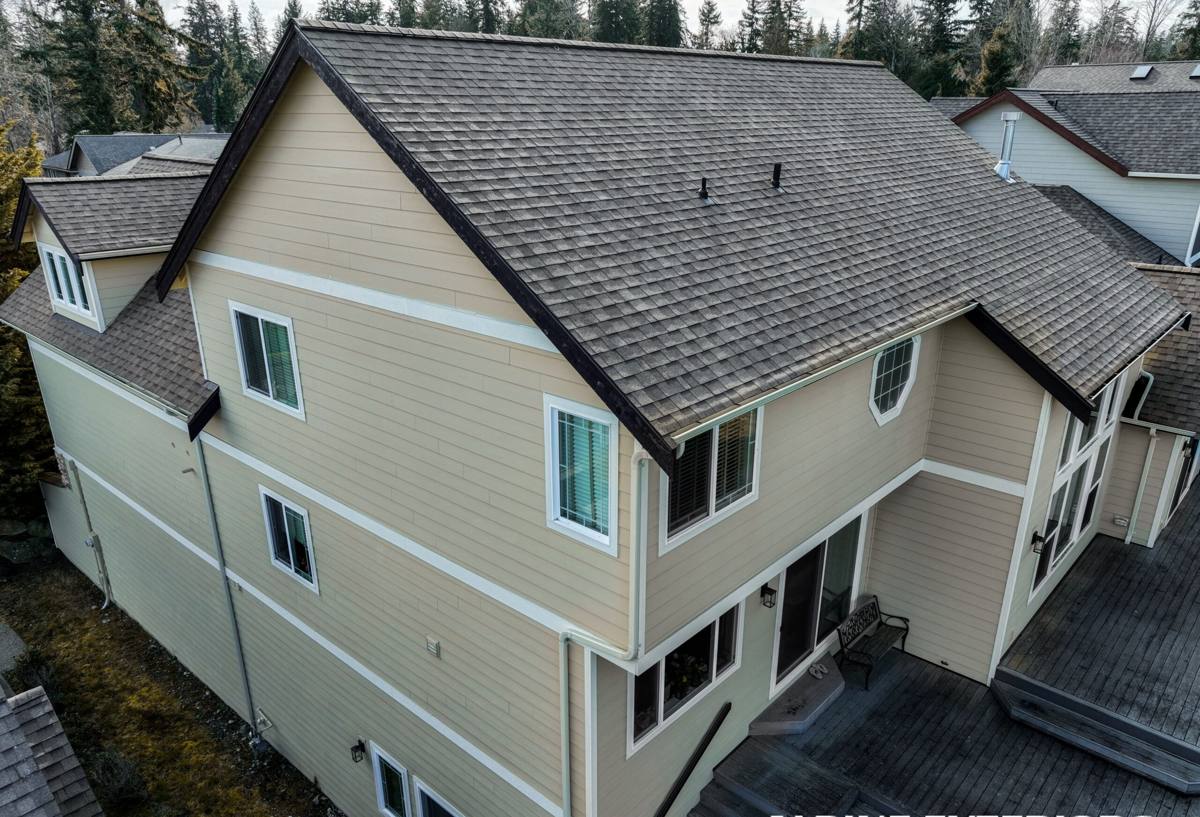
What Bellingham's Climate Actually Does to a Deck
Three things drive almost every deck failure we see in this area, and they compound each other.
Salt Air
Bellingham Bay puts homes near the water in a mild but persistent salt-air environment. Salt accelerates corrosion on anything metal — fasteners, joist hangers, railing hardware, screws. A deck built with standard-grade fasteners in this environment can start showing rust streaks and weakened connections well before an equivalent deck built further inland. This is the single biggest difference between building a deck in Bellingham and building one in, say, Lynden proper.
Driving Rain
Storms coming off the Strait of Georgia don't just fall straight down — wind-driven rain gets pushed sideways into ledger connections, under railing posts, and into any gap in the decking or flashing that wouldn't matter in a calmer climate. Water that gets behind flashing or into end grain doesn't dry out quickly here, because the next rain is rarely far off.
A Long Moss Season
Consistent moisture, filtered sun under trees or on north-facing decks, and mild temperatures create ideal moss and algae conditions for most of the year. Moss on a deck surface isn't just cosmetic — it holds moisture against the decking material and turns into a genuine slip hazard, especially on stairs.
Choosing the Right Decking Material for This Environment
There's no single "best" decking material — every option is a tradeoff between upfront cost, maintenance, and how it behaves specifically in a wet, salt-air climate. Here's how the common choices compare for a Bellingham deck.
| Material | How It Handles Moisture & Salt Air | Maintenance | Typical Lifespan Here |
|---|---|---|---|
| Pressure-treated wood | Good rot resistance if properly sealed; fasteners need to be corrosion-rated | Annual cleaning, re-sealing every 1-2 years | 15-20 years with upkeep |
| Cedar | Naturally moisture and insect resistant; needs UV/moisture protection to hold color | Cleaning and oil or stain every 1-2 years | 15-25 years with upkeep |
| Composite decking | Excellent moisture resistance; won't rot or splinter; surface can still grow moss/algae without cleaning | Periodic washing, no sealing or staining | 25-30+ years |
| PVC/capped polymer | Fully sealed surface, best moisture and salt-air performance | Occasional washing | 25-30+ years |
We don't push one material on every job. A wood deck under a covered porch with good airflow can perform very well here for decades. That same wood species on an exposed, low-airflow deck facing the water will age faster no matter how well it's finished. We talk through your specific site — sun exposure, tree cover, proximity to the water — before recommending a material, rather than defaulting to whatever is easiest to install.
Why We're Selective About Certain Wood Products
Some lower-grade treated lumber and thin composite products are more sensitive to installation error and moisture cycling than their marketing suggests. Our standard is to use materials whose manufacturer specifications match this climate's demands — proper treatment retention levels for ground contact or above-ground use, and fastener systems rated for the material. That's less about brand preference and more about matching the product to what Bellingham weather will actually put it through over a decade or two.
Structural Details That Matter More Here Than Elsewhere
The parts of a deck nobody sees are usually where climate-related failures start. These are the details we treat as non-negotiable on every Bellingham build.
Ledger Board Flashing
The ledger board — where the deck attaches to the house — is the single most common point of hidden rot on decks in wet climates. Correct flashing (metal flashing plus a self-adhering waterproof membrane behind it) keeps driving rain from working its way behind the ledger and into the house's rim joist. We treat this as mandatory, not optional, on every attached deck we build.
Joist Protection
Joist tape or a comparable moisture barrier over the top of each joist keeps water from pooling in the screw holes where decking fasteners penetrate the wood — a slow, invisible rot point that shows up as soft spots five or ten years down the road.
Corrosion-Rated Fasteners and Hardware
Near Bellingham Bay, we use fasteners, joist hangers, and structural hardware rated for coastal or high-moisture exposure — typically stainless steel or heavy hot-dip galvanized, matched to the decking material to avoid corrosion reactions between dissimilar metals. Standard fasteners are a false economy here; the cost difference is small relative to what it costs to fix a corroded connection years later.
Drainage and Airflow Underneath
A deck that traps moisture underneath — low clearance, poor grading, no ventilation — stays damp longer after every rain and speeds up both rot and moss growth. We grade and space framing to let air move and water drain away from the structure, not pool under it.
Footings Sized for Our Soil
Footing depth and sizing need to account for local frost depth and soil conditions, and for Whatcom County that means footings poured to the depth code requires, not just "deep enough to hold a post." This is inspected work, and we build to pass inspection the first time.
Our Deck-Building Process
- Site visit and design conversation — we look at sun exposure, drainage, tree cover, and how the deck connects to your home before talking materials.
- Material and layout selection — honest tradeoffs on wood versus composite versus PVC based on your site, not a one-size pitch.
- Permitting — decks over a certain size or height typically require a permit in Whatcom County; we handle that process so you don't have to chase it down.
- Site prep and footings — footings poured to proper depth and code-required spacing for your soil and structure size.
- Framing with moisture protection — ledger flashing, joist tape, and corrosion-rated hardware installed as standard practice, not an upgrade.
- Decking and railing installation — proper fastener spacing and gapping to allow drainage and seasonal wood movement.
- Final walkthrough — we check every railing connection, stair, and fastener before calling the job done.
Railings and Hardware: The Part Homeowners Overlook
Railings take a lot of abuse in this climate — they're exposed on all sides, they're handled constantly, and they're often the first place corrosion shows up because post connections and baluster fasteners are smaller-gauge hardware than the main structure. We use hardware matched to the railing material and rated for exposure near salt air, and we make sure post-to-frame connections meet the structural requirements for guardrail loads, not just what looks solid. A railing that looks fine but wasn't properly through-bolted into blocking is a liability that doesn't show itself until someone leans on it.
Living With a Deck in Bellingham: Realistic Maintenance
No deck material here is truly "no maintenance" — climates like this one just change what the maintenance looks like. Here's a practical checklist for keeping a deck sound through Whatcom County's wet season after wet season:
- Sweep debris and standing leaves off the deck regularly — trapped organic matter holds moisture and feeds moss.
- Clean moss and algae off the surface and stairs before it builds up, especially on shaded or north-facing sections.
- Check railing posts and stair connections once a year for looseness or corrosion at the hardware.
- Re-seal or re-stain wood decking on the manufacturer's recommended schedule — don't wait until it's visibly gray and dry.
- Confirm gaps between deck boards stay clear so water can drain through rather than pooling on the surface.
- Look underneath once a year for standing water, soft framing, or signs of rust on hardware.
Permits and Code Considerations in Whatcom County
Most attached decks of meaningful size in Whatcom County require a building permit, and inspections typically cover footings, framing, ledger attachment, and guardrail height and spacing before the deck is signed off. Guardrails are generally required above a certain height off grade, with baluster spacing designed to meet code safety requirements. We handle the permitting and inspection process as part of the build so the finished deck is both safe and properly documented — which matters if you ever sell the home or need to reference it for insurance.
Why Hire a Crew That Already Works Bellingham
A contractor who mainly builds decks in drier, inland areas can still build a structurally sound deck — but they're less likely to default to coastal-grade fasteners, proper ledger flashing, or moss-conscious layout choices unless they're specifically asked. Because we work regularly in Bellingham and along the rest of Whatcom County's coastline, those choices are our standard practice, not an upsell. We've seen what a poorly flashed ledger or standard-grade hardware looks like after a decade of salt air and driving rain, and we build to avoid that outcome from day one.
If you're planning a new deck or replacing one that's showing its age, we're happy to take a look and put together a straightforward, no-pressure estimate. Fill out the form below and we'll go over your site, your material options, and what the job will actually involve.