 Lynden Siding
 Building a Deck That Actually Holds Up in Nooksack
Nooksack sits in a part of Whatcom County where the weather doesn't do a homeowner any favors. Between the long stretch of wet months, the humidity that settles into the river valley, and the marine-influenced air that carries moisture even on days it isn't raining, an outdoor deck here works harder than it would almost anywhere else in the state. A deck that's built for a dry climate — or built to a bare-minimum spec — starts showing problems within a few seasons: soft spots, black streaks, squeaky boards, rusted fasteners. A deck built correctly for this area can go decades without those headaches.
This page is about one thing: building or replacing a deck in Nooksack, done right for the conditions this specific area throws at it. Not a generic overview of decking — the actual decisions that matter when the structure has to survive driving rain, a long moss season, and freeze-thaw cycles year after year.
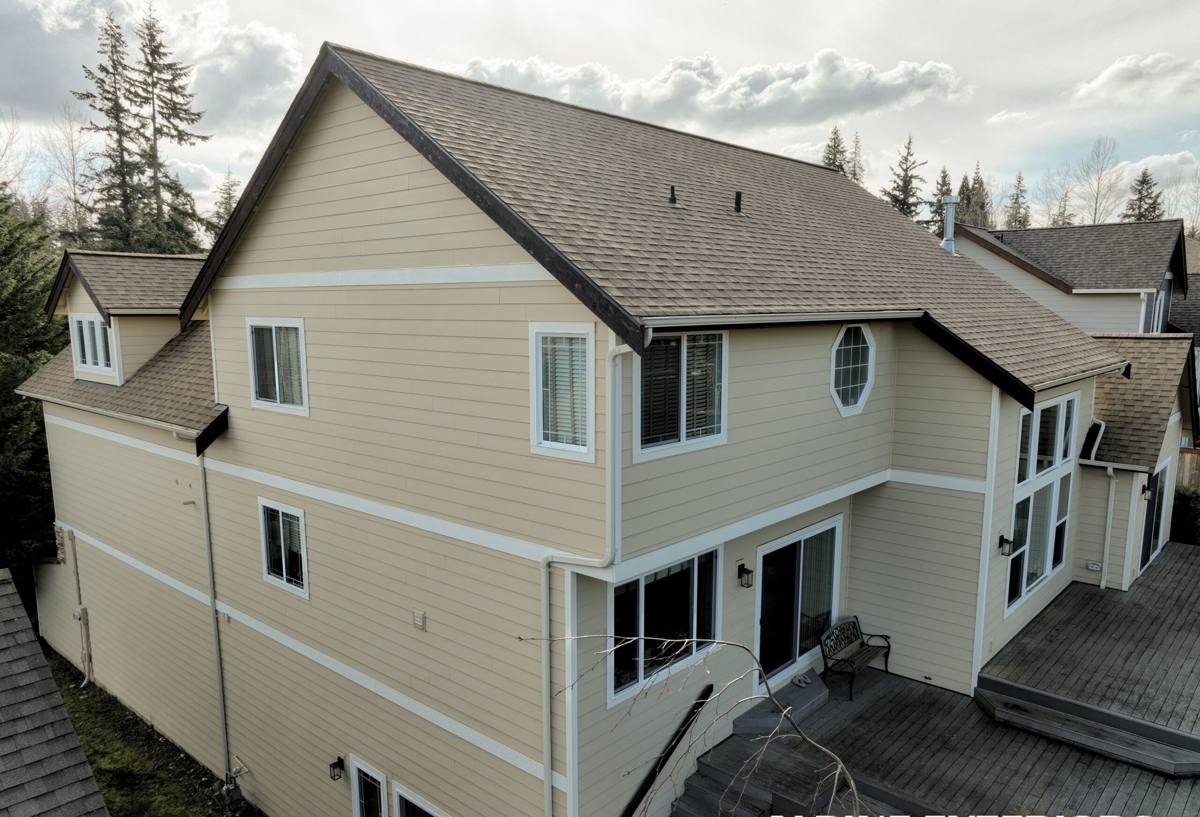
What Nooksack's Climate Actually Does to a Deck
Before talking about materials or process, it helps to understand what's working against the deck once it's built.
Moisture That Doesn't Let Up
Whatcom County gets a long wet season, and Nooksack's inland, river-valley setting holds onto humidity even between rain events. Wood framing and decking that can't dry out between storms is where rot gets its start — not from one big storm, but from months of staying damp.
Moss and Algae Growth
A long moss season means any deck surface that stays shaded or doesn't drain well will start growing moss and algae, sometimes within the first year. Beyond looking bad, moss holds moisture against the decking material and turns a walking surface slick and genuinely dangerous, especially on stairs.
Driving Rain and Wind-Driven Wet
Rain here doesn't always fall straight down. Wind-driven rain gets up under rail caps, into end grain on cut boards, and behind ledger connections if they weren't flashed properly. This is where a lot of "invisible" deck failures start — the damage is happening at the ledger board or in the framing where nobody's looking.
Salt-Tinged Marine Air
Even away from the immediate coastline, Whatcom County's marine air carries enough salt content to accelerate corrosion on lower-grade fasteners and hardware over time. It's a slower process than what you'd see right on the water, but it adds up over the life of a deck.
The Framing and Structure Most Homeowners Never See
The part of a deck that fails first is almost never the decking boards on top — it's the structure underneath. This is where corners get cut on lower-quality builds, and it's the part we spend the most time getting right.
- Footings sized and set below frost depth, on undisturbed or properly compacted soil
- Ledger board attachment flashed correctly where the deck meets the house, so water can't track into the rim joist or wall framing
- Joist spacing that matches the actual decking material being installed, not a generic spacing that happens to work for the cheapest option
- Corrosion-resistant structural hardware — joist hangers, post bases, and fasteners rated for ground contact and exterior exposure
- Proper drainage and airflow underneath the deck so the structure can dry out between rain events instead of sitting wet
None of this is visible once the deck is finished, which is exactly why it matters. A deck can look great for the first year or two even with weak framing underneath — the difference shows up five or ten years down the road, usually as an expensive surprise.
Choosing the Right Decking Material for This Area
There's no single "best" decking material for every homeowner — it depends on budget, maintenance tolerance, and how the deck will be used. What matters is picking with Nooksack's climate in mind, not just a showroom sample.
| Material | How It Handles This Climate | Maintenance | General Cost Range |
|---|---|---|---|
| Pressure-treated lumber | Affordable and structurally solid, but end grain and fastener holes need real attention or they hold moisture | Annual cleaning, periodic sealing/staining | Lowest upfront cost |
| Cedar | Naturally moisture- and insect-resistant, ages to a silver-gray if left unfinished, but still wants regular care in a wet climate | Sealing or staining every couple of years to hold color and resist moss | Mid-range |
| Composite decking | Doesn't absorb water the way wood does, resists rot, and won't splinter — but can still grow surface moss in shaded, damp spots if not cleaned | Occasional washing, no staining or sealing | Higher upfront, lower long-term labor |
| PVC/capped polymer | Fully synthetic, essentially impervious to moisture absorption, very stable in wet-dry cycling | Occasional washing | Highest upfront cost |
We'll walk through these trade-offs honestly based on your budget and how you plan to use the space — a deck that gets shaded, damp exposure needs a different conversation than one that sits in full sun most of the day.
A Note on Fasteners and Hardware
Whatever decking material gets chosen, the hardware holding it together matters just as much. We use fasteners and structural connectors rated for exterior, ground-contact, or coastal-grade exposure — not general-purpose hardware that looks fine going in but starts corroding within a few wet seasons. It's a small cost difference at install time and a large difference in how the deck ages.
Our Process for a Nooksack Deck Project
- On-site assessment. We look at drainage, sun/shade exposure, existing structure (if it's a rebuild), and how the space will actually be used.
- Design and material selection. We talk through decking material, railing style, and layout based on your priorities and budget — no upselling toward whatever has the best margin.
- Permitting. Most deck projects in Whatcom County require a permit, especially anything attached to the house or built above a certain height. We handle that process rather than leaving it on you.
- Demolition and site prep, if it's a replacement — including a real look at the ledger and framing underneath before deciding what can stay and what needs to go.
- Framing. Footings, posts, beams, and joists built to hold up under this area's wet-dry cycling, not just to pass a quick inspection.
- Decking, railing, and stairs installed with attention to drainage gaps, fastener placement, and how water will move off the surface.
- Final walkthrough so you know how the specific material you chose should be cared for going forward.
Railings, Stairs, and Code Requirements
Railings and stair details aren't just aesthetic choices — they're governed by building code for good reason, and it's an area we don't cut corners on. Guard height, baluster spacing, and stair rise/run all have to meet current code, and inspectors in this area check for it. Beyond code minimums, stair treads and any elevated walking surface need attention to slip resistance, since moss and algae growth on stairs is one of the more common safety issues we see on older decks in this climate.
Keeping a Nooksack Deck in Good Shape Year to Year
A well-built deck still needs some upkeep in this climate — the goal is to make that upkeep manageable rather than a constant fight against moisture and moss.
- Sweep debris and standing leaves off the surface regularly, especially in fall — trapped organic material holds moisture and feeds moss growth
- Rinse or wash the deck surface periodically to knock back algae and moss before it takes hold, particularly in shaded areas
- Check that gaps between boards stay clear so water can drain through instead of pooling
- Inspect railing posts and stair connections once a year for any looseness or soft spots
- Re-seal or re-stain wood decking on the schedule appropriate for that material — don't wait until it's visibly gray and cracking
- Keep an eye on the area underneath the deck for standing water or poor drainage after heavy rain
Why It Matters to Hire a Crew That Already Works in Nooksack
A deck built to a spec sheet written for a dry climate is a deck built to fail here early. We work throughout Lynden and the surrounding Whatcom County communities, including Nooksack, and we build every deck with this area's rain, humidity, and moss season already factored into the framing, material choices, and hardware — not as an afterthought. That means footings set for how the ground actually behaves here, flashing details that account for wind-driven rain, and fastener choices that won't be the weak point ten years from now.
It also means we're not guessing at how a given material or design choice will hold up locally — we've seen what does and doesn't work through actual Whatcom County winters.
Get a Straightforward Estimate
If you're planning a new deck or looking at replacing one that's showing its age, we're happy to come take a look and give you an honest read on what it needs — no pressure, no upsell. Fill out the form below to request a free estimate for your Nooksack property.