 Lynden Siding
 Why Siding Takes a Beating on the Sumas Side of Whatcom County
Sumas sits at the north end of the Nooksack lowlands, close enough to the Salish Sea and the Fraser Valley that marine-influenced weather reaches it directly. That means long stretches of the year where siding stays damp, not just wet — driving rain off passing fronts, low winter sun that never fully dries north-facing walls, and a moss and algae season that can run from fall through spring. Add in the freeze-thaw swings that show up on cold, clear nights in this part of the county, and you've got a set of conditions that will eventually find every weak point in a home's exterior.
None of that means siding is doomed to fail. It means siding has to be installed and repaired with those conditions in mind — correct flashing, correct drainage behind the cladding, and materials that don't feed the moisture and moss problem instead of resisting it. A lot of the repair calls we get in this area aren't really about the siding material at all; they're about a detail that was never right in the first place finally catching up with the house.
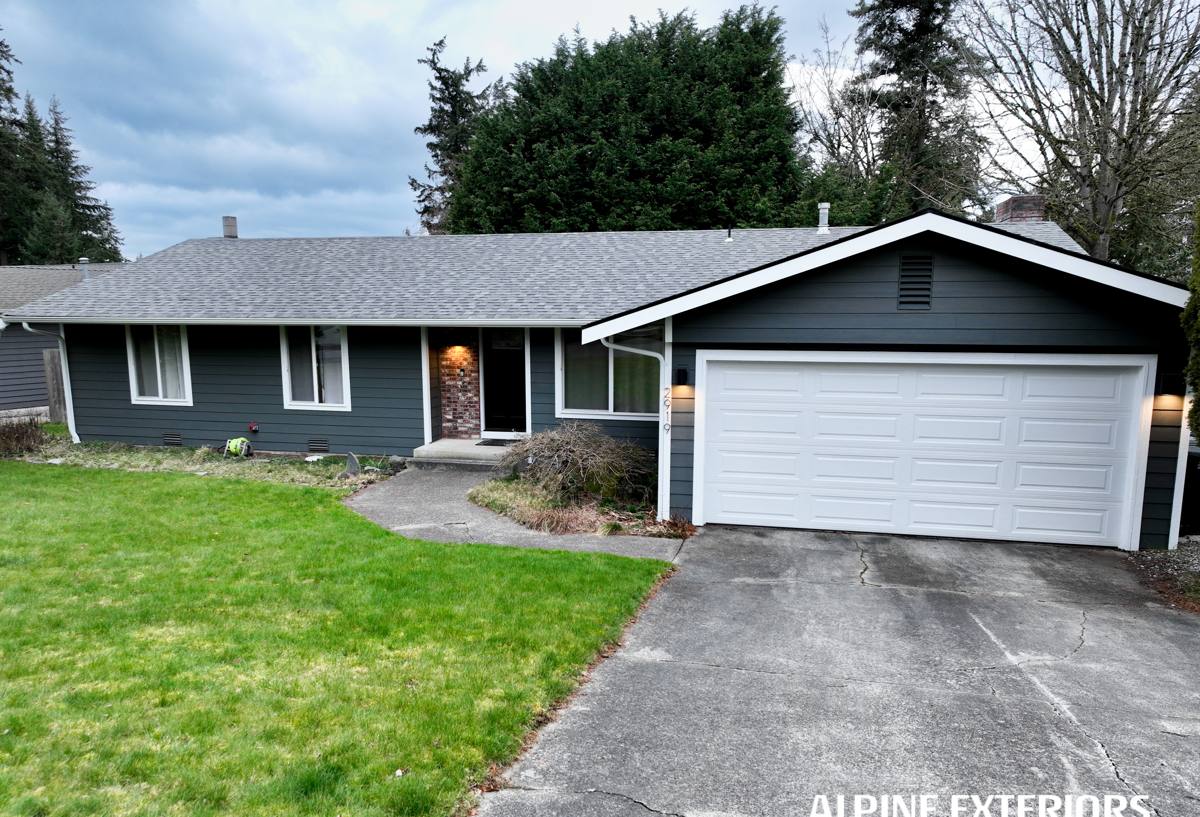
Signs Your Sumas Home's Siding Needs Attention
Some siding problems are obvious. Others sit quietly behind the wall for a season or two before they show themselves. Here's what we tell Sumas homeowners to watch for:
- Soft, spongy, or crumbling spots when you press on a board, especially near the bottom courses and around window and door trim
- Persistent dark or greenish staining that comes back within weeks of being cleaned
- Paint that's peeling, bubbling, or won't hold on one section of wall while the rest of the house looks fine
- Visible gaps at butt joints, corner boards, or trim where caulk has shrunk, cracked, or fallen out
- Warping, cupping, or boards that have pulled away from the wall slightly
- A musty smell or visible staining on interior walls that share a wall line with a suspect exterior section
- Nail heads popping through the siding face, which usually points to swelling or movement underneath
Any one of these on its own might be minor. Two or three in the same area, or damage that keeps reappearing after being patched, usually means water is getting behind the cladding somewhere and the visible damage is just the symptom.
What a Correct Siding Repair Actually Involves
A repair that just replaces the damaged board and re-caulks the seam can look fine for a season and fail again the next wet winter, because it never addressed why that board failed. A repair done right starts by figuring out the actual path water is taking, not just where it's showing up.
Common Failure Points We See in This Area
In Sumas and the surrounding valley, the same handful of spots account for most of the calls we get: lower courses near grade or splash-back zones where soil, mulch, or hardscaping keeps siding wet longer than it should be; trim and corner boards where caulk joints have failed and let water track behind the board; window and door flashing that was skipped or installed backward during a past remodel; and north- and west-facing walls where moss and algae hold moisture against the surface far longer than sun-exposed elevations.
What We Check Before We Touch Anything
Before any repair work starts, we look at what's underneath — the house wrap or building paper, the flashing at penetrations and trim, and whether the sheathing or framing behind the damaged siding has taken on moisture. If the water intrusion is limited to the siding and trim, a targeted repair is usually the right call. If it's gone further, we'll tell you honestly rather than close up a wall over a problem that's still active.
Repair or Replace? How We Help You Decide
Not every damaged section needs a full re-side, and not every repair is worth doing on its own. The decision usually comes down to a few factors:
| Factor | Leans Toward Repair | Leans Toward Replacement |
|---|---|---|
| Extent of damage | Isolated to one wall or a few boards | Spread across multiple elevations |
| Age of existing siding | Under 10-15 years, otherwise sound | Near or past expected service life |
| Moisture intrusion | Surface-level, no sheathing damage | Signs of rot or damage behind the cladding |
| Original installation quality | Flashing and drainage details were done correctly | Recurring failures point to systemic install issues |
| Material match | Matching board profile is available | Discontinued profile or product no longer sold |
We'll walk you through where your home falls on that list before we recommend anything. A straight repair is often the right, cost-effective answer — we're not going to talk you into a full re-side you don't need.
Our Siding Repair Process
- Inspection. We look at the damaged area and the wall assembly behind it, including flashing, trim, and any signs of moisture that have traveled beyond the visible damage.
- Scope and explanation. We tell you what we found, what's causing it, and what it will take to fix it correctly — not just what will make it look fixed.
- Prep and moisture correction. Any compromised sheathing, house wrap, or flashing gets addressed first. Repairing the surface over an unresolved moisture problem just buys you a repeat visit.
- Siding and trim repair. Damaged sections are removed and replaced, with attention to proper overlap, fastening, and sealed transitions at trim, corners, and penetrations.
- Finish and cleanup. Caulking, touch-up finish work, and a final check to confirm the repair drains and sheds water the way it's supposed to.
Why We Repair — and Replace — With James Hardie Fiber Cement
We install James Hardie fiber cement siding exclusively, and that carries into repair work too. When a damaged section needs replacing, we use Hardie boards and trim rather than mixing in a different material, because fiber cement handles this climate in ways that matter for the long-term outcome of the repair, not just the day it's installed.
Fiber cement doesn't provide the organic material that moss and algae feed on the way wood-based products can, it holds paint and factory finish longer under repeated wet-dry cycling, and it's engineered to resist the swelling and warping that causes a lot of the trim and butt-joint failures we see in this area. Hardie's ColorPlus factory finish also means a repaired section can match the surrounding siding's color and sheen far better than field-painted patch material typically does. If your existing siding isn't Hardie, we'll still give you an honest read on whether a like-for-like patch makes sense or whether a Hardie section is the more durable long-term fix for that spot — that's a conversation, not a sales pitch.
Why a Crew That Already Works This Area Matters
Siding repair done by someone unfamiliar with Whatcom County's weather pattern tends to treat every job the same way, regardless of climate. A crew that regularly works in and around Sumas knows which elevations take the worst of the driving rain, where moss recurs no matter how often it's cleaned, and which older installation habits in this area tend to cause the failures we get called out for. That local pattern recognition shortens the diagnosis part of the job and reduces the chance of a repair that looks right for one season and fails again the next.
It also means accountability. A local crew is available if a repair needs a follow-up look after the first real winter storm, without you having to track down a contractor who's moved on to jobs in another region entirely.
What a Lasting Repair Should Give You
The goal of any siding repair on a Sumas home isn't just to make a wall look presentable again — it's to close off the path water was taking and leave that section of the house as durable as the rest of it. That means matched materials, correctly sealed transitions, and a wall assembly that's dry behind the cladding, not just dry on the surface. A repair that meets that bar should hold up through the next wet season and the one after that, not just until the next inspection.
If you're seeing damage, staining, or recurring problems on your home's siding, we're happy to take a look and give you a straight answer on what it needs. Reach out for a free, no-pressure estimate — we'll tell you honestly whether it's a repair job or something bigger, and what either option actually involves.