 Lynden Siding
 Siding That Has to Work in Sumas, Not Just Look Good
Sumas sits at the edge of Whatcom County, where the weather off the water and the low, wet foothills combine into a long stretch of damp months every year. Homes here don't get a break from moisture the way houses in drier parts of the state do. Rain lingers, humidity stays high for weeks at a time, and anything on the exterior of a house that can hold water eventually will. That's the starting point for any honest conversation about siding in this area: the material and the installation both have to be built for sustained wet conditions, not just an afternoon shower.
We install James Hardie fiber cement siding exclusively, and Sumas is one of the communities where that decision matters the most. This page walks through what local homes actually need from their siding, what a correct fiber cement installation looks like, and how our process is built around the realities of this specific area rather than a generic install checklist.
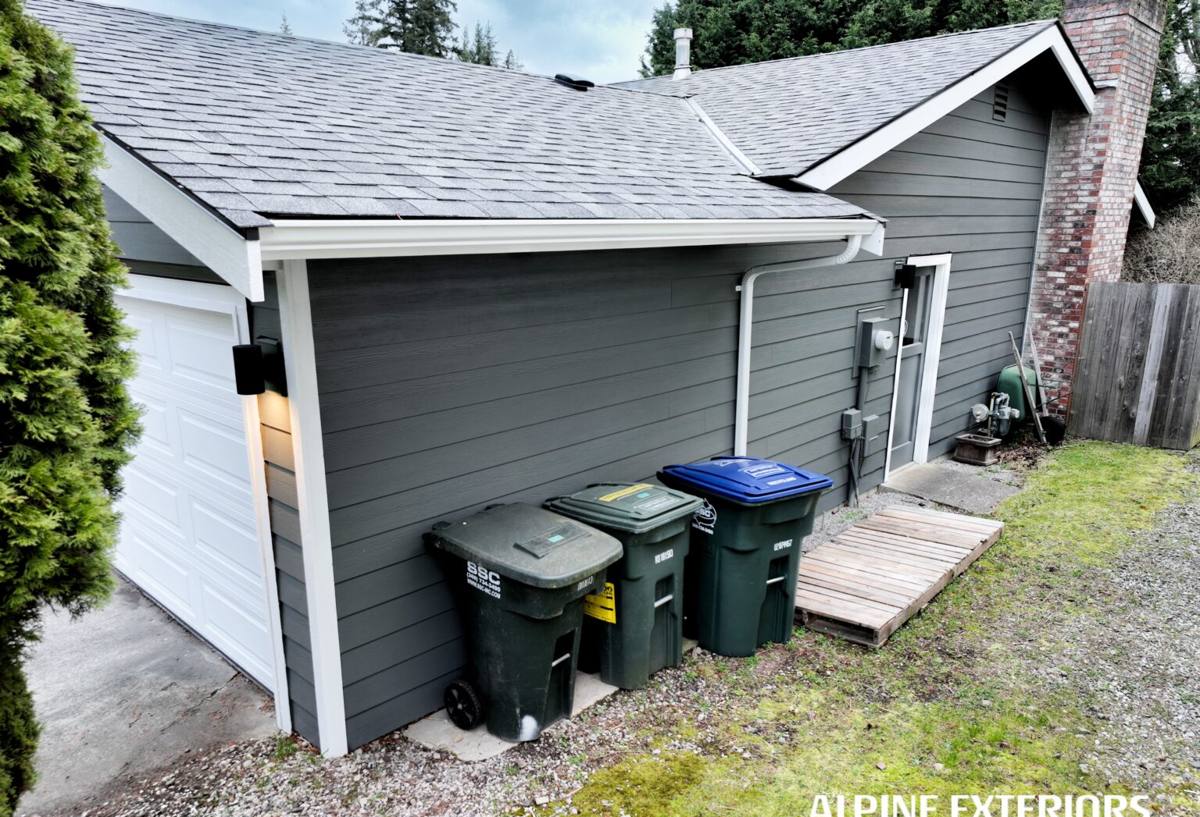
What Sumas Weather Does to Exterior Siding Over Time
Whatcom County's marine-influenced climate means Sumas gets a mix of driving rain, persistent low-level moisture, and a moss and algae season that can stretch from fall through spring. Even homes set back from the water deal with marine air moving inland on prevailing winds, which adds a layer of humidity that keeps wood and wood-composite products damp longer than they'd like to be. Add in the freeze-thaw swings that show up in the colder months near the foothills, and you get a combination that punishes any siding product with weak points at the seams, fasteners, or bottom edge.
The Specific Failure Points We See
- Butt joints and seams that weren't properly caulked or flashed, letting water track behind the siding
- Bottom courses too close to grade, soil, or hardscape, wicking moisture up into the panel
- Moss and algae buildup on north-facing and shaded walls that holds moisture against the surface
- Fastener corrosion or popped nails from repeated wet-dry cycling
- Paint or coating failure on wood and wood-composite products, exposing raw material to weather
None of these are exotic problems. They're the predictable result of ordinary Sumas weather acting on a product or installation that wasn't specified for it.
Why Fiber Cement Fits This Climate
James Hardie fiber cement is a cement, sand, and cellulose fiber composite. It doesn't absorb water the way wood or wood-based composites do, it doesn't rot, and it's non-combustible. For a wet, moss-prone climate like Sumas sees, those properties translate directly into fewer callbacks and less long-term maintenance.
Hardie's ColorPlus factory-applied finish is baked on under controlled conditions rather than brushed on outdoors, which gives it better adhesion and UV resistance than field-applied paint. That matters here specifically because Whatcom County's damp stretches don't give field-applied coatings much of a chance to cure properly before the next rain moves through. A factory finish sidesteps that problem entirely.
Hardie also engineers different product lines (HZ5 and HZ10) for different climate zones, accounting for freeze-thaw exposure and moisture load rather than using one formulation everywhere. That's the kind of climate-specific engineering that a generic siding product doesn't offer, and it's a meaningful part of why we standardized on Hardie instead of carrying multiple lower-cost alternatives.
What a Correct Fiber Cement Installation Actually Involves
Fiber cement siding is only as good as its installation. A rushed or generic install can undercut even the best material, and in a wet climate the mistakes show up faster. A correct job includes:
Water Management Details
- Proper weather-resistant barrier installed and lapped correctly behind the siding
- Rain screen or drainage gap where conditions call for it, to let incidental moisture drain and the wall assembly dry
- Flashing at every window, door, and roofline intersection, not just caulk
- Correct minimum clearance from grade, decks, patios, and roof lines per manufacturer specification
Fastening and Fit
- Fasteners driven to Hardie's specified depth and spacing, not overdriven or underdriven
- Butt joints backed with flashing or sealed per manufacturer detail, not just caulked and left
- Panels cut and fit tight without forcing, which avoids stress cracking over time
- Blade and tooling practices that control silica dust during cutting, protecting the crew and the site
Every one of those details is invisible once the siding is up. That's exactly why it matters who does the install — a homeowner can't inspect flashing behind a finished wall a year later, so it has to be done right the first time.
Our Process for a Sumas Project
1. On-Site Assessment
We walk the exterior and look at drainage, existing moisture damage, trim condition, and any areas where the current siding has already failed. This tells us what the wall assembly needs, not just what the surface looks like.
2. Prep and Repair
Any rot, damaged sheathing, or compromised weather barrier gets addressed before new siding goes on. Installing new siding over a wet or damaged wall just hides the problem — it doesn't fix it.
3. Weather Barrier and Flashing
We install or verify the weather-resistant barrier and flash every penetration and transition point before the first piece of siding goes up.
4. Installation to Manufacturer Spec
Hardie panels, planks, or shingle-style siding are installed per James Hardie's published installation guidelines, with attention to fastener pattern, clearances, and joint treatment.
5. Final Walkthrough
We review the finished work with the homeowner, covering what was done, what to expect from the finish over time, and basic care.
Comparing Options for a Sumas Home
| Factor | James Hardie Fiber Cement | Vinyl Siding | Wood / Wood-Composite |
|---|---|---|---|
| Moisture resistance | Does not rot or absorb water | Won't rot, but can trap moisture behind panels | Vulnerable to rot without diligent maintenance |
| Moss/algae resistance | Cleanable surface, factory finish holds up | Can stain and hold algae in shaded areas | Prone to moss growth and surface breakdown |
| Finish durability | Factory-baked ColorPlus finish | Color molded in, can fade and become brittle | Field-applied paint/stain needs regular recoating |
| Fire resistance | Non-combustible | Combustible | Combustible |
| Typical lifespan (installed to spec) | Multiple decades | 15-25 years | Shorter without consistent upkeep |
What Fiber Cement Siding Costs to Consider
| Cost Factor | Why It Matters in Sumas |
|---|---|
| Home size and wall complexity | More corners, gables, and trim details mean more cutting, flashing, and labor time |
| Existing wall condition | Rot repair or sheathing replacement adds cost but prevents hiding a moisture problem |
| Siding profile (lap, panel, shingle) | Different profiles have different material and labor costs |
| Trim and accessory package | Hardie trim, corner boards, and soffit work should match the wall system for consistent water management |
| Access and site conditions | Grade, landscaping, and setback affect scaffolding and staging |
We give project-specific numbers after seeing the house, not a blanket price — every home's exposure and wall condition is different.
Maintenance: What Sumas Homeowners Should Actually Do
- Rinse siding annually, more often on shaded or north-facing walls prone to moss
- Keep gutters clear so water isn't sheeting down the wall face
- Keep plantings and mulch beds pulled back from the bottom of the siding
- Inspect caulking at trim and penetrations every year or two and recaulk as needed
- Address any impact damage or chipped finish promptly rather than letting it sit exposed
Fiber cement is low-maintenance compared to wood, but "low-maintenance" isn't "no-maintenance." A few minutes of attention a year keeps a correctly installed system performing the way it's designed to.
Why Local Installation Experience Matters
A siding crew that already works in Sumas and the surrounding Whatcom County area knows how the local moisture pattern behaves on real walls, not just in a manual. That experience shows up in small decisions — where to add extra flashing, which walls need a drainage gap most, how to detail trim around window and door openings that see the most weather. It also means familiarity with local permitting and inspection expectations, so the project moves without surprises.
We stand behind our installations because we control every part of the process, from the weather barrier to the final course of siding. That's also why we only install James Hardie: we've seen what holds up under Whatcom County conditions and what doesn't, and we'd rather put one product on homes correctly than offer several options we can't fully stand behind.
Ready to Talk About Your Sumas Home?
If your siding is showing moss, staining, cracking, or you're planning ahead for a replacement, we're glad to take a look and give you an honest read on what your home needs. Use the form below to request a free, no-pressure estimate.