 Lynden Siding
 Roofing Around Wiser Lake Isn't Like Roofing in Town
Wiser Lake sits in a pocket of Whatcom County where the roofs work harder than most people realize. Between the tree cover ringing the lake, the extra humidity that comes off the water, and the wind patterns that push moisture-laden air in off the Salish Sea and up through the valley, homes here go through a slower but more relentless kind of wear than a roof on an open, sunny lot in town. We've replaced enough roofs in this specific area to know that a "one-size-fits-all" replacement plan doesn't hold up. What works on a south-facing roof in downtown Lynden isn't necessarily right for a shaded, lake-adjacent roof a few miles out.
This page is about one job, in one area: full roof replacement for homes in and around Wiser Lake. Not repairs, not a general overview of roofing — the specific considerations that come up when a roof out here has reached the end of its useful life and it's time to do it right.
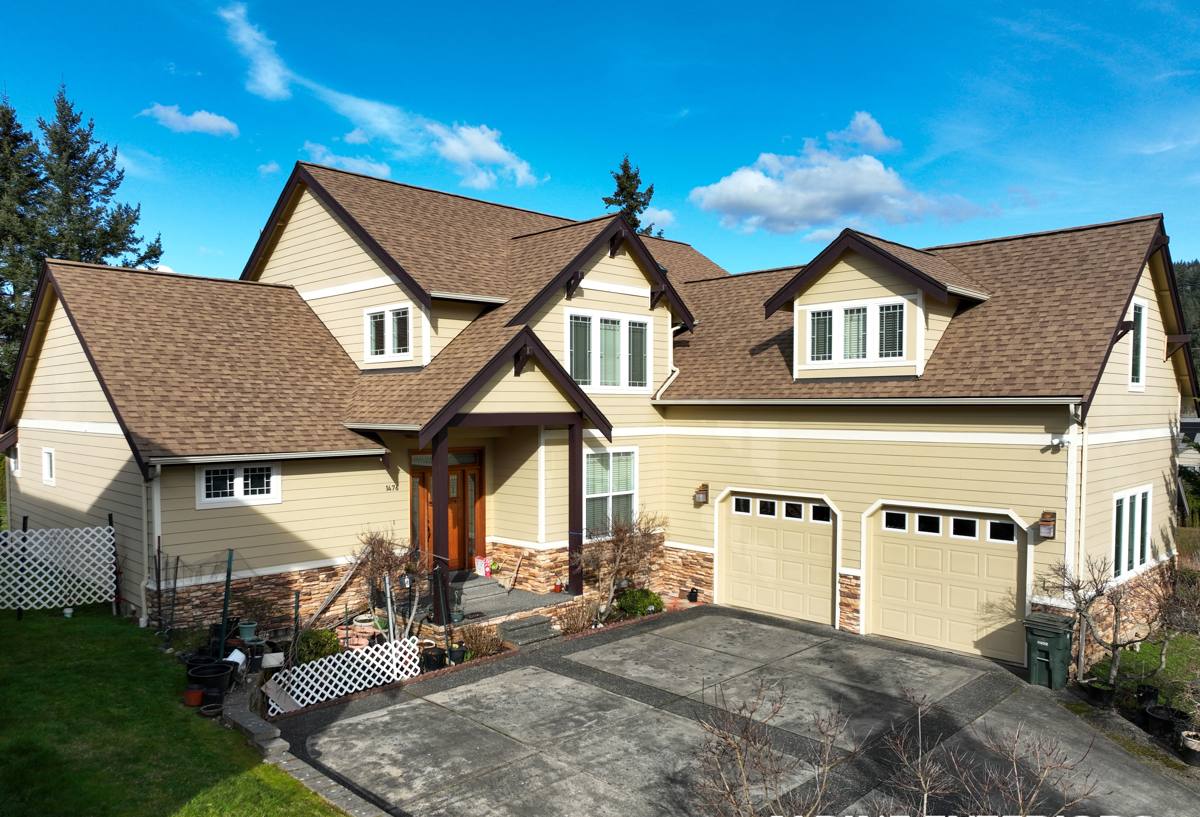
What the Local Climate Does to a Roof Over Time
Driving Rain and Standing Moisture
Whatcom County doesn't get the heaviest rainfall in the state, but what it lacks in volume it makes up for in duration and wind-driven angle. Storms coming off the water push rain sideways into fascia, under shingle tabs, and into any flashing that's even slightly undersized. Over years, that pattern finds every weak seam in a roofing system — not through one dramatic failure, but through slow saturation that rots decking and degrades underlayment from the inside out, often before it ever shows as an obvious leak indoors.
Salt-Tinged Marine Air
Lynden sits inland, but the prevailing weather here still carries a marine influence off Bellingham Bay and the greater Salish Sea. That air isn't as harsh as true oceanfront exposure, but over the 20-30 year life of a roofing system it still contributes to faster corrosion on exposed metal — fasteners, flashing, gutter hardware — especially on homes with less tree cover breaking up the wind. It's one more reason we don't treat every roof the same way and adjust material choices accordingly.
Moss, Shade, and a Long Wet Season
This is the big one for Wiser Lake specifically. The tree canopy around the lake keeps a lot of roofs shaded for large parts of the day, which sounds like a benefit until you consider what shade plus moisture plus a mild climate adds up to: an extended moss and algae growing season that can run nearly year-round on north-facing slopes. Moss isn't just cosmetic. As it establishes itself under shingle tabs, it lifts them, holds moisture against the roofing material, and accelerates granule loss. A roof that would last two decades in full sun can wear out meaningfully faster under a moss load that's never fully addressed.
Signs a Wiser Lake Roof Needs Replacing, Not Just Repair
Repair makes sense when a roof has isolated damage and the rest of the system is sound. Replacement makes sense when the underlying materials — decking, underlayment, flashing — have been compromised broadly enough that patching one spot just shifts the problem somewhere else. Here's what we look for when we're deciding which side of that line a roof is on:
- Granule loss heavy enough that you can see bare, shiny patches on multiple shingles, not just one or two
- Moss or algae established across more than a small section, especially if it's been there more than one season
- Soft or spongy spots when walked on, which usually means the decking underneath has started to rot
- Shingles curling, cupping, or losing their tabs, especially on the north or shaded slopes
- Daylight visible through the roof deck from inside the attic, or water staining on rafters
- Flashing around chimneys, vents, or valleys that's rusted, cracked, or was never properly stepped in the first place
- A roof that's 20+ years old and has never had underlayment or ventilation upgraded
If a homeowner is only seeing one or two of these, a repair might genuinely be the honest answer — we'll tell you that. Replacement gets recommended when the pattern points to a system-wide problem, not a single failure point.
What a Correct Roof Replacement Actually Involves
Full Tear-Off and Deck Inspection
We don't install new roofing over old material. A full tear-off is the only way to actually see the deck — the plywood or planking the whole system rests on — and confirm it's sound before anything new goes down. In a moss-prone, moisture-heavy area like Wiser Lake, this step matters more than in drier climates, because trapped moisture damage under old shingles isn't always visible from the outside.
Underlayment Built for Wet Climates
The underlayment is the roof's real waterproofing layer — shingles shed most of the water, but underlayment is what protects the deck when wind-driven rain gets underneath them, which it will, eventually, on every roof. For this area we pay particular attention to ice-and-water shield in valleys and eaves, and use synthetic underlayment rated for extended exposure rather than the cheaper felt options that degrade faster under our wet season.
Ventilation That Actually Balances
A roof needs intake at the eaves and exhaust at the ridge working together, not just vents installed wherever they're easy to place. Poor ventilation traps humid air in the attic, which condenses on the underside of the deck and contributes to rot and mold — a problem that compounds in a shaded, humid microclimate like Wiser Lake's. Correcting ventilation during a replacement is one of the highest-value things we do on every job here, even when it wasn't the reason the homeowner called.
Flashing and Penetrations
Chimneys, skylights, plumbing vents, and roof valleys are where the large majority of leaks actually originate — not the open field of shingles. Correct step flashing, counterflashing, and properly sealed penetrations are non-negotiable parts of a real replacement, not an upsell.
Choosing the Right Roofing Material for a Wiser Lake Home
There's no single "best" roofing material — there's a best material for a given roof's exposure, slope, shade level, and the homeowner's budget and timeline. Here's how the common options stack up for a lake-adjacent, moss-prone property in this climate:
| Material | Typical Lifespan Here | Moss/Moisture Behavior | Relative Upfront Cost |
|---|---|---|---|
| Architectural asphalt shingle | 25-30 years | Good with proper ventilation and moss treatment; the most common choice locally | Moderate |
| 3-tab asphalt shingle | 15-20 years | More prone to curling and moss lift in shaded areas; lower wind resistance | Lower |
| Standing seam metal | 40-50+ years | Excellent — moss and moisture struggle to establish on smooth metal; sheds water fast | Higher |
| Cedar shake | 20-30 years with upkeep | Needs consistent maintenance in shaded, damp spots or moss and rot set in faster | Higher |
For most Wiser Lake homes we're pointing people toward a quality architectural shingle or, for owners planning to stay long-term, standing seam metal — the moss resistance alone often pays for itself over the life of the roof in reduced maintenance. We don't push cedar shake on heavily shaded lots here; it's a good product in the right setting, but the ongoing maintenance burden in a shaded, damp microclimate is a real cost most homeowners underestimate going in. That's a maintenance and moisture-behavior tradeoff, not a knock on the material itself.
Cost Factors Worth Understanding Before You Get a Quote
Roof replacement pricing varies by roof size, pitch, number of layers being removed, material choice, and how much decking needs to be replaced once it's opened up. Rather than quote a number that won't mean much without seeing your specific roof, here's what actually moves the price:
| Factor | Why It Matters |
|---|---|
| Roof pitch and access | Steeper roofs and limited equipment access around trees or the lake shoreline increase labor time |
| Layers of existing roofing | Tear-off of multiple old layers takes longer and costs more in disposal |
| Decking condition | Rotted plywood found during tear-off has to be replaced — this is the most common source of a mid-project cost adjustment |
| Material selection | Metal and cedar carry higher material costs than asphalt but different long-term maintenance profiles |
| Ventilation and flashing upgrades | Correcting undersized or missing ventilation adds modest cost but meaningfully extends roof life |
Our Process, Start to Finish
- On-site inspection: We walk the roof and the attic, not just look from the ground, so the estimate reflects the actual condition rather than a guess.
- Written estimate: Clear scope, material options, and pricing — no vague allowances that turn into surprise add-ons later.
- Scheduling around the weather: Given how much this area's rain patterns affect a tear-off, we plan installs around realistic dry windows rather than rushing a deck that needs to stay covered.
- Tear-off and deck repair: Old material comes off, the deck gets inspected, and any soft or damaged sections get replaced before anything new goes down.
- Underlayment, flashing, and material installation: Installed to manufacturer spec, with extra attention to valleys, eaves, and penetrations given the local rain exposure.
- Ventilation check and correction: Intake and exhaust balanced properly, not just left as-is from the old system.
- Cleanup and final walkthrough: Magnetic sweep for nails, full site cleanup, and a walkthrough so you know exactly what was done and why.
Why Local Experience Around Wiser Lake Matters
A crew that's worked the roads and properties around Wiser Lake already knows things that save time and prevent mistakes: which slopes tend to hold moisture longest, how tree cover on a given lot affects moss return after a roof is cleaned, and how to stage equipment and material delivery on properties where lake access, narrow driveways, or septic systems limit where a dumpster or lift can go. That local knowledge also extends to Whatcom County permitting — knowing what triggers a permit review and what doesn't, so a project doesn't stall waiting on paperwork nobody flagged up front.
It also means accountability that doesn't disappear once the truck leaves. A crew based in and around Lynden is going to be back through this area on other jobs — that's a real incentive to do the work right the first time, not just get through the punch list.
Ready When You Are
If your roof near Wiser Lake is showing its age — moss that keeps coming back, granules in the gutters, soft spots, or it's simply been 20-plus years — we're happy to come take an honest look. No pressure, no inflated urgency, just a straight assessment of where your roof actually stands and what a correct replacement would involve. Use the form below to request a free estimate.