 Lynden Siding
 Laurel's Roofs Face a Different Kind of Wear
Laurel sits in a part of Whatcom County where the roof over your head is doing more work than most homeowners realize. The proximity to Puget Sound and the Strait of Georgia means salt-laden air moves through on a regular basis, settling into fasteners, flashing, and exposed metal. Add in wind-driven rain off the water and a wet season that stretches longer here than in drier parts of the state, and you have a climate that quietly stresses a roof system year-round rather than in a few dramatic storms.
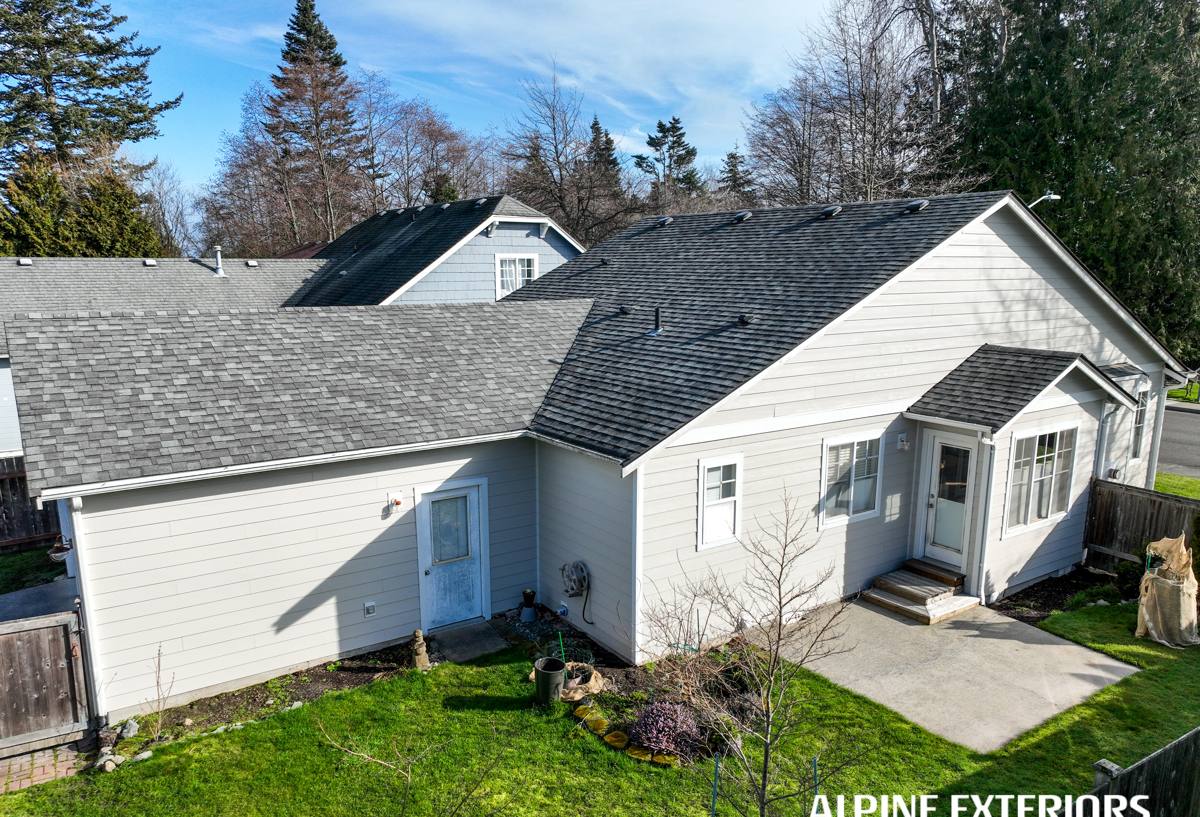
Many of the properties around Laurel also sit under mature tree cover, which is part of what makes the area attractive to live in — but it also means shaded roof slopes that stay damp longer after every rain. That combination of salt exposure, wind-driven moisture, and shade is exactly what drives the moss growth and slow leak development we see on repair calls in this area.
How Salt Air, Rain, and Moss Actually Damage a Roof
Salt Air and Metal Fasteners
Salt in the air accelerates corrosion on exposed nails, flashing, and metal roof edges. Once a fastener starts to corrode, it loses its grip, and shingles or panels around it become vulnerable to lifting in wind. This is a slow process — it doesn't show up as a dramatic failure, it shows up as a small leak two or three years earlier than it should.
Wind-Driven Rain and Flashing Points
Straight-down rain rarely causes leaks on a roof in good condition. Wind-driven rain is different — it gets pushed sideways and upward into laps, valleys, and flashing seams that were never designed to handle water moving in that direction. Chimneys, skylights, and roof-to-wall transitions are the most common failure points we find on repair calls in this region.
Moss and Trapped Moisture
Moss doesn't just look bad — it holds water against the roofing material far longer than the material was designed to tolerate, and its root structure works into shingle granules and seams over time. On shaded, north-facing slopes common around Laurel, moss can establish itself within a couple of wet seasons if it isn't kept in check.
Signs a Laurel Home Needs Roof Repair
Most roof problems in this area start small and stay hidden until a homeowner happens to notice one of the following:
- Dark streaking or thick moss growth, especially on shaded or north-facing slopes
- Granules collecting in gutters or at downspout outlets
- A ceiling stain that appears after a windy rainstorm but not after a calm one
- Curling, lifted, or missing shingles near valleys, chimneys, or roof edges
- Visible daylight or damp insulation when looking up into the attic
- Soft or spongy decking felt underfoot near roof edges, if accessible
- Rust streaks below metal flashing or roof vents
What a Correct Roof Repair Actually Involves
A repair that actually solves the problem starts with finding the real source of the leak, not just patching where the water happened to show up inside the house. Water frequently travels along decking or underlayment before it drips through a ceiling, so the visible stain and the actual entry point can be several feet apart. We trace it back, check the surrounding shingles and flashing for hidden damage, and confirm the decking underneath hasn't been softened by long-term moisture before closing anything up.
From there, a proper repair means replacing flashing rather than caulking over it where corrosion has already started, matching replacement shingles as closely as reasonably possible, and reintegrating the repair with the surrounding underlayment so water sheds correctly instead of just being redirected to the next weak point. A patch that ignores the underlayment or flashing detail underneath it tends to fail again within a season or two — which is a poor use of a homeowner's money even if the labor cost looked cheaper upfront.
Repair or Replacement? A Cost-Factor Comparison
Not every roof problem calls for a full replacement, and not every roof is worth continuing to patch. These are the factors that actually decide it:
| Factor | Repair Usually Makes Sense | Replacement Usually Makes Sense |
|---|---|---|
| Roof age | Under roughly 15-20 years, depending on material | At or beyond the material's expected service life |
| Number of leak points | One or two isolated areas | Multiple, unrelated leak locations |
| Decking condition | Solid, no soft spots found | Soft, delaminated, or rotted decking present |
| Moss/moisture history | Recent onset, surface-level only | Years of untreated growth with granule loss |
| Flashing condition | Isolated corrosion or damage | Widespread corrosion across multiple penetrations |
When a roof falls into the middle of that table, we'll tell you honestly — including when a repair now is the right call even if a replacement is likely a few years out.
Our Roof Repair Process
- Inspection. We look at the whole roof system, not just the reported problem area, including attic access where available.
- Diagnosis. We identify the actual water path and root cause before recommending any work.
- Written estimate. You get a clear scope and price before anything is touched — no surprise add-ons mid-job.
- Repair. Flashing, decking, and shingle work is done in the sequence that actually stops water, not just the fastest fix.
- Cleanup and check. Debris and old material are cleared, and we walk the repair with you before we consider the job done.
Moss Removal and Prevention That Actually Holds
Pressure washing a mossy roof is one of the fastest ways to strip granules and shorten a shingle's life, so we don't use it as a moss removal method — it's a common shortcut, but it trades a short-term clean look for real long-term damage. A proper approach uses a low-pressure soft wash with a roof-safe treatment, followed by manual removal of heavier moss buildup by hand or brush.
Zinc or copper strips installed near the ridge are a reasonable long-term prevention step for shaded roofs — rain washing over them carries trace metal ions downslope that discourage new moss growth. Combined with keeping overhanging branches trimmed back to let more light and airflow reach the roof, this is usually enough to keep a moss problem from coming back year after year on the kind of tree-shaded lots common around Laurel.
Materials and Methods We Rely On
For flashing in this climate, we favor heavier-gauge, corrosion-resistant metal over standard galvanized stock — it costs a bit more upfront, but it holds up against the salt air moving through this part of Whatcom County far longer, which matters most at the exact seams where leaks actually start. At eaves, valleys, and other spots that stay wet longest, we use a self-adhering ice-and-water membrane underneath the roofing material as a second line of defense, since these are the areas where wind-driven rain is most likely to find a way in.
We're upfront that this is a maintenance and installation-sensitivity trade-off, not a claim that other materials or methods can't work — cheaper flashing and skipped underlayment details will often perform fine for a while in a drier climate. In a coastal, moss-prone environment like this one, though, we've found the extra material cost up front is cheaper than repeat repair calls down the road, which is why it's become our standard rather than an upsell.
Why a Crew That Already Works Laurel Matters
A roofer who works this area regularly already knows which slopes hold moss the longest, which roof lines take the worst of the wind off the water, and how quickly a small leak here can turn into a decking problem if it sits through a wet winter unaddressed. That familiarity means less time spent diagnosing and more time spent fixing the actual problem — and it means we can respond quickly for emergency tarping after a storm, since we're not coming from across the county.
Before You Call for Roof Repair
A few things you can safely check from the ground or a window before scheduling a visit:
- Look for dark streaking, moss patches, or missing shingles from the ground or a nearby vantage point
- Check gutters and downspout outlets for granule buildup after a rain
- Note whether ceiling stains appear only during windy storms or with any rain
- Check the attic, if accessible, for daylight, damp insulation, or musty odor
- Write down roughly how old the roof is, or when it was last worked on, if you know
Having answers to those questions ready helps us give you a faster, more accurate assessment when we come out.
If you're seeing any of these signs on a Laurel-area home, we're happy to take a look and give you an honest, no-pressure estimate — just fill out the form below to get started.