 Lynden Siding
 Why Custer's Climate Is Hard on Roofs
Custer sits in the part of Whatcom County where marine air, wind-driven rain, and heavy tree shade all combine against a roof at the same time. That's a tougher combination than it sounds. A roof can be rated for plenty of rainfall and still fail early here if it wasn't installed with this specific climate in mind.
Salt Air and Marine Exposure
Homes closer to the water pick up fine salt in the air, and that salt doesn't stay outside. It settles on roofing hardware, fasteners, flashing, and any exposed metal, and over years it accelerates corrosion. A nail or flashing detail that would last decades in a dry inland climate can start showing rust streaks and weak spots much sooner out here. This is why fastener and flashing choice matters as much as the shingle itself.
Driving Rain and Wind
Whatcom County storms rarely come straight down. Wind pushes rain sideways and up under laps, seams, and roof-wall junctions that a calmer climate would never test. A roof that only handles vertical rain well will eventually leak at the details — valleys, chimney flashing, skylight curbs — even if the field shingles look fine.
A Long Moss Season
Between the rainfall and the tree cover common around Custer, moss has a long growing window here — often most of the year. Moss doesn't just look bad. It holds moisture against the roof surface, lifts shingle edges as it grows, and slowly works its way into seams. A roof designed without moss in mind will need more attention, sooner, than one that accounts for it from day one.
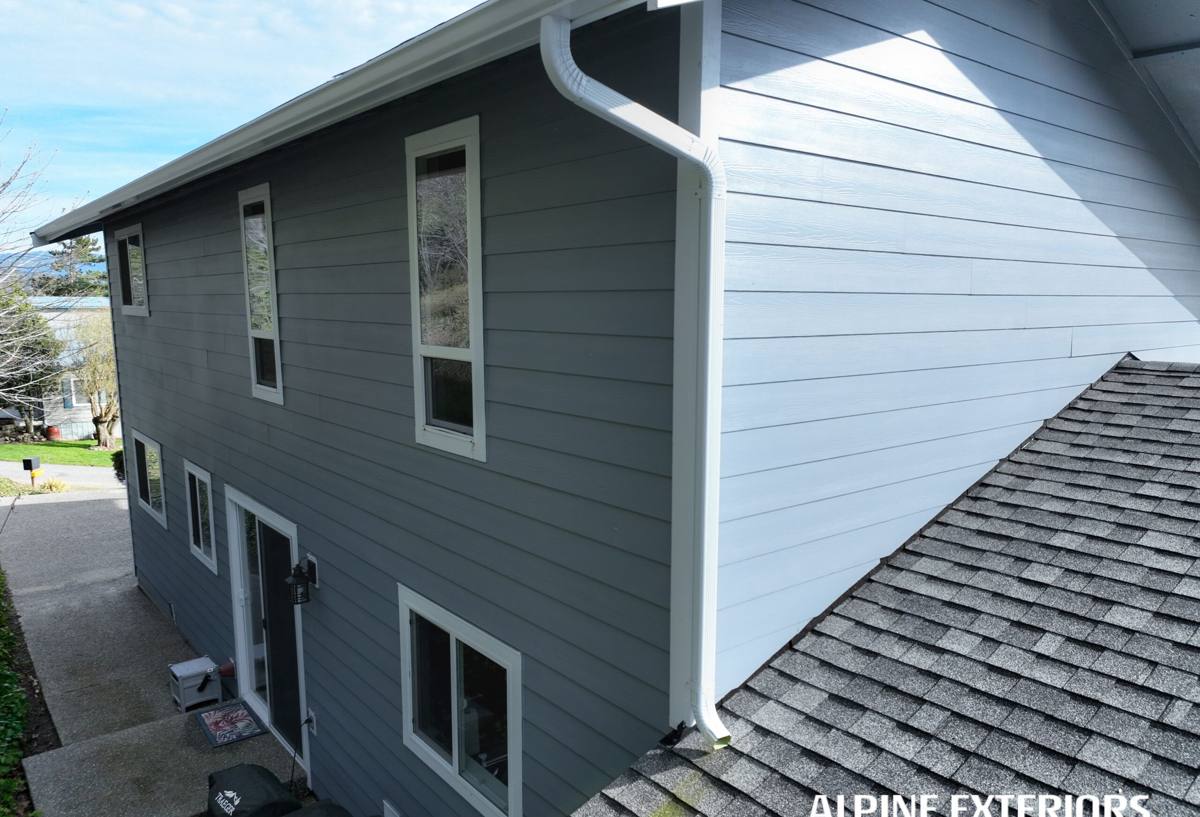
Signs It's Time for a New Roof, Not Another Repair
Not every roof problem means full replacement, but there's a point where patching stops making financial sense. Some signs we look for on Custer homes:
- Granule loss heavy enough that shingles look bald or patchy, especially on south- and west-facing slopes
- Shingles that are cupping, curling, or cracking across multiple areas of the roof, not just one spot
- Moss or algae staining that keeps coming back within a season or two of cleaning
- Soft spots or sagging when walked, which usually means decking damage underneath
- Daylight visible through the attic roof boards, or water stains on attic sheathing
- A roof approaching or past the manufacturer's expected service life for its material and this climate
- Repeated repair calls to the same areas without the underlying cause being solved
If a roof is showing two or three of these at once, repair is usually just delaying the same decision at a higher eventual cost, since the decking underneath often needs attention by that point too.
What a Correct New Roof Installation Actually Involves
A new roof is more than swapping old shingles for new ones. The parts nobody sees are what determine whether it holds up through a Whatcom County winter.
Tear-Off and Deck Inspection
We remove the old roofing down to the decking rather than installing over it. This lets us actually see the plywood or plank sheathing underneath — soft, delaminated, or water-stained decking gets replaced before anything new goes down. Roofing over hidden rot just hides the problem for a few more years.
Underlayment and Moisture Barriers
Given how much wind-driven rain this area sees, underlayment choice matters. We use synthetic or felt underlayment as the base moisture barrier, with self-adhering ice-and-water membrane at the vulnerable spots — eaves, valleys, and roof penetrations — where wind can push water backward under the shingles.
Flashing Done Right
Most roof leaks trace back to flashing, not the shingles themselves. Chimneys, skylights, sidewalls, and valleys all need properly formed, corrosion-resistant flashing installed in the correct sequence with the underlayment and shingles, not just caulked over old flashing left in place.
Ventilation Built In
Intake and exhaust ventilation keep the attic temperature and moisture balanced, which reduces condensation, ice buildup risk, and premature aging of the roof deck from the inside out. We check and correct ventilation as part of every installation, not as an afterthought.
Choosing the Right Roofing Material for This Climate
There's no single "best" material for every home — it depends on budget, roof pitch, and how much maintenance an owner wants to take on. Here's how the common options compare for a Custer property:
| Material | Typical Lifespan | How It Handles Salt Air & Moisture | Maintenance |
|---|---|---|---|
| 3-tab asphalt shingle | 15-20 years | Adequate with proper flashing; lighter-weight shingle is more prone to wind lift | Moderate — moss cleaning recommended |
| Architectural (dimensional) shingle | 25-30 years | Better wind rating and thicker profile resist driving rain and lifting | Moderate — moss cleaning recommended |
| Standing seam metal | 40-50+ years | Sheds moisture well; requires corrosion-resistant fasteners and coatings near marine air | Low — occasional inspection |
| Cedar shake | 20-30 years with upkeep | Traditional look, but absorbs moisture and needs active moss/rot management | High — regular treatment needed |
Most Custer homeowners land on architectural asphalt shingle as the practical middle ground — a meaningful step up from 3-tab in wind resistance and lifespan, without the upfront cost jump of metal. We'll walk through the honest trade-offs for your specific roof rather than pushing one product across the board.
Ventilation and Moss: The Overlooked Half of a Good Roof
A lot of roof problems in this part of Whatcom County aren't about the shingle at all — they're about airflow and shade. A roof under heavy tree cover stays damp longer after every rain, which is exactly what moss needs. We'll talk through practical steps during the estimate: whether some limb trimming near the roofline would help, where moss-resistant shingle options make sense, and how ridge and soffit ventilation can reduce the moisture sitting on and under your roof. None of this eliminates moss entirely in a climate like ours, but it meaningfully slows how fast it comes back.
Our New Roof Installation Process
We keep the process straightforward so there are no surprises partway through:
- On-site assessment — we inspect the existing roof, attic ventilation, and any trouble spots, and take measurements
- Written estimate — a clear scope covering materials, tear-off, decking allowance, and timeline, with no vague line items
- Material selection — we go over shingle or metal options and colors based on your budget and the home's exposure
- Scheduling around weather — we plan installation windows with Whatcom County's rain patterns in mind, not against them
- Tear-off and deck repair — old roofing comes off, decking is inspected, and any damaged sections are replaced
- Underlayment, flashing, and installation — moisture barriers and flashing go in first, then the roofing material, following manufacturer specs
- Site cleanup — magnetic sweep for nails, debris removal, and a final walkthrough with the homeowner
Why a Local Crew That Already Works Custer Matters
Roofing crews that mostly work drier inland regions sometimes underestimate what Whatcom County weather asks of a roof. A crew that regularly works Custer, Lynden, and the surrounding area already knows to plan installations around the rain, to spec flashing and fasteners for salt air exposure, and to account for moss and shade when recommending a material — because we see the results of roofs that didn't account for these things. That local familiarity also means faster response if something needs a look after installation, rather than waiting on a crew that has to travel in from outside the county.
Protecting Your Roof After Installation
A correctly installed roof still benefits from basic upkeep, especially with this climate's moss season. A short annual routine keeps a new roof performing the way it should for its full lifespan:
- Clear debris and needles from valleys and gutters at least once a year, more often under heavy tree cover
- Check and clean gutters so water isn't backing up under the eave line
- Have moss growth treated or removed before it spreads, rather than after it's established
- Trim back overhanging branches that keep sections of the roof shaded and damp
- Look over flashing around chimneys and skylights after major storms
- Schedule a professional inspection every few years, even with no visible problems
What Affects the Cost of a New Roof
Every roof is different, so we don't quote sight unseen, but the main factors that move the price are consistent:
- Roof size and number of facets, valleys, and penetrations
- Pitch and accessibility — steeper or harder-to-access roofs take more time and safety setup
- Material chosen — architectural shingle, metal, and cedar carry different material and labor costs
- Condition of the decking underneath, which isn't fully known until tear-off begins
- Ventilation and flashing upgrades needed to bring an older roof system up to current standards
We'd rather walk your roof and give you real numbers than post a generic price range that doesn't apply to your home.
If your Custer home needs a new roof, or you're just not sure whether repair or replacement makes more sense, we're happy to take a look. Use the form below to request a free, no-pressure estimate from a crew that already works this area.