 Lynden Siding
 Building New in Ferndale: What Your Windows Are Up Against
Ferndale sits close enough to Bellingham Bay and the Strait of Georgia that salt-laden air is a real factor in how exterior materials age here, not just a talking point. Add Whatcom County's long stretch of driving rain off the water and the moss season that follows, and you've got a climate that's genuinely tough on anything installed with a gap, a shortcut, or the wrong sealant. For a new-construction window, that exposure starts on day one. The window isn't going into a wall that's already weathered in and proven itself — it's going into fresh framing, fresh house wrap, and a building envelope that has to get the sequencing right the first time, because there's no old caulk line or existing trim to fall back on if something's off.
That's the real difference between doing new-construction windows well and doing them just well enough to pass inspection. In a climate like ours, "well enough" tends to show up as a soft spot around a sill or a streak of mildew below a corner two or three winters later.
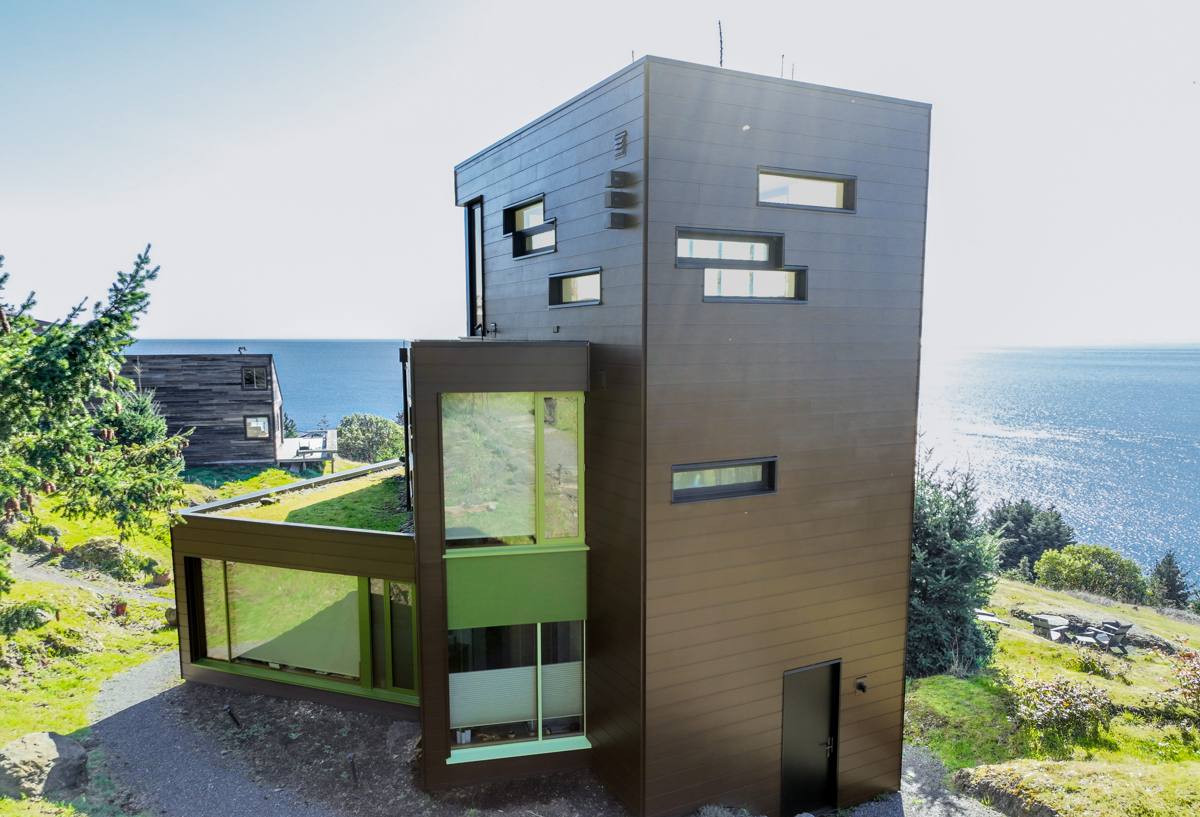
New-Construction vs. Replacement Windows: Why the Distinction Matters
New-construction windows have a nailing flange — a flat strip around the perimeter of the frame that gets fastened directly to the wall sheathing before siding goes on. Replacement windows don't have this flange; they're built to drop into an existing opening and get trimmed out afterward. The two jobs use different products, different techniques, and honestly, different levels of consequence if the flashing is done wrong.
On a new build, the window installation is really a flashing installation with a window in the middle of it. Get the sequencing wrong and you've built a leak path directly into the wall cavity, sealed up behind siding where nobody will see it until there's a stain on the drywall inside.
The Flashing Sequence We Follow
Every new-construction window opening gets handled in a specific order, and we don't skip steps to save time:
- Rough opening checked for square, level, and correct dimensions before the window ever shows up on site
- Sill pan flashing installed first, sloped slightly to the exterior so any water that gets past the window drains back out, not into the framing
- Window set, shimmed plumb and square, and fastened per the manufacturer's schedule — not just "enough nails to hold it"
- Side and head flashing tape applied in the correct shingle-lap order (sides before the top) so water sheds down and over each layer, never up and under it
- Housewrap integrated back over the head flashing to complete the drainage plane
- Interior gaps insulated and air-sealed before drywall closes up the opening for good
Why This Can't Be an Afterthought
On a lot of new builds, windows get treated as a line item to knock out between framing and siding — whoever's available does it, and the flashing details get rushed. Given how much wind-driven rain Whatcom County sees in a normal winter, that's the part of the job that determines whether the window performs for thirty years or starts causing problems in five.
What a Correct Installation Involves, Start to Finish
Beyond the flashing sequence itself, a handful of details separate a window that's genuinely weathertight from one that just looks finished:
| Step | What We Check | Why It Matters in This Climate |
|---|---|---|
| Rough opening prep | Square, plumb, correct size with proper shim space | An out-of-square opening stresses the frame and opens gaps that driving rain finds fast |
| Sill pan | Sloped, back-dammed, sealed at corners | Gives any intruding water a way out instead of a place to sit |
| Fastening | Full nailing schedule per manufacturer spec | Under-fastened frames flex in wind and work sealant joints loose over time |
| Flashing tape | Correct lap order, fully adhered, no fishmouths | One reversed lap can funnel water straight into the wall cavity |
| Interior air seal | Low-expansion foam or backer rod and sealant, not bare gaps | Reduces condensation risk that feeds moss and mildew growth indoors and out |
| Exterior trim/caulk | Paintable, flexible sealant at all trim-to-siding joints | Keeps the finished look tight even as the house settles through its first winters |
Choosing the Right Window for Ferndale's Exposure
Frame material matters more here than it does in a drier inland climate. Salt air accelerates corrosion on hardware and fasteners, and constant damp cycles punish materials that hold moisture instead of shedding it.
| Frame Type | How It Handles Salt Air & Rain | Maintenance Reality |
|---|---|---|
| Vinyl | Won't corrode or rot; performs consistently near the water | Low — occasional cleaning, no painting or sealing needed |
| Fiberglass | Very stable in temperature and moisture swings; strong resistance to salt exposure | Low — durable finish, minor cost premium over vinyl |
| Wood-clad | Attractive but the cladding has to be flawless where it meets flashing, or moisture gets trapped against the wood core | Higher — requires attentive caulk and finish upkeep over the years |
| Bare aluminum | Prone to corrosion and condensation in coastal-influenced air | We generally steer new builds away from it here for that reason |
We're not tied to one brand — we'll work with the manufacturer and product line that fits your budget and the home's design. What we do insist on is a frame and hardware package rated for the moisture exposure this area actually gets, not just a baseline builder-grade spec.
Coordinating With Your Builder's Timeline
New-construction window work doesn't happen in isolation — it has to slot into the framer's schedule, the house wrap installer's work, and eventually the siding crew's start date. Windows need to go in after the weather-resistive barrier is up but before siding closes over the flashing. Show up too early and the wrap isn't ready to integrate; too late and you're holding up the whole exterior schedule. We coordinate directly with builders and general contractors on Ferndale-area projects so the sequence flows instead of stalling.
Our Process, From Rough Opening to Final Trim
On a typical new-construction job, we start with a walkthrough of the framed openings before windows arrive, confirming sizes and flagging anything that needs correcting before install day. Windows are set following the flashing sequence above, inspected as a crew before we move to the next opening, and photographed for our own records at each stage — sill pan, flashing, and final seal. Interior air-sealing happens before insulation and drywall close the opening, and exterior trim and caulking are finished once siding is in place, so the reveal lines are clean and consistent around the whole house.
Why a Crew That Already Works Ferndale Matters
New-construction window work in this area comes with specifics that don't show up in a general installation manual: how much wind-driven rain a given elevation actually takes off the water, which framing crews and builders we've already coordinated schedules with, and what Whatcom County's inspectors look for at the flashing and rough-in stage. A crew that's done this work around Ferndale and Lynden repeatedly isn't guessing at any of that — the sequencing, the product choices, and the inspection expectations are already dialed in before your project starts.
A Few Things Worth Confirming With Any Contractor
- Do they install a sill pan on every opening, or only "when needed"?
- Can they explain their flashing lap order without hesitating?
- Do they coordinate directly with your framer or builder on timing, or expect you to manage that?
- Will they document the flashing and sill work before it's covered by siding?
- Are they familiar with local permitting and inspection expectations for new builds in Whatcom County?
What to Expect After Move-In
Even a correctly installed window needs a little seasonal attention here. Moss and organic growth on nearby siding or trim can hold moisture against a window's exterior trim if it's left unchecked, and salt residue from air near the water can dull hardware finishes over time. A rinse-down of frames and sills once or twice a year, and keeping gutters and nearby moss growth from dumping runoff directly onto window heads, goes a long way toward keeping a correctly flashed window performing the way it was installed to.
If you're framing up a new home or addition in Ferndale and want windows installed by a crew that treats the flashing details as the actual job, not an afterthought, we're glad to walk your plans or your framed openings and give you a straightforward, no-pressure estimate. There's a form below — reach out and we'll get a look scheduled.