 Lynden Siding
 Why Maple Falls Homeowners Are Rethinking Their Windows
Maple Falls sits in one of the wetter, greener corners of Whatcom County, and that has real consequences for the windows in your home. Homes out here deal with a longer wet season than a lot of the country ever sees, plus the kind of wind-driven rain that finds its way into gaps a calmer climate would never expose. Add in a moss season that stretches for months, and older or poorly-fitted windows start showing their age fast — fogged glass, cold drafts near the frame, sashes that stick from swollen wood, and heating bills that creep up every winter.
Energy-efficient windows aren't a luxury upgrade in this part of Washington — they're a practical response to the climate. Done right, they cut down on drafts, reduce condensation problems, and take pressure off your furnace or heat pump during the long stretch of cool, damp months. Done wrong, or installed with the wrong product for this environment, they can trap moisture and cause bigger problems than the windows they replaced.
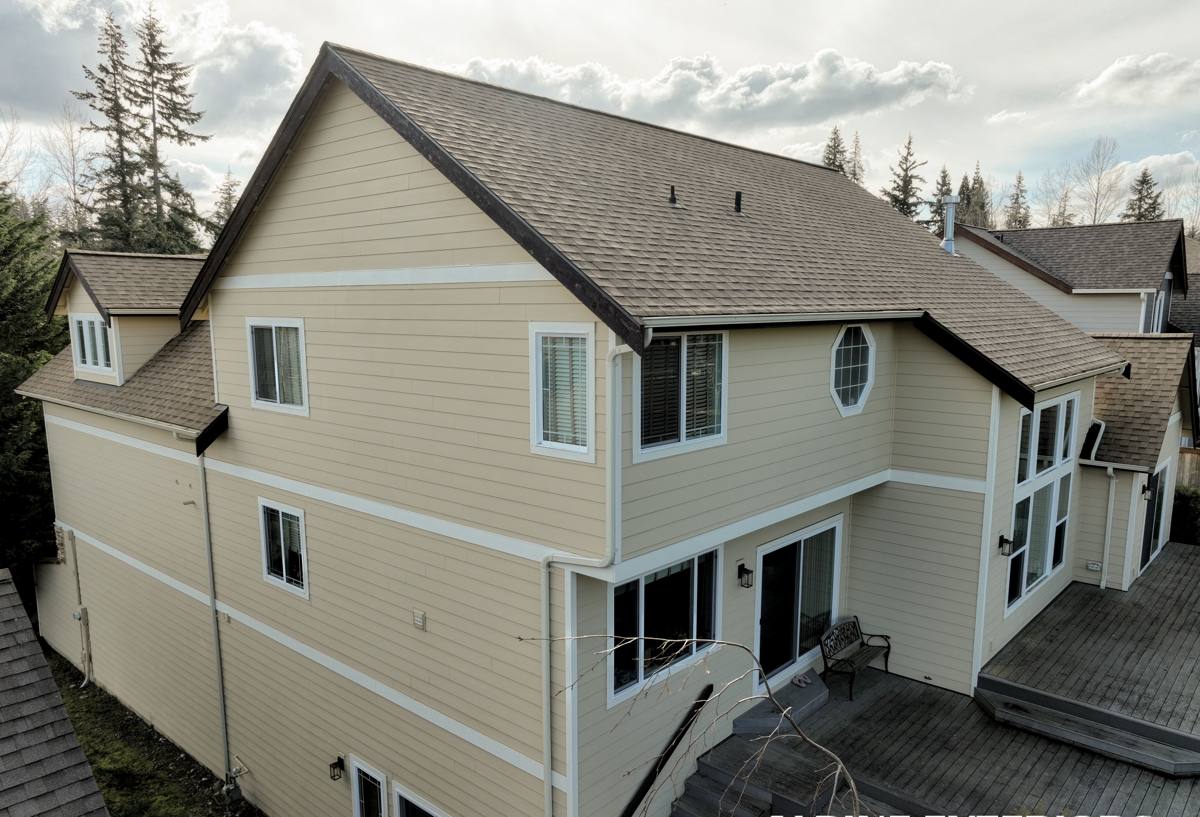
What Driving Rain and a Long Moss Season Do to Windows
It's easy to think of windows as a glass problem. In practice, most window failures in this climate start at the frame and the flashing, not the glass itself. Wind-driven rain pushes water sideways and upward against a house, which means water testing that a window would pass in a dry climate can still fail here if the flashing details and sealants aren't right. Over time, that shows up as:
- Soft or discolored trim and sill areas around older wood-framed windows
- Fogging or moisture between the panes of insulated glass units that have lost their seal
- Drafts you can feel near the frame even when the window itself is "shut"
- Moss or algae staining building up on frames, sills, and nearby siding
- Sashes that swell, stick, or no longer latch cleanly after a wet winter
None of that is unique to any one house — it's a predictable outcome of Whatcom County's climate acting on a window system that was never built, or never installed, to handle it. Some of that moisture load even carries a maritime edge from the Sound and Strait weather systems that move through the county, which is part of why window and trim details that work fine in drier regions of the state don't always hold up the same way out here.
What "Energy-Efficient" Actually Means for This Climate
The term gets used loosely, so it's worth breaking down what actually matters for a Maple Falls home rather than treating it as a marketing label.
U-Factor and Heat Loss
U-factor measures how much heat a window lets escape — lower is better. In a climate with a long heating season, a low U-factor window keeps warmth inside instead of bleeding it out through the glass and frame, which is the single biggest factor in year-round comfort and energy bills here.
Glazing and Gas Fills
Double-pane windows with a low-E coating and an inert gas fill (typically argon) between the panes are the practical standard for this region. The coating reflects heat back into the room in winter, and the gas fill slows heat transfer through the glass unit itself.
Frame Material and Moisture Behavior
The frame matters as much as the glass in a wet climate. A frame that absorbs moisture, swells, or rots will undermine even the best glazing package. This is where the difference between a good and a mediocre window installer really shows.
Air Sealing at Installation
A window's lab-rated efficiency numbers assume a correct installation. A high-performance window installed with gaps in the flashing or insulation will underperform a mid-grade window installed correctly. Installation quality is not a secondary detail — for driving-rain climates like this one, it's often the deciding factor.
Comparing Frame Materials for a Maple Falls Home
There's no single "best" window material for every home — it depends on your budget, your home's age and style, and how much upkeep you want to take on. Here's how the common options stack up against the conditions Whatcom County actually throws at them.
| Frame Type | Moisture Resistance | Maintenance | Typical Lifespan | Best Fit |
|---|---|---|---|---|
| Vinyl | Strong — won't rot or absorb water | Low; occasional cleaning | 20–30+ years | Most homes wanting efficiency without upkeep |
| Fiberglass | Very strong; dimensionally stable in temperature swings | Low | 30+ years | Homeowners wanting a premium, long-term option |
| Wood | Requires diligent maintenance to resist moisture | High; regular painting/sealing | Varies widely with upkeep | Historic or period-style homes where appearance is the priority |
| Wood-Clad (wood interior, exterior cladding) | Good, if cladding and flashing details are correct | Moderate | 20–30 years | Homeowners wanting a wood interior look with better exterior protection |
| Aluminum | Poor thermal performance; prone to condensation | Low | Long-lasting but energy-inefficient | Rarely recommended for this climate |
For most Maple Falls homes, vinyl or fiberglass frames offer the best balance of efficiency and low maintenance given how much rain and moss exposure the exterior of a house takes on here. Wood and wood-clad options can still make sense on homes where the look matters most, but they come with a real maintenance commitment — something worth being honest about up front rather than discovering after the first few wet winters.
What a Correct Window Installation Actually Involves
The window itself is only part of the job. In a climate that drives rain sideways and keeps things damp for months at a time, the installation details are what determine whether that window performs for twenty years or starts leaking in five.
- Removing and inspecting the opening — checking the sheathing and framing underneath for hidden rot before anything new goes in
- Correct flashing sequencing — installed so water is always directed outward and downward, layered so nothing traps moisture behind the window
- Sill pan protection — a backup barrier at the bottom of the opening in case water ever gets past the primary seal
- Proper shimming and squaring — so the window operates smoothly and doesn't stress the seal over time
- Insulating the gap — filled correctly, not overpacked, to avoid bowing the frame or leaving cold spots
- Weather-resistant sealants — applied at the right joints, not just caulked around the outside trim as an afterthought
- Interior and exterior trim finished — sealed and matched to the surrounding siding or trim so the whole assembly sheds water as a system
Skipping or rushing any one of these steps is how a brand-new, well-rated window still ends up with a soft sill or a draft within a few years — especially in a location that gets as much sustained wet weather as this one.
Our Process for Maple Falls Window Projects
We approach every window job here the same methodical way, because the climate doesn't give you room to cut corners:
- On-site assessment — we look at your current windows, the condition of the surrounding wall and trim, and how the house is oriented to wind and rain exposure
- Honest recommendation — we walk you through frame and glazing options that fit your home, your budget, and this climate specifically, without pushing a single product line as a one-size-fits-all answer
- Clear scope and pricing — you know what's included before work starts, and what the installation itself involves
- Careful removal and opening inspection — so any hidden moisture damage is caught and addressed before new windows go in, not covered up
- Installation to the details above — flashing, sill protection, sealing, and finish work done in sequence, not shortcuts
- Final walkthrough — operation, sealing, and cleanup checked with you before we consider the job done
Signs It's Time to Have Your Windows Looked At
You don't need to wait for a full failure to get windows evaluated. Common early signs we see on homes in this area include:
- Visible fogging or a permanent haze between the panes of double-pane glass
- Drafts near the window frame even with it fully closed and latched
- Difficulty opening, closing, or latching a window that used to operate smoothly
- Soft, discolored, or moss-stained wood on the sill, frame, or nearby trim
- Noticeably higher heating costs compared to homes of similar size nearby
- Condensation forming on the inside of the glass during cold, wet weather
Catching these early usually means a more straightforward, less costly repair or replacement than waiting until water has worked its way into the wall framing.
Why Local Experience in This Area Matters
A crew that mainly works drier parts of the state — or installs windows the same way regardless of climate — is more likely to miss the details that matter for a Maple Falls home. Whatcom County's mix of driving rain, humidity, and a moss season that can run half the year rewards installers who already understand how water moves around a house here and where it tends to get in. Working in this specific area also means we're familiar with the kinds of homes common to Maple Falls and the greater Lynden area — their age ranges, typical construction, and the wear patterns that show up on windows exposed to this particular weather pattern year after year.
What to Expect After Installation
New energy-efficient windows should need very little from you. Vinyl and fiberglass frames typically just need occasional rinsing to keep moss and algae from taking hold, especially on north-facing or shaded sides of the house where moisture lingers longest. Wood or wood-clad units need more regular attention to their exterior finish. Either way, we'll walk you through basic care specific to whatever product you choose, so you know what upkeep — if any — to expect before winter sets in.
If your windows are drafty, fogged, or just older than you'd like them to be, we're happy to take a look and give you a straightforward, no-pressure estimate for your Maple Falls home. Use the form below to get started.