 Lynden Siding
 Deck Building in Laurel: A Lynden-Area Crew That Knows This Climate
Laurel sits on the rural edge of Lynden, in Whatcom County, in that mix of open farmland and tree-sheltered lots that defines a lot of this part of Washington. It's a good area for outdoor living — plenty of yard space, room to build out from the house — but it's also squarely inside the same weather pattern that makes exterior work in this county more demanding than it looks on paper. Salt-tinged marine air, driving rain that comes in sideways as often as it falls straight down, and a moss season that can run most of the year all land hardest on horizontal surfaces. A deck is nothing but horizontal surfaces, which is exactly why decks in Laurel tend to show problems years before a wall or a roof plane would.
We build decks for this specific climate, not for a generic weather assumption. That shows up in the framing lumber we spec, the fasteners we choose, the drainage we build into the structure, and the way we detail the ledger connection to the house. None of that is visible once the deck is finished and the boards are down — which is exactly why it matters, and why it's worth understanding before you hire anyone to build one.
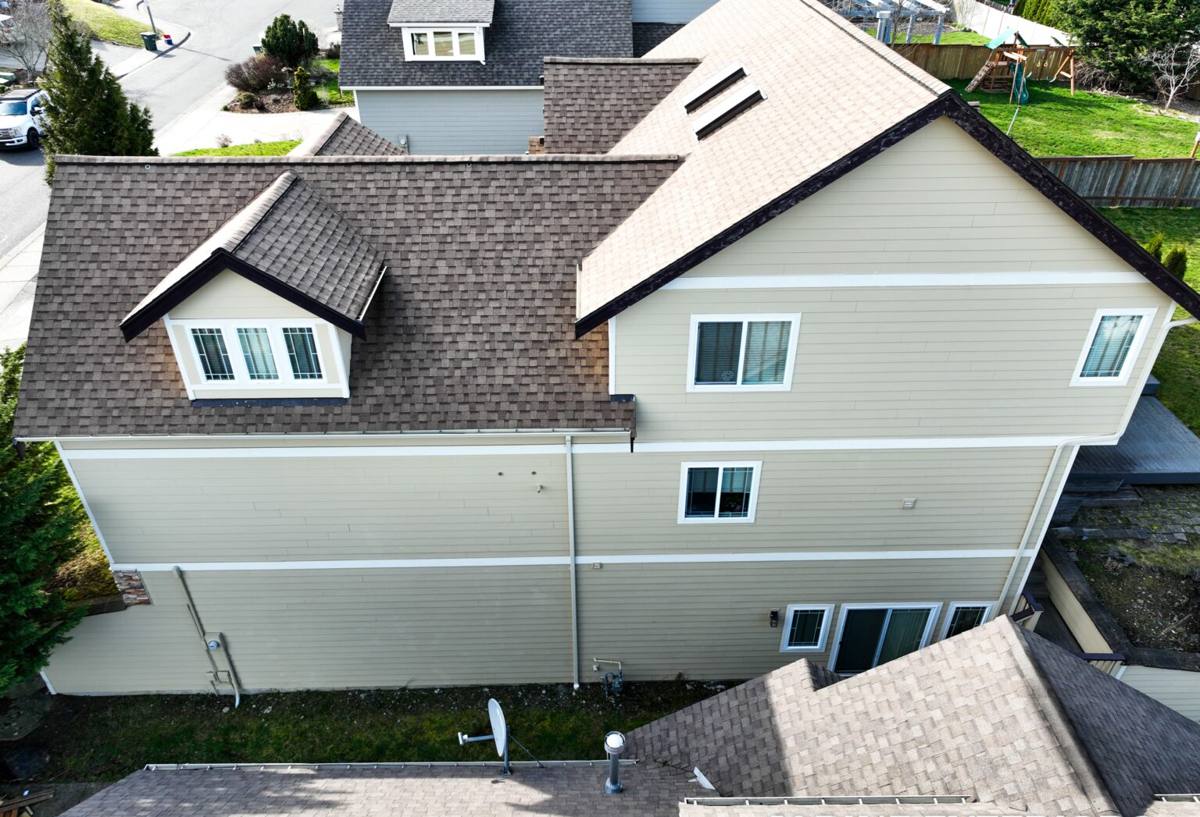
What This Climate Does to an Outdoor Deck
Salt Air and Fastener Corrosion
Whatcom County homes, including those out in Laurel, get a steady dose of salt-laden air moving in off the Sound even when the property isn't anywhere near the immediate shoreline. Salt accelerates corrosion in exposed metal — screws, joist hangers, post bases, bolts. On a deck, that hardware is structural, not decorative, so corrosion isn't a cosmetic issue. It's a slow failure of the connections holding the deck together, and it happens faster with the wrong grade of fastener than most homeowners expect.
Driving Rain and Standing Moisture
Rain here rarely falls straight down. Wind-driven rain pushes moisture into ledger connections, under railing posts, and into any joint where two pieces of material meet without a drainage path. On a deck, that means water tends to collect at the house-to-deck ledger, around post bases set directly on concrete, and between boards that are spaced too tight to shed water and dry between storms.
A Long Moss Season on Horizontal Surfaces
Mild temperatures, consistent moisture, and shade from surrounding trees add up to a moss and algae season that runs long in this part of the county. Roofs get the most attention for moss, but decks are just as exposed — arguably more, since people walk on them. A deck surface that stays damp and shaded develops a moss or algae film that isn't just unsightly; it's slick, and it accelerates wear on whatever finish or coating is on the boards.
What a Correctly Built Deck Requires in Laurel
Footings and Framing
Footings need to be sized and set below frost depth with solid bearing, not poured shallow to save a step. Framing lumber should be rated for ground contact where it's close to grade, and the whole frame needs enough slope and spacing to let water move off the structure instead of pooling under it. A flat, tightly built frame with no drainage path is one of the more common reasons an otherwise solid-looking deck starts rotting from underneath within a handful of years.
Fasteners and Connectors
Given the salt exposure in this area, we don't treat fastener grade as a minor spec line. Hot-dip galvanized or stainless hardware, rated for contact with treated lumber, belongs at every structural connection — joist hangers, ledger bolts, post bases. Cheaper coated fasteners can look fine for a year or two and then start failing exactly where you can't see them, inside a joist hanger or under a post base.
Decking Material Selection
The board material you choose changes how much ongoing maintenance the deck needs and how it handles this area's moisture load. Pressure-treated lumber, cedar, and composite or PVC boards all behave differently once they've been through a few wet Whatcom County winters, and the right choice depends on how much upkeep you actually want to do versus how much you're willing to pay upfront for a lower-maintenance material.
Comparing Deck Material Options for This Climate
| Material | Moisture Behavior | Maintenance | Best Fit |
|---|---|---|---|
| Pressure-Treated Pine | Resists rot when properly treated and detailed, but can cup or check as it dries and re-wets seasonally | Needs periodic sealing or staining to control moisture cycling | Budget-conscious builds where the owner is willing to maintain the finish |
| Cedar | Naturally moisture- and insect-resistant, but the surface finish weathers faster in this much sustained rain | Regular cleaning and refinishing to hold color and prevent graying | Homeowners who want a natural wood look and don't mind upkeep |
| Capped Composite | Moisture-resistant core with a protective cap; doesn't absorb water into the board body | Occasional washing; no staining or sealing | Owners who want low upkeep and are comfortable with a higher upfront cost |
| PVC Decking | Fully synthetic; effectively immune to rot and moisture absorption | Lowest maintenance of the group; washing only | Shaded, damp lots where moss and algae are a persistent problem |
None of these is automatically the "right" choice — it's a real trade-off between upfront cost and how much time you want to spend maintaining the deck through Whatcom County's wet season, year after year.
Our Deck Building Process
- Site walk and design: We look at grade, drainage, sun and shade exposure, and how the deck will connect to the house before talking materials or layout.
- Permitting: Most elevated decks require a permit through the local building department. We handle that paperwork and coordinate any required inspections rather than leaving it to the homeowner.
- Footings and framing: Footings go in below frost depth, and the frame is built with proper slope and fastener spec for this climate before a single deck board goes down.
- Decking, railing, and stairs: Boards, railings, and stairs are installed to the material manufacturer's spacing and fastening requirements, not shortcuts that save time but cost the homeowner later.
- Final walkthrough: We walk the finished deck with you, point out anything that needs periodic attention, and answer questions before we call the job done.
Railings, Stairs, and Permitting Basics
Any deck built above a certain height above grade needs a guardrail, and stairs need to meet current building code for rise, run, and handrail requirements. Exact thresholds and requirements can shift with code updates and depend on the specific structure, which is one more reason a permitted, inspected build matters — it isn't red tape for its own sake, it's a second set of eyes confirming the structure and the railing system are actually safe to use. We pull permits and coordinate inspections on elevated decks as a standard part of the job, not an add-on.
Signs an Existing Laurel Deck Needs Attention
- Soft, spongy, or discolored boards, especially near the house ledger
- Rust staining around screws, bolts, or joist hanger hardware
- Persistent moss or algae film that returns quickly after cleaning
- Visible gaps, cupping, or splitting in the decking boards
- Wobble or movement in railing posts or stair stringers
- Standing water that doesn't drain off the surface within an hour or two of rain
Any one of these on its own might just need a repair. Several at once, especially near the ledger or in the framing, usually means it's time for a full evaluation rather than another patch.
Why a Local Lynden Crew Matters for Laurel Deck Projects
A crew that builds decks across Whatcom County day to day, not just occasionally between other types of jobs, sees how salt air, driving rain, and moss actually play out on real structures over years, not just on a materials spec sheet. That shapes practical choices on a Laurel property — how much drainage slope to build into the frame given the lot's tree cover, which fastener grade is worth the extra cost, where the ledger connection needs extra flashing attention. Laurel's mix of open farmland and sheltered, tree-lined lots means those details vary property to property, which is exactly why we walk each site rather than applying one standard plan to every deck we build.
Get a Free, No-Pressure Estimate
If you're planning a new deck in Laurel or need an honest look at one that's showing its age, we're glad to walk the property and give you a straightforward assessment — what it needs, what it would cost, and why. Use the form below to request a free estimate, no pressure and no upsell script.