 Lynden Siding
 Siding Built for Blaine's Coastal Exposure
Blaine sits close enough to the water that homes here take on a different kind of weathering than siding a few miles inland in Lynden. Salt-laden air moves off the coast and settles on exterior surfaces, driving rain comes in sideways during winter storms, and the shaded, damp stretches of the year let moss and algae get a foothold on north-facing walls and anything tucked under tree cover. Siding that works fine in a drier, more sheltered part of Whatcom County can struggle here, and it shows up as chalking paint, soft trim, streaked panels, and moss creeping up from the bottom courses within a few years of installation.
We install James Hardie fiber cement siding exclusively, and Blaine is exactly the kind of property where that decision matters most. This page covers what the local climate actually does to a home's exterior, what a correct Hardie installation looks like, and how our process is built around the realities of a coastal Whatcom County site.
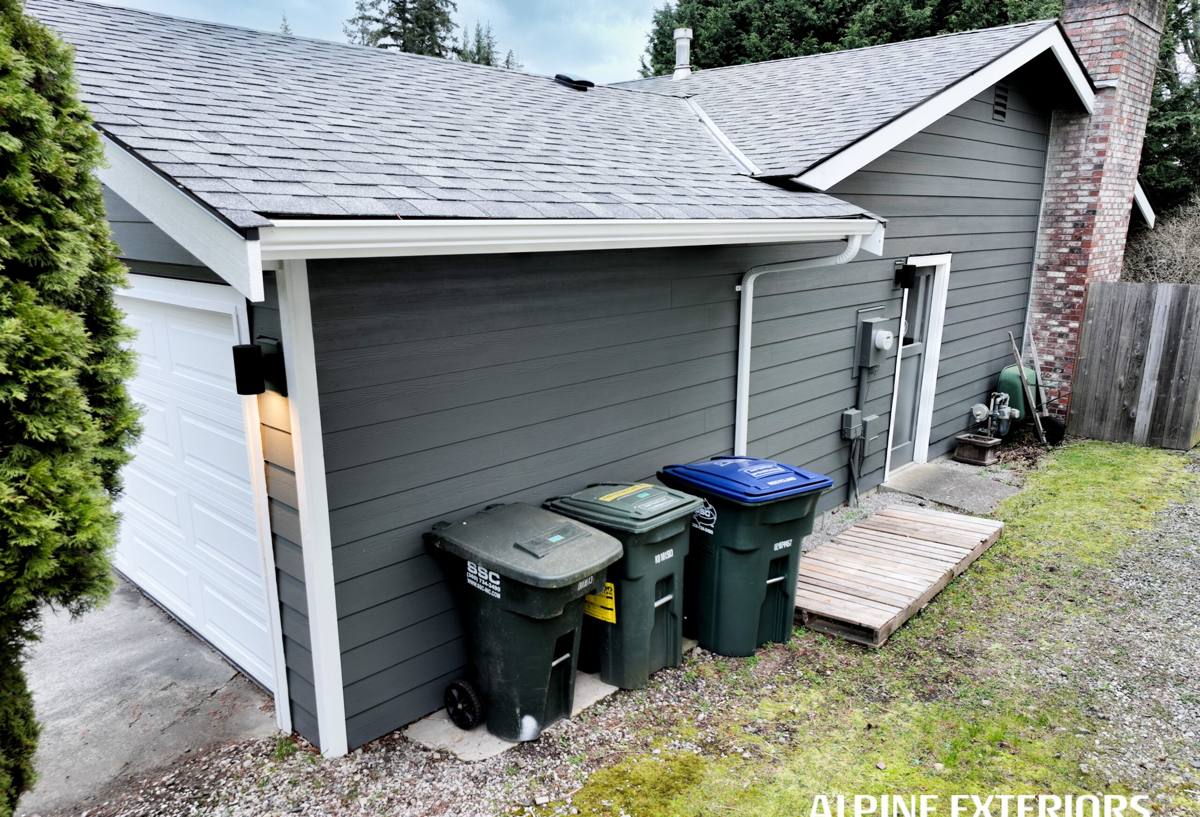
What Salt Air, Rain, and Moss Really Do to a House
Salt Air
Airborne salt is corrosive to metal and abrasive to finishes over time. Fasteners, flashing, and painted surfaces that aren't rated for coastal exposure degrade faster near the water than they would inland. This is one of the reasons fastener choice and flashing detail matter more in Blaine than they would on a similar house in a landlocked part of the county.
Driving Rain
Storms coming off the Strait of Georgia don't just fall straight down — wind pushes rain sideways into wall assemblies, seams, and any gap in the water-resistive barrier. A siding system depends on more than the panel itself to keep water out; the house wrap, flashing, and lap details behind and around the siding are what actually stop wind-driven rain from reaching the sheathing.
Moss and Algae
Blaine's long stretch of cool, damp months keeps shaded and north-facing wall sections wet for extended periods. Wood-based and improperly primed products absorb that moisture and become a food source for moss, algae, and mildew. Once organic growth establishes itself in a porous surface, cleaning it off without damaging the material gets difficult, and it tends to come back faster each season.
Why We Install Only James Hardie
We made a standing decision as a company not to install vinyl siding, LP SmartSide, Cemplank, Allura, primed spruce, or cedar. Each of those products has legitimate uses, but none of them hold up the way we want a Blaine exterior to hold up over 20 or 30 years of salt air and rain exposure. Fiber cement is non-combustible, dimensionally stable in wet-dry cycling, and doesn't feed mold or moss the way wood-based products can. James Hardie's ColorPlus factory-applied finish is baked on under controlled conditions rather than painted on-site, which gives it better adhesion and UV resistance than field-applied paint — a real advantage on a wall that takes direct salt spray and sun for years at a stretch.
We're not saying other products can't be installed correctly. We're saying that after years of doing this work in Whatcom County, Hardie is the one product line we're willing to put our name behind for a coastal climate like Blaine's.
HZ5 — Hardie's Climate Engineering
James Hardie engineers its products by climate zone, and the Pacific Northwest falls under the HZ5 designation. HZ5 products are formulated for the wetter, more temperature-moderate conditions found here, as opposed to the hotter, drier HZ10 formulation used in the Southwest. Installing the correct climate-zone product is a detail that matters more than most homeowners realize — it's part of why we source Hardie's HZ5 line specifically for jobs in Blaine and the rest of Whatcom County rather than treating siding as a one-size-fits-all product.
What a Correct Installation Involves
The panel itself is only part of the system. A siding job that's going to hold up against driving rain and salt air depends on the details behind and around it:
- A continuous, properly lapped water-resistive barrier installed before any siding goes up
- Correct flashing at every window, door, and roof-to-wall intersection, installed to shed water outward and downward
- Rain-screen or ventilation gap where the assembly calls for it, so any moisture that gets behind the siding can dry out instead of sitting against the sheathing
- Hardie-approved, corrosion-resistant fasteners driven to the manufacturer's exact depth and spacing — over-driven or under-driven fasteners are one of the most common causes of early siding failure
- Correct clearance between the bottom edge of the siding and the ground, deck, or roofline, so splash-back and standing water don't sit against the material
- Properly caulked and sealed joints at trim, penetrations, and butt joints, using sealants rated for the exposure
- Factory-cut, factory-primed edges left exposed by field cuts get sealed or touched up per Hardie's specification, not left raw
Skipping or rushing any one of these steps is how a house ends up with premature staining, moisture intrusion, or panel failure well before the material itself would have worn out. Most siding problems we get called out to inspect trace back to installation shortcuts, not the product.
Our Process on a Blaine Home
We walk every project through the same sequence, adjusted for the specific exposure of the house:
- Site assessment — we look at which walls face prevailing wind and rain, where moss and algae are already established, and where the existing water-resistive barrier or trim shows signs of past moisture problems.
- Tear-off and substrate check — removing the old siding lets us inspect the sheathing underneath for rot or soft spots before anything new goes on. Covering up a compromised substrate just hides a problem, it doesn't fix it.
- Water management install — house wrap, flashing, and any rain-screen furring go in first and get inspected before a single piece of siding is hung.
- Hardie panel and trim installation — HZ5 product installed to Hardie's fastening, clearance, and lap specifications.
- Detail and seal work — caulking, touch-up, and trim work at every joint and penetration.
- Final walkthrough — we go over the finished exterior with the homeowner and point out anything they should watch for going forward.
Comparing Materials for a Coastal Whatcom County Home
| Material | Salt Air Resistance | Moss/Algae Resistance | Typical Finish Life |
|---|---|---|---|
| James Hardie Fiber Cement (HZ5) | Strong — non-corroding, stable material | Strong — doesn't feed organic growth like wood | Long-lasting factory ColorPlus finish |
| Vinyl | Can become brittle and fade with UV/salt exposure over time | Moderate — smooth surface, but seams and J-channels trap moisture | Color is molded-in but not repaintable if it fades unevenly |
| Cedar | Moderate — treated cedar can handle salt but needs upkeep | Weak — absorbs moisture, prone to moss and rot in shaded areas | Requires re-staining or sealing on a recurring cycle |
| LP SmartSide (engineered wood) | Moderate — coatings help, but it's a wood-based substrate | Moderate — depends heavily on correct sealing of cut edges | Field-applied finish wears faster than a factory finish |
This isn't a claim that other materials fail outright — plenty of them perform reasonably well when installed and maintained correctly. It's why, for a house exposed to Blaine's salt air and rain, we consistently land on fiber cement as the better long-term fit.
What Affects the Cost of a Siding Project in Blaine
| Factor | Why It Matters |
|---|---|
| Home size and wall complexity | More corners, gables, and dormers mean more cutting, flashing, and trim work |
| Substrate condition | Rotted sheathing found during tear-off adds repair scope before siding can go on |
| Panel style and trim selection | Lap siding, panel systems, and trim boards vary in material and labor cost |
| Existing moisture damage | Homes with a history of moss or leaks may need extra water-management work |
| Access and site conditions | Slopes, fencing, and landscaping around the house affect setup and staging time |
We'd rather walk your specific property and give you real numbers than quote a broad range that doesn't reflect what your house actually needs.
Living With Hardie Siding in Blaine
One of the practical benefits of ColorPlus fiber cement in this climate is how little upkeep it asks for compared to painted wood or trim-heavy systems. It doesn't need repainting on the schedule that cedar or field-painted products do, and its resistance to moisture absorption means it isn't feeding the moss and algae that a lot of Blaine homeowners fight every year. That said, no siding is maintenance-free in this environment. A simple annual rinse-down, especially on shaded or north-facing walls, keeps organic growth from building up, and it's worth checking caulked joints and trim periodically for any gaps that open up from seasonal movement.
A Quick Homeowner Checklist
- Rinse siding annually, focusing on shaded walls and areas under trees or overhangs
- Check caulked joints at trim and penetrations once a year for cracking or separation
- Keep gutters clear so overflow isn't running down the face of the siding
- Trim back vegetation that keeps a wall section shaded and damp longer than the rest of the house
- Have any staining or discoloration inspected early — it's easier to address moisture intrusion before it reaches the sheathing
Why Local Installation Experience Matters
A crew that already works in Blaine and the surrounding Whatcom County coastline knows which walls on a typical local house take the brunt of the weather, where moss tends to establish first, and how the water-resistive barrier and flashing need to be detailed for wind-driven rain rather than just vertical rainfall. That local pattern recognition doesn't replace following the manufacturer's installation spec — it's what makes sure the spec gets applied to the parts of your house that actually need it most.
If you're planning a siding project on a Blaine home and want to talk through what your house specifically needs, we're happy to walk the property and put together a free, no-pressure estimate — the request form below gets you started.