 Lynden Siding
 A Border-Region Climate That Doesn't Forgive Bad Siding
Abbotsford sits in a stretch of the Pacific Northwest where the weather doesn't take a season off. Homes here deal with a marine-influenced air mass that carries salt and moisture well inland, driving rain that comes in sideways off the Fraser Valley more months than not, and a moss season that can stretch from early fall clear through spring. None of that is unusual for this part of Whatcom County and the Fraser Valley — but it is unusual compared to the drier, milder conditions a lot of siding products are engineered and marketed for. A siding system that looks fine in a showroom in a different climate zone can fail here in ways that only show up after five or six wet seasons.
We're a siding crew based in Lynden, and Abbotsford is close enough, and similar enough in climate, that it's part of our regular service area. We're not learning this weather pattern for the first time on your house.
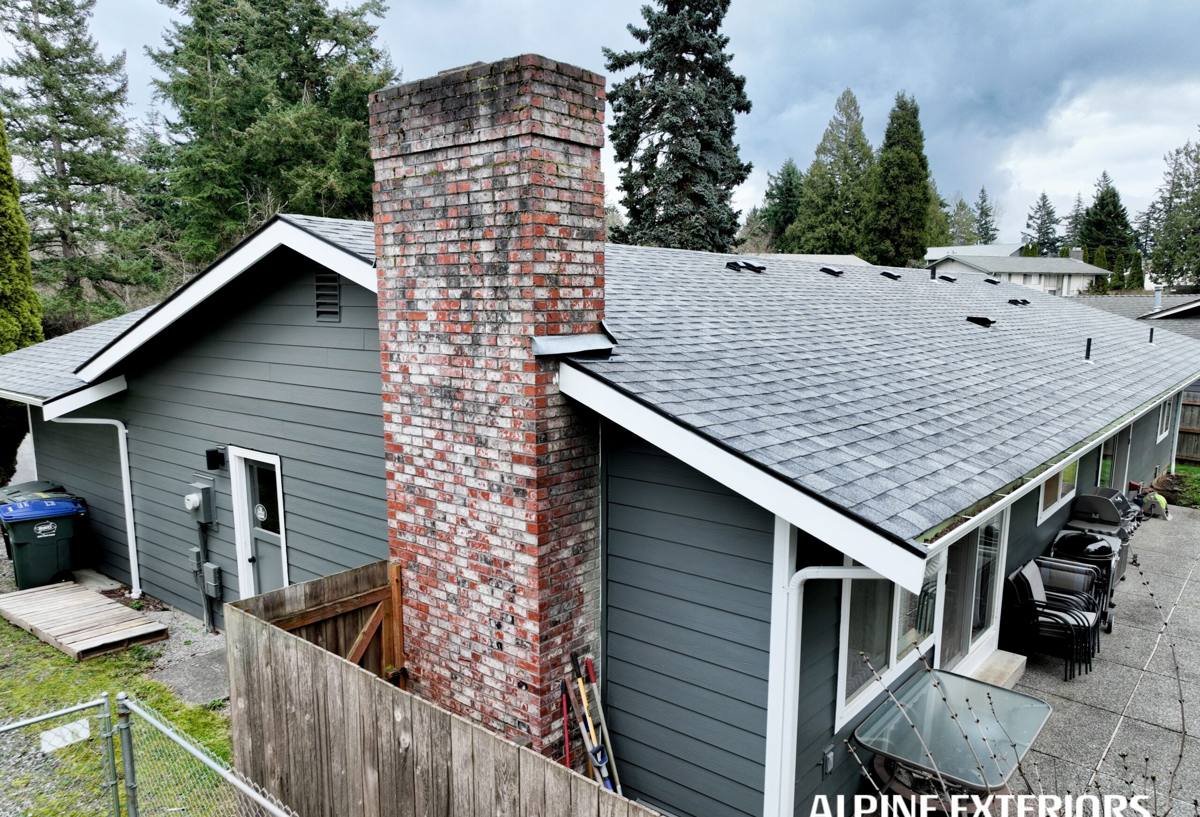
What This Climate Actually Does to Siding
It helps to be specific about the failure modes, because "wet climate" undersells it.
Salt-Laden Air
Air moving in off the strait carries salt that settles on exterior surfaces, accelerates corrosion on exposed fasteners and metal trim, and slowly breaks down finishes that weren't formulated to handle it. Over years, that shows up as chalking, fading, and rust bleed at nail heads and flashing joints.
Driving, Wind-Driven Rain
Rain that falls straight down is a much easier problem to manage than rain that gets pushed sideways under laps and around trim by wind. Wind-driven rain finds every gap in flashing, every under-caulked joint, and every place where siding was nailed tight to sheathing instead of held off it. Once moisture gets behind the cladding, it doesn't leave quickly in a climate this humid.
A Long Moss and Mildew Season
Shaded north and west elevations here can stay damp for weeks at a stretch. That's exactly the environment moss, algae, and mildew need to take hold on painted or coated surfaces. Cheaper paint systems chalk and lose their sheen faster under that kind of biological growth, and once moss gets a foothold at a butt joint or a fastener head, it holds water against the material underneath.
Why We Standardized on James Hardie Fiber Cement
We install one siding product: James Hardie fiber cement. Not vinyl, not LP SmartSide, not Cemplank or Allura, not primed wood. That's a deliberate standard, not a lack of options.
Fiber cement is non-combustible and dimensionally stable — it doesn't expand and contract with moisture and temperature the way wood-based products do, which matters directly in a climate that cycles between soaked and dry as often as this one does. James Hardie's ColorPlus finish is baked on at the factory under controlled conditions, which gives it a harder, more UV- and salt-resistant surface than field-applied paint, and it carries a real, transferable finish warranty behind it. For a region where the siding is fighting salt air, driving rain, and moss for essentially eight or nine months of the year, that combination is the reason we don't offer alternatives — we'd rather turn down a job than put something on a house that we know will need attention again in a few years.
What Correct Installation Looks Like on an Abbotsford Home
James Hardie siding performs the way it's rated to perform only when it's installed to the manufacturer's specifications. A lot of the siding failures we get called out to look at aren't product failures — they're installation shortcuts. In this climate, those shortcuts fail faster.
- A drainage plane and rainscreen gap behind the siding, so any water that does get past the cladding has somewhere to go instead of sitting against the sheathing
- Correct fastener type, spacing, and depth — over-driven nails crack the board's edge and create a water entry point
- Flush, properly lapped house wrap and flashing at every window, door, and penetration, installed so water sheds outward at each layer
- Factory-cut or properly sealed field cuts, since an unsealed cut edge is one of the fastest ways moisture gets into fiber cement
- Correct joint treatment at butt seams and trim, using the caulking and gapping James Hardie specifies rather than whatever is fastest
Every one of those details is invisible once the job is finished and the house looks good from the curb. That's exactly why they matter — nobody catches a bad rainscreen detail until water damage shows up behind the wall two or three years later.
Choosing the Right Product Line and Finish
James Hardie makes climate-engineered product lines, and picking the right one for this region isn't just an upsell — it changes how the siding performs.
| Line | Built For | Relevant to Abbotsford |
|---|---|---|
| HZ5 | Moderate, wet climates with freeze-thaw cycles | Standard fit for most Fraser Valley and Whatcom County homes |
| HZ10 | Hot, humid, high-moisture climates | Occasionally relevant for particularly exposed or shaded, damp sites |
| ColorPlus finish | Factory-baked, UV- and moisture-resistant color | Reduces repainting cycles and resists salt-air fading better than field paint |
For most Abbotsford homes, the HZ5 line paired with a ColorPlus finish is the right baseline. We'll walk your specific site — elevation exposure, shade, proximity to open ground — before recommending a line, rather than defaulting to whatever's easiest to order.
Our Process, Start to Finish
The steps don't change much whether the house is in Lynden or across the line in Abbotsford, but the logistics of working a cross-border area do take some coordination on our end so they don't become your problem.
- Site assessment — we look at existing siding condition, moisture damage if any, elevation exposure, and trim/flashing details before quoting anything
- Written estimate — product line, color, scope, and a real timeline, no pressure to sign on the spot
- Prep and moisture check — removing old siding, inspecting sheathing for hidden rot or damage before anything new goes up
- House wrap, flashing, and rainscreen installation — the part that determines how the job performs in ten years, not just how it looks in week one
- James Hardie siding installation — to manufacturer fastening and gapping specifications, not shortcuts
- Final walkthrough — trim, caulking, and finish check with you before we call it done
We handle the material logistics and scheduling that come with working across the border so the project timeline stays predictable on your end.
What It Costs
Every siding job is priced off the specific house, but the cost drivers are consistent enough to lay out honestly.
| Factor | Why It Moves the Price |
|---|---|
| Home size and wall complexity | More square footage, corners, and trim detail means more labor and material |
| Existing siding condition | Rotten sheathing or hidden moisture damage found during tear-off adds repair scope |
| Product selection | Panel vs. lap siding, HZ5 vs. HZ10, and trim/color choices all shift material cost |
| Story height and access | Multi-story or difficult-access elevations require more scaffolding and time |
| Window and door count | Every penetration needs its own flashing detail, which adds labor |
We won't quote a number without seeing the house — anyone who does is guessing, and a guess isn't useful to you.
Why a Crew That Already Works This Area Matters
There's a real difference between a contractor who's done one or two jobs near the border and a crew that treats this stretch of Whatcom County and the Fraser Valley as regular territory. We already know how this specific combination of salt air, driving rain, and long wet-season moss growth behaves on real houses, because we've been back to check on our own work in it. We're familiar with the practical side of working across the border too — coordinating material delivery and scheduling so a cross-border job runs on the same predictable timeline as a job down the street from our shop in Lynden. That's not a substitute for pulling the right local permits and following the right jurisdiction's process, which we do — it just means the border isn't a source of delays or surprises on your project.
Maintaining James Hardie Siding in This Climate
Correctly installed Hardie siding is low-maintenance, not zero-maintenance. A little seasonal attention goes a long way in a climate this wet.
- Rinse siding annually, focusing on shaded north and west elevations where moss and algae take hold first
- Keep gutters clear so overflow doesn't run down the face of the siding at corners and joints
- Trim back landscaping that holds moisture against the wall or blocks airflow
- Check caulking at trim and penetrations every couple of years and re-seal where it's cracked or pulled away
- Look at fastener heads and cut edges after major storms for any exposed, unsealed spots
None of that requires a professional visit — it's the kind of upkeep that keeps a correctly installed system performing for decades instead of just looking good for a few years.
If you're weighing a siding replacement on an Abbotsford home, we're glad to come take a look, walk you through what your specific house needs, and put together a straightforward, no-pressure estimate. Use the form below to get started.