 Lynden Siding
 Why Maple Falls Homes Take a Harder Hit From the Weather
Maple Falls sits up in the wooded foothill country east of Lynden, where the terrain climbs toward the mountains and the tree canopy thickens. That setting is beautiful, but it changes how a house ages. Dense evergreen cover means more shade, more standing moisture, and slower drying after every rain. Whatcom County as a whole sits under a marine-influenced weather pattern that pushes damp Pacific air inland, and prevailing westerlies carry salt-tinged air off the Georgia Strait and Puget Sound well past the coastline. Combine that moisture load with the shade and duff buildup typical of a forested foothill lot, and you get long, mild, wet winters and a moss season that can stretch eight months or more.
Roof overhangs, window and door detailing, and how well a previous installer managed water at wall penetrations all compound with that moisture load — a house with minimal overhangs on a shaded lot dries out far slower than one with generous eaves in full sun.
Siding in this environment isn't just cosmetic. It's the first line of defense against wood rot, mold, pest intrusion, and the slow structural damage that comes from moisture sitting against a wall for months at a time. Products that aren't built for sustained dampness — or that were installed without the right water-management details — tend to show it here years before they would in a drier part of the state.
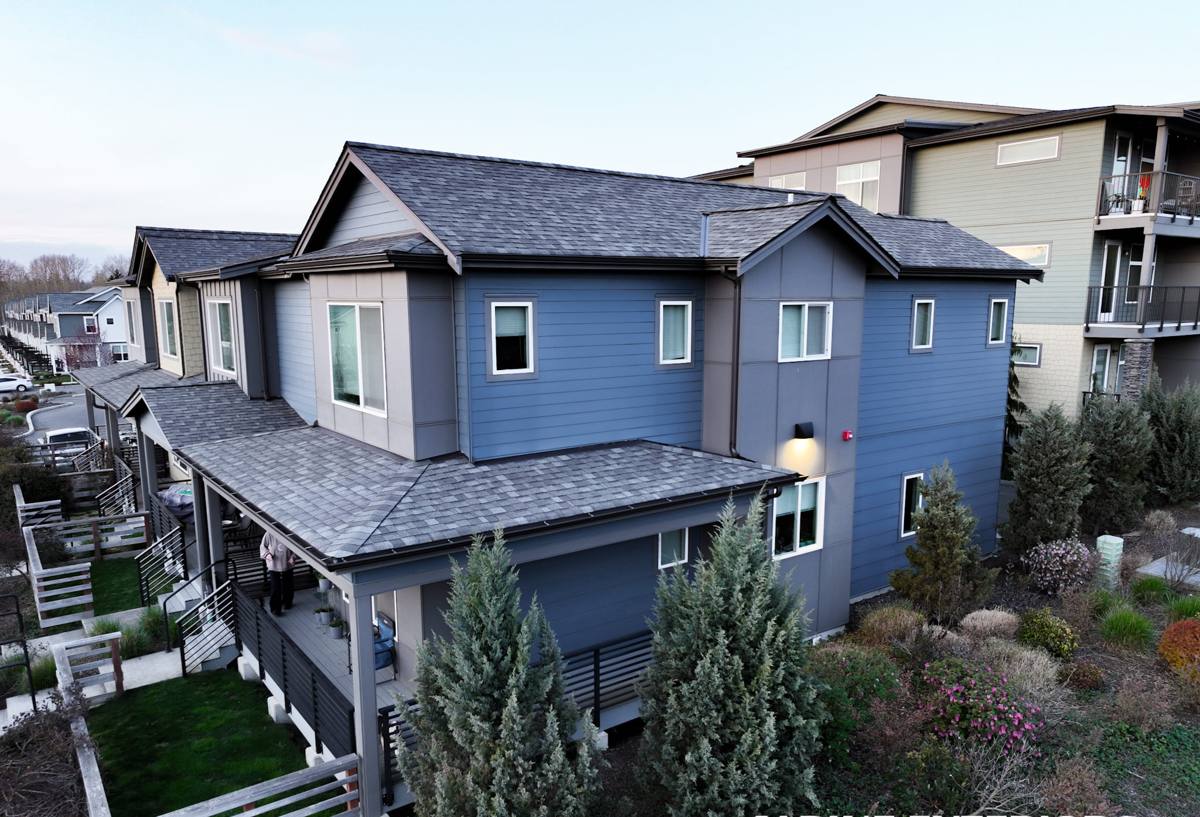
What Fiber Cement Actually Solves for This Climate
Moisture and Rot Resistance
Fiber cement is made from cellulose fiber, sand, and Portland cement, cured into a dense, dimensionally stable board. It doesn't absorb and swell the way wood-based products can, and it doesn't provide the organic food source that mold and fungus need to establish themselves. In a shaded, damp foothill setting where siding can stay wet for days after a storm, that matters more than in most parts of the county.
Standing Up to Driving Rain and Wind-Driven Moisture
Fall and winter storms in this part of Whatcom County don't just drop rain straight down — wind pushes it sideways into wall assemblies, especially on exposed gable ends and around window and door openings. Fiber cement itself resists that moisture, but the real protection comes from correct lap coverage, flashing, and a properly integrated weather-resistant barrier underneath. The board is only as good as the water-management system behind it.
Non-Combustible Material in Forested Terrain
Homes tucked into tree-covered lots near the foothills carry more wildfire exposure than homes in open, low-vegetation areas. Fiber cement siding is non-combustible, which won't make a home immune to wildfire risk but is a meaningfully different starting point than vinyl siding, which can soften and melt under radiant heat, or untreated wood, which can ignite directly.
What a Correct Fiber Cement Job Actually Involves
Flashing and Water Management Details
Most siding failures we're called out to inspect aren't a materials problem — they're a details problem. Head flashing over windows and doors, kick-out flashing where a roofline meets a wall, proper weather-resistant barrier lapping, and correctly sealed penetrations for vents and fixtures all have to be done in the right order, before the siding ever goes up. Skipping or rushing these steps is what lets water behind the cladding in the first place, regardless of what siding product sits on top.
Fastening, Clearances, and Caulking
James Hardie's installation instructions specify fastener type, spacing, and placement, along with minimum clearances from grade, roof lines, decks, and other siding-to-trim intersections. Those clearances exist specifically to keep water from wicking up into the board or pooling against it — details that matter more, not less, in a wet, wooded environment where surfaces stay damp longer. Caulking joints and gaps correctly, with the right sealant and enough flexibility to handle seasonal movement, is part of the same system, not an afterthought.
Painting and Finish Integrity
Field-applied paint is only as durable as its adhesion and coverage, and inconsistent coverage is one of the more common shortcuts on rushed jobs. Factory-applied finishes solve this differently, which is one reason we standardized on a factory-finished product rather than relying on field painting to hold up through a long wet season.
James Hardie Product Lines That Make Sense Here
We install James Hardie fiber cement exclusively, and for a climate like this, product selection within the Hardie lineup still matters. Hardie engineers its siding by climate zone (HZ5 for the cold, wet Pacific Northwest), which affects the board's moisture and freeze-thaw performance compared to a one-size-fits-all product. For Maple Falls homes we typically discuss:
- HardiePlank lap siding — the most common choice for full re-sides, available in several exposure widths and textures.
- HardieShingle siding — for homes wanting a shingle or shake look without the moisture sensitivity of real wood shingles.
- HardieTrim and HardieSoffit — matched trim and soffit boards so the whole envelope, not just the field siding, is fiber cement.
- ColorPlus factory finish — a baked-on, multi-coat finish applied under controlled conditions, which holds up differently than a field-applied coat exposed to rain within days of painting.
Within HardiePlank alone, exposure width and surface texture — smooth or a simulated cedar grain — are separate decisions from color, and we'll walk through which combination suits your home's architecture and roofline before ordering material. Color and texture choices matter for curb appeal, but on a wooded lot with heavy shade, lighter and mid-tone ColorPlus finishes tend to show less visible staining between cleanings than very dark colors, which can highlight surface debris and pollen film more readily.
Our Process for a Maple Falls Project
The steps are the same discipline we bring to every job, but a few get extra attention out here given the terrain and moisture exposure. We treat every Maple Falls estimate as a chance to look past the siding itself, checking trim, soffits, and flashing condition at the same time, since a full re-side is the easiest point in a home's life to correct any of those details properly.
- On-site assessment — we look at existing siding, trim, flashing, and any signs of moisture damage or rot at wall penetrations, corners, and grade level, which is more common on shaded, foothill lots than elsewhere in the county.
- Tear-off and sheathing inspection — old siding comes off and we check the sheathing underneath before anything new goes on. Hidden rot gets addressed before it's covered back up.
- Weather-resistant barrier and flashing — a new, properly lapped barrier and flashing package goes in at every window, door, and roof-to-wall intersection.
- Installation to manufacturer spec — correct fastening, clearances, and joint treatment, following James Hardie's published instructions rather than shortcuts.
- Trim, caulking, and final inspection — matched trim installed, joints sealed, and a final walkthrough before we call the job done.
What Drives the Cost of a Fiber Cement Project
Every home is different, but these are the factors that most often move the price on a Maple Falls project:
| Factor | Why It Matters |
|---|---|
| Home size and wall complexity | More square footage and more corners, gables, and dormers mean more material and labor. |
| Existing siding removal | Tear-off of old wood, vinyl, or damaged siding adds labor time before installation can begin. |
| Sheathing or framing repair | Moisture damage found underneath old siding has to be repaired before new siding goes up — common on older, shaded homes. |
| Trim and detail work | Custom trim, extra window and door openings, and detailed flashing work add time relative to a simple, boxy elevation. |
| Site access | Driveway grade, distance from the road, and how close a truck or lift can get affect staging and labor efficiency. |
| Product line and finish | Lap width, texture, and ColorPlus color selection carry different material costs within the Hardie lineup. |
Living With Fiber Cement in a Moss-Prone, Tree-Covered Setting
Fiber cement is low-maintenance compared to wood, but "low-maintenance" doesn't mean "no-maintenance," especially under heavy tree cover. A few habits go a long way toward protecting the investment:
- Rinse siding annually (a garden hose is usually enough) to clear pollen, dust, and organic film before it has a chance to hold moisture against the surface.
- Keep gutters clear so overflow doesn't run down the siding face or pool at the base of a wall.
- Trim back branches and brush that keep siding in constant shade or brush directly against the wall.
- Inspect caulking at trim joints, window and door surrounds, and corners every year or two, and re-caulk as it dries out or cracks.
- Watch grade level and landscaping beds so soil, mulch, or plantings don't build up against the bottom courses of siding.
- Address any moss or algae growth promptly with a gentle wash rather than pressure-washing directly into joints and seams.
Why Hire a Crew That Already Works This Area
Foothill lots east of Lynden come with their own set of practical challenges: steeper or gravel driveways that affect staging and material delivery, denser tree cover that limits sun exposure and airflow around a house, and moisture patterns that are genuinely different from a home closer to town. A crew that already works Maple Falls regularly has already worked through those logistics and knows what moisture damage in this specific setting tends to look like before the siding even comes off. That translates into fewer surprises mid-project and a job that's built to the conditions the house actually faces, not a generic install plan.
It also means a crew that's used to scheduling around this area's wetter stretches of the calendar, sequencing tear-off and installation to avoid leaving a home's sheathing exposed to the weather any longer than necessary — and one that understands Whatcom County's permitting and code requirements for exterior work, so the paperwork side of the project doesn't become the bottleneck.
Ready for a Straightforward Estimate
If your Maple Falls home's siding is showing rot, staining, or moisture damage — or you're planning ahead for a full re-side — we're happy to take a look and walk you through what correct fiber cement installation looks like for your specific home. Fill out the form below for a free, no-pressure estimate.