 Lynden Siding
 Why Ferndale Siding Takes a Different Kind of Beating
Ferndale sits close enough to the water that homes here deal with a combination most inland Whatcom County towns don't face at the same intensity: salt-laden air rolling in off Bellingham Bay and the Strait, wind-driven rain that hits siding sideways instead of straight down, and a moss and algae season that can run eight months out of the year in shaded, north-facing exposures. Any one of these on its own is manageable. Together, they shorten the life of the wrong siding material fast and turn small, ignorable problems into rot, mold, and structural repairs if nobody catches them early.
We're a Lynden-based crew that already works this stretch of the county, so we're not guessing at what Ferndale homes need. We're describing what we actually see on repair calls.
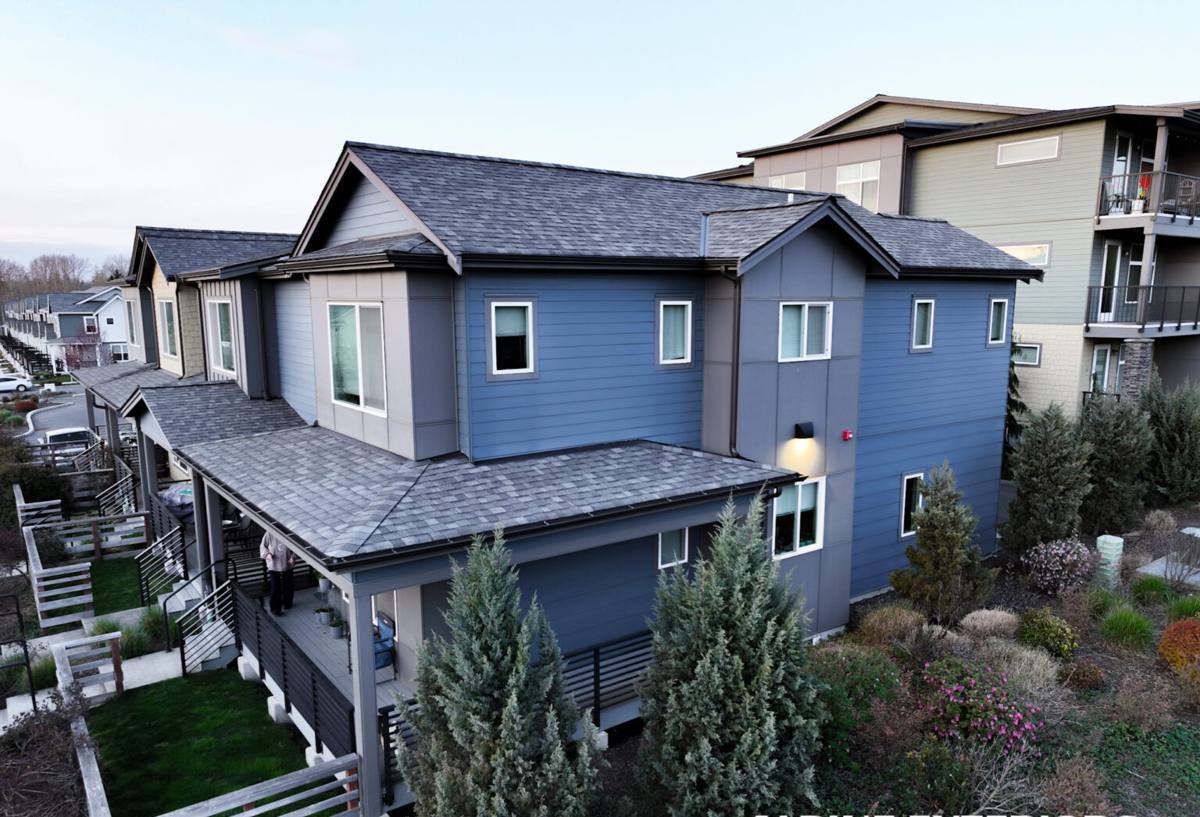
What Salt Air, Rain, and Moss Actually Do to Siding
Salt Air
Airborne salt is corrosive to fasteners and hard on painted or coated surfaces. On wood and engineered wood siding, salt exposure accelerates finish breakdown, so paint fails sooner and the substrate underneath starts absorbing moisture years before it would inland. On metal flashing and trim, it speeds up corrosion, which is often the real reason a "siding leak" started in the first place.
Driving Rain
Ferndale's exposure to weather systems coming off the water means rain doesn't just fall — it gets pushed. Wind-driven rain finds every gap: unsealed butt joints, nail heads that have backed out, caulk that's cracked, or trim that was never properly flashed. Once water gets behind the siding plane, it can travel a long way before it shows up as a visible stain, which is why interior damage is often worse than what you can see from the yard.
Moss and Algae Season
Shaded walls, north exposures, and anything under overhanging trees stay damp for extended stretches. Moss and algae don't just look bad — they hold moisture against the siding surface far longer than open air would, which is exactly the condition that leads to rot in wood-based products and coating failure in lower-grade composites.
Signs a Ferndale Home Needs Siding Repair, Not Just Cleaning
- Soft or spongy spots when you press on siding, especially near the bottom courses and around windows
- Paint or finish that's bubbling, peeling, or chalking in patches rather than evenly across the wall
- Visible gaps at butt joints, corners, or where siding meets trim, window, or door casings
- Dark staining or streaking below joints or fasteners — often a sign water is tracking behind the surface
- Persistent moss or algae growth that comes right back after cleaning
- Nail heads visibly popped or backed out of the siding face
- Warping, cupping, or visible separation between boards or panels
- A musty smell or visible mold on interior walls that back up to exterior siding
What a Correct Siding Repair Actually Involves
A proper repair isn't just swapping out the damaged board and moving on. In a climate like this, the sequence matters:
- Find the actual entry point. Damaged siding is usually a symptom. We trace back to the flashing, joint, or fastener that let water in, because replacing the visible damage without fixing the entry point means the repair fails again in a season or two.
- Check the water-resistive barrier and sheathing. If water has been getting behind the siding, the house wrap and sheathing underneath need to be inspected — and replaced if compromised — before new siding goes back on.
- Correct the flashing and drainage details. Around windows, doors, and butt joints, proper flashing and a drainage gap behind the siding are what actually keep driving rain from becoming trapped moisture.
- Match the repair to the existing material and finish. On James Hardie siding, this means using the correct HZ5 product for our zone, factory ColorPlus finish where possible, and Hardie's own fastening and joint-treatment specifications — not generic techniques borrowed from other siding types.
- Reseal and re-inspect trim. Caulk and sealant at penetrations and joints are a maintenance item, not a one-time fix, and we check the surrounding areas while we're already on the wall.
Repair vs. Replacement: How We Help You Decide
Not every damaged section needs a full re-side, but there's a point where patch repairs stop making financial sense. We walk this decision with you honestly rather than defaulting to the bigger job.
| Factor | Leans Toward Repair | Leans Toward Replacement |
|---|---|---|
| Extent of damage | Isolated to one or two areas (a wall section, around one window) | Recurring damage across multiple walls or elevations |
| Underlying material | Sheathing and framing test dry and sound | Rot has reached the sheathing or framing in more than one spot |
| Age of existing siding | Siding is mid-life and otherwise performing well | Siding is near or past its expected service life |
| Product type | Existing James Hardie siding with isolated impact damage | Existing wood, LP, or other composite siding showing widespread moisture failure |
| Root cause | A single fixable flashing or sealant failure | Systemic drainage or ventilation problems behind the whole wall assembly |
Why We Only Repair and Install with James Hardie
When a repair does call for new siding material — whether it's a patch or a full section — we use James Hardie fiber cement, and we don't install alternatives like vinyl, LP SmartSide, primed spruce, cedar, Cemplank, or Allura. That's a standard we hold to everywhere we work, and it matters even more in a climate like Ferndale's:
- Fiber cement doesn't rot, and it isn't a food source for the moss and algae that thrive in this area's damp, shaded conditions
- It's non-combustible, which matters as wildfire smoke and dry-season risk have become a bigger regional concern even in wetter parts of the county
- Hardie's HZ5 product line is engineered for climates with significant moisture exposure, which fits Whatcom County's rain and humidity profile
- The factory-applied ColorPlus finish resists the fading and chalking that salt air and UV accelerate on field-applied paint
- It carries a strong transferable warranty when installed to Hardie's specifications — which is a big part of why installation quality is not the place to cut corners
We're upfront that this means we'll sometimes tell a homeowner that their existing vinyl or wood siding needs full replacement rather than a matching patch repair, since we don't stock or install those materials. When that's the honest answer, we say so.
Our Repair Process for Ferndale Homes
- On-site inspection. We look at the damaged area and the surrounding wall, not just the spot you called about, since salt and rain damage rarely stays contained to one board.
- Moisture and substrate check. We check for soft sheathing or trapped moisture before quoting the scope of work.
- Honest scope and estimate. You get a clear explanation of what's damaged, what caused it, and whether repair or partial replacement is the right call — with reasoning, not just a number.
- Repair or replacement, done to spec. Flashing, drainage gaps, fastening, and joint treatment are all handled per manufacturer requirements, not shortcuts.
- Final walkthrough. We show you what was fixed and why, and flag anything else on the wall worth keeping an eye on.
Maintenance That Extends the Life of a Repair
A good repair lasts a lot longer with a little seasonal attention, especially given how long moss season runs here:
- Rinse siding periodically to reduce salt residue buildup, particularly on walls facing open water or prevailing wind
- Trim back tree limbs and vegetation that keep any wall shaded and damp for most of the day
- Check caulk and sealant at trim and window joints once a year and touch up before gaps widen
- Address moss or algae growth as soon as it appears rather than letting it establish
- Watch for and clear gutters and downspouts near siding — overflow is a common, preventable cause of localized rot
Why Hire a Crew That Already Works Ferndale
Siding repair done well requires knowing what the local exposure actually does to a wall, not just general best practices from a manual. A crew that already works this part of Whatcom County has seen how salt air behaves on a west-facing wall near the water, how driving rain finds its way into joints during a fall storm, and which north-facing exposures are going to fight moss no matter what. That local pattern recognition is what separates a repair that holds up from one that reopens the same problem in two years.
If you're seeing signs of damage on your Ferndale-area home — soft spots, staining, recurring moss, or gaps at joints and trim — we're happy to take a look and give you a straightforward assessment. Reach out for a free, no-pressure estimate, and we'll tell you honestly what we find and what it would take to fix it right.