 Lynden Siding
 Windows Built for the Fraser Valley's Wet Side
Abbotsford sits in a stretch of the Pacific Northwest where the weather doesn't do things in half measures. Winters bring long stretches of driving, wind-pushed rain off the Salish Sea and Boundary Bay, summers can swing surprisingly warm and dry, and the shoulder seasons are damp enough that moss and algae get a running start on anything with a north-facing exposure. Windows here aren't just a comfort upgrade — they're one of the hardest-working components on the house, standing between conditioned indoor air and a climate that alternates between soaking and drying out the building envelope all year long.
We're a Lynden-based crew that works Abbotsford regularly, and the pattern of window failure we see is consistent: it's rarely the glass itself that goes bad first. It's the frame, the seal, and the flashing detail around the opening that let water and air where they don't belong. An energy-efficient window that isn't installed correctly for this climate will underperform a modest window that was installed right.
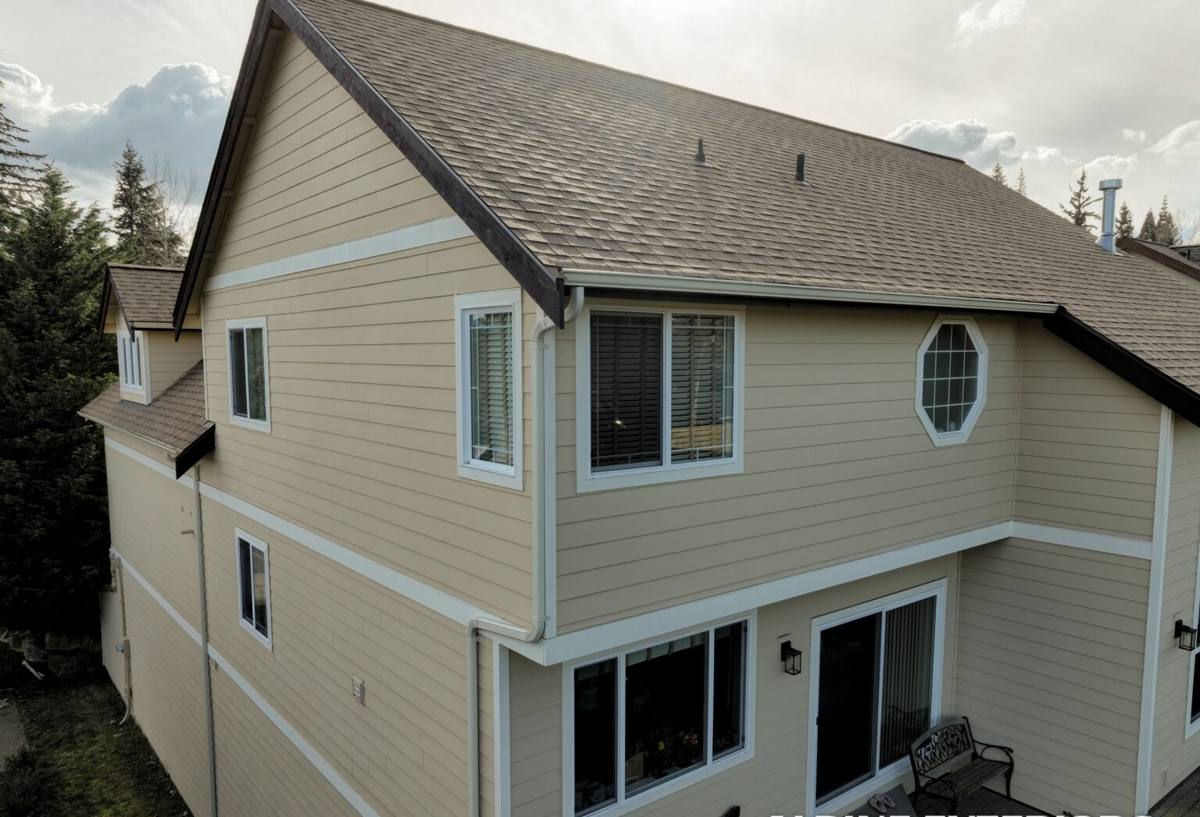
What "Energy-Efficient" Actually Means Here
The term gets used loosely, so it's worth breaking down what actually determines how a window performs in a coastal Fraser Valley climate:
- U-factor — how well the window resists heat loss. Lower is better for our cool, wet winters.
- Solar Heat Gain Coefficient (SHGC) — how much solar heat passes through the glass. This matters more on south and west exposures that get real summer sun.
- Glazing and gas fill — double vs. triple pane, and whether the sealed unit is filled with argon or another inert gas to slow heat transfer.
- Low-E coatings — a microscopically thin coating that reflects heat while still letting light through.
- Frame material and construction — this affects both insulation value and how the frame holds up to years of moisture cycling.
Canadian energy labeling for windows isn't identical to the U.S. system — ratings here account for our specific climate zones rather than a one-size-fits-all number. When you're comparing quotes, ask the installer to explain what the rating actually means for an Abbotsford installation rather than taking a sticker at face value. A window rated well for a dry interior climate isn't automatically the right choice for a house getting hit with wind-driven rain six months of the year.
Signs Your Current Windows Are Losing the Battle
Most homeowners don't replace windows on a schedule — they replace them when something starts bothering them. Here's what that usually looks like in this climate specifically:
- Fogging or a permanent haze between the panes — the seal on the insulated glass unit has failed and moisture has gotten inside where it can't be wiped away.
- Cold glass or a draft you can feel standing near the window on a windy, rainy day.
- Soft or discolored wood at the sill or the trim below the window — a sign water is getting behind the frame, not just running off it.
- Moss, algae, or black streaking building up on the sill or casing faster than on the rest of the wall.
- Windows that are difficult to open, close, or lock — frames can swell, warp, or settle out of square as moisture works into the material over years.
Any one of these on its own might just mean a cleaning or minor repair. Several of them together, especially on the same window, usually means the unit has reached the end of its useful life and is starting to cost you in heating bills whether you've noticed it on a statement yet or not.
Frame Material: It Matters More in a Rain-Heavy Climate
The frame is doing more work here than in a drier climate, because it's absorbing constant moisture cycling — wet, dry, wet again — for most of the year. Here's how the common options stack up for a house like yours:
| Frame Material | Moisture Behavior | Maintenance | Typical Trade-offs |
|---|---|---|---|
| Vinyl | Won't rot; handles moisture cycling well | Low — occasional cleaning | Good value; limited color/finish options; can't be repainted easily |
| Fiberglass | Excellent — very stable, minimal expansion/contraction | Low | Higher upfront cost; strong long-term performance |
| Wood-clad | Good if the cladding stays intact; interior wood needs protection from condensation | Moderate to high | Warm interior appearance; more sensitive to installation quality |
| Aluminum | Conducts heat and cold readily; needs a thermal break for efficiency | Low | Strong and slim sightlines; poor insulator without proper design |
We don't push one material on every job — the right call depends on the house's exposure, your budget, and how the existing openings are framed. What we do insist on is being straightforward about maintenance burden and moisture behavior up front, rather than letting a homeowner find out the hard way five winters later.
Where Installation Quality Actually Determines Performance
You can buy an excellent window and still end up with a leaky, drafty result if the installation misses the details that matter in a climate like this one. The parts of the job that make the real difference:
Flashing and Water Management
Every window opening needs a drainage path so that any water that gets behind the exterior cladding has somewhere to go besides your wall framing. In a driving-rain climate, this isn't optional trim work — it's the difference between a window that lasts decades and one that causes hidden rot behind the wall within a few years.
Air Sealing Beyond Just Caulk
A bead of caulk around the outside trim is not an air seal. Proper sealing happens at the rough opening, using backer rod and sealant or a self-adhered membrane sized for the gap, plus insulation in the cavity between the window frame and the framing. Skipping this step is one of the most common shortcuts we see undone from prior installs.
Level, Plumb, and Square
A window installed slightly out of square will bind, won't seal properly against its own weatherstripping, and will fail prematurely — no matter how good the unit itself is.
Old Window Removal and Disposal
Removing the old unit cleanly, without damaging the surrounding wall assembly, sets up everything that follows. Rushed removal is where hidden water damage often gets discovered — and where it should be dealt with before the new window ever goes in, not covered over.
Why It Matters That We Actually Work Abbotsford Regularly
Weather patterns don't respect the border. A crew based in Whatcom County that regularly works both Lynden and Abbotsford sees the same wind-driven rain, the same moss season, and the same coastal moisture cycling on both sides of the line — which means we're not guessing at how a product or an installation detail will hold up here. We know which exposures on a typical Fraser Valley home take the worst of the weather, and we build the water management and sealing details accordingly rather than following a generic install checklist written for a drier region.
Being local also means straightforward scheduling and a crew that's genuinely accountable to the neighborhood — not a here-today, gone-tomorrow outfit chasing storm work across a wide territory.
What Drives the Cost of a Window Project
Every quote should break down clearly, but broadly, here's what moves the price on a window replacement project:
| Cost Factor | Why It Matters |
|---|---|
| Number and size of windows | More openings and larger units mean more material and labor |
| Frame material chosen | Vinyl, fiberglass, and wood-clad carry different material costs |
| Glazing package | Double vs. triple pane, low-E coatings, and gas fill all add cost and performance |
| Installation type | Insert (into existing frame) vs. full-frame replacement — full-frame costs more but is often necessary if the old frame or flashing is compromised |
| Trim and exterior capping | Matching existing trim or upgrading to low-maintenance capping affects both cost and long-term upkeep |
| Access and site conditions | Second-story windows, tight access, or extensive rot repair add labor time |
Rather than quoting a per-window number sight unseen, we walk the exterior and interior of each opening, because a house with hidden water damage behind the trim needs a different scope than one that's simply due for an upgrade. It's also worth checking what regional or utility efficiency rebate programs are currently available before you finalize a scope — availability changes, so we'd rather you confirm current details directly than rely on outdated information.
A Simple Maintenance Checklist to Extend the Life of New Windows
Even a well-installed, high-quality window benefits from a little seasonal attention in this climate:
- Rinse sills and tracks a couple of times a year to keep moss and algae from getting a foothold.
- Check weep holes (the small drainage openings at the bottom of the frame) to make sure they're clear of debris and not painted over.
- Look at exterior caulking annually and touch up any spots that have cracked or pulled away.
- Test that windows still open, close, and lock smoothly — resistance can be an early sign of frame movement worth catching early.
- Keep gutters and downspouts clear so water isn't sheeting down the wall directly above window openings.
If your windows are fogging, drafty, or just past their prime, we're happy to take a look and give you an honest read on what's actually going on — no pressure, no upsell. Fill out the form below for a free estimate and we'll walk the house with you.