 Lynden Siding
 Deck Building for Acme Homes: Built for This Climate, Not Just Any Climate
Acme sits in the wooded, hilly stretch of Whatcom County east of Lynden, where mature tree cover, higher rainfall totals, and long stretches of overcast, damp weather shape everything about how an outdoor structure should be built. A deck design that works fine in a dry inland climate can fail early out here if it isn't built with this area's moisture load in mind. We build decks specifically for Acme and the surrounding Lynden area, which means every decision — from footing depth to fastener choice to the gap left between deck boards — is made with local weather in mind, not a generic national spec sheet.
A deck in this part of Whatcom County isn't just a place to put a grill. It's an outdoor room that has to survive driving rain in the fall and winter, a marine-influenced air that keeps humidity high even when it isn't actively raining, and a long moss season that can turn an untreated surface slick and green in a matter of months. Building for that reality from day one is cheaper than fighting it later.
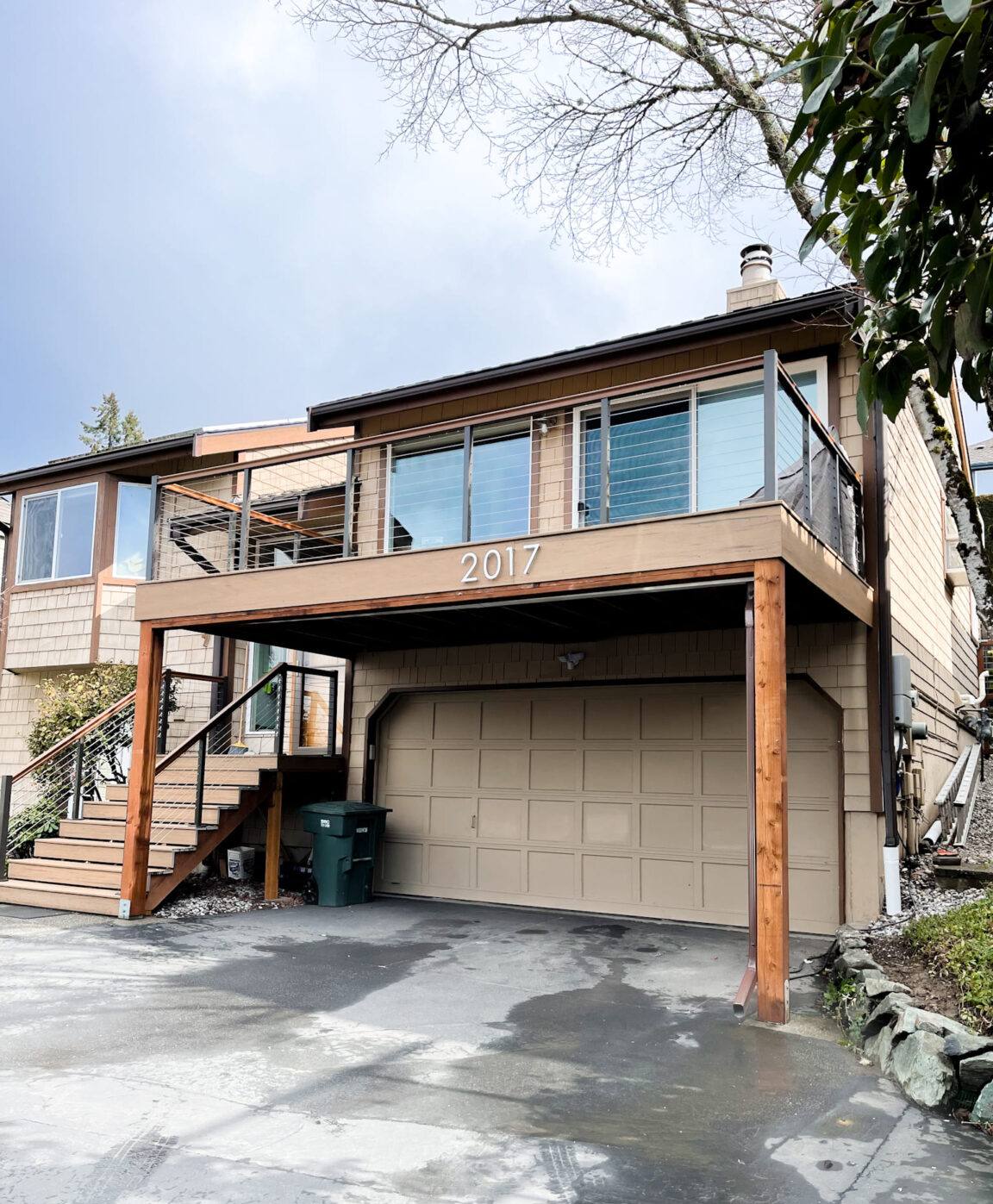
What Acme's Climate Does to a Deck Over Time
Three climate factors matter most for decks in this area:
Driving rain and standing moisture
Rain here doesn't just fall straight down — wind-driven rain pushes moisture into joints, under railings, and against ledger boards where a deck meets the house. Any spot where water can collect and sit, rather than drain and dry, becomes the first place rot and fastener corrosion show up.
Tree cover and shade
Many Acme properties sit under fir, cedar, and maple canopy, which is part of what makes the area beautiful — but heavy shade means decks dry out slowly after rain. Slower drying time means more time for moss, algae, and mildew to establish themselves on horizontal surfaces.
Marine-influenced humidity
Even away from the immediate shoreline, Whatcom County's marine air keeps ambient humidity elevated much of the year. That constant low-grade moisture works on fasteners, connectors, and unsealed end grain even between rain events, which is why hardware selection matters as much as the decking material itself.
Choosing a Decking Material for an Acme Property
There's no single "best" decking material — the right choice depends on how much sun or shade the deck gets, your maintenance appetite, and your budget. Here's how the common options stack up under this area's conditions:
| Material | Upfront Cost | Maintenance in This Climate | Typical Lifespan Here |
|---|---|---|---|
| Pressure-treated lumber | Lowest | Needs periodic cleaning and re-sealing; prone to moss in shaded spots without upkeep | 15-20 years with maintenance |
| Cedar | Mid-range | Naturally rot-resistant but still needs sealing to hold its color and resist moisture staining | 15-25 years with maintenance |
| Composite / capped composite | Highest | No sealing or staining required; occasional washing to keep surface film-free in shaded areas | 25-30+ years, manufacturer-backed |
In heavily shaded Acme lots, we lean toward recommending composite or cedar over untreated pressure-treated lumber for visible, high-traffic decks, simply because both hold up better against the moss and mildew that shade encourages. That said, pressure-treated lumber is still a perfectly sound choice for framing and substructure regardless of which surface material sits on top — it's the right material in the right place, not a compromise.
What a Correctly Built Deck Actually Involves
A deck that lasts in this climate is decided by what's underneath and behind the visible surface, not by the decking boards alone.
Footings sized for local soil and frost depth
Footings need to be dug to the depth and diameter required by Whatcom County's building code, set on soil that's been checked for drainage, and poured so the post base sits above grade — never buried, where it will hold moisture against the wood or metal connector.
Ledger flashing done right
Where a deck attaches to the house, the ledger board is the single most common failure point we see on older decks in wet climates. Proper flashing — installed in the correct sequence with the house's existing water-resistive barrier — keeps rain from working its way behind the siding at exactly the spot where a leak does the most hidden damage.
Corrosion-resistant fasteners and connectors
Structural screws, joist hangers, and post bases need to be rated for ground contact and exterior exposure. In a marine-influenced, high-humidity area, using the wrong-grade fastener is how a deck develops rust streaks and weakened connections years before the decking itself wears out.
Proper board spacing and airflow
Gaps between deck boards and airflow underneath the structure are what let a deck actually dry out between rain events. Decks built too tight to the ground, or with boards spaced too close together, stay damp longer — which is exactly what accelerates rot and moss growth.
Our Deck Building Process
We keep the process straightforward and give you a clear picture of what's happening at each stage:
- On-site assessment — we look at the slope, shade, drainage, and how the deck will attach to your home before recommending a design.
- Design and material selection — we walk through decking material, railing style, and layout options based on how you'll use the space and your budget.
- Permitting — most new decks and many rebuilds in Whatcom County require a permit; we handle that process rather than leaving it to you.
- Footings and framing — the structural work that determines how long the deck will actually last.
- Decking, railing, and stairs — the visible finish work, installed to manufacturer specs for whichever material you've chosen.
- Final walkthrough — we go over the finished deck with you and explain any maintenance it needs going forward.
Railings, Stairs, and Code Requirements
Railing height, baluster spacing, and stair rise-and-run are all governed by building code, and inspectors in Whatcom County check these details closely — for good reason, since they're safety items, not style choices. We build to code as the floor, not the ceiling, and can talk through railing material options (wood, metal, composite, or cable) that fit both the code requirements and the look you're going for. On a sloped Acme lot, stair and landing design also has to account for grade changes that flatter properties don't have to deal with, which is part of why an accurate on-site assessment matters more than a quick estimate over the phone.
Maintenance: What Actually Keeps a Deck Lasting Out Here
No decking material is maintenance-free in this climate — some just need less. A few habits make the biggest difference regardless of material:
- Clear leaves and debris out of gaps between boards before they trap moisture through the wet season
- Rinse or lightly scrub shaded areas where moss tends to establish, rather than letting it build up over a season
- Check and re-seal wood decking on the schedule the product calls for — skipping a cycle in this climate shows up fast
- Keep gutters and downspouts near the deck clear so runoff isn't dumping directly onto or under the structure
- Walk the deck once a year and check for soft spots, loose fasteners, or gaps opening up around the ledger board
Why Hire a Crew That Already Works in Acme
A deck builder who mainly works in drier parts of the state will design and build the way they always have — which isn't necessarily wrong, just not tuned to what this area does to a structure over ten or twenty years. A crew that already works in and around Lynden and Acme knows which lots hold water longer, which spots stay shaded most of the day, and which fastener and flashing details actually matter here versus which ones are overkill. That local pattern recognition is what separates a deck that looks good on install day from one that still looks good in year fifteen.
Signs an Existing Acme Deck Needs Attention
If you already have a deck and are weighing repair against replacement, a few warning signs are worth taking seriously:
- Soft, spongy, or discolored decking boards, especially in shaded corners
- Rust streaking around fasteners or visible corrosion on metal connectors
- Gaps or staining where the deck meets the house siding, which can point to a ledger flashing failure
- Wobble in the railing or posts when you lean on them
- Persistent moss or algae that comes back within weeks of cleaning
Some of these are simple repairs; others point to structural issues that are cheaper to fix now than after another wet season.
If you're planning a new deck or need an honest opinion on one you already have, we're happy to come take a look. Estimates are free and there's no pressure to move forward — just a straight assessment of what your deck needs and what it will take to build or fix it right for an Acme property.