 Lynden Siding
 Decking Built for Wiser Lake's Wet, Whatcom County Climate
Wiser Lake sits in one of the damper corners of Whatcom County, ringed by mature trees that keep large stretches of yard and dock area shaded for most of the day. Add in the marine air that moves through this part of Washington off the Salish Sea, months of driving rain from fall through spring, and a moss season that can run longer here than in drier parts of the county, and you've got a climate that is genuinely hard on outdoor structures. A deck around Wiser Lake rarely gets a full day of direct sun and wind to dry it out the way a deck in a more open, exposed yard would.
That combination — standing moisture, shade, and moss spores looking for anywhere damp to take hold — is exactly what wears out the wrong decking material fastest. It's also exactly what composite decking, installed correctly, is built to handle. This page covers what that actually means for a deck around Wiser Lake specifically, not decking in general.
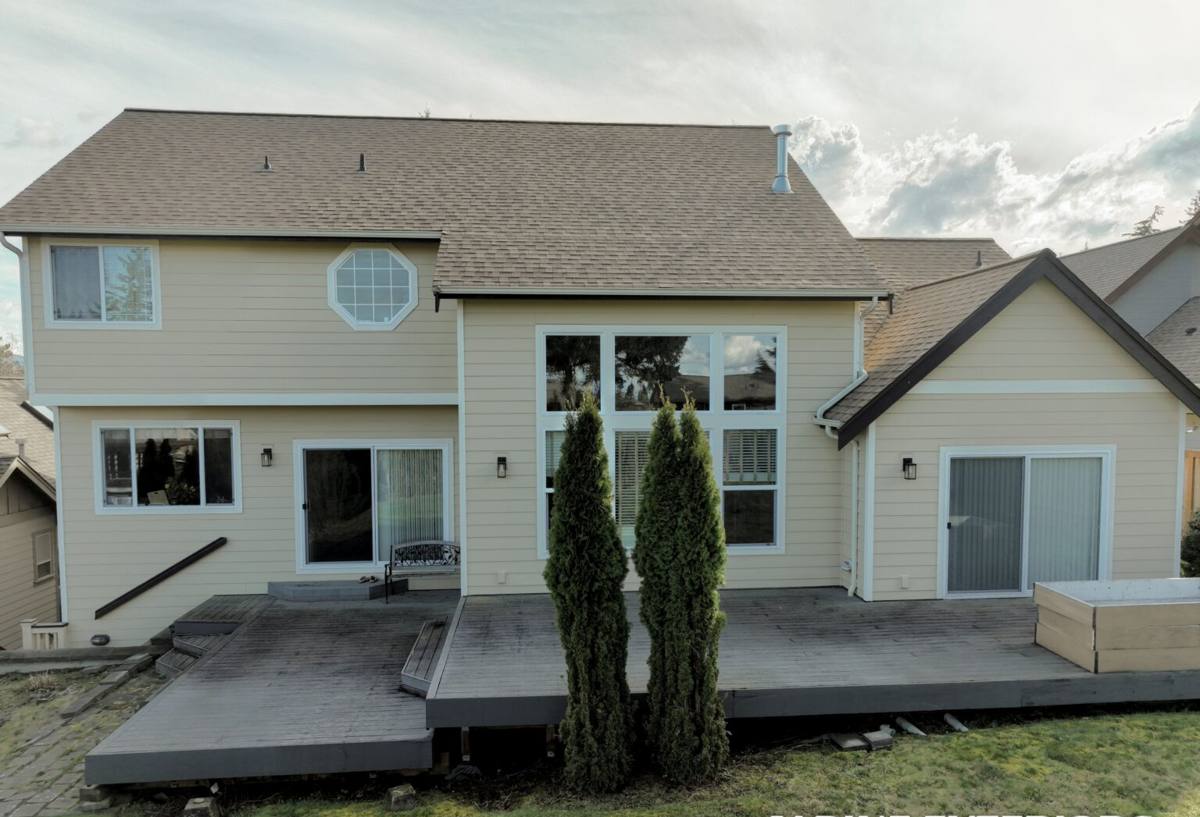
Why Composite Makes Sense for This Neighborhood
Where Wood Struggles Here
Pressure-treated and cedar decking can both look great new, but in a shaded, damp microclimate like Wiser Lake's, wood decking asks for a lot of upkeep to stay that way. Boards that stay wet longer swell, cup, and eventually split. Shaded, north-facing sections green up with algae and moss faster than the rest of the deck, which means uneven cleaning and re-staining schedules. Skip a year of sealing and the wood starts absorbing moisture at the end grain and around fasteners — the two spots that rot first.
What Composite Actually Solves
Composite boards don't have open wood grain for moisture to soak into, and capped composite products add a shell around the board that resists staining, scratching, and moss growth far better than bare wood. That doesn't mean composite is maintenance-free — nothing outdoors in this climate is — but it does mean the maintenance is mostly surface cleaning rather than the sanding, sealing, and board replacement that wood decking demands. For a lake property where the deck sees shade, moisture, and moss pressure most of the year, that difference adds up fast.
What a Correct Composite Install Actually Involves
Composite decking fails early far more often because of how it was installed than because of the material itself. A correct install in a climate like this one comes down to a handful of details that don't show once the deck is finished, but decide how it performs over the next 15-25 years.
Framing and Joist Spacing
Composite boards flex more than solid wood, so manufacturers spec tighter joist spacing than a lot of older wood decks were built to — especially for boards run at an angle, or for boards near a lake where the ground stays soft and damp longer into the season. Undersized or improperly spaced framing is one of the top causes of bounce, board sag, and premature fastener failure we see on composite decks that were installed cutting corners.
Fastening and Board Layout
Hidden fastener systems keep the deck surface clean and reduce the number of places water can sit and pool, which matters in a climate that already gives moisture plenty of chances to sit. Board gapping also has to account for our wet-to-dry swing — too tight and boards can buckle when they expand; too loose and organic debris and moss spores collect in the gaps.
Drainage and Ventilation Underneath
This is the detail most often skipped on lower, ground-level decks near water. Composite decking still needs airflow underneath to keep the framing and the underside of the boards from staying damp. Around Wiser Lake, where the water table and shade already keep the ground moist, proper grading away from the house, gapped or vented skirting, and keeping the underside clear of soil contact are what keep a deck from turning into a year-round mildew trap underneath.
Flashing Where the Deck Meets the House
Ledger board flashing is the single most common source of hidden water damage on any deck, composite or wood. Done right, it directs water away from the house framing instead of behind the siding or into the rim joist. This is not a place to save time — it's the difference between a deck that lasts and a repair bill behind the siding a few years later.
Our Process for a Wiser Lake Deck
- Site visit and assessment — we look at sun exposure, tree shade, drainage patterns, and how close the build site sits to grade or water, since all of that changes the framing and ventilation plan.
- Design and material selection — board style, color, rail system, and layout, sized to your budget with honest trade-offs explained up front.
- Permitting — we handle the Whatcom County or applicable permit paperwork so the deck is built to code, not just to look right.
- Demo and framing — old structure removed if needed, new framing set to the spacing the board manufacturer specs for our climate and load requirements.
- Composite install — hidden fastening, proper gapping, flashing, and skirting or vent detailing appropriate to the site.
- Final walkthrough — we go over the finished deck with you, including what routine cleaning it will actually need here.
Choosing Boards, Colors, and Rail Systems
Composite decking comes in a range of price points and finishes, and the right choice depends on how much sun exposure your particular spot around Wiser Lake gets, how the deck will be used, and your budget. Darker boards show less moss and organic debris but can run warmer underfoot in direct sun; lighter boards stay cooler but show dirt and pollen more. We'll walk you through actual samples rather than just a brochure, since color and texture read very differently outdoors than in a showroom.
| Factor | Pressure-Treated Wood | Composite Decking |
|---|---|---|
| Upfront cost | Lower | Higher |
| Annual maintenance | Cleaning, sealing/staining most years | Periodic washing, no sealing/staining |
| Moisture and moss resistance | Moderate — depends on upkeep | Strong, especially with capped boards |
| Typical lifespan in shaded, damp sites | Shorter without consistent maintenance | Longer with correct install |
| Appearance consistency over time | Fades, grays, needs refinishing | Holds color longer, some fade still possible |
| Repair approach | Board-by-board replacement, sanding | Board replacement, minimal refinishing |
Problems We Commonly Find on Older or DIY Composite Decks
Not every composite deck problem is a material problem. Around lake properties with shaded, damp conditions like this one, most of the composite decks we get called out to repair share a few root causes:
- Skirting installed with no ventilation gaps, trapping moisture and organic debris underneath
- Joist spacing too wide for the board style, causing sag or a spongy feel underfoot
- Missing or poorly lapped ledger flashing, leading to hidden rot at the house connection
- Boards butted too tight with no room for seasonal movement, causing buckling
- Fasteners exposed to standing water instead of set with proper drainage slope
Most of these are invisible from the top of the deck until something fails — which is why the install details matter more than the brand name on the board.
Keeping a Composite Deck Ahead of Moss and Mildew
Composite decking cuts down on maintenance, but a shaded, wet-climate lake property still needs a basic seasonal routine to stay ahead of moss and mildew rather than fighting an established problem later.
- Sweep off leaves, needles, and pollen regularly, especially in shaded corners near tree cover
- Rinse the deck surface and gaps between boards a few times a year to clear out trapped organic material
- Use a soft-bristle brush and a composite-safe cleaner on any green or black staining as soon as it appears, rather than waiting for it to spread
- Keep gutters and downspouts near the deck clear so runoff isn't draining directly onto or under the deck surface
- Check underneath annually for standing water, blocked vents, or debris buildup against the skirting
- Trim back overhanging branches where practical to let more air and light reach the deck surface
Why a Local Lynden Crew Matters for a Wiser Lake Deck
A crew that already works this specific area knows how the ground around Wiser Lake drains, what the moss and mildew pressure actually looks like season to season here versus other parts of Whatcom County, and what permitting looks like for a lakeside or lake-adjacent property. That local knowledge shows up in decisions a homeowner never sees directly — framing height off wet ground, skirting ventilation, flashing choices — but that determine whether a deck holds up through its first decade or starts showing problems in year three. It also means someone who can be back out to check on the work without a long drive, and who has a real reputation in Lynden to stand behind.
If you're planning a new composite deck or replacing an aging one around Wiser Lake, we're happy to come take a look, walk the site with you, and put together a straightforward estimate — no pressure, no sales script. Use the form below to get started.