 Lynden Siding
 Board & Batten Siding Built for Sumas' Weather
Board and batten has a long history in Whatcom County. The vertical lines suit the farmhouse and craftsman-style homes common around Sumas and the rest of the Lynden area, and it holds up visually in a way that flat panel siding sometimes doesn't. But the look is only half the story. Board and batten siding has more seams than standard lap siding, and every one of those seams is a place where water, salt-laden air, and moss can find a way in if the material and the installation aren't right for the climate. On a home near Sumas, that's not a small detail — it's the whole ballgame.
This page is specifically about board and batten siding for homes in and around Sumas. We're not going to talk in generalities about siding everywhere; we're going to talk about what this particular style needs to hold up in this particular corner of Whatcom County.
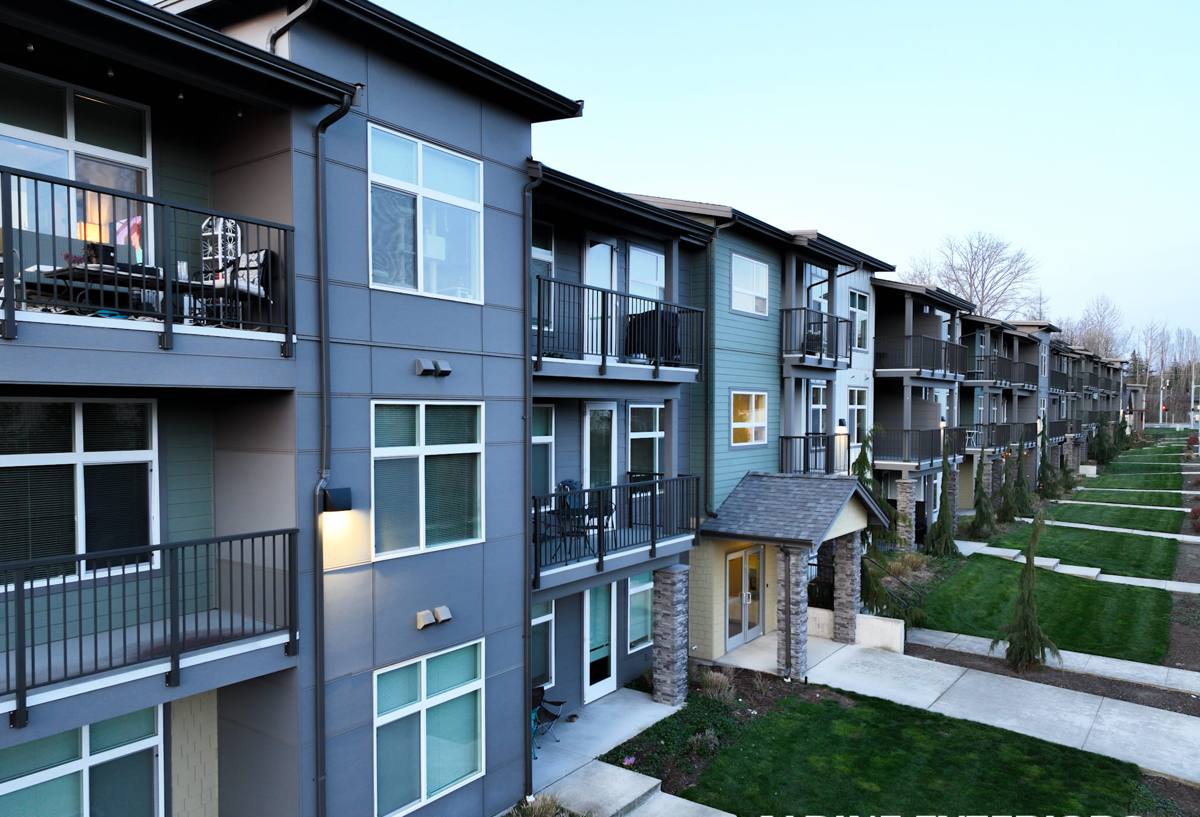
What Sumas-Area Weather Does to Siding Over Time
Homes in this part of Washington deal with three things, year after year, that most siding products were never designed around: salt air, driving rain, and a moss season that can stretch for months at a time.
Moisture That Doesn't Let Up
Driving rain doesn't just fall straight down — wind pushes it sideways, into seams, under trim, and up under laps and battens. Siding here needs to shed that water immediately and dry out quickly between storms. A material that absorbs moisture, swells, or takes days to dry is fighting a losing battle for most of the year.
Salt Air and Slow Corrosion
Salt-laden air accelerates the breakdown of fasteners, caulking, and paint film. It's a slow process, but it's constant, and it shows up first at the weak points of a siding system — exposed nail heads, poorly sealed joints, and any place where the finish has started to chalk or crack.
A Moss Season That Doesn't Really End
Whatcom County's wet, mild winters and shaded lots are close to ideal growing conditions for moss and algae. Once it gets a foothold on a north-facing wall or under an overhang, it holds moisture against the siding surface almost permanently, which speeds up rot in wood products and staining on lower-quality finishes.
Why Board & Batten's Extra Seams Change the Equation
Standard horizontal lap siding relies on overlap and gravity to shed water. Board and batten works differently — vertical boards or panels with a batten strip covering each joint. Done right, it's a very effective system. Done with the wrong material or sloppy flashing, those vertical joints become direct paths for wind-driven rain to get behind the siding.
This is exactly why the product choice matters more on a board and batten job than it does on some other siding styles. A material that swells, cups, or loses its seal at the joint over time will fail at those battens years before it fails anywhere else on the house.
James Hardie's Board & Batten System
We install James Hardie fiber cement exclusively, and for board and batten specifically, that means HardiePanel vertical siding installed with vertical battens over the joints. It's not a repurposed lap product — it's built and engineered as a vertical siding system from the start.
Fiber Cement, Not Wood or Vinyl
Fiber cement doesn't absorb water the way wood does, so it doesn't swell, cup, or rot at the joints the way traditional board and batten lumber can. It also doesn't soften or distort in heat the way vinyl can, and it won't feed pests the way wood siding does.
ColorPlus Factory Finish
James Hardie's ColorPlus finish is baked on at the factory under controlled conditions, which gives it better adhesion and UV resistance than field-applied paint. That matters directly for salt air exposure — a factory finish holds up longer against the slow chalking and fading that coastal air causes.
Non-Combustible and Warrantied
Fiber cement is non-combustible, which is a real consideration for insurance and long-term peace of mind. James Hardie also backs its products with a strong, transferable limited warranty — meaningful if you ever sell the home, since board and batten siding is a visible, character-defining feature buyers notice.
What a Correct Board & Batten Installation Involves
The product is only as good as the installation behind it. Board and batten in particular punishes shortcuts, because there are more joints and fastening points than a lap job.
Weather-Resistive Barrier and Flashing First
Before a single panel goes up, the wall needs a properly lapped weather-resistive barrier and correctly integrated flashing at windows, doors, and any horizontal trim. This layer is what actually keeps water out of the wall assembly — the siding is the second line of defense, not the only one.
Panel Layout and Batten Spacing
Panel joints need to land on framing, be properly gapped for expansion, and be backed with the right flashing or sealant strategy before the batten goes over them. Batten spacing has to follow manufacturer specifications, both for appearance and for wind load performance.
Fastening to Spec
James Hardie specifies fastener type, spacing, and embedment depth for a reason — it's tied to wind resistance and long-term panel performance. Under- or over-driven fasteners are one of the most common causes of early siding problems, and they're invisible to a homeowner until something goes wrong.
Sealant and Trim Detailing
Joints, corners, and penetrations get sealed with a compatible sealant, not just caulked as an afterthought. This is one of the areas where driving rain finds its way in when it's skipped or rushed.
Board & Batten Material Comparison for Sumas Homes
Here's how the common board and batten material options stack up against the conditions this area actually sees.
| Material | Moisture & Rot Resistance | Moss/Algae Resistance | Maintenance | Typical Lifespan |
|---|---|---|---|---|
| James Hardie fiber cement | Strong — won't swell or rot | Good with factory finish; periodic cleaning still recommended | Low — no repainting for years | Decades, with transferable warranty |
| Cedar or primed wood | Vulnerable at joints and battens if finish fails | Prone to moss/algae staining without regular treatment | High — regular painting/staining and joint inspection | Shorter without diligent upkeep |
| Vinyl board and batten | Doesn't rot, but can warp or gap at fasteners over time | Can trap moisture behind panels at seams | Low, but limited repair options if damaged | Variable; UV and heat can shorten life |
| LP SmartSide | Engineered wood — depends heavily on correct sealing at every cut edge and joint | Moderate; performance tied closely to installation quality | Moderate — edge sealing and inspection matter more | Solid if installed and maintained precisely |
We only install the first row of that table. Not because the others don't have a place in the market, but because we've made a professional call that fiber cement is the right standard for the moisture and moss conditions homes face here.
Our Process for Board & Batten Installs Near Sumas
- Assessment: We walk the home, check existing siding and sheathing condition, and look specifically at wind exposure and moisture patterns on that lot.
- Prep: Old siding removal (when applicable), sheathing repair as needed, and installation of a properly lapped weather-resistive barrier.
- Flashing and trim: Windows, doors, and horizontal trim get flashed before any panel goes up.
- Panel and batten installation: Panels and battens go up to James Hardie fastening and spacing specifications, with attention to joint placement over framing.
- Sealing and finish check: Joints and penetrations are sealed, and the finished job is inspected against manufacturer installation standards before we call it done.
Maintaining Board & Batten Siding in a Moss-Prone Climate
Fiber cement is low-maintenance, not no-maintenance. A little seasonal attention goes a long way in this climate:
- Rinse the siding with a garden hose (not a pressure washer aimed directly at joints) once or twice a year, especially on shaded or north-facing walls
- Trim back landscaping and tree branches that keep siding shaded and damp longer than it needs to be
- Check caulking at trim, corners, and penetrations annually and have gaps resealed before they become entry points
- Keep gutters and downspouts clear so water isn't sheeting down the wall behind the battens
- Address any moss or algae growth early with a gentle cleaning rather than letting it establish and hold moisture against the surface
Why Hire a Crew That Already Works in Sumas and Lynden
Board and batten installation quality depends on judgment calls that generic experience doesn't always cover — how much clearance to leave at grade on a lot with poor drainage, how to detail flashing on a wall that takes the brunt of wind-driven rain, where moss tends to establish first based on sun exposure and tree cover. A crew that regularly works Sumas and the greater Lynden area has already seen how homes in this specific stretch of Whatcom County hold up over time, and builds that knowledge into every install rather than learning it on your house.
It also means straightforward accountability. We're not driving in from out of the area for one job — we're working on homes near yours on a regular basis, and our name is attached to how those installations perform through the next wet winter and the one after that.
If you're weighing board and batten siding for a home in the Sumas area, we're happy to take a look and talk through what your specific house needs. Reach out for a free, no-pressure estimate — there's a form right below this page to get started.