 Lynden Siding
 Board & Batten Siding for Acme Homes: A Style That Demands Correct Execution
Board and batten has become one of the most requested exterior looks for homes in and around Acme, and it's easy to see why. The strong vertical lines suit modern farmhouse, craftsman, and shop-style homes alike, and it reads as clean and intentional in a way that flat lap siding sometimes doesn't. But board and batten is also one of the least forgiving siding profiles when it's installed poorly. The vertical seams, the exposed batten strips, and the reliance on properly managed water paths all mean that small installation shortcuts show up fast in a climate like ours. Whatcom County sees a long, wet stretch of the year, with driving rain that comes in sideways more often than straight down, salt-laden air moving in off the water, and a moss season that can stretch across most of the fall, winter, and spring. A board and batten job that isn't detailed correctly for that reality doesn't just look bad over time — it fails.
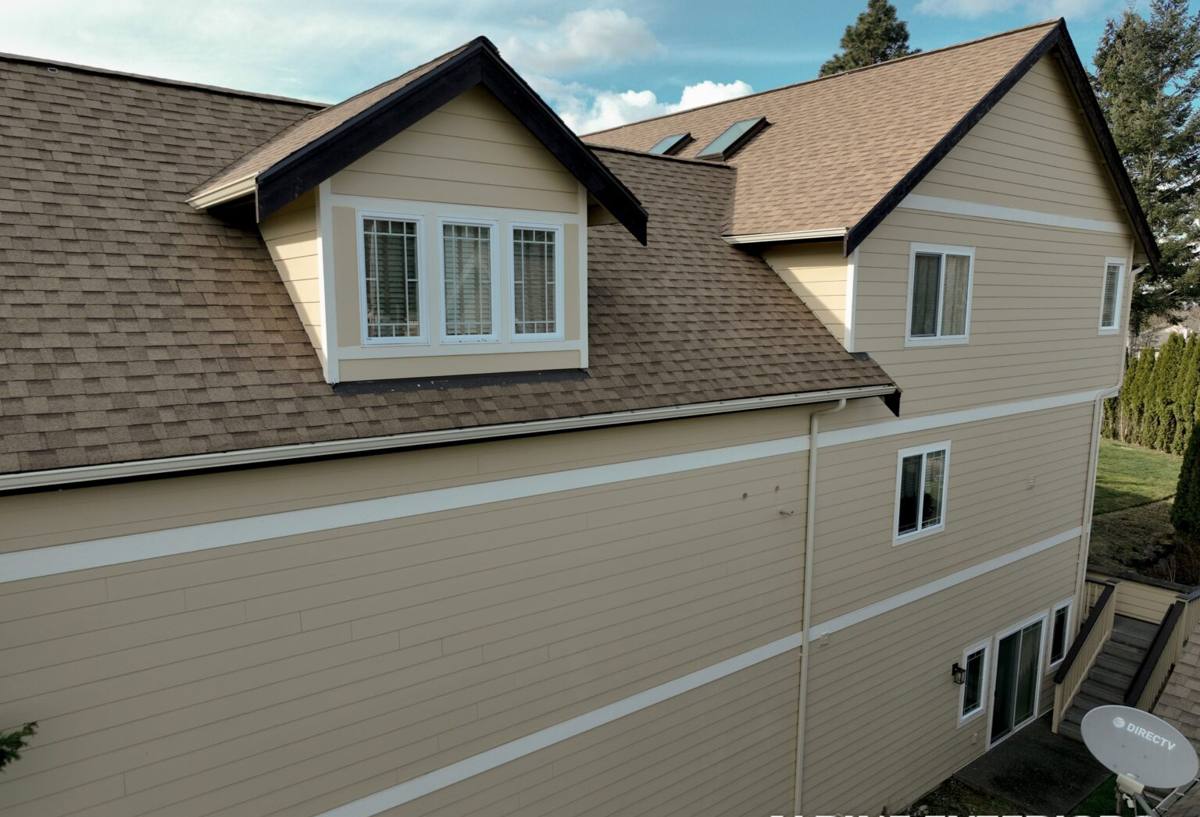
What Board & Batten Siding Actually Is
The Vertical Panel System
True board and batten is a two-layer system. Wide vertical panels (or individual boards) are installed first, and then narrower battens are fastened over the seams between them. The battens aren't decorative trim sitting on top of a finished wall — they're a functional part of how the wall sheds water. Get the layering, fastening, and flashing wrong at this stage and everything visible above it is compromised.
Why the Batten Strips Matter
Every batten strip is a fastening zone, and every fastening zone is a place water can find its way behind the cladding if it isn't detailed correctly. On a horizontal lap profile, gravity does a lot of the water-shedding work for you. On a vertical board and batten wall, water runs straight down the face of the panel and collects right where the battens meet the panel edge. That's exactly why we treat batten placement, fastener pattern, and the drainage plane behind the panels as the parts of the job that actually determine how the siding performs — not just how it looks on installation day.
What Lynden's Climate Does to Vertical Siding
Whatcom County's weather isn't dramatic, but it's relentless, and relentless is what wears out a poorly built wall. A few things matter specifically for board and batten performance on Acme homes:
- Driving rain: Wind-driven rain pushes water sideways into vertical seams and batten joints rather than letting it simply run off, which is why gapping and flashing details at every joint matter more here than in calmer climates.
- Salt air: Airborne salt moving inland accelerates corrosion on fasteners and metal flashing and speeds up the breakdown of lower-grade caulking and paint films over time.
- A long moss season: Extended damp, shaded conditions — common on north-facing walls and under eaves with less sun exposure — give moss and algae a long runway to take hold, especially where battens trap moisture or debris against the wall.
None of this means board and batten is a bad choice for the area. It means the installation has to be built with this climate in mind from the first course, not patched later with caulk and touch-up paint.
Where Board & Batten Installations Go Wrong
Most board and batten failures we get called to look at trace back to a handful of repeatable mistakes, not bad luck. If you're evaluating a bid or a past installation, these are the details worth checking:
- Battens face-nailed directly through the panel and into open air behind it, instead of nailed into solid framing or blocking
- No rainscreen or drainage gap behind the panels, so any moisture that gets in has nowhere to go and no way to dry
- Butt joints and panel ends left unflashed, with caulk used as the only line of defense against water intrusion
- Battens spaced or sized inconsistently, which strains the caulked joints and accelerates cracking
- Incorrect fastener type or spacing for a vertical panel product, leading to buckling or fastener pull-through in wind
- Bottom starter courses and inside corners left without proper flashing, which is where standing water tends to collect first
Our Board & Batten Process for Acme Homes
We approach every board and batten project as a water-management system first and a finish second. In practice that looks like this:
- Wall assessment: We check the existing wall for hidden moisture damage, soft sheathing, and framing issues before any new siding goes on — covering a problem never fixes it.
- Drainage plane and rainscreen installation: A proper water-resistive barrier and drainage gap go in first, so any incidental moisture that gets past the cladding has a path to drain and dry rather than sitting against the wall.
- Panel installation to manufacturer spec: Panels are installed with correct fastener type, spacing, and clearance, following James Hardie's published installation requirements rather than a generalized approach.
- Batten placement and fastening: Battens are fastened into solid backing at the correct spacing, with attention to expansion gaps so the assembly can move with temperature and moisture changes without cracking joints.
- Flashing and sealant detailing: Corners, penetrations, and horizontal transitions get proper flashing rather than relying on sealant as a primary barrier — sealant is a backup layer, not the whole plan.
- Final inspection: We walk the finished wall looking specifically for consistent reveal lines, tight fastener patterns, and clean caulk joints before calling the job done.
James Hardie Options for a Board & Batten Look
We only install James Hardie fiber cement, and for board and batten there are a couple of ways to get the look correctly with their product lines. The table below compares the common approaches.
| Approach | How It's Built | Best Suited For |
|---|---|---|
| HardiePanel vertical siding + HardieTrim battens | Wide vertical fiber cement panels with true batten strips fastened over the seams, in either smooth or Select Cedarmill texture | Homes wanting an authentic board and batten profile with strong shadow lines |
| Artisan Series accent applications | A premium-finish line sometimes used for board and batten accent walls or feature gables alongside a primary lap or panel field | Homes mixing board and batten as an accent rather than the full exterior |
| ColorPlus factory finish (either approach) | Color is baked on in a controlled factory process rather than field-applied | Homeowners who want consistent, long-lasting color without repainting on a set cycle |
All of these are non-combustible fiber cement, engineered specifically for wet, variable climates like ours — which is part of why we standardized on Hardie rather than offering vinyl board and batten panels or wood-based alternatives that carry more long-term moisture and maintenance risk in this environment.
Cost Factors for Board & Batten Siding in Acme
Board and batten costs more than plain lap siding on a like-for-like basis, mainly because of the extra batten material and labor involved in installing two layers correctly. The main variables that move the price on a given home are below.
| Factor | Why It Affects Cost |
|---|---|
| Home size and wall complexity | More corners, gables, and dormers mean more cut panels, more battens, and more flashing detail work |
| Existing siding removal and disposal | Tear-off of old cladding adds labor and hauling costs before new siding can start |
| Wall and sheathing repair | Moisture damage found during removal has to be repaired before new siding goes on, which affects both cost and schedule |
| Full board and batten vs. accent use | A full-exterior board and batten wall costs more than using it selectively on gables or feature areas |
| Trim and corner detailing | Custom corner and window trim work adds material and precision labor beyond the flat field of siding |
| Access and site conditions | Multi-story sections, tight lot lines, or difficult staging areas add time and equipment cost |
A Practical Maintenance Checklist for Acme Homeowners
Even correctly installed siding benefits from a little seasonal attention in this climate. A short annual routine goes a long way:
- Rinse siding down once or twice a year to clear pollen, road film, and the salt residue that airborne moisture can leave behind
- Check shaded, north-facing sections for early moss or algae growth before it spreads across a wider area
- Look at caulked joints at trim, corners, and penetrations for cracking or separation, especially after the wettest months
- Keep gutters clean and downspouts directed away from the wall so runoff isn't concentrated onto one section of siding
- Trim back vegetation and landscaping that keeps a wall section shaded and damp longer than the rest of the house
Why a Crew That Already Works in Acme Matters
Board and batten performance in this climate comes down to details that don't show up in a glossy brochure — how a specific wall orientation handles driving rain, how much moss pressure a shaded elevation actually sees over a full year, and how the local building department expects flashing and drainage details to be documented. A crew that regularly works homes in and around Lynden and greater Whatcom County has already worked through those details on other houses facing the same weather your home does. That experience shows up in fewer callbacks, tighter installations, and a finished wall that's built for the specific conditions it has to survive here — not a generic install pulled from a manual written for a drier region.
If you're considering board and batten siding for a home in Acme, we're happy to walk the property, look at your specific exposure to rain and moss, and put together a straightforward, no-pressure estimate using the form below.