 Lynden Siding
 Blaine Sits Right at the Edge of the Weather
Blaine gets the full force of what the Salish Sea and the Pacific systems moving through Whatcom County can throw at a house. Homes here sit close to open water, which means salt-laden air working on every exposed surface year-round, plus driving rain that comes in sideways during winter storms rather than falling straight down. Add a long, shaded, wet moss season that can run from fall through spring, and you have a climate that is genuinely harder on exterior siding than most inland areas of the county, including our home base in Lynden.
None of these factors are dramatic on their own. It is the combination — and the fact that it repeats every single year — that wears siding down faster in Blaine than it would twenty or thirty minutes inland. Salt air accelerates corrosion on fasteners and trim. Wind-driven rain finds gaps in flashing and caulking that would never get tested in a calmer location. Moss and algae hold moisture against the wall longer than a quick rain shower would. A siding system and installation method that would be perfectly fine elsewhere in Whatcom County can fall short here.
What Blaine Homes Actually Need From Their Siding
Given that climate, the priorities for siding on a Blaine home are pretty specific:
- Material that does not absorb and hold moisture, since it will be exposed to damp conditions for long stretches of the year
- A factory finish that holds its color under UV exposure and salt air, instead of chalking or fading within a few seasons
- Fasteners and flashing details rated for a corrosive, wet environment
- A surface and joint system that does not give moss and algae an easy foothold
- An installation that respects manufacturer clearances and gaps, because those details matter more here than in a drier climate
These aren't abstract concerns. They're the difference between siding that still looks and performs like new after fifteen years near the water, and siding that needs recaulking, repainting, or patching within five.
Why We Only Install James Hardie Fiber Cement in Blaine
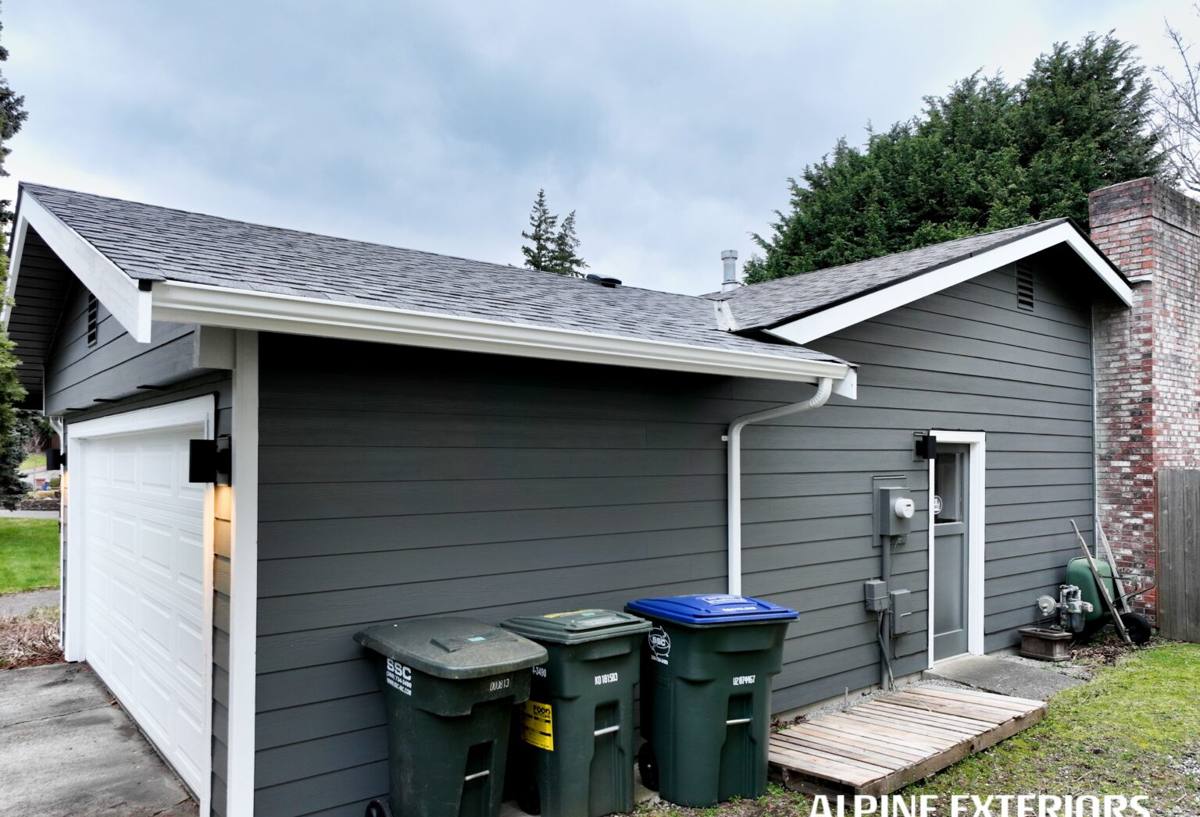
We made a decision as a company to install James Hardie fiber cement siding exclusively, and nowhere does that decision make more sense than on a coastal job in Blaine. We don't install vinyl, LP SmartSide, Cemplank, Allura, or primed wood siding — not because those products have no merit, but because we don't think they hold up to this specific combination of salt exposure, wind-driven rain, and sustained moss season the way we want a Blaine home's siding to hold up. Fiber cement is dimensionally stable and doesn't rot, swell, or provide the organic food source that wood-based products can offer to moss and mildew.
How Hardie Handles Salt Air
James Hardie's ColorPlus finish is a factory-applied, baked-on coating engineered to resist fading and chalking better than field-applied paint, which matters in an environment where salt air and UV exposure both work against a painted surface. Because the color is cured onto the board before it ever reaches the site, it holds tone more consistently through the kind of weathering Blaine sees than a repainted surface typically does.
How Hardie Handles Moisture and Moss
Fiber cement is non-combustible and doesn't absorb water the way wood or wood-composite products do, so it doesn't swell, cup, or rot when it stays damp for extended periods — which is exactly what happens during a long moss season. That doesn't mean moss can't grow on any exterior surface with the right shade and moisture; it means the siding itself isn't degrading underneath it while it does.
What a Correct Installation Involves
The product is only half the equation. In a climate like Blaine's, how the siding goes on matters as much as what goes on. A rushed or generic installation can undermine even the best material.
Weather-Resistive Barrier and Flashing
Every installation starts with a properly lapped weather-resistive barrier and correctly integrated flashing at windows, doors, and any horizontal trim or transition. In a driving-rain environment, water will find any shortcut in the flashing sequence — laps have to run the right direction, and every penetration needs to be sealed before the siding goes over it.
Fastening and Clearances
James Hardie specifies exact fastener types, spacing, and minimum clearances above rooflines, decks, and grade. Skipping those clearances is one of the most common ways an otherwise good product fails early, because it traps moisture right where the siding meets another surface — a mistake that shows up faster in a wet, salt-air climate than it would somewhere drier.
Trim, Joints, and Caulking
Butt joints, corners, and trim transitions get treated as moisture-management details, not just cosmetic ones. That means the right caulking products, correct joint gaps per manufacturer spec, and attention to how water will actually move across the wall during a storm blowing in off the water.
Our Process for a Blaine Siding Project
Site Visit and Assessment
We start by walking the exterior with you, looking at current siding condition, trim, flashing, and any moisture or moss issues already present. We measure, note problem areas, and talk through what your home specifically needs given its exposure — a home facing open water or prevailing wind gets treated differently than one more sheltered by trees or neighboring structures.
Prep and Tear-Off
Old siding comes off, and we inspect the sheathing underneath for any rot or damage that needs to be addressed before new material goes on. Covering up a moisture problem instead of fixing it is how a new installation ends up failing early — we won't do that.
Installation
Our crews follow James Hardie's installation specifications on fastening, clearances, and flashing sequence, adjusted for the specific exposure of your home. We work with an eye on the weather, since a driving-rain day is not the day to have a wall open.
Final Walkthrough and Cleanup
We walk the finished job with you, check caulking and trim details, and clean up the site. You should be able to look at every elevation and see consistent, correctly finished work — not just the front of the house.
Signs Your Blaine Home May Need New Siding
A few things worth checking, especially on a home that's been exposed to the water and wind for a number of years:
- Persistent moss or algae growth that returns quickly after cleaning
- Soft spots, bubbling, or visible warping in siding panels or trim
- Paint that's chalking, peeling, or fading unevenly, especially on the water-facing side of the house
- Caulking that's cracked, shrunk, or pulled away from joints and trim
- Staining or discoloration near the bottom courses, which often points to moisture wicking up from grade
- Visible corrosion on fasteners or trim hardware
Any one of these on its own might just need a repair. Several together, especially on a home that's due for a siding update anyway, usually means it's worth having a full assessment done.
What Affects the Cost of Siding Installation in Blaine
Every home is different, but the main cost drivers for a Blaine project tend to fall into a few categories:
| Factor | Why It Matters Here |
|---|---|
| Home size and elevation complexity | More corners, dormers, and trim transitions mean more flashing and joint detail work |
| Tear-off and sheathing condition | Moisture-related repairs found during tear-off add scope but prevent hidden problems |
| Exposure to wind and water | Homes with direct exposure to open water or prevailing storms often warrant extra flashing and sealing attention |
| Trim and accessory scope | Corner boards, window trim, and fascia detail all affect material and labor |
| Access and site conditions | Grade, landscaping, and staging space affect how efficiently a crew can work |
We give a specific number after seeing your home, not a phone estimate — too many of these factors depend on what's actually going on with your walls.
Why a Crew That Already Works in Blaine Matters
General siding experience doesn't automatically translate to good outcomes in a coastal, high-exposure environment. A crew that has worked Blaine before understands which elevations tend to take the worst of the weather, how far moss issues can spread if the underlying moisture problem isn't caught during tear-off, and how to sequence a job around a weather window instead of getting caught mid-install by a system rolling in off the water. That local familiarity, paired with sticking to one product system we know well, is what lets us give you a straight answer about what your home needs instead of a generic pitch.
Maintaining Your Siding After Installation
James Hardie siding is low-maintenance, not no-maintenance. In Blaine's climate, a periodic rinse to keep moss and algae from building up, an annual look at caulking and trim joints, and keeping gutters and downspouts clear so water isn't sheeting down the wall will go a long way toward getting the full lifespan out of the installation. None of this requires professional service on a routine basis — it's the kind of upkeep most homeowners can do themselves in an afternoon.
If you're weighing a siding replacement for a home in Blaine, we're happy to take a look and give you a straightforward, no-pressure estimate — just fill out the form below.