 Lynden Siding
 Custom Decks in Blaine: Building for a Salt Air, Coastal Climate
Blaine sits at the northern edge of Whatcom County, right where Semiahmoo Bay and Drayton Harbor meet the U.S.-Canada border, and that waterfront position shapes almost everything about building outdoors here. A custom deck in Blaine has to hold up to salt-laden air, rain that arrives sideways as often as it falls straight down, and a moss season that barely lets up most of the year. We're based just up the road in Lynden, and Blaine is regular territory for our crew — enough that we've built and repaired decks up and down this stretch of coastline and seen firsthand which construction choices actually last against what this climate delivers.
A deck is different from siding or roofing in one important way: it's a horizontal surface. People walk on it, water sits on it, and the sun rarely gets a full day to dry it out before the next system rolls through. That combination makes deck work in Blaine less forgiving of shortcuts than it would be in a drier, more sheltered part of the county. This page covers what actually goes into a custom deck built to last here — the materials, the structural details, and the ongoing conditions we design around on every job.
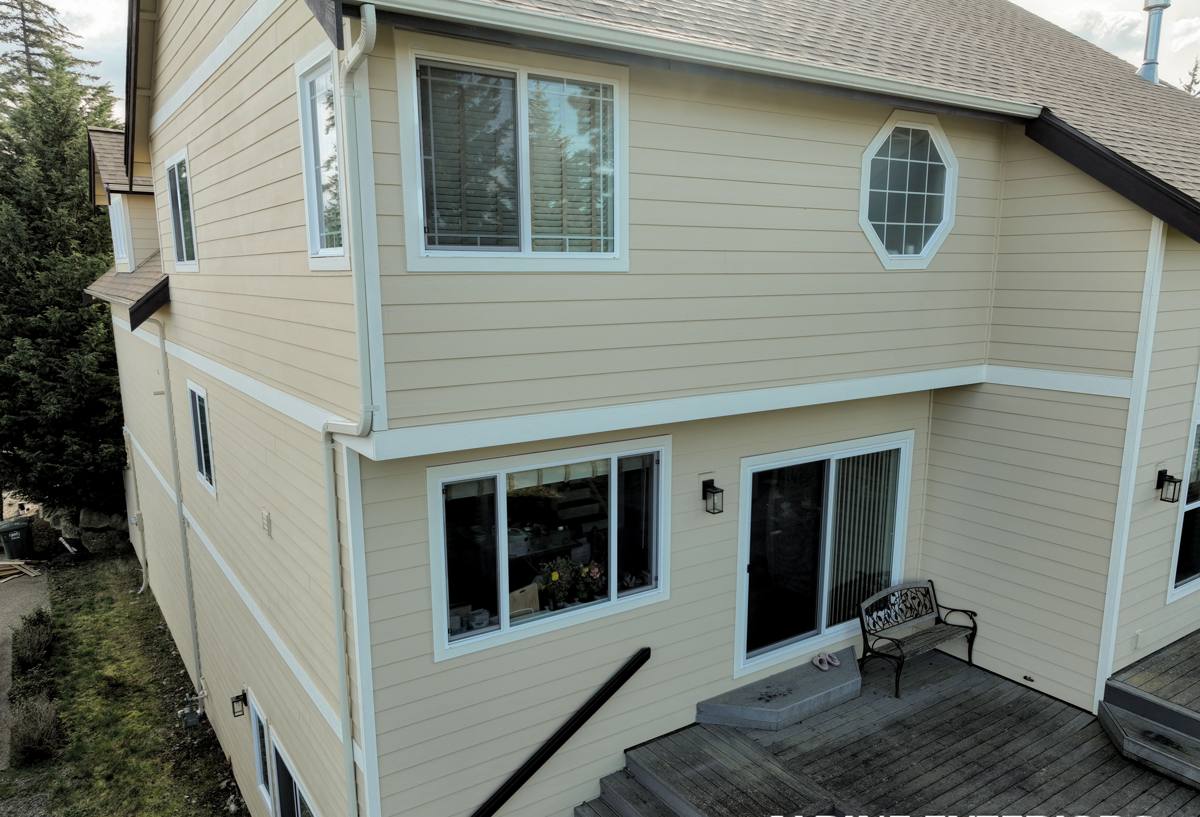
What Blaine's Climate Does to a Deck
Salt Air and Fastener Corrosion
Because Blaine sits directly on the water, homes here take a steadier dose of salt-carrying air than towns set further inland in the county. On a deck, that shows up first in the metal: screws, joist hangers, post bases, and railing hardware all corrode faster when they're rated for general use rather than coastal exposure. A rusting fastener isn't just unsightly — it loses holding strength over time, and on structural connections like ledger boards and stair stringers that's a safety issue, not a cosmetic one.
Driving Rain and Standing Moisture
Storms coming off the water don't fall straight down in Blaine; wind pushes rain sideways and up under railings, into ledger connections, and across board seams. A deck surface has to shed that water quickly, and the framing underneath has to stay ventilated enough to dry out between storms. Decks that trap moisture against a ledger board or hold water in a low spot on the decking surface are the ones that develop rot and soft framing years ahead of schedule.
A Long Moss Season Underfoot
Mild temperatures and near-constant dampness give moss and algae a growing season that runs most of the year on shaded decks, especially under trees or on the north side of a house. On a deck, that's not just a cosmetic problem. Moss and algae film on a walking surface gets slick fast, and it's one of the more common reasons we get called out to look at an older deck in Blaine.
Decking Material: Composite vs. Wood for This Climate
The decking boards themselves carry most of the weather load on a deck, since they're the surface that stays wettest the longest. Here's how the common options actually perform in a climate like Blaine's, not just on a spec sheet:
| Material | Moisture & Moss Behavior | Maintenance | Realistic Lifespan Here |
|---|---|---|---|
| Capped composite (e.g. TimberTech) | Protective cap resists moisture absorption into the core; harder surface for moss and algae to take hold on | Occasional washing; no staining or sealing | 25-30+ years |
| Pressure-treated wood | Absorbs moisture readily; prone to cupping, splitting, and moss growth on shaded boards | Regular sealing or staining, often every 1-2 years in this climate | 10-15 years before major repair |
| Cedar | Naturally rot-resistant but still absorbs surface moisture; grays and can splinter without upkeep | Regular sealing or staining to hold color and prevent splintering | 15-20 years with consistent upkeep |
| PVC decking | Fully synthetic; doesn't absorb moisture, though surface texture and feel differ from composite | Low; occasional washing | 25-30+ years |
There's no universally "right" answer — budget, look, and how much upkeep you actually want to do all factor in. What matters is going into that decision with an honest picture of how each material behaves once it's sitting outside in Blaine's weather year-round, not just how it looks on the day it's installed.
Why We Build Custom Decks with Composite Decking
We build the large majority of our custom decks with capped composite boards, and that comes from watching how different decking materials hold up on service calls and rebuilds across Whatcom County's coastal towns, not from a supplier relationship.
- Capped construction: A protective polymer shell wraps the board, keeping moisture from soaking into the core the way it does with uncapped wood-composite blends or raw lumber.
- No seasonal sealing or staining: In a climate that gets this much sustained rain, skipping the annual maintenance cycle is a real advantage, not a luxury.
- Dimensional stability: Composite boards don't cup, warp, or split the way wood does after repeated wet-dry cycling, which keeps board seams tighter and reduces the low spots where water pools.
- Consistent color and grip: Factory-finished boards hold their color longer than field-applied stain, and textured surfaces stay less slick when wet or mossy than smooth wood.
- Manufacturer warranty backing: Composite decking typically carries a stronger, more straightforward warranty structure than lumber, provided the substructure and fastening follow spec.
We won't talk a homeowner out of a cedar or pressure-treated deck if that's genuinely the look and budget they want — wood has a real place, and plenty of people are happy with it when they keep up the maintenance it needs. But if you're asking us to build a deck we fully stand behind with the least ongoing upkeep in a climate this wet, composite is the honest answer for the decking surface itself.
What a Correctly Built Custom Deck Involves
The decking material only performs as well as what's underneath it. In Blaine's climate, the structural details matter more than they would somewhere drier, and they're the parts that don't show once the job is finished.
Footings and Substructure
Footings need to be set to the correct frost depth and bear on solid, undisturbed soil — something that can vary from lot to lot even within Blaine, depending on how close a property sits to the water and how the ground drains. Framing lumber should be rated for ground contact where it's close to grade, and any structural wood needs enough airflow underneath to dry out between wet stretches rather than sitting in standing moisture.
Fasteners and Hardware
Every screw, hanger, bolt, and bracket on a deck built for Blaine should be rated for coastal or marine-grade exposure, not just general exterior use. This is one of the areas where cutting a corner is nearly invisible on install day and shows up as rust streaks and loosening connections a few years later.
Drainage, Spacing, and Ledger Flashing
Board spacing needs to allow water to drain through rather than pool on the surface, and the ledger board where the deck attaches to the house needs proper flashing to keep water from tracking behind it into the wall framing. This is one of the most common failure points we find on older decks — a ledger that was never flashed correctly, quietly feeding moisture into the house for years before anyone notices.
Cost Factors for a Blaine Custom Deck
| Deck Element | What Drives Cost | Coastal Climate Consideration |
|---|---|---|
| Substructure & footings | Frost depth, soil conditions, ledger attachment method | Corrosion-resistant hangers and hardware for salt-tinged air |
| Decking material | Composite vs. wood, board profile, color and texture options | Composite avoids the repeated sealing and staining cycle this climate demands of wood |
| Railings & stairs | Material choice, height and baluster spacing code requirements | Hardware and fastener corrosion resistance near the water |
| Size & layout | Square footage, number of levels, custom shapes | More footings and ledger connections to detail correctly in wet ground |
| Covered or roofed sections | Added framing, roofing tie-in to the existing structure | Keeps the deck surface drier through Blaine's long wet stretch |
These are general cost drivers, not a quote. Every lot in Blaine sits at a slightly different distance from the water, with different soil and drainage, so we walk the property and talk through what you actually want before putting a real number on a custom deck project.
Signs an Existing Blaine Deck Needs Attention
Most deck problems in this climate develop slowly, underneath the surface, before they show up as something a homeowner notices while standing on the deck. Worth checking for:
- Soft, spongy, or bouncy boards, especially near the house or in shaded corners
- Moss or algae film that returns quickly after cleaning
- Rust streaks around screws, hangers, or railing hardware
- Cupping, splitting, or splintering on wood decking
- Loose or wobbly railings, posts, or stair stringers
- Water that doesn't drain off the surface within a day of a storm
- Discoloration, staining, or soft wood at the ledger board where the deck meets the house
Any one of these is worth a look before it gets worse. A soft ledger connection in particular is easy to miss from a casual glance and is one of the more serious issues we find on older Blaine decks.
Why a Local Crew Already Working Blaine Matters
A crew that builds and repairs decks across Whatcom County's coastal towns on a regular basis sees how salt air, driving rain, and moss actually behave on real decks over years, not just how a material performs on a spec sheet. That experience shapes practical decisions on a custom deck project: how footings should be set for a given lot's drainage, which hardware grade is worth the extra cost this close to the water, and where extra flashing attention at the ledger pays off down the line. Blaine's exposed, waterfront position isn't the same as more sheltered towns further inland in the county, and a crew that knows the difference builds accordingly instead of using a generic approach on every job.
Get a Free, No-Pressure Estimate
If you're planning a new custom deck in Blaine, replacing an aging one, or you've noticed soft boards, rust, or a ledger that doesn't look right, we're glad to come take a look and give you a straightforward, honest read on what it needs. Reach out using the form below to schedule a free estimate — no pressure, no upsell script.