 Lynden Siding
 Why Birch Bay Decks Wear Out Faster Than You'd Expect
Birch Bay sits right on the water, and that changes what a deck goes through year to year compared to a deck a few miles inland. Salt-laden air corrodes metal fasteners, hinges, and connectors faster than plain moisture does. Wind off the water drives rain sideways under railings and into board gaps that would stay dry on a more sheltered lot. And because the marine layer keeps things damp and shaded for long stretches of the year, moss and algae get a head start on wood surfaces and never really let go until late summer.
None of that means a deck in Birch Bay is doomed — it means the repair has to account for those conditions instead of ignoring them. A patch job that would hold up fine in a dry inland yard can fail within a season or two out here if the fasteners, flashing, and wood treatment aren't matched to what salt air and standing moisture actually do.
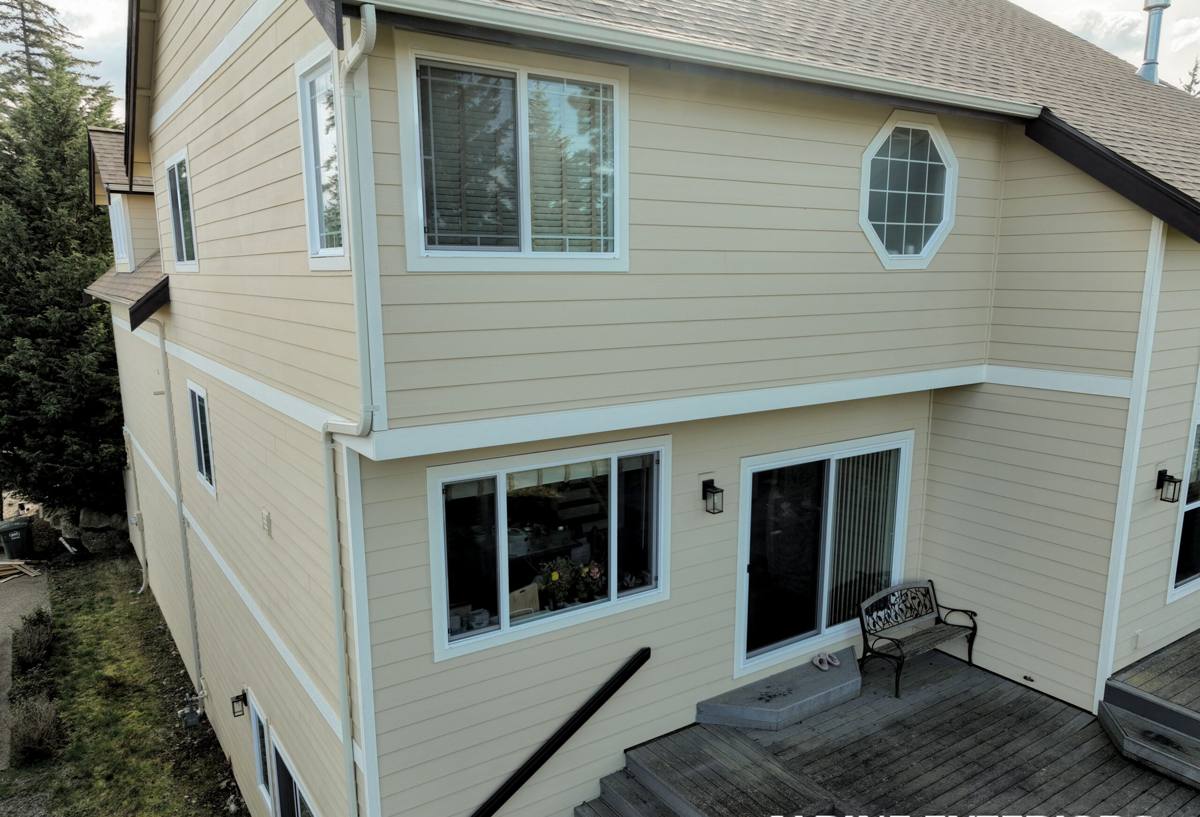
Signs Your Deck Needs Repair — Not Just a Pressure Wash
A lot of Birch Bay homeowners call us after noticing surface problems, but the real damage is often underneath. Here's what we look for, and what you should look for too before it gets worse:
- Soft or spongy spots when you walk across the boards, especially near the house or stair landings
- Rust streaks bleeding out from screws, joist hangers, or bolts
- Gaps or separation where the deck ledger board meets the house siding or trim
- Railing posts that wiggle or flex when you lean on them
- Persistent green or black staining that pressure washing only removes temporarily
- Stair stringers that feel bouncy or uneven underfoot
- Fastener heads that have popped up or corroded through the board surface
If you're seeing two or more of these, it's worth having someone look at the framing, not just the decking surface. Surface wear is cosmetic. Framing and ledger problems are structural, and those are the ones that turn into a bigger bill — or a safety issue — if they sit through another wet Whatcom County winter.
What an Honest Deck Repair Actually Involves
Framing and Structural Checks First
Before we touch a single deck board, we check the framing underneath: joists, beams, posts, and the ledger board connection to the house. This is the part that's invisible from the top and the part most likely to cause real problems if it's been quietly rotting under a deck that still looks fine from a distance. Any repair that skips this step is really just cosmetic work on top of an unknown problem.
Ledger Board and Flashing
The ledger board — where the deck attaches to your house — is one of the most common failure points we see in coastal Washington homes. Driving rain and wind push water behind poorly flashed ledgers, and that moisture has nowhere to go. We check flashing condition and correct it as part of any repair that touches this area, because re-fastening a rotten ledger without fixing the water path underneath just buys you a year or two before it fails again.
Decking Boards and Fasteners
Individual board replacement, fastener upgrades, and surface repair come after the structure is confirmed sound. In a salt-air environment, we pay close attention to fastener material — standard coated screws corrode faster here than they would inland, and a repair is only as good as the hardware holding it together.
Railings and Stairs
Loose railings and bouncy stairs are usually a connection problem, not a wood problem. We check post attachment to framing, not just the visible railing itself, since a railing can look solid and still be barely attached underneath.
Repair vs. Replace: What Actually Drives the Decision
Not every deck problem means a full rebuild, and not every deck is worth saving as-is. Here's how we think through it with homeowners:
| Factor | Leans Toward Repair | Leans Toward Replacement |
|---|---|---|
| Framing condition | Solid, dry, no rot at connections | Soft or rotted joists, posts, or ledger |
| Age of structure | Under 15 years, built to code | Older structure, unclear or outdated construction |
| Extent of damage | Isolated boards, rails, or fasteners | Widespread rot, moss staining throughout, multiple failure points |
| Fastener corrosion | Localized rust, easy to replace | Corrosion throughout the fastener system |
| Budget goals | Extend usable life at lower cost | Want a long-term reset and updated design |
We'll give you a straight answer on which side of that table your deck falls on. If a repair genuinely makes sense, we won't push a rebuild — and if the framing is compromised, we'll tell you why patching it isn't a real fix.
Our Process for a Birch Bay Deck Repair
- On-site assessment. We walk the deck, check framing from underneath where accessible, test railings and stair connections, and look at ledger and flashing condition.
- Honest scope and estimate. You get a clear picture of what's structural versus cosmetic, and what it will take to fix it correctly — not just what's visible from the top.
- Structural repairs first. Any framing, ledger, or flashing issues get addressed before surface work, since surface repairs on a compromised structure don't hold.
- Surface and hardware repair. Board replacement, fastener upgrades, and railing repair, matched to the coastal conditions the deck actually faces.
- Walkthrough. We show you what was found, what was fixed, and what to watch going forward.
Materials That Hold Up in Salt Air
Material choice matters more in Birch Bay than it does a few miles inland. For structural hardware, we favor stainless or high-grade corrosion-resistant fasteners and connectors over standard coated options — the price difference is small compared to what it costs to redo a repair in a few years because the screws failed first. For decking surfaces, both quality-grade treated lumber and composite boards can perform well here, but each comes with trade-offs worth understanding upfront rather than after installation.
Treated wood is often more budget-friendly and easier to spot-repair board by board, but it needs regular sealing to resist moisture and moss in this climate, and it will show wear over time. Composite decking resists moisture and moss better with less upkeep, but it costs more upfront, isn't always simple to spot-repair if a single board is damaged, and installation sensitivity matters — proper spacing and fastening are critical for how it handles temperature swings. We'll walk through which fits your deck, your budget, and how much maintenance you actually want to do, rather than assuming one is automatically right.
Moss, Mildew, and Whatcom County's Wet Season
Even a well-repaired deck needs some seasonal attention out here. Moss and algae growth is a fact of life in this part of Washington, not a sign that something was done wrong. A few habits go a long way:
- Sweep debris and standing leaves off the deck surface regularly, especially in fall
- Keep gutters and downspouts clear so water isn't dumping directly onto or near the deck
- Address green or black staining early with appropriate cleaning rather than letting it sit all winter
- Check railings and stair connections once a year for looseness before it becomes a bigger repair
- Re-seal treated wood decking on a regular schedule rather than waiting until it looks obviously dry
None of this replaces a proper repair when framing or fasteners are actually compromised, but it does stretch the life of the repair once it's done.
Why It Matters to Hire a Crew That Already Works Birch Bay
A contractor who only works inland jobs isn't necessarily thinking about salt-air fastener corrosion, wind-driven rain angles, or how long moss actually takes to dry out on a shaded coastal lot. Those aren't exotic problems — they're just the normal conditions a Birch Bay deck deals with every year. Knowing that going in changes what hardware gets specified, how flashing gets detailed, and what gets flagged during an inspection.
We work throughout Whatcom County, including Birch Bay and the surrounding coastal areas, and we bring that context to every deck repair estimate — what tends to fail first out here, what's worth fixing versus replacing, and what will actually hold up through another wet winter off the water.
If your deck has soft spots, loose railings, rust stains, or moss that won't quit, we're happy to take a look and give you a straightforward assessment. Request a free, no-pressure estimate using the form below and we'll walk through what your deck actually needs.