 Lynden Siding
 Birch Bay Roofs Work Harder Than Roofs a Few Miles Inland
Birch Bay sits right on the water in Whatcom County, and that location changes what a roof has to deal with compared to a home a short drive inland in Lynden. The combination of salt-laden air, wind-driven rain coming off the water, and a shaded, damp climate that keeps moss growing for most of the year puts real stress on asphalt shingle roofs. None of this means asphalt shingles are the wrong choice for the area — they're not — but it does mean the materials, fasteners, and installation details matter more here than they would on a roof set back from the shoreline.
Salt Air and Corrosion
Airborne salt doesn't just affect boats and metal railings. Over years, it accelerates corrosion on exposed metal roofing components — nail heads, flashing, drip edge, and vent stacks. When those parts corrode faster than expected, they fail before the shingles around them do, and that's when leaks start showing up at valleys, chimneys, and roof-to-wall transitions long before the shingle field itself is worn out.
Wind-Driven Rain Off the Water
Rain that comes in sideways off open water behaves differently than rain falling straight down. It gets pushed under shingle tabs, into exposed nail heads, and along flashing edges that would stay dry in a calmer setting. A roof built for average Pacific Northwest rain isn't automatically built for wind-driven rain off Birch Bay — the sealing details have to account for it.
A Long, Damp Moss Season
Between tree cover, marine humidity, and a roofing season that stays cool and wet for much of the year, moss and algae get a long window to establish themselves. Moss holds moisture against the shingle surface, works its way under tabs as it grows, and can lift shingles enough to let water in — even on a roof that isn't that old.
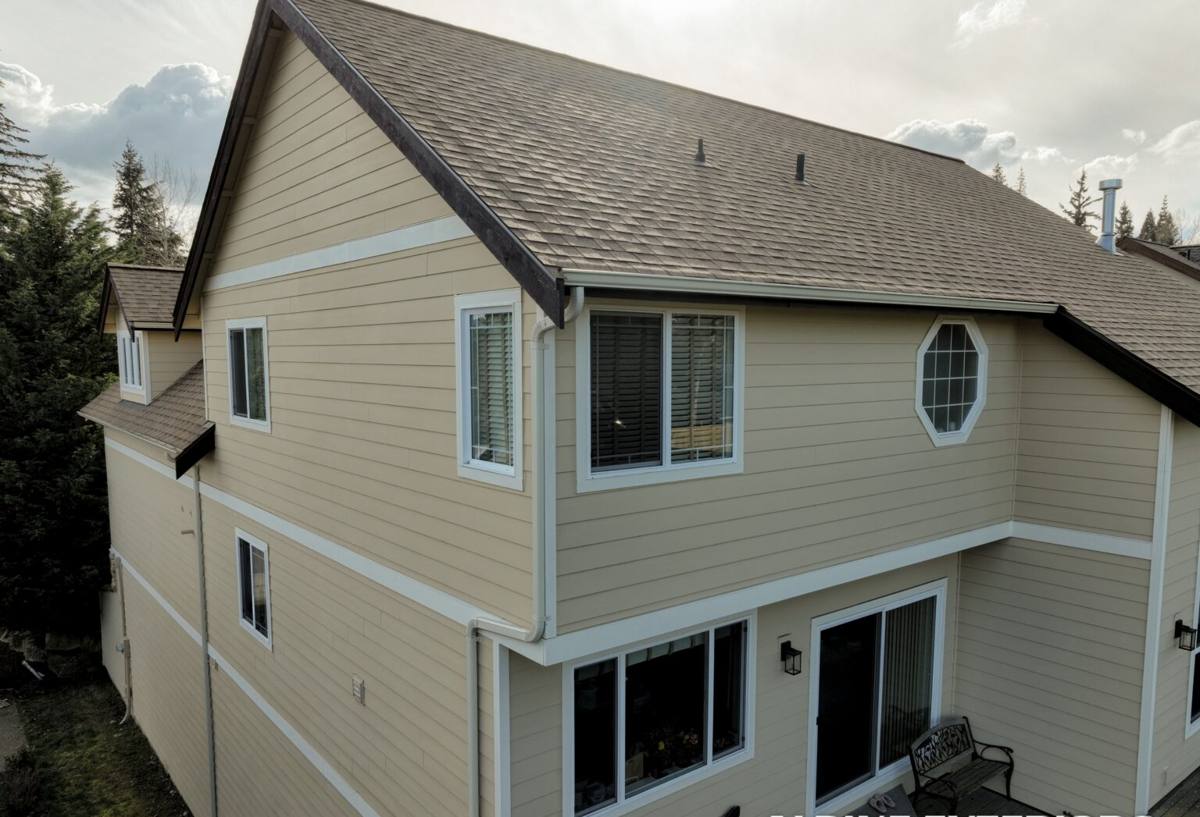
What a Correctly Installed Roof Needs to Handle All of That
A roof that's going to hold up in Birch Bay's environment isn't just "shingles nailed to plywood." The details underneath and around the shingles do most of the real work.
Underlayment and Water-Resistant Barriers
A synthetic or self-adhered underlayment adds a real second layer of protection under the shingles, which matters when wind-driven rain is pushing water somewhere the shingles alone can't fully block. In vulnerable spots — eaves, valleys, and low-slope sections — an ice-and-water shield membrane gives extra insurance against water that finds its way past the shingle surface.
Flashing and Fasteners That Resist Corrosion
Given the salt exposure, we don't treat flashing and fastener selection as an afterthought. Corrosion-resistant flashing at chimneys, sidewalls, and valleys, along with fasteners rated for coastal exposure, cost a little more up front but avoid the early, isolated failures that salt air causes around metal components years before the shingles themselves are due for replacement.
Ventilation That Actually Moves Air
Proper intake and exhaust ventilation keeps the underside of the roof deck dry and at a stable temperature. That matters for shingle lifespan generally, but in a moss-prone, high-humidity area like Birch Bay it also reduces the moisture buildup that helps moss and algae take hold in the first place. A roof that "breathes" correctly simply gives moss less to work with.
Choosing Shingles for a Coastal, Moss-Prone Roof
Not every asphalt shingle is a good match for this environment. A few product-level decisions make a real difference over the life of the roof.
Algae-Resistant (AR) Shingles
Algae-resistant shingle lines use copper or zinc granules blended into the shingle surface. As rain moves across the roof, trace amounts of that metal discourage algae and moss growth. In a climate like Birch Bay's, where moss has months to establish itself every year, starting with an AR-rated shingle is one of the simplest ways to buy yourself time before moss becomes a maintenance headache.
Architectural vs. 3-Tab
Architectural (dimensional) shingles are heavier, layered, and generally rated for higher wind speeds than standard 3-tab shingles. In an area that gets real wind off the water, that extra weight and wind rating is worth the modest price difference for most homeowners. 3-tab shingles are still a legitimate, lower-cost option, but we're upfront with homeowners about that wind-performance tradeoff before they decide.
Wind Ratings
Manufacturers rate shingles for wind resistance, and those ratings depend on using the fastening pattern and sealant strip specified for that product — cutting corners on nailing pattern quietly voids both the wind rating and, often, the manufacturer warranty. On an exposed coastal roof, we don't treat the fastening spec as optional.
Our Installation Process
The steps themselves aren't unusual, but the details within each step are where a coastal roof either holds up or doesn't.
| Step | What We're Doing | Why It Matters in Birch Bay |
|---|---|---|
| Tear-off and deck inspection | Remove old roofing down to the deck, check for soft or damaged sheathing | Trapped moisture from old moss growth can quietly rot decking underneath |
| Deck repair | Replace any damaged sheathing before anything new goes down | A weak deck undermines even the best shingle and fastener choices |
| Underlayment and ice/water shield | Install synthetic underlayment plus membrane at eaves, valleys, and penetrations | Backs up the shingle layer against wind-driven rain |
| Flashing | Install corrosion-resistant flashing at all transitions and penetrations | Flashing fails from salt exposure before shingles typically do |
| Shingle installation | Install shingles to manufacturer nailing pattern and exposure spec | Preserves the wind rating and keeps the warranty intact |
| Ventilation check | Confirm intake and exhaust venting are balanced | Reduces moisture buildup that feeds moss and shortens shingle life |
| Final walkthrough | Inspect the finished roof and clean up the site | Confirms the details above were actually followed |
Keeping Moss and Moisture From Shortening Your Roof's Life
Even a well-installed, AR-rated roof benefits from some basic upkeep in an environment where moss has this much time to work. A few habits go a long way:
- Have moss and debris cleared from the roof surface and gutters at least once a year, more often under heavy tree cover
- Avoid pressure washing shingles directly — it strips granules and shortens shingle life; use gentle, roof-safe methods instead
- Keep overhanging branches trimmed back so shingles get more sun and airflow, which slows moss regrowth
- Check flashing around chimneys, vents, and skylights annually for early signs of corrosion or lifting
- Have a professional inspection after major windstorms, since wind-driven rain can expose problems that aren't visible from the ground
- Make sure gutters drain freely — standing water at the eaves keeps that section of roof wet longer than the rest
What Affects the Cost of a New Asphalt Shingle Roof
Every roof is different, and the honest answer is that cost depends on several factors working together. Here's how the main ones typically weigh in:
| Cost Factor | Typical Impact |
|---|---|
| Roof size and number of facets | High — more area and more valleys/hips mean more material and labor |
| Roof pitch and accessibility | Medium to High — steep or hard-to-access roofs take longer and need more safety setup |
| Number of existing layers to remove | Medium — tear-off of multiple old layers adds labor and disposal cost |
| Deck condition underneath | Variable — hidden rot or soft sheathing adds repair cost once uncovered |
| Shingle grade (3-tab vs. architectural, AR-rated or not) | Medium — better wind and algae resistance costs more per square |
| Flashing and ventilation upgrades | Low to Medium — worthwhile given coastal salt exposure |
We walk through these factors on-site rather than quoting a number sight unseen, since a roof's actual condition and layout drive the price far more than a flat per-square rate would suggest.
Why Hiring a Crew That Already Works Birch Bay Matters
A roofing crew that mostly works drier, less exposed areas inland can still install a technically correct roof — but they may not default to corrosion-resistant fasteners, extra membrane at vulnerable points, or AR-rated shingles unless a homeowner specifically asks. A crew that regularly works Birch Bay and the surrounding Whatcom County coastline treats those choices as standard practice, not upgrades, because they've seen what happens to a roof built without them after a few wet, salty winters. That local familiarity shows up less in what's visible on the surface and more in the details underneath — the flashing, the fasteners, the underlayment — that determine whether a roof is still performing well ten or fifteen years in.
If you're planning a new roof or replacing an aging one in Birch Bay, we're happy to take a look and walk you through what your specific roof needs. Use the form below to request a free, no-pressure estimate.