 Lynden Siding
 Storm Damage Roof Repair for Wiser Lake Homes
Wiser Lake sits in a pocket of Whatcom County that takes weather seriously. Homes here get the open exposure that comes with being near water, the driving rain that rolls in off Bellingham Bay and the Salish Sea, and the shade and moisture from surrounding trees that keeps roofs damp longer than homes further inland. Add in the salt air carried inland from the coast and you have a roofing environment that wears materials down faster than a lot of homeowners expect. A roof that would coast through ten quiet years somewhere drier can pick up real damage here after just one or two rough winters.
This page covers what storm damage roof repair actually means for a Wiser Lake home — what the climate does to a roof, what a correct repair involves, and how we approach the work when we're called out to a property in this area.
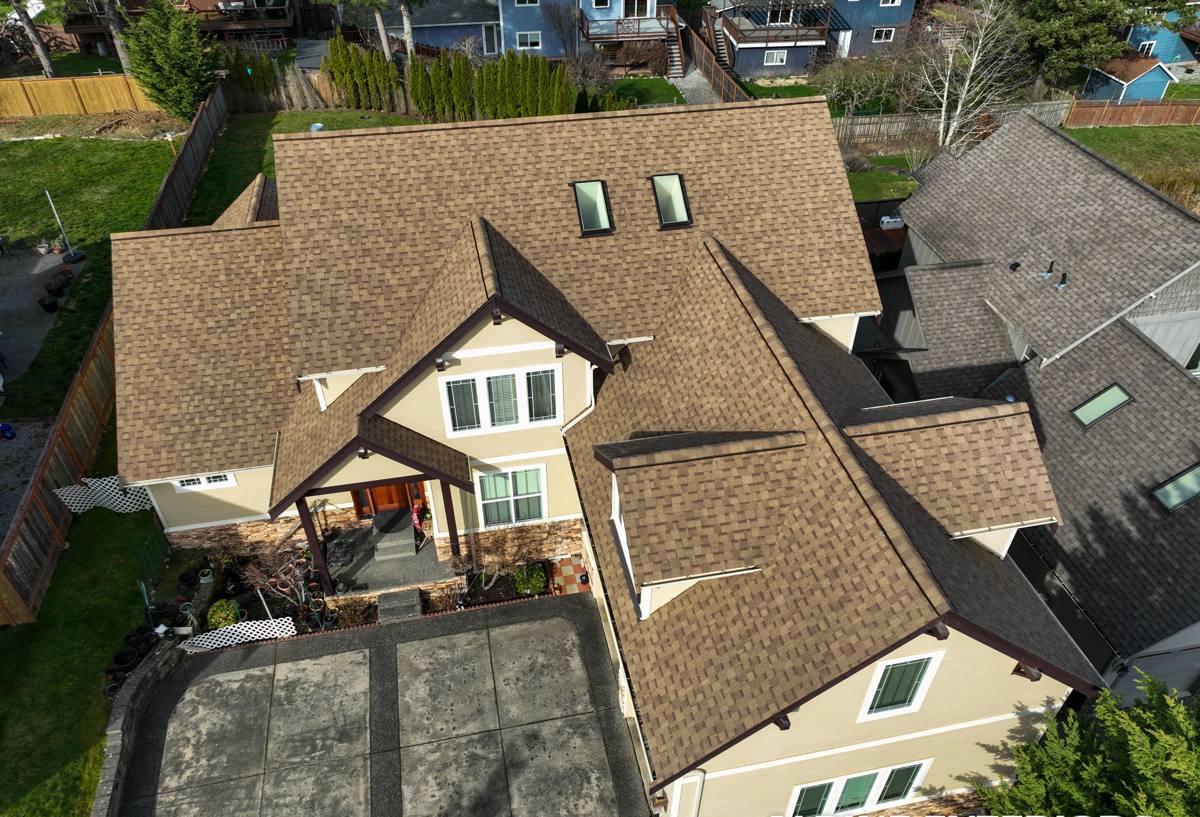
What Whatcom County Weather Does to a Roof
Wind and Driving Rain
Storms moving through this part of Washington rarely hit a roof straight on. Wind comes in at an angle, driving rain up and under shingle edges, ridge caps, and flashing rather than just down on top of them. That's how a roof that looks intact from the driveway can still be taking on water. Repeated wind events also work shingle tabs loose over time — a shingle doesn't have to blow off completely to stop doing its job.
Moss and Trapped Moisture
Lynden's moss season runs long, and a lake-adjacent property with mature trees nearby tends to stay shaded and damp even after the rain stops. Moss doesn't just look bad — it holds water against the roof surface, works its way under shingle edges, and lifts them slightly as it grows. That lifted edge is exactly what wind and rain need to get underneath. Left alone, moss turns ordinary weather exposure into a slow leak problem.
Salt Air and Metal Fatigue
Salt-laden air moving inland accelerates corrosion on exposed metal roofing components — flashing, fasteners, gutter hardware, and any metal roofing panels. Corrosion at a flashing seam or fastener head is a common starting point for a leak that shows up well after the storm that caused it.
Signs Your Wiser Lake Roof May Have Storm Damage
Storm damage isn't always obvious from the ground. Some of it only shows up once you know where to look — or once it's already caused a leak. Watch for:
- Shingles that are cracked, curled, creased, or missing granules, especially after a windy stretch
- Bent, lifted, or missing flashing around chimneys, vents, skylights, and roof-to-wall transitions
- Dented or dinged metal components — vents, gutters, flashing — from hail or wind-driven debris
- Granules collecting in gutters or at downspout outlets
- Soft or discolored ceiling patches, especially near exterior walls or chimneys
- Daylight visible through the roof deck from inside the attic
- Moss buildup at shingle edges, valleys, or the north-facing slope
- Sagging or uneven rooflines, which can indicate deck damage under the surface
Any one of these on its own might not mean much. Two or three together, especially after a known storm event, are worth a professional look before the next rain.
What a Correct Storm Damage Repair Involves
A repair that actually holds up in this climate goes beyond swapping out the shingles that are obviously damaged. The steps that matter most:
- Full-slope inspection, not spot-checking. Wind damage is rarely confined to one shingle. We check the whole affected slope, plus valleys, penetrations, and edges, since storm damage tends to cluster where wind uplift is strongest.
- Deck assessment. If water has been getting under the roofing material for any length of time, the plywood or OSB deck underneath needs to be checked for soft spots or rot before new material goes down. Repairing over a compromised deck doesn't fix anything — it just hides the problem.
- Underlayment and flashing, not just shingles. A shingle is only as good as what's underneath it. Damaged underlayment or corroded flashing gets replaced, not patched around.
- Matching materials correctly. New shingles need to tie into the existing roof properly — same style, compatible weight, and as close a color match as the manufacturer's current line allows.
- Proper fastening for wind exposure. Given how much wind this area sees off the lake and surrounding open ground, repairs get fastened to hold up under the same conditions that caused the original damage, not just to look finished.
Repair or Replace? What Actually Decides It
Not every storm-damaged roof needs a full replacement, and not every roof is worth repairing repeatedly. The honest answer depends on a few factors:
| Factor | Repair Usually Makes Sense | Replacement Usually Makes Sense |
|---|---|---|
| Roof age | Under 10-12 years, or a newer roof with isolated damage | Near or past the material's expected service life |
| Extent of damage | Localized to one slope or a small area | Spread across multiple slopes or recurring in the same spots |
| Deck condition | Solid, dry decking under the damaged area | Soft, rotted, or repeatedly wet decking |
| Material availability | Matching shingles still in production | Discontinued product with no reasonable color/style match |
| Repair history | First or second repair on this roof | Third or more repair in a few years — a pattern, not an event |
We'll always tell you honestly which side of that table your roof falls on. A repair that's likely to fail again in a year isn't a good use of your money, and a full replacement isn't necessary just because a repair is possible.
Our Process for Wiser Lake Homeowners
1. Inspection
We walk the roof (or use a drone where a walk-on inspection isn't practical) to document every affected area — not just the spot you called about. We also check the attic from the inside when accessible, since interior signs often tell us more about how long water has been getting in than what's visible from the roof surface.
2. Written Findings and a Straight Answer
You get a clear rundown of what we found, what caused it, and what it will take to fix — repair or replacement, with the reasoning behind that recommendation. No pressure toward the bigger job if it isn't warranted.
3. Documentation for Insurance
If the damage is storm-related, we document it in a way that's usable for a homeowner's insurance claim — photos, notes on cause, and a scope of work. We're not your insurance adjuster and won't promise a claim outcome, but we make sure the paperwork on our end supports your claim rather than complicating it.
4. The Repair Itself
Work gets done to the standard described above — full slope attention, deck check, proper flashing and underlayment, correct fastening for local wind exposure. We clean up thoroughly, including magnetic sweeps for stray fasteners near driveways and walkways.
5. Follow-Up
We stand behind the work and want to know if anything comes up after the next storm, not just the next sunny day.
Insurance Claims: What to Know Going In
Most homeowner's policies cover sudden storm damage — wind, hail, falling debris — but they generally don't cover damage that built up gradually from neglect or age, like a moss-compromised roof that's been leaking slowly for years. That distinction matters, because it affects both whether a claim is approved and how quickly you should act after a storm. If you suspect storm damage, it's worth getting an inspection soon after the event rather than waiting, since insurers may ask about the timeline between the storm and when damage was reported.
We're happy to provide documentation you can hand to your insurance company, but the claim itself is between you and your insurer. We won't inflate a scope of work to match a settlement number, and we won't tell you something is storm damage if it looks like ordinary wear.
Why Local Experience in Wiser Lake Matters
A contractor who works this specific stretch of Whatcom County regularly knows things a roofer coming from farther away won't — how exposed a given area is to wind off the lake and surrounding open land, how much shade and moss pressure the tree cover creates, and how salt air affects metal components differently than it would twenty miles inland. That local pattern recognition shortens the inspection, sharpens the diagnosis, and helps avoid both under-scoping a repair that won't hold and over-scoping one that doesn't need to be a full replacement.
It also means we're not disappearing after the invoice. If something shows up after the next storm, we're still working in Lynden and the surrounding area, not three towns away.
Get a Free, No-Pressure Estimate
If your Wiser Lake home has visible storm damage, or you're not sure but want a second set of eyes before the next round of weather, we're glad to take a look. The estimate is free, and there's no pressure to move forward with anything — you'll get a straight answer about what's going on and what it would take to fix it. Use the form below to get started.