 Lynden Siding
 Roof Repair for Wiser Lake Homes
Wiser Lake sits in a part of Whatcom County that takes a real beating from the weather. Homes here get months of steady rain, cool damp air that never fully dries out the shade side of a roof, and a marine influence off the Salish Sea that carries salt into the air even well inland. Add a long moss season on top of that, and a roof out here works harder than one in almost any other part of the state. We repair roofs in this area regularly, and the patterns we see are specific to it — not the generic wear-and-tear list you'd get from a roofer who only shows up once and never comes back.
This page covers what roof repair actually looks like for a Wiser Lake home: what the climate does to a roof over time, what a correct repair involves, how we approach the job, and why it matters to hire a crew that already understands this specific stretch of Whatcom County.
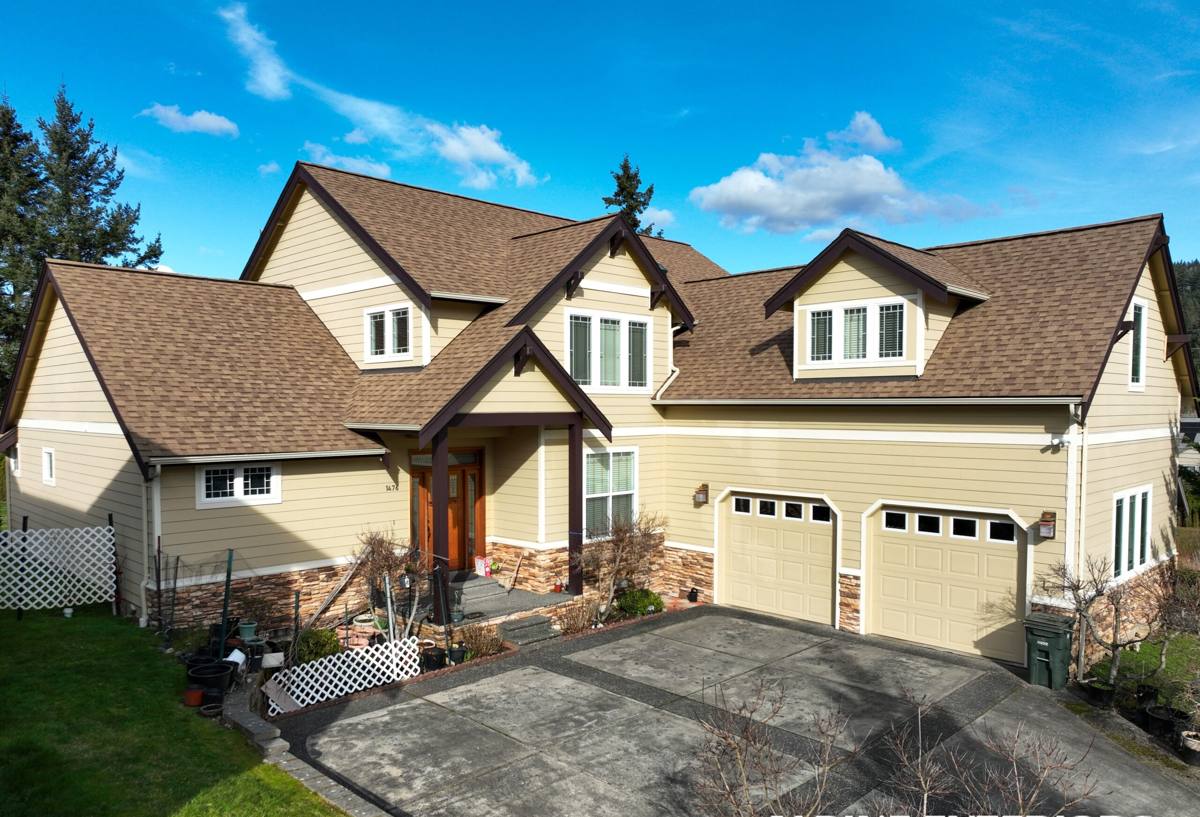
What This Climate Does to a Roof
Moss and Trapped Moisture
Moss doesn't just sit on top of shingles looking bad — it works its way under the shingle edges and holds water against the roof deck. In a spot like Wiser Lake, with tree cover and persistent shade on parts of most lots, moss can re-establish within a single wet season if it isn't fully treated and the roof isn't given a way to shed water and dry out. Left alone, it lifts shingle tabs, breaks the granule surface down early, and eventually rots the decking underneath.
Salt Air and Fasteners
Whatcom County's proximity to the Salish Sea means salt-laden air moves through the region even away from the immediate shoreline. Over years, that air accelerates corrosion on exposed metal — nail heads, flashing edges, gutter fasteners, and any exposed screws on metal roofing. A roof that looks fine from the ground can have flashing that's rusted through at the seams, which is one of the most common sources of a slow, hard-to-find leak.
Wind-Driven Rain
Rain in this part of Washington doesn't always fall straight down. Storms push rain sideways into roof valleys, under shingle laps, and behind flashing that was installed for calm-weather conditions rather than driving wind. That's why so many of the leaks we're called out for aren't from one obvious hole — they're from water finding its way in sideways through a marginal detail that never mattered until the wind picked up.
Common Roof Problems We Find in This Area
- Moss growth along shaded slopes and roof edges, with granule loss underneath
- Rusted or lifted flashing around chimneys, skylights, and roof-to-wall transitions
- Cracked or curling shingles from repeated wet-dry cycling
- Clogged gutters and downspouts causing water to back up under the roof edge
- Soft or spongy decking discovered only once a leak is traced back to its source
- Nail pops and lifted shingle tabs from wind events
- Deteriorated pipe boots and vent seals — often the actual cause of an interior stain
Signs You Need Repair, Not Just a Cleaning
Moss removal and gutter cleaning are maintenance, not repair — and it's worth knowing the difference before you call anyone out. A repair is warranted when the roof's ability to shed water has actually been compromised.
| What You're Seeing | Likely Just Needs Maintenance | Likely Needs Repair |
|---|---|---|
| Green or black streaking on shingles | Yes — cleaning and treatment | Only if granules are visibly gone underneath |
| Water stain on an interior ceiling | No | Yes — trace and repair the source |
| A few lifted or curling shingles | No | Yes — localized shingle repair |
| Gutters overflowing in heavy rain | Yes — clean and check slope | Only if backup has caused edge rot |
| Rust visible on flashing or vent caps | No | Yes — flashing replacement |
| Daylight visible in the attic | No | Yes — this needs attention now |
What a Correct Roof Repair Actually Involves
Finding the Real Source
Water rarely enters a roof at the same spot it shows up inside the house — it travels along decking and framing before it drips somewhere visible. A repair that only patches the ceiling stain without tracing the path back to the actual entry point will fail again, usually within a season. We start every repair by getting on the roof and finding where water is actually getting in, not just where it's showing up.
Matching the Existing Roof
A repair should blend into the roof it's part of, not stand out as an obvious patch. That means matching shingle type, color, and exposure as closely as possible, and tying new material into the existing roof at a seam that sheds water correctly rather than just overlapping and hoping. On older roofs where an exact shingle match isn't available, we'll tell you honestly what the options look like rather than pretending it'll be invisible.
Flashing and Underlayment Details
Most repeat leaks trace back to flashing, not shingles. Chimney flashing, valley flashing, and step flashing along walls all need to be reinstalled correctly with proper underlayment behind them — not just caulked over, which is a temporary fix at best and traps moisture at worst. Given how much this climate relies on flashing to handle wind-driven rain, this is where we spend the most attention.
Decking Condition
If moisture has been sitting under a leak for a while, the plywood or board decking underneath may be soft or delaminated. A proper repair replaces any compromised decking before new shingles or flashing go back down — covering over soft decking with new material just hides the problem and shortens the life of the repair.
Repair or Replace? Factors That Actually Matter
Not every roof problem in Wiser Lake means a full replacement, and not every roof is worth continuing to patch. These are the factors that genuinely tip the decision one way or the other.
| Factor | Leans Toward Repair | Leans Toward Replacement |
|---|---|---|
| Roof age | Under two-thirds of expected shingle life | Near or past expected shingle life |
| Extent of damage | Isolated to one section or detail | Widespread across multiple slopes |
| Repair history | First or second repair on this roof | Same areas have needed repeat repairs |
| Decking condition | Solid, no rot found | Soft decking found in multiple spots |
| Cost | A few hundred dollars for a targeted flashing or shingle repair | Cost of repeated repairs starts approaching replacement cost |
We'll give you a straight answer on which side of that line your roof sits, including when a repair is genuinely the right call rather than upselling a replacement you don't need yet.
Our Process for Wiser Lake Roof Repairs
- Inspection. We get on the roof, check the attic where accessible, and trace the actual path water is taking rather than assuming based on where a stain shows up.
- Honest assessment. We explain what we found, what caused it, and whether a repair or a larger fix makes sense — including the reasoning, not just a number.
- Written scope. Before work starts, you know exactly what's being repaired, with what materials, and roughly what it involves.
- The repair itself. Damaged decking replaced first, flashing and underlayment corrected, then matching shingles or roofing material installed to shed water properly.
- Cleanup and check. Job site cleared of debris and fasteners, and the repair area reviewed before we consider the job done.
Why a Local Crew Matters for This Kind of Repair
Roof repair is one of the easiest trades to do badly and have it look fine for a year. A contractor who doesn't work this area regularly may not recognize how fast moss returns on a shaded Whatcom County roof, or how much flashing matters when wind-driven rain is a normal part of the forecast rather than an occasional event. A crew that already works in and around Lynden and Wiser Lake has seen how local roofs actually fail over time — not just how they look the day the work is finished.
There's also the matter of being reachable afterward. Roof repair should come with a real answer if something isn't right once the next storm hits, and that's a lot easier from a contractor who's local and plans to keep working in this community, rather than one passing through the area for a season.
Get a Free Estimate
If you're dealing with a leak, storm damage, or a roof that's overdue for an honest look, we're glad to come out to your Wiser Lake home, inspect it, and give you a straightforward assessment — no pressure, no upsell. Use the form below to request a free estimate.