 Lynden Siding
 Roofing Around Wiser Lake Comes With Its Own Set of Problems
Wiser Lake sits in a pocket of Whatcom County that most roofers only pass through on their way to somewhere else. That's a mistake, because lake-adjacent properties don't age the same way a roof does out in open farmland or in the middle of town. Homes around Wiser Lake tend to sit under more tree cover, get more shade for more of the day, and hold onto morning moisture longer because the water itself keeps the air damp well after the rest of Lynden has dried out. None of that shows up in a five-minute drive-by estimate. It shows up two or three years later as soft decking, curling shingles, and moss creeping up from the eaves.
We're not new to this neighborhood. When we quote a new roof for a Wiser Lake property, we're accounting for the shade line off the trees, the direction the prevailing weather comes from, and how the roof has actually performed so far — not just what the shingles look like from the driveway.
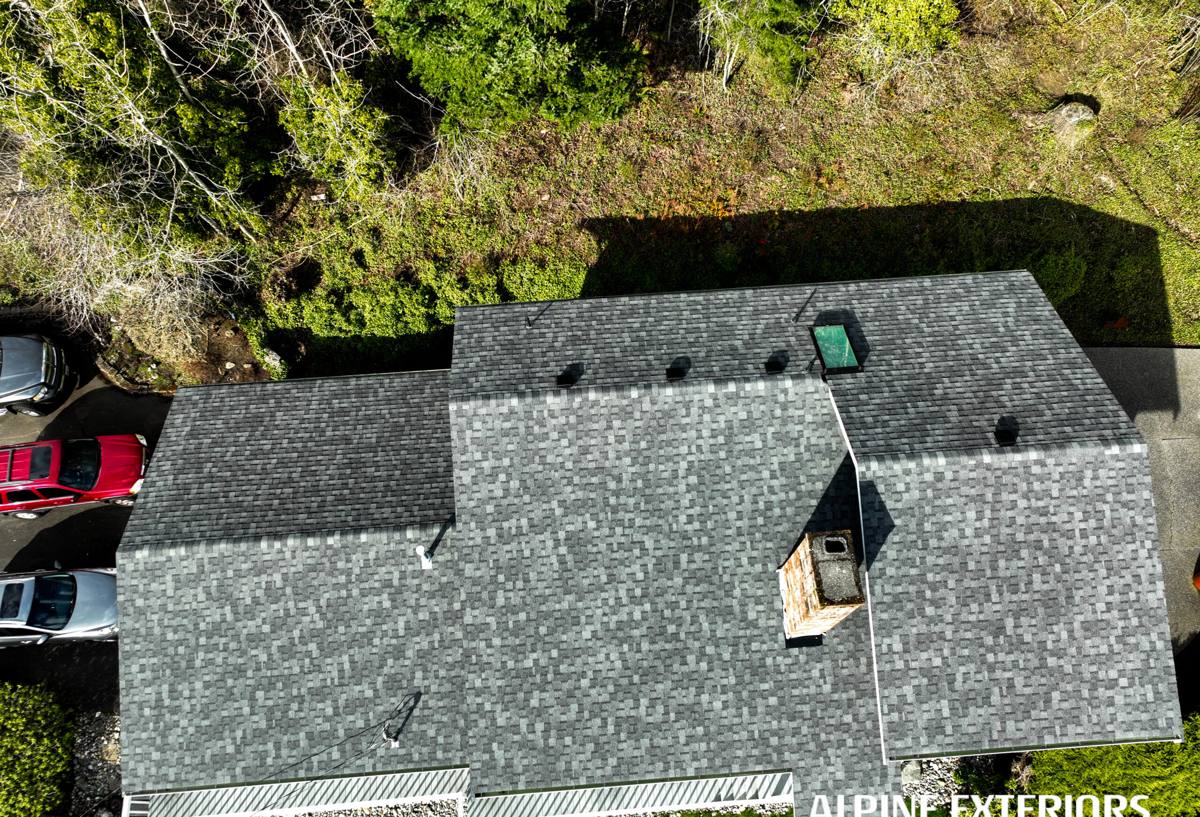
What Whatcom County's Climate Does to a Roof Over Time
Lynden and the surrounding county sit in a marine-influenced climate, and that means a roof here is dealing with a different kind of stress than a roof in a dry inland state. It's rarely one big storm that takes a roof out — it's the accumulation of small things, repeated for years.
Driving Rain and Wind-Driven Moisture
Winter storms off the Pacific don't just drop rain straight down — they push it sideways. Wind-driven rain gets up under poorly sealed shingle tabs, around flashing that's slightly undersized, and into any nail that wasn't seated correctly. On a good roof this is a non-event. On a roof with aging materials or shortcuts in the original install, it's how leaks start — often at the sheathing, long before anyone sees a stain on the ceiling.
A Long Moss and Algae Season
Shade, moisture, and mild temperatures are exactly what moss wants, and Wiser Lake's tree cover gives it more of all three than most Lynden lots see. Moss doesn't just look bad — it holds water against the shingle surface, works its way under tabs and around fasteners, and accelerates granule loss. Left alone through a few wet seasons, it can shorten the useful life of an otherwise sound roof by years.
Freeze-Thaw and the Occasional Hard Snow
Whatcom County doesn't get brutal winters every year, but it gets enough freeze-thaw cycling and the occasional heavy wet snow to matter. Ice damming at the eaves, especially on roofs with marginal insulation or ventilation below, can force water backward under the shingle line — a problem that has nothing to do with the shingles themselves and everything to do with how the roof system underneath was built.
Signs a Wiser Lake Roof Needs Replacement, Not Another Patch
Repairs make sense when a roof is fundamentally sound and the damage is localized. They stop making sense once the roof as a whole is past its service life or the deck underneath has been compromised. Some signs we look for specifically on lake-area homes:
- Moss or algae that returns within a season or two of cleaning, even after a treatment
- Granules collecting in gutters or at downspout outlets in noticeable amounts
- Shingles that are curling, cupping, or losing their seal along the tabs
- Soft or spongy spots underfoot when walking the roof, indicating deck damage
- Daylight visible through the attic sheathing, or damp insulation after a storm
- Flashing around chimneys, skylights, or valleys that's rusted, lifted, or resealed with visible caulk patches
- A roof that's simply reached the end of its rated lifespan, regardless of how it looks from the ground
If a roof is showing two or more of these at once, it's usually more cost-effective over time to replace than to keep chasing individual repairs.
What a Correct New Roof Installation Actually Involves
A roof is a system, not a single layer of shingles laid over whatever was there before. Skipping steps is the single biggest reason a "new roof" fails early, and it's rarely visible until something goes wrong.
Tear-Off and Deck Inspection
We remove the old roofing down to the deck rather than layering over it. That's the only way to actually see the condition of the sheathing — and on a shaded, moisture-prone lot like the ones around Wiser Lake, deck damage under an aging roof is common enough that we plan for some amount of board replacement as a normal part of the job, not a surprise upcharge.
Underlayment and Ice & Water Protection
A synthetic underlayment goes down across the full deck as the roof's real waterproof backstop, with self-adhering ice-and-water membrane at the eaves, valleys, and around every penetration — the spots where wind-driven rain and ice damming actually cause failures. This layer does more of the long-term work than most homeowners realize, since it's what protects the deck if wind ever drives water past the shingle surface.
Flashing, Valleys, and Penetrations
Chimneys, skylights, vent stacks, and roof valleys are where the great majority of leaks originate — not the open shingle field. We install new metal flashing at every one of these rather than reusing old flashing or relying on sealant alone, which degrades and cracks well before the shingles do.
Shingle or Material Installation
Materials go down to manufacturer spec for nailing pattern, exposure, and starter courses — details that directly affect the wind rating a roof will actually hold up to, not just what's printed on the shingle wrapper.
Ventilation Tie-In
Intake and exhaust ventilation get checked and corrected as part of the install, not treated as a separate project. A new roof over an unbalanced attic still traps moisture and heat, which shortens the life of the very shingles we just installed.
Choosing a Material That Makes Sense for a Lake Property
There's no single "best" roofing material — there's the material that fits the home's exposure, budget, and how long the owner plans to stay in it. For a shaded, moisture-prone lot like most of what's around Wiser Lake, moss resistance and moisture handling matter more than they would on an open, sun-exposed roof across town.
| Material | Moss/Moisture Resistance | Typical Lifespan | Relative Cost |
|---|---|---|---|
| Architectural asphalt shingle | Good with algae-resistant granules; needs periodic cleaning under heavy shade | 25–30 years | $ |
| 3-tab asphalt shingle | Fair; less resistant to moss buildup than architectural | 15–20 years | $ |
| Standing seam metal | Excellent; sheds moisture and discourages moss growth | 40–50+ years | $$$ |
| Cedar shake | Poor to fair without diligent maintenance in shaded, damp conditions | 20–30 years with upkeep | $$$ |
We don't push cedar shake on heavily shaded lake lots as a rule. It's a good-looking material, but in consistently damp, low-sun conditions it needs more upkeep to avoid moss and rot than most owners want to take on — that's a maintenance-burden trade-off we'll walk through honestly rather than sell around.
Our Process on a Wiser Lake Job
The steps are the same discipline everywhere, but the details get tuned to the property.
Assessment
We walk the roof and the attic, not just the ground. On a lake lot that means checking how much of the roof sits under tree canopy, where moss has already established, and what the ventilation and deck condition actually look like before we quote anything.
Scheduling Around the Weather
A tear-off exposes the deck to whatever the sky is doing, so we plan installs around realistic weather windows rather than promising a date and hoping. That's especially relevant on properties near the water, where fog and drizzle can linger longer into the morning than it does a few miles inland.
Debris and Site Protection
Tree-lined lots mean more care around landscaping, driveways, and anything below the roofline. We protect the property during tear-off and haul debris off-site rather than leaving it for the homeowner to deal with.
Final Walkthrough
Before we call the job done, we walk it with the homeowner — flashing, valleys, ventilation, gutter lines, and cleanup — so nothing gets left as a "we'll get to it."
Why a Crew That Already Works Wiser Lake Matters
A roofing crew that only shows up once won't know that a given lot holds moisture longer than the county average, or that the shade pattern off a tree line changes which side of the roof actually needs the most attention. That kind of knowledge comes from working the area repeatedly, not from a single site visit.
It also matters for the practical side of the job — knowing how Whatcom County permitting works for a full re-roof, understanding realistic access and staging on lake-area lots, and having a crew that isn't guessing at how the local weather pattern will affect a multi-day tear-off. That's the difference between a roof that's installed correctly the first time and one that turns into a slow string of callbacks.
Get a Straight Answer on Your Wiser Lake Roof
If your roof near Wiser Lake is showing moss that keeps coming back, granule loss, soft spots, or it's simply reaching the end of its rated life, we'll take a straight look at it and tell you honestly whether it needs full replacement or if a targeted repair still makes sense. No pressure, no inflated urgency — just what the roof actually needs. Use the form below to request a free estimate and we'll get back to you to schedule a look.