 Lynden Siding
 What Sumas' Weather Actually Does to a Window
Sumas sits inland from the Salish Sea, in the low ground near the Nooksack lowlands and the Canadian border. It doesn't take the same direct salt spray that Lynden and the coastline see, but it still lives under the same wet, marine-influenced weather that defines Whatcom County for most of the year. Add in a local quirk of the terrain — cold outflow air that can push down out of the Fraser Valley through the gap near Sumas — and windows here take a specific kind of beating that's worth understanding before you replace them.
Driving rain and wind-driven moisture
Whatcom County doesn't just get rain, it gets rain pushed sideways by wind for days at a stretch. On an older window, that means water finding its way past worn weatherstripping, past a sash that no longer closes tight, or through a frame-to-siding joint that was never flashed correctly in the first place. Once water gets behind the frame, it doesn't dry out quickly in this climate — it sits, and it starts rotting wood and rusting hardware from the inside where you can't see it.
A long moss season
Shaded yards, damp ground, and mild temperatures most of the year add up to a moss and algae season that runs far longer here than in drier parts of the state. On windows, that shows up as green growth in track corners, sills, and any horizontal trim ledge, plus the slow breakdown of caulk and sealant that moss and mildew feed on over time. It's a maintenance headache, but it's also a sign of how much moisture is sitting against your window openings for months on end.
Cold outflow winds off the Fraser Valley
Sumas' location near the border puts it in the path of cold winter outflow winds that can funnel down out of the Fraser Valley in a way that homes further south and west don't experience as often. That combination of sudden cold and wind pressure is hard on old glass and aging frames — it's when you'll hear whistling around a sash, feel a cold draft off the glass, or notice a room that just won't hold heat no matter what the thermostat says.
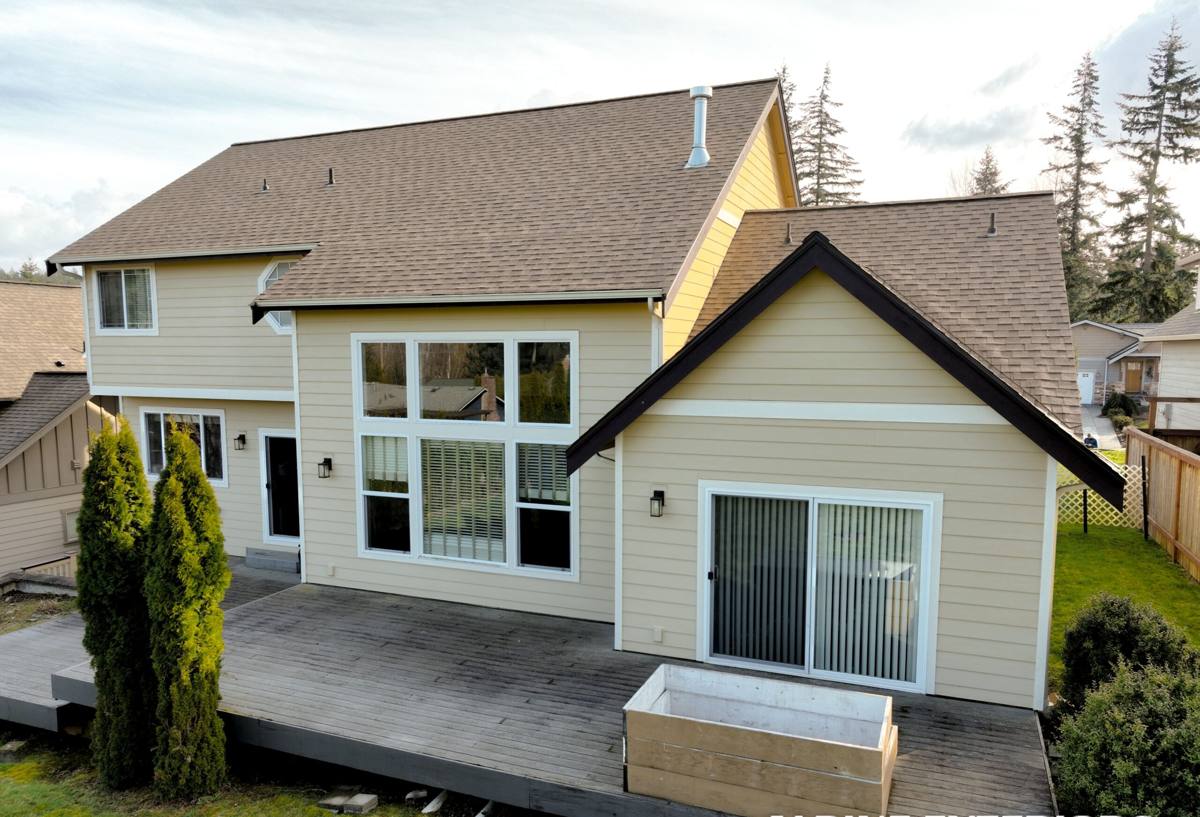
Signs a Sumas Home Needs Replacement, Not Repair
Not every problem window needs to come out. Sometimes new weatherstripping, a re-glazed pane, or fresh caulking solves it. But there's a point where repair is just delaying the inevitable, and in this climate that point tends to arrive sooner than homeowners expect. Here's what tells us a window has reached the end of its useful life rather than needing a patch:
- Visible rot, soft spots, or discoloration in the wood frame or sill
- Fogging or a milky haze between panes of double-glazed glass — the seal has failed and it can't be fixed
- Windows that are difficult to open, close, or lock, or that no longer sit square in the opening
- Cold air you can feel near the glass or frame even when the window is fully closed
- Condensation on the inside of the glass most mornings, especially through the winter
- Peeling paint or bubbling on interior trim near the window, often a sign of moisture already inside the wall
- Noticeably higher heating bills without any other change in the home
If you're seeing more than one or two of these, it's usually more cost-effective over time to replace than to keep repairing.
What a Correct Window Replacement Job Actually Involves
The window itself is only part of the job. Most of the long-term performance of a window replacement comes down to what happens at the opening before the new unit ever goes in, and that's where a lot of shortcuts get taken in this trade.
Removing the old window without damaging the opening
The old sash and frame need to come out cleanly, without tearing up the surrounding siding, trim, or sheathing more than necessary. This is also the point where we get eyes on the rough opening — the framing, the sill, and whatever's happened to them over the years — before anything gets closed back up.
Dealing with what's found in the opening
Given how much water this region pushes at older windows, it's common to find some degree of rot, soft sheathing, or old failed flashing once a window comes out. Any of that needs to be repaired or replaced before the new window goes in. Installing a new window over a compromised opening just guarantees a repeat problem in a few years, no matter how good the window is.
Flashing and moisture management
This is the step that determines whether the window actually keeps water out for the next twenty-plus years. Proper flashing at the sill, jambs, and head, tied correctly into the home's weather-resistive barrier, directs water down and out and away from the wall assembly. Because we work as siding contractors day to day, this is the part we spend the most attention on — a window is only as good as its integration with the wall around it.
Insulation and air sealing
The gap between the new window frame and the rough opening needs to be filled with an appropriate low-expansion insulating material, not stuffed with scrap fiberglass or left mostly open. Done right, this is what stops the cold-air-off-the-glass feeling that shows up during outflow wind events.
Setting, shimming, and sealing the new window
The window has to be shimmed level, plumb, and square, fastened per the manufacturer's instructions, and sealed with the correct exterior sealant compatible with both the window frame and the siding material. Skipping the manufacturer's fastening schedule is one of the most common ways a warranty gets voided without the homeowner ever knowing it happened.
Choosing Frame Material and Glass for Sumas Conditions
There's no single "best" window for every house — the right choice depends on your home's age, exposure, and how much upkeep you want to take on. Here's how the common options stack up for a climate like this one:
| Frame Material | How It Handles This Climate | Maintenance |
|---|---|---|
| Vinyl | Won't rot, doesn't need painting, handles moisture well; can flex slightly in big temperature swings | Low — occasional cleaning |
| Fiberglass | Very stable through temperature changes, strong moisture resistance, holds up well to wind pressure | Low — occasional cleaning |
| Wood-clad | Attractive interior wood look, but the exterior cladding and any exposed wood joints need to stay sealed against constant moisture | Higher — periodic inspection and sealant upkeep |
On glass, most homes in this area do well with double-pane units with a low-E coating and an argon gas fill, which cuts heat loss and reduces the cold-glass effect during winter outflow events. Triple-pane glass adds another layer of insulation and sound dampening, at added cost and weight, and is worth considering on north- or east-facing rooms that take the brunt of the wind.
Our Process, Start to Finish
- Free on-site estimate — we look at each window opening in person, not just from a photo, since condition varies window to window even on the same house
- Measuring and product selection — we go over frame material, glass options, and sizing together before anything is ordered
- Scheduling around the weather — with this much rain in the forecast most of the year, we plan installs carefully so openings aren't left exposed longer than necessary
- Removal and opening inspection — old windows come out, and we address anything found in the rough opening before moving forward
- Flashing, insulation, and installation — the new window goes in per manufacturer specification, with attention to how it ties into your siding's weather barrier
- Sealing and cleanup — exterior and interior finish work, debris removal, and a final check that every unit opens, closes, and locks properly
- Walkthrough — we go over the finished work with you before calling the job done
Why a Contractor Who Already Works in Sumas Matters
Window replacement done in isolation, without regard for the siding and moisture barrier around it, is how call-backs happen. As a siding contractor first, we look at a window opening as part of the whole wall system — how the flashing ties into the house wrap, how the trim sheds water, and how the new window will hold up against the specific driving rain and wind this part of Whatcom County gets. A crew that only installs windows may get the unit right and still get the water management around it wrong.
Familiarity with the area also matters in smaller, practical ways: knowing what kind of framing and siding pairings show up on homes of a given age around Sumas, planning installs around the wetter stretches of the year, and being upfront about what an older opening is likely to reveal once the existing window comes out.
What Window Replacement Costs in Sumas — and Why
Every home is different, but the same handful of factors drive most of the cost variation we see. As a broad range, straightforward vinyl or fiberglass window replacements often land in the low-to-mid four figures per window installed, with wood-clad units, larger sizes, or added structural repair pushing higher. The only way to get a number you can actually plan around is an on-site look at each opening.
| Cost Factor | Why It Matters |
|---|---|
| Frame material | Vinyl and fiberglass typically cost less than wood-clad units of the same size |
| Window size and configuration | Larger units, custom shapes, and multi-pane configurations cost more than standard single or double sashes |
| Condition of the rough opening | Rot or old flashing failures found during removal add repair time before the new window goes in |
| Glass package | Triple-pane, upgraded low-E coatings, or sound-dampening glass add cost over standard double-pane |
| Access and site conditions | Second-story windows, tight access, or homes set back from the street can add labor time |
Caring for New Windows Through Whatcom County Winters
New windows still need a little seasonal attention in a climate like this. A quick annual check keeps the investment protected. Clear moss and debris from sills and track corners before it has a chance to hold moisture against the frame. Check exterior caulking each fall, before the wet season sets in, and touch up anything that's cracked or pulled away. Vacuum out weep holes and drainage channels so water has somewhere to go instead of pooling. And keep an eye on the seal around the frame after any stretch of hard wind, since that's when a marginal seal tends to show itself first.
If you're weighing whether your current windows are worth repairing or it's time to replace them, we're happy to take a look and give you an honest read on your options. Reach out for a free, no-pressure estimate — the form below gets you started.