 Lynden Siding
 Roofing in Maple Falls Takes a Different Kind of Beating
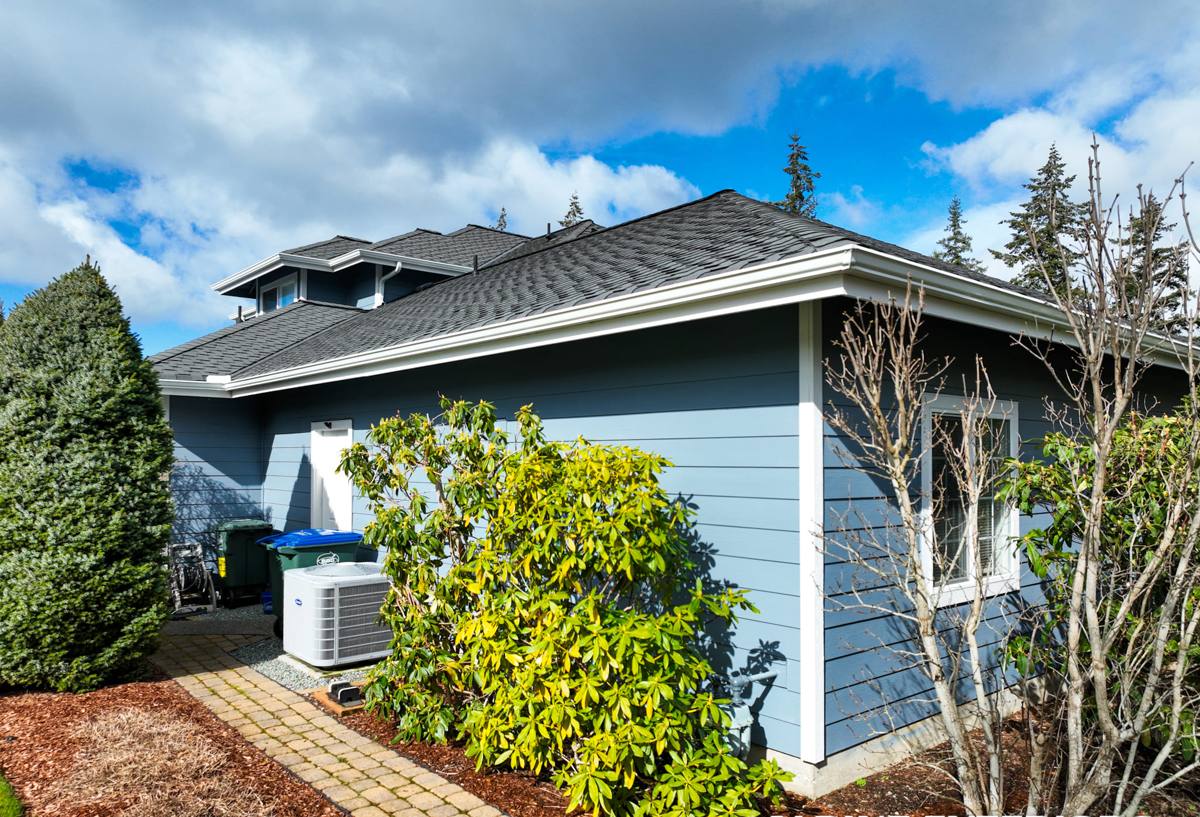
Maple Falls sits up against the foothills of the North Cascades, and that location shapes everything about how a roof ages here. Homes are tucked under tall conifers, which means more shade, more falling needles and debris, and roofs that stay damp far longer after a storm than a roof out in open sun. Add in Whatcom County's long wet season, moisture-heavy air moving in off Puget Sound and the Salish Sea, and driving rain that comes in sideways during winter storms, and you've got a climate that's genuinely tough on shingles, flashing, and decking.
Moss is the most visible sign of this. Give a north-facing, tree-shaded roof in Maple Falls a few damp seasons without maintenance and you'll see moss creeping up from the eaves, lifting shingle edges as it grows, and holding moisture against the roof deck. That's not just a cosmetic problem — it's the beginning of rot, granule loss, and eventually leaks. A roof replacement here isn't just about swapping old shingles for new ones; it's about correcting the conditions that wore the old roof out in the first place.
Signs a Repair Won't Cut It Anymore
Not every roofing problem in Maple Falls means a full replacement. But there's a point where patching becomes a waste of money, and it's worth knowing where that line is before you spend on repairs that won't hold.
What we look for during an inspection
- Granule loss heavy enough that you can see bare, shiny patches on the shingles
- Moss or algae established across large sections, not just a few isolated spots
- Shingles that are curling, cupping, or cracking rather than lying flat
- Soft spots or sagging when walked on, which usually points to deck damage underneath
- Water stains or daylight visible in the attic, especially around valleys and chimneys
- A roof that's 20+ years old on asphalt shingles, or showing widespread wear regardless of age
If you're only seeing one or two of these in a limited area, a targeted repair is usually the honest answer, and we'll say so. Replacement makes sense when the wear is spread across the whole roof, when the decking underneath has been compromised, or when repair costs start closing in on what a new roof would run.
What a Correct Roof Replacement Actually Involves
A roof replacement done right in this climate is more than tear-off and re-shingle. Skipping the details below is exactly how a roof ends up needing early repairs in a place like Maple Falls.
Tear-off and deck inspection
Every layer of old roofing comes off down to the deck. This is the only real chance to see the plywood or OSB underneath and confirm it's sound. Any wood that's soft, delaminated, or water-stained gets replaced before anything new goes down — covering damaged decking with new shingles just hides a problem that will resurface.
Underlayment built for wind-driven rain
Given how much driving rain and wind this area sees off the foothills, we don't treat underlayment as an afterthought. A synthetic underlayment with solid tear resistance and a proper watertight lap pattern gives the roof a real second line of defense if wind ever drives water up under a shingle edge.
Ice-and-water shield where it matters
Eaves, valleys, and areas around chimneys and skylights get self-adhering ice-and-water membrane. These are the spots where water backs up, pools, or gets funneled during heavy rain, and they're the most common places we find hidden rot on older Maple Falls roofs.
Flashing, not caulk
Chimneys, vent pipes, skylights, and wall-to-roof transitions need properly formed metal flashing, step-flashed and integrated with the underlayment — not a bead of caulk over old flashing. Caulk fails; correctly installed flashing sheds water for decades.
Ventilation that matches the house
Balanced intake at the soffits and exhaust at the ridge keeps the attic dry and temperature-stable. Poor ventilation traps moisture, which speeds up moss growth from underneath and can shorten shingle life significantly — more on this below.
Choosing Materials for Maple Falls Conditions
There's no single "best" roofing material for every house — it depends on your roof's exposure to shade, your budget, and how long you want to go before the next replacement. Here's how the common options stack up for a shaded, high-moisture property like the ones common around Maple Falls.
| Material | Moss & Moisture Resistance | Typical Lifespan | Cost Range | Best For |
|---|---|---|---|---|
| Standard 3-tab asphalt shingle | Lower — needs regular moss treatment | 15-20 years | Lowest | Budget-conscious re-roofs on sunnier sections |
| Architectural (laminate) shingle | Moderate to good, especially with algae-resistant granules | 25-30 years | Mid-range | Most Maple Falls homes — durability and value |
| Metal (standing seam or panel) | Excellent — sheds moss and debris, dries fast | 40-50+ years | Highest upfront | Heavily shaded lots, steep pitches, long-term owners |
| Cedar shake | Poor without diligent upkeep in a wet, shaded climate | 20-25 years with maintenance | High | Homeowners committed to regular maintenance and treatment |
We'll be straightforward about cedar shake in a location like this: it can look great, but in a shaded, damp environment it demands consistent cleaning and moss treatment to avoid early rot. If you want that look without the upkeep burden, there are architectural shingle profiles that get close for a lot less maintenance. That's a trade-off we'll walk through honestly rather than talk you into the option that costs more.
Ventilation and Moisture Control: The Part That Gets Skipped
Plenty of roof replacements focus entirely on the shingles and treat ventilation as an afterthought. In a climate like Whatcom County's, that's a mistake. An attic that can't breathe traps moisture from everyday living and from humid outside air, and that trapped moisture condenses on the underside of the deck. Over a few seasons, that's mold, soft sheathing, and shingles failing from underneath — none of which you'll see until it's already a problem.
Proper ventilation also matters for ice and snow. Maple Falls sits at higher elevation than the valley floor, and cold snaps with snow are more common here than in Lynden proper. A well-ventilated attic keeps the roof deck closer to outside temperature, which reduces the freeze-thaw cycling that leads to ice damming at the eaves. We check intake and exhaust balance on every replacement and correct it as part of the job, not as an upsell.
Our Roof Replacement Process
1. Inspection and honest estimate
We walk the roof, check the attic, and tell you plainly whether you're looking at repair or replacement — with the reasoning, not just a number.
2. Material selection
We go over the options above in the context of your specific roof: pitch, shade exposure, and how long you plan to stay in the home.
3. Scheduling around the weather
Roofing needs a dry window to do right. We plan around Whatcom County's forecast rather than rushing a job into a wet stretch, which protects your decking and underlayment during install.
4. Tear-off, deck repair, and install
Full tear-off, deck inspection and repair as needed, underlayment, ice-and-water membrane at vulnerable areas, flashing, ventilation correction, and the new roofing material — installed to manufacturer specifications so your warranty is valid.
5. Cleanup and walkthrough
Magnetic sweep for nails, full debris cleanup, and a walkthrough so you know exactly what was done and what your new roof needs going forward.
Why a Crew That Already Works in Maple Falls Matters
Roofing crews that mostly work in flatter, more open parts of Whatcom County don't always account for what a forested, foothill property throws at them — narrow or gravel driveways for material delivery, dump trailer access around mature trees, and roofs that need extra care with debris and moss because of constant tree cover. A crew that's worked this specific area knows to plan for that before the trucks show up, not after.
Local experience also means familiarity with the permitting and inspection process for this part of the county, and a realistic sense of how weather windows actually play out at this elevation versus down in Lynden or Bellingham. That translates into fewer surprises and a job that's scheduled and executed with the actual site conditions in mind.
A Few Things Worth Asking Any Roofer You're Considering
- Are you licensed and insured to work in Washington State, and can you provide proof?
- Do you inspect and repair damaged decking as part of the job, or just re-cover it?
- What underlayment and ice-and-water shield do you use, and where do you install it?
- How do you handle attic ventilation as part of a replacement?
- What's covered under workmanship warranty versus manufacturer warranty, and for how long?
- Can you walk me through your cleanup process, including nail sweep?
A contractor who answers these clearly and without hedging is one who does this kind of work regularly and stands behind it.
If your roof is showing moss, wear, or you're just not sure whether it's a repair or a replacement situation, we're happy to take a look. Fill out the form below for a free, no-pressure estimate — we'll give you a straight answer about what your roof actually needs.