 Lynden Siding
 Metal Roofing for Acme Homes
Acme sits back in the foothills east of Lynden, where Whatcom County's weather shows up in a particular way: long stretches of steady rain, heavy timber cover that keeps roofs shaded and damp, and moisture-laden marine air that pushes inland off the Sound and settles into the valley. None of that is unusual for this part of Washington, but it's exactly the kind of environment that separates a roof that lasts twenty years from one that lasts fifty. Metal roofing, installed correctly, is one of the few systems that genuinely holds up to it.
This page is about metal roofing specifically for homes in and around Acme — what the climate demands, what a correct installation actually involves, and how our process works when we take on a job out here.
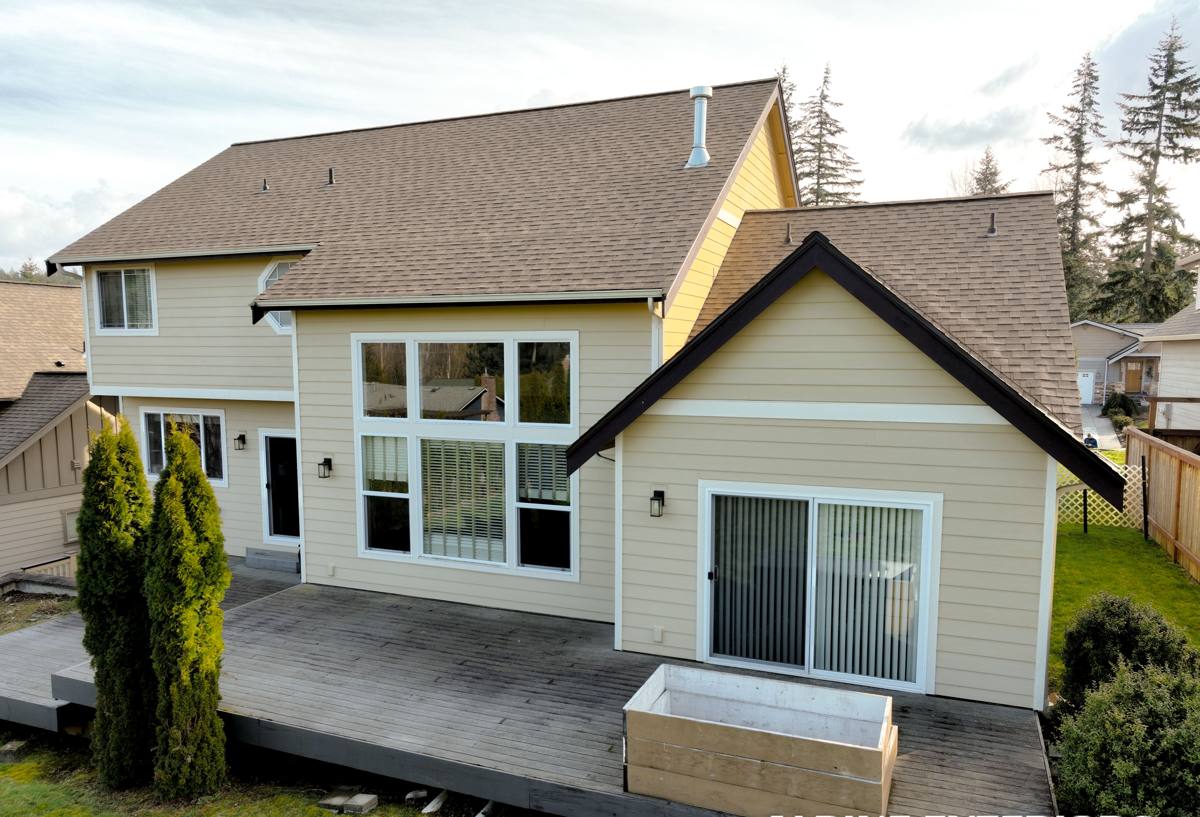
What Acme's Climate Does to a Roof
Three things drive most of the roofing problems we see in this area:
- Driving rain. Storms coming through Whatcom County don't just fall straight down — wind pushes rain sideways under shingle tabs, around flashing, and into any gap that isn't properly lapped or sealed.
- Long moss season. Tree cover and consistent moisture mean moss and algae get a foothold fast, especially on north-facing slopes and anywhere debris collects. Left alone, moss holds water against the roofing surface and works its way under shingle edges.
- Marine air. Salt-tinged, moisture-heavy air moving through the county accelerates corrosion on unprotected metal, fasteners, and flashing details that weren't specified for this environment.
A roof out here isn't fighting one condition — it's fighting all three, most of the year, for the life of the building. That's the standard we install to.
Why Metal Roofing Fits This Climate
Metal roofing isn't the right fit for every house or every budget, and we'll say so honestly during an estimate. But for the conditions Acme deals with, it has real advantages over asphalt shingles:
- A properly sealed metal roof sheds water fast and doesn't rely on overlapping tabs the way shingles do — there's less surface area for wind-driven rain to exploit.
- Moss and algae have a much harder time gripping smooth painted or coated metal than they do the granular surface of asphalt shingles, which cuts down on maintenance and the moisture-retention problems moss causes.
- Quality metal roofing systems use factory-applied coatings and corrosion-resistant fasteners built for coastal and marine-influenced climates like ours, so the salt-air exposure that eats through cheaper materials isn't as much of a threat.
- Metal sheds snow and ice load more readily than shingles, which matters in the foothill elevations around Acme during cold snaps.
Where Metal Roofing Isn't the Right Call
We're not going to oversell it. Metal costs more upfront than asphalt, it can be noisier in heavy rain without proper underlayment and decking, and on a house with a lot of complex roof geometry, the labor to do it correctly goes up. We'll walk through those trade-offs honestly when we look at your roof — our job is to tell you what's actually right for your house, not just sell the higher-margin product.
Metal Roofing Systems We Install
Not all metal roofing is the same, and the differences matter for a house dealing with Acme's rain and moss exposure. Here's how the main options compare:
| System | How It's Fastened | Best For | Trade-Offs |
|---|---|---|---|
| Standing seam | Concealed clips, no exposed fasteners | Steep or complex roofs, long-term low maintenance | Higher material and labor cost |
| Exposed fastener panel | Screws through the panel face into decking | Simpler roofs, tighter budgets, outbuildings | Fasteners need periodic inspection and eventual replacement |
| Stone-coated steel | Interlocking panels, hidden fasteners | Homeowners who want a shingle or shake look with metal performance | More components at seams; installation detail matters more |
For most homes in Acme, we lean toward standing seam or a well-detailed stone-coated steel system, since both handle sideways-driven rain better than exposed-fastener panels. But roof pitch, budget, and the look you're going for all factor in — we'll talk through it specifically for your house.
What a Correct Metal Roof Installation Actually Involves
Metal roofing fails early almost exclusively because of installation shortcuts, not because the material itself wore out. On a wet-climate job like this, the details that matter most are:
Deck Inspection and Prep
Any soft, rotted, or water-damaged decking gets replaced before a single panel goes down. Installing metal over compromised sheathing just hides a problem that will show up later as a sag or a leak.
Underlayment
We use a synthetic or self-adhering underlayment rated for the exposure, with extra attention at eaves and valleys where wind-driven rain concentrates. This is the roof's real waterproofing layer — the metal panels are the second line of defense, not the only one.
Flashing and Penetrations
Chimneys, vents, skylights, and wall intersections are where the overwhelming majority of roof leaks start. Every penetration gets flashed and sealed with materials and methods matched to metal, not adapted from a shingle-roof approach.
Fastener and Panel Selection
Corrosion-resistant fasteners, correctly spaced and torqued — not overdriven, which crushes the panel's rubber washer seal and lets water in. Panel seams are lapped and sealed to shed water even under wind pressure.
Ventilation
Proper ridge and soffit ventilation keeps moisture from building up in the attic space, which matters as much for a metal roof as any other — trapped humidity causes its own problems regardless of what's on top of the deck.
Our Process for Acme Jobs
- On-site assessment. We look at your current roof, deck condition, ventilation, and any trouble spots — moss buildup, valley wear, flashing condition — before recommending anything.
- Honest scope and estimate. You get a clear breakdown of what needs replacing, what system fits your roof and budget, and a straightforward price — no inflated "problems" added to pad the job.
- Deck repair as needed. Any damaged sheathing is addressed before installation starts, documented so you know exactly what was found and fixed.
- Installation. Underlayment, flashing, panels, and fasteners installed to the standard above, with attention to the details that matter most in a wet, moss-prone climate.
- Final walkthrough. We go over the finished roof with you, confirm everything is sealed and clean, and answer any questions before we consider the job done.
Cost Factors for a Metal Roof in Acme
Every roof is different, but the main variables that move the price are consistent. Broad ranges only — your estimate will be specific to your roof.
| Factor | Why It Matters |
|---|---|
| Roof size and pitch | Steeper roofs take longer to install safely and use more material for waste |
| System type | Standing seam runs higher than exposed-fastener panel systems |
| Deck condition | Rot or water damage found during tear-off adds repair cost |
| Roof complexity | Valleys, dormers, chimneys, and skylights all add flashing labor |
| Tear-off vs. overlay | Full tear-off costs more but lets us inspect and repair the deck properly |
As a general rule, metal roofing costs more upfront than asphalt shingles but requires less frequent maintenance and typically lasts several decades longer when installed correctly — worth weighing against the higher initial investment.
Keeping a Metal Roof Performing in This Climate
Metal roofing needs less maintenance than shingles, but "less" isn't "none," especially with Acme's tree cover and moss pressure. A simple annual check covers most of it:
- Clear debris and needles from valleys and low-slope sections where moss tends to establish
- Check that gutters and downspouts are flowing freely, since backed-up water sits against roof edges
- Look at flashing around chimneys, vents, and skylights for any sealant that's cracked or pulled away
- Watch for any panel fasteners that have backed out or show rust staining
- After major windstorms, do a visual check for lifted panels or displaced flashing
Why It Matters to Hire a Crew That Already Works in Acme
Roofing crews that mostly work drier, milder climates often don't think about wind-driven rain angles, moss-prone shading patterns, or marine-air corrosion until it's already a callback. Working regularly in Whatcom County and around Lynden and Acme means we're specifying underlayment, flashing details, and fasteners for the conditions your roof will actually face year-round, not for a generic install. That's the difference between a roof that needs attention in year five and one that's still doing its job in year thirty.
If you're weighing a metal roof for your home in Acme, we're happy to take a look and give you a straightforward assessment — no pressure, no inflated scope. Fill out the form below for a free estimate.