 Lynden Siding
 Metal Roofing for Maple Falls' Wooded, Wet Conditions
Maple Falls sits up in the Whatcom County foothills, closer to the tree line and the Mt. Baker corridor than most of the properties we work on down in Lynden proper. That changes what a roof has to deal with. Instead of open exposure and steady wind, homes here sit under heavy conifer canopy, get less direct sun on large sections of the roof, and stay damp longer after every storm because the trees slow down drying time. Add in the driving rain that moves through Whatcom County for a good chunk of the year, and you've got a roof environment that punishes anything that isn't installed with moisture management as the top priority.
Metal roofing holds up well here when it's specified and installed correctly. It sheds rain fast, doesn't absorb moisture into the roofing material itself, and gives moss far less to grab onto compared to a shingle surface. But "metal roof" isn't a single product, and a lot of what determines whether it performs for fifteen years or fifty comes down to panel choice, underlayment, and how the details around penetrations and edges are handled — not just the metal itself.
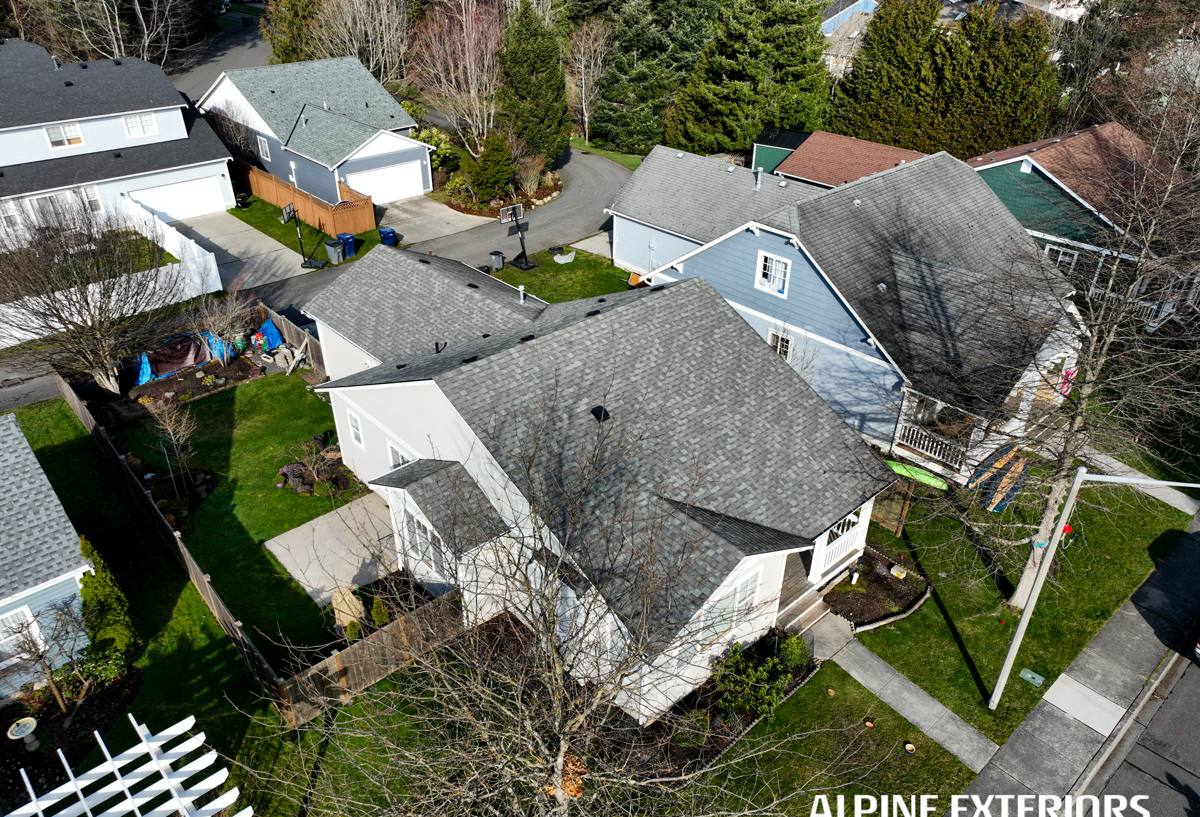
What Makes a Maple Falls Roof Different from a Lynden or Bellingham Roof
We get asked why we'd treat a Maple Falls job any differently than a roof five miles away in town. A few real differences show up on nearly every property up here:
- Tree cover and shade — sections of roof under conifer canopy dry slower and collect needles and cones year-round, which means moss and organic buildup show up faster than on an open roof.
- Elevation — properties higher in the foothills can see colder overnight temperatures and occasional snow loads that lowland Lynden rarely deals with, which affects fastener spacing and panel selection.
- Longer moss season — shaded, damp roofs in this part of the county stay wet longer after rain, which extends the window moss and moisture-loving growth have to establish.
- Driving rain exposure — wind-driven rain off storms moving through the region finds any weak point in flashing or underlayment, especially on roof valleys and around chimneys or skylights.
None of that makes metal roofing a bad fit for Maple Falls — it actually makes it a stronger fit than most alternatives. But it does mean the installation details matter more here than they would on a simpler, more exposed roof.
What a Correct Metal Roof Installation Involves
Underlayment first
On a roof that stays damp under tree cover for extended stretches, the underlayment layer beneath the metal is doing more work than people assume. We use synthetic or self-adhered underlayment rated for the moisture conditions of the roof, with extra attention at valleys, eaves, and anywhere water tends to concentrate before it sheds off the panel.
Fastening and panel seams
Exposed-fastener panels rely on screws with rubber washers that compress correctly and stay sealed for years — done wrong, they're the single most common source of leaks on metal roofs. Standing seam panels avoid exposed fasteners entirely by locking seams mechanically, which is one reason we lean toward standing seam on roofs with heavy shade and slower drying times, where a failed gasket might not get noticed until it's already caused damage.
Flashing and penetrations
Chimneys, skylights, vents, and valleys are where almost every roof leak actually starts, metal or otherwise. Flashing has to be formed to shed water outward at every one of these points, not just caulked and hoped for. On tree-covered lots, valleys also need to be sized generously enough to move debris along with water rather than letting needles and cones dam it up.
Ventilation
A roof deck that can't breathe traps moisture underneath the metal, which leads to condensation issues that have nothing to do with the roofing material itself. We check ridge and soffit ventilation as part of any metal roof install, especially on homes with heavier shade where the attic space doesn't get natural drying help from sun exposure.
Comparing Metal Roofing Options for a Maple Falls Property
| Panel Type | Best Fit For | Trade-offs |
|---|---|---|
| Standing seam (concealed fastener) | Shaded, tree-covered roofs; long-term low-maintenance goals | Higher upfront cost; requires experienced installation for clean seams |
| Exposed-fastener panel | Simpler roof shapes; budget-conscious projects; outbuildings and shops | Fasteners and gaskets need periodic inspection and eventual replacement |
| Stone-coated steel | Homeowners wanting a shingle or shake appearance with metal's durability | More installation steps; higher material cost than exposed-fastener panel |
We don't push one system on every roof. A detached shop or simpler roof plane can do perfectly well with exposed-fastener panels if it's maintained. A primary residence sitting under heavy tree cover, where a missed leak could mean hidden water damage before anyone notices, is where we usually recommend spending the extra cost on standing seam.
Moss, Needles, and Debris: What Maintenance Actually Looks Like
Metal roofing doesn't feed moss the way an asphalt shingle's granulated surface can, but that doesn't mean a Maple Falls roof is maintenance-free. Needles, cones, and organic debris still collect in valleys and against any obstruction, and that debris holds moisture against the panel even when the panel itself isn't absorbing water.
- Clear valleys and low points of needle and debris buildup at least once or twice a year, more often on lots with heavy overhanging conifers
- Keep gutters and downspouts clear so water actually leaves the roof instead of backing up at the eaves
- Trim back branches that overhang the roofline where practical — less direct debris and faster drying
- Have flashing and sealant points at penetrations checked periodically, since these are the parts of any roof system that age faster than the panels themselves
- Rinse visible moss or algae growth before it has a chance to spread across a wider area
How Our Process Works
We start with an on-site look at the actual roof — the pitch, the amount of shade and tree cover, existing ventilation, and any trouble spots like valleys or chimney flashing that show signs of past water intrusion. From there we walk through panel options and give a straight recommendation based on what the roof actually needs, not the most expensive option on the shelf.
Once a scope is agreed on, we handle tear-off or overlay decisions based on the condition of the existing roof deck, install proper underlayment before a single metal panel goes down, and finish with flashing details done the way they should be — formed and layered to shed water, not just sealed with caulk and left. We clean up debris and old material as part of the job, not as an afterthought.
What Affects the Cost of a Metal Roof in Maple Falls
| Factor | Why It Matters |
|---|---|
| Panel type | Standing seam costs more than exposed-fastener panel due to material and labor complexity |
| Roof complexity | More valleys, dormers, and penetrations mean more flashing work and labor time |
| Existing deck condition | Rot or damage found during tear-off adds repair work before new roofing goes on |
| Accessibility | Steep pitches or difficult site access (common on wooded foothill lots) affect labor and staging |
| Underlayment and ventilation upgrades | Bringing an older roof system's moisture protection up to current standards adds cost but reduces long-term risk |
We're not going to quote a number without seeing the roof — anyone who does that on a property with this much variation in pitch, tree cover, and access isn't giving you a real estimate. What we can tell you honestly is that the panel type and roof complexity drive most of the cost difference, and it's worth weighing those against how long you plan to own the home and how much shade the roof sits under.
Why Hire a Crew That Already Works in Maple Falls
A roofing crew that mostly works flat, open, in-town roofs isn't necessarily prepared for the realities of a foothill property — steeper site access, heavier tree cover, longer drying times, and roof geometry shaped by decades-old construction up in this part of the county. We work throughout Whatcom County, including the Maple Falls area regularly enough to know what these roofs are actually up against: extended moss season, driving rain finding weak flashing, and debris load that a lowland roof doesn't see nearly as much of.
That matters when it comes to the decisions that aren't visible once the roof is finished — where extra underlayment goes, how big a valley gets sized, whether a penetration gets flashed properly instead of just caulked. Those are the details that separate a metal roof that performs for decades from one that starts causing problems in five years.
If you're weighing metal roofing for a home in Maple Falls, we're happy to come take a look and give you a straight, no-pressure estimate — use the form below to get started.