 Lynden Siding
 Laurel's Weather Doesn't Go Easy on a Roof
Homes in the Laurel area, tucked into the farmland and residential pockets around Lynden in Whatcom County, sit close enough to the water and the Cascade foothills to catch a little of everything the weather throws. Salt-tinged air rolls in off the Salish Sea, winter storms bring driving rain sideways across open fields, and the mild, wet stretches between storms give moss months to take hold on anything with a north-facing slope or shade. None of that is unusual for this corner of Washington — but it adds up over the life of a roof faster than most homeowners expect.
Storm damage rarely announces itself with a hole you can see from the driveway. More often it's a lifted shingle tab, a bent piece of flashing, or a soft spot where wind-driven rain found a way under the roofing material. Left alone through another Whatcom County winter, small damage becomes decking rot, insulation damage, and eventually an interior repair bill that dwarfs the roof work that would have prevented it.
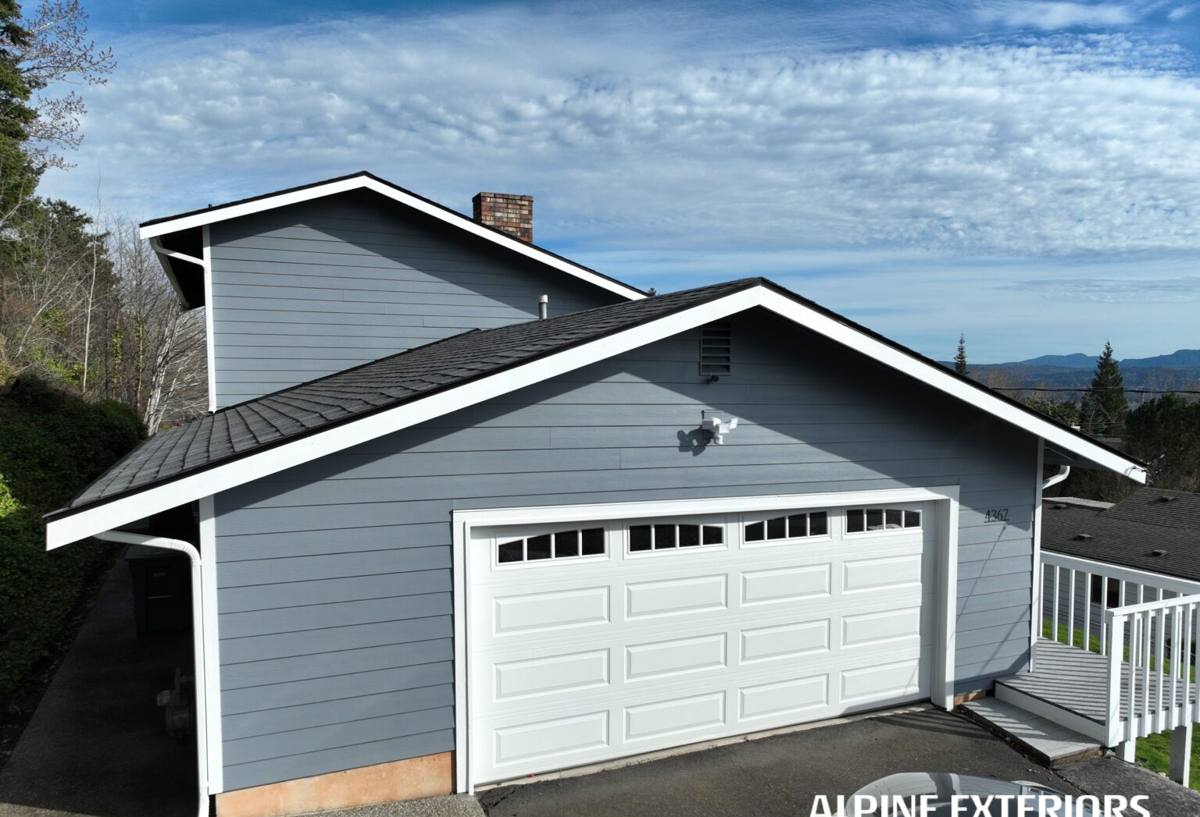
What Actually Damages Roofs in This Part of Whatcom County
Wind and Driving Rain
Laurel doesn't get hurricane-force wind, but it doesn't need to. Sustained wind events combined with heavy rain — the kind that comes through several times most winters — is enough to work shingle tabs loose, especially on roofs that are already a decade or more old and have lost some of their sealant bond. Once a tab lifts, wind-driven rain gets pushed uphill under the shingle instead of running off the way the roof was designed to shed it.
Salt Air
Proximity to the Salish Sea means a steady, low-level exposure to salt-laden air. It's not as aggressive as true oceanfront exposure, but it does accelerate corrosion on exposed metal — flashing, fasteners, gutter hardware — over years. Corroded flashing is one of the most common root causes we find behind a leak that homeowners assumed was a shingle problem.
Moss and Prolonged Moisture
Whatcom County's long wet season gives moss and moisture a wide window to work. Moss holds water against the roofing surface, lifts shingle edges as it grows, and keeps the deck underneath damp far longer than it should be. On shaded or north-facing sections of a Laurel roof, moss is often the slow-motion version of storm damage — less dramatic than a windstorm, but just as capable of causing rot if it's never addressed.
Signs a Laurel Homeowner Should Not Ignore
Most storm damage is visible if you know where to look, or it shows up as a small clue indoors before it becomes a bigger problem.
- Shingle tabs that are lifted, curled, cracked, or missing altogether
- Granules collecting in gutters or at downspout outlets after a storm
- Bent, loose, or missing flashing around chimneys, vents, and roof valleys
- Dented or dislodged gutters and downspouts after high wind
- Soft or spongy spots when the roof is walked, or sagging visible from the ground
- Water stains on interior ceilings or in the attic, especially after a storm
- Daylight visible through the roof deck from inside the attic
- Moss buildup along ridges, valleys, and shaded slopes
Any one of these on its own might be minor. Several together, or any sign paired with an active leak, means it's time for an inspection rather than a wait-and-see approach.
What a Correct Storm Damage Repair Involves
A Full Inspection, Not Just a Patch
A repair that only addresses the spot where water is entering the house often misses the real problem. Wind-driven rain can travel several feet under roofing material before it finds a path down into the structure, so the visible leak indoors and the actual point of failure on the roof are frequently not in the same place. A correct repair starts with tracing the damage back to its source — checking the surrounding shingles, the flashing, and the decking underneath, not just the ceiling stain.
Checking the Decking, Not Just the Surface
If water has been getting under the roofing for any length of time, the plywood or OSB decking underneath can be softened or rotted. Replacing shingles over damaged decking doesn't fix anything — it just re-covers a structural problem. Part of a proper repair is confirming the decking is sound, and replacing any section that isn't, before new material goes down.
Flashing and Sealant Details
Given how much of the storm and moisture damage we see traces back to flashing rather than the shingles themselves, flashing gets particular attention — around chimneys, skylights, vent pipes, and in roof valleys where water volume is highest. Corroded or improperly lapped flashing gets replaced, not just resealed, since sealant alone is a short-term fix on a long-term problem.
Matching Materials
Repairs should use shingles and materials that match the existing roof as closely as possible in type, weight, and color, so the repaired section performs the same as the rest of the roof and doesn't stand out. On older roofs where an exact match isn't available, we'll walk the homeowner through the closest reasonable option and where it will be placed.
Repair or Replace? What Actually Drives That Decision
Not every storm-damaged roof needs full replacement, and not every roof is worth repairing indefinitely. The honest answer depends on a handful of factors we walk through during inspection.
| Factor | Favors Repair | Favors Replacement |
|---|---|---|
| Roof age | Under 12-15 years, sealant bond still intact elsewhere | Nearing or past expected material lifespan |
| Extent of damage | Isolated to one section or slope | Spread across multiple slopes or recurring in new spots |
| Decking condition | Sound, no rot found during inspection | Rot found in more than one area |
| Shingle condition overall | Rest of roof still has good granule coverage and flat tabs | Widespread curling, granule loss, or brittleness |
| Material availability | Close match available for the existing roof | Discontinued product, no reasonable match |
We'll always tell a Laurel homeowner if a repair is a reasonable, honest fix versus a short-term patch on a roof that's genuinely at the end of its service life. There's no benefit to us in talking someone into a full replacement they don't need, and no benefit to them in repairing a roof that's going to need the same repair again next winter.
How Our Repair Process Works
1. Inspection and Documentation
We walk the roof, weather permitting, and check the attic, photograph the damage, and identify the cause rather than just the symptom. If the damage may be covered by insurance, we document it in a way that supports a claim.
2. A Straight Answer on Scope
We explain what we found, what needs to happen, and what it will cost, in plain terms. If it's a small repair, we say so. If it's more involved, we explain why.
3. The Repair Itself
Work is scheduled around the weather — driving rain and Whatcom County's wet stretches aren't ideal conditions for opening up a roof, so we plan around dry windows when possible and use proper tarping and sequencing when a repair can't wait for a clear day.
4. Cleanup and Final Check
Old material, nails, and debris get cleared from the roof, gutters, and ground around the house. We do a final check of the repair and the surrounding area before calling the job done.
Insurance and Storm Damage Claims
Wind and storm damage is often covered under a standard homeowner's policy, though coverage details, deductibles, and what counts as storm damage versus ordinary wear and tear vary by policy and insurer. We're not insurance adjusters and won't promise a claim outcome, but we can provide clear photo documentation, a written scope of damage, and a repair estimate that homeowners can bring to their insurer. If damage genuinely happened during a specific storm event, having it documented promptly makes that conversation with the insurance company considerably easier.
Reducing the Odds of Repeat Damage
A repair fixes what's already broken. A few maintenance habits make the next storm season less likely to cause the same kind of damage again.
Keep Gutters and Downspouts Clear
Clogged gutters back water up under the roof edge during heavy rain, which is one of the more preventable causes of edge and fascia damage we see on Laurel-area homes. Clearing gutters before the fall storm season and again after any major wind event is one of the simplest things a homeowner can do.
Address Moss Before It Spreads
Moss is far easier to manage when it's caught early — light growth can often be treated and removed without disturbing the shingles, while heavy, long-established moss usually means some shingle damage has already happened underneath it. Keeping an eye on shaded and north-facing slopes during Whatcom County's wetter months helps catch it early, before it becomes a repair instead of routine maintenance.
Check Attic Ventilation
Poor attic ventilation traps moisture underneath the roof deck, which softens wood over time and makes storm damage worse when it does occur. It's worth having ventilation checked as part of any roof inspection, not only after a storm has already caused visible damage.
Why It Matters That We Already Work in Laurel
A crew that regularly works the Laurel area and greater Lynden already has a feel for what roofs here are up against — the wind exposure certain lots get off open farmland, which streets tend to hold moss longer because of tree cover, and how local permitting is handled when a repair crosses into replacement territory. That familiarity means fewer surprises during inspection, a more accurate estimate, and a repair built for the conditions the roof will actually face again next winter, not a generic fix pulled from a general contractor's playbook.
It also means a shorter response time. After a storm moves through Whatcom County, roofing crews get busy fast, and homeowners who wait to call often wait longer for service. A local crew already routing through the area can usually get an inspection scheduled sooner than one driving in from outside the county.
If you're seeing signs of storm damage on your Laurel-area roof, or just want a professional set of eyes on it after a rough winter, we're happy to take a look. Fill out the form below for a free, no-pressure estimate — we'll tell you honestly what we find and what it would take to fix it right.