 Lynden Siding
 Storm Damage Roof Repair for Kendall Homes
Kendall sits out toward the foothills northeast of Lynden, where big timber, open pasture, and exposed rooflines all take a beating when Whatcom County weather turns. Winter windstorms drive rain sideways under shingles and flashing, tree cover drops limbs and debris onto roofs that don't get checked often enough, and the long stretch of wet, low-sun months between fall and spring gives moss and moisture damage plenty of time to work into a roof before anyone notices a problem from the ground. Add in the salt-laden marine air that moves through this part of Washington off the Sound, and you've got a climate that's genuinely hard on roofing materials year-round, not just during a named storm event.
Storm damage roof repair here isn't a one-size-fits-all service. A roof that took wind uplift on a gable end needs different attention than one with a tree strike near a chimney, and a roof that's been slowly saturating under moss for two winters needs a different scope of work than one with a single clean puncture. Getting the diagnosis right is most of the job — the repair itself is usually straightforward once you actually know what's wrong.
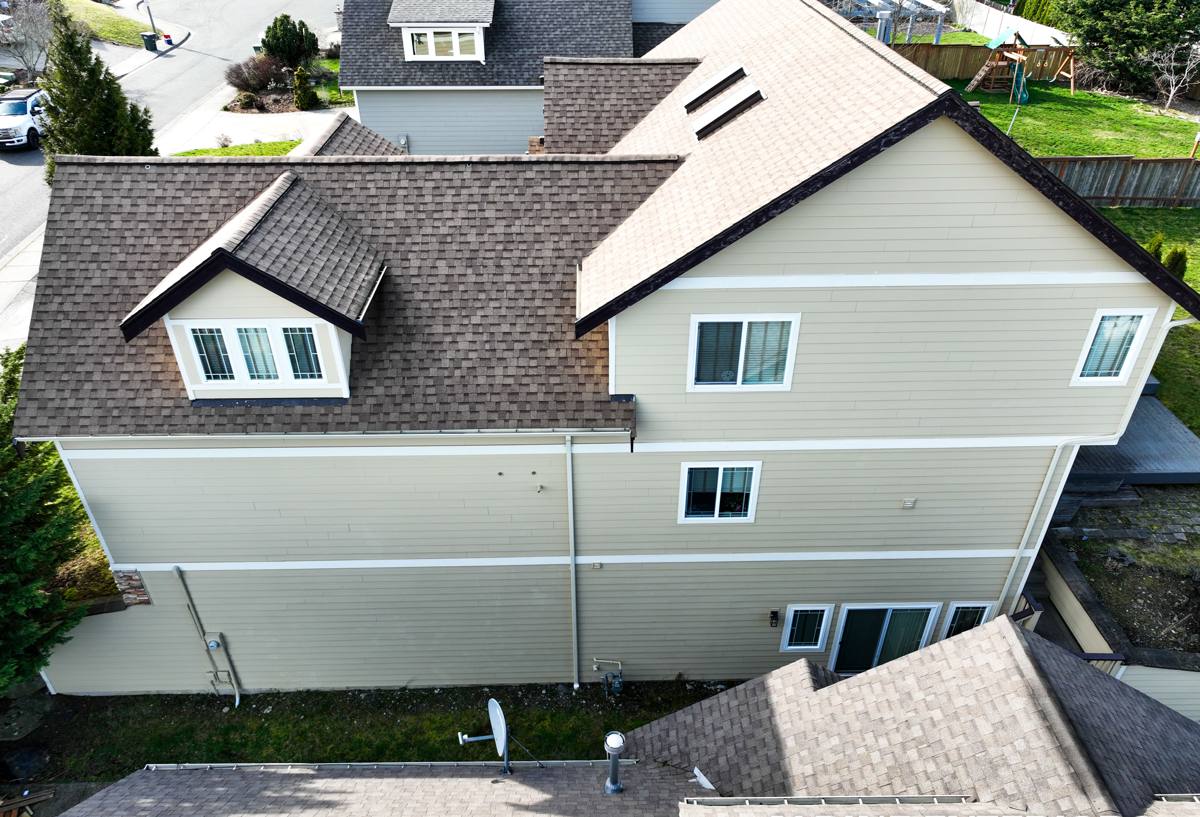
What Storms Actually Do to a Roof Out Here
Wind
Sustained wind and gusts lift shingle tabs, crack ridge caps, and work fasteners loose at the edges and corners of a roof first — those are the highest-stress zones in any wind event. Once a shingle's seal is broken, it doesn't have to blow off to cause damage; it just has to flap enough times to let wind-driven rain underneath.
Wind-driven rain
Rain that's moving sideways doesn't behave like rain falling straight down. It gets pushed up and under shingle edges, into open laps at flashing, and through any gap that would otherwise shed water fine in calm conditions. Most of the "mystery leaks" we get called out for after a storm trace back to wind-driven rain finding a weak point that had been fine for years under normal rainfall.
Debris and impact
Branches, cones, and blown debris from nearby trees can crack shingles, dent metal flashing, and puncture underlayment in a concentrated spot. Impact damage is often small and localized, which is good news for repair scope, but bad news if it goes unnoticed — a dime-sized puncture lets in just as much water as a big obvious hole.
Moss and prolonged moisture
This one isn't a single storm event, it's cumulative. Moss holds water against the roof surface long after a storm has passed, keeps shingles wet and cool, and works its way under tabs and around fasteners. Over a full wet season, that moisture exposure degrades the same materials a storm damages directly — just slower and more quietly.
What a Correct Repair Actually Involves
A rushed storm repair patches the visible symptom and leaves the underlying entry point open. A correct one traces water back to where it actually got in, which is often several feet from where the stain or drip shows up inside. Water follows rafters, sheathing seams, and underlayment laps downhill before it ever shows itself on a ceiling.
- Full roof inspection, not just the reported problem area — storms rarely damage only one spot
- Underlayment and sheathing check where shingles were compromised, since wet decking needs to dry and sometimes be replaced before new material goes down
- Flashing inspection at every penetration near the damage — chimneys, vents, valleys — since flashing failures are a leading cause of repeat leaks
- Matching materials as closely as possible so the repair doesn't stand out or create a new weak seam
- Fastener and seal check on surrounding shingles that may have been loosened by the same wind event, even if they didn't fail outright
Skipping any of these steps is how a homeowner ends up paying for the same repair twice — once right after the storm, and again eighteen months later when the real cause of the leak finally shows up somewhere new.
Our Process, Start to Finish
1. Assessment
We inspect the full roof, not just the area you're worried about, and document what we find before recommending anything. If the damage is limited and the rest of the roof is sound, we'll say so plainly.
2. Scope and explanation
You get a straightforward explanation of what's damaged, what caused it, and what it'll take to fix — in plain language, not a sales pitch. If there's a decision to make between a targeted repair and a larger scope, we'll lay out the honest trade-offs.
3. Repair
We open up the damaged section, check the decking underneath, replace what's compromised, and rebuild the flashing and shingle courses to shed water the way they're supposed to — not just cover the hole.
4. Verification
Before we call it done, we check that surrounding materials are properly sealed and that water has a clear path off the roof again, especially at valleys and low-slope transitions where debris and moss tend to collect.
Moss, Moisture, and Why Follow-Up Matters
Whatcom County's wet season runs long, and Kendall's tree cover means shaded sections of roof stay damp longer than roofs out in the open. That's exactly the condition moss needs to establish. Once moss gets a foothold, it doesn't just sit there — it lifts shingle edges as it grows, holds water against the surface, and slowly works granules loose, which shortens the life of the roofing material underneath it.
After a storm repair, we'll flag any areas showing early moss growth or granule loss even if they weren't part of the storm damage itself, because those are the spots most likely to fail next. A roof that's had storm repair done is a good moment to also deal with moss buildup before it becomes its own separate problem — treating both at once is more efficient than two separate service calls.
Insurance and Storm Claims
Many storm-related roof repairs are covered under a standard homeowner's policy, but coverage and claim requirements vary by carrier and by the specific cause of damage. We're happy to document damage clearly — photos, cause, scope — in a way that's useful if you decide to file a claim, but we're a roofing contractor, not an insurance adjuster, and we won't tell you what your policy covers. That's a conversation for your agent or adjuster. What we can tell you honestly is whether what we're looking at is storm-caused or long-term wear, since that distinction usually matters to a claim.
Repair or Replace? What Actually Drives That Decision
| Factor | Leans Toward Repair | Leans Toward Replacement |
|---|---|---|
| Roof age | Roof is under 15 years old | Roof is near or past its expected lifespan |
| Damage extent | Isolated to one section or slope | Spread across multiple sections |
| Decking condition | Dry, sound sheathing under the damage | Soft or water-damaged decking found |
| Moss/moisture history | Minimal prior moss or granule loss | Long-term moss damage beyond the storm area |
| Material availability | Matching shingles still available | Discontinued product, visible mismatch likely |
Most storm calls in Kendall end up being repairs, not full replacements — but the only honest way to know which category a roof falls into is to actually get up there and look, not guess from the ground or from a photo.
What to Do Right After a Storm
- Check the interior first — ceiling stains, damp attic insulation, or musty smells are often the first sign of a roof problem
- Note any debris on the roof or in gutters, but don't climb up to inspect it yourself after a storm
- Take photos from the ground of any visible missing shingles, dented flashing, or obvious damage
- Address active leaks with a bucket or tarp only as a temporary measure — don't attempt roof-level repairs in wet or windy conditions
- Call for an inspection promptly; small storm damage left open to weather gets worse with every subsequent rain
Why a Crew That Already Works Kendall Matters
A contractor who regularly works this area already understands how the wind moves across open pasture versus through tree-lined properties, which roof orientations take the worst of driving rain, and how fast moss reestablishes given the local wet season. That local pattern recognition speeds up the diagnosis part of the job — the part that actually determines whether a repair holds.
It also means someone who can get to a Kendall property without treating it as an out-of-the-way trip, which matters when a roof is actively leaking and every day of delay adds water damage. We'd rather build a lasting relationship with homeowners in this area than treat storm repair as a one-time transaction.
If you've got storm damage, a suspicious leak, or a roof that's been holding moss longer than it should, we're glad to take a look and give you a straight answer. Reach out for a free, no-pressure estimate using the form below.