 Lynden Siding
 Roof Replacement Built for Kendall's Climate
Kendall sits in a part of Whatcom County that puts real, sustained pressure on a roof year after year. Salt-tinged air off the water works into exposed metal and fasteners over time. Rain here rarely falls straight down — wind drives it sideways and up under shingle edges and flashing laps that a rushed job never accounted for. And a long, damp moss season settles into shaded and north-facing roof planes for months at a stretch, holding moisture against the roof surface far longer than a drier climate would allow. A full roof replacement is the point where all of that can finally be addressed properly, from the deck up, instead of being patched around one more time.
This page is specifically about full roof replacement for a Kendall home — how to know when replacement is the right call instead of another repair, what a correct whole-roof job actually includes, the material choices worth weighing at replacement time, and how our process works from the first inspection to final cleanup.
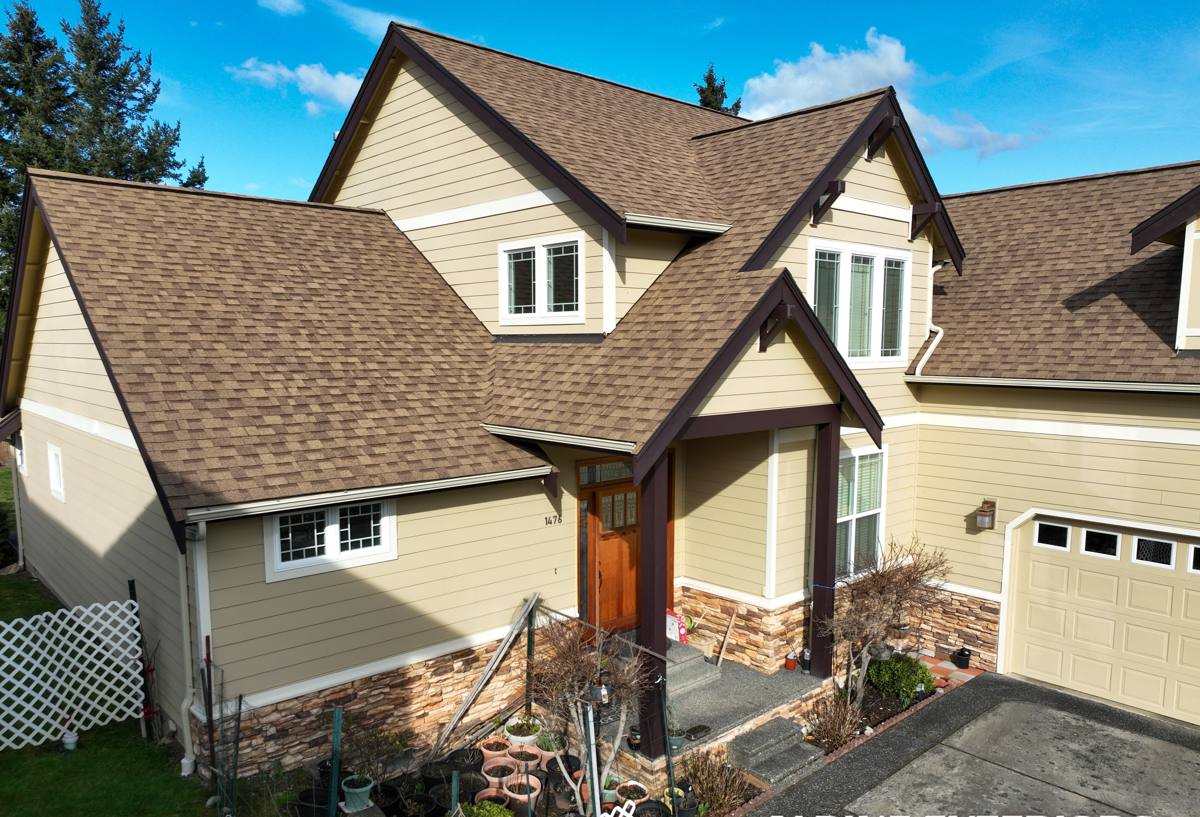
How to Tell You Need Replacement, Not Another Repair
Every roof reaches a point where continuing to patch it costs more, over time, than replacing it outright — and that point usually arrives with warning signs rather than a sudden failure. The judgment call is knowing when you've crossed it.
- Age relative to material lifespan: A shingle roof nearing 20-25 years old is statistically closer to failure than to its next repair being a lasting fix.
- Repeated leaks in different spots: One leak is a repair. Leaks showing up in new locations each wet season usually means the underlayment and deck are failing broadly, not just at one flashing point.
- Widespread granule loss or shingle curling: When this shows up across most of the roof rather than one slope, the shingle field itself is past the point where spot repairs hold.
- Soft or spongy decking: Found during a repair or inspection, this signals moisture has been getting into the plywood or OSB deck long enough to compromise it structurally in places.
- Persistent moss and moisture on north-facing slopes: If moss keeps returning after cleaning and the roof underneath stays damp, the roof's ability to shed water and dry out has degraded.
- Multiple existing layers: A roof that already has two layers of shingles on it needs a full tear-off at the next re-roof regardless of condition, since code and manufacturer specifications generally don't allow a third layer.
An honest inspection should tell you plainly which side of that line your roof is on, including the option that a targeted repair is genuinely the right call for now. Replacement isn't always the answer, and a contractor who recommends it for every roof they look at isn't doing you any favors.
What a Correct Full Replacement Actually Involves
A roof replacement done right treats the roof as a complete system, not just a new layer of material laid down over whatever's underneath. Skipping any of the following steps is how a brand-new roof still ends up with the same leaks a few years later.
Complete Tear-Off
Every layer of old roofing comes off down to bare decking. This is the only way to find rot, soft spots, or hidden moisture damage that's been developing unseen, sometimes for years, and it's the step a layover install skips entirely by simply burying whatever problems already exist.
Deck Repair or Replacement
Any decking found to be soft, delaminated, or water-damaged during tear-off gets replaced before anything new goes down. New shingles or metal fastened over a compromised deck won't hold fasteners properly and won't last, regardless of how good the surface material is.
Underlayment and Water Barrier
Synthetic or self-adhered underlayment across the field, with ice-and-water shield at eaves, valleys, and other vulnerable transitions, gives the roof a real second line of defense against wind-driven rain that gets forced under the surface layer rather than running off it.
Flashing at Every Transition
Valleys, chimneys, skylights, and wall-to-roof intersections are where most roof leaks actually start, not in the open field. A full replacement is the opportunity to redo flashing correctly at every one of these points rather than caulking over whatever was there before.
Ventilation Correction
A replacement is also the right time to correct intake and exhaust ventilation if the existing setup has been trapping moisture against the underside of the deck. Balanced ventilation extends the life of whatever new roofing goes on and reduces the moisture that feeds moss growth from below.
Choosing a Material at Replacement Time
Full replacement is also the one point where switching materials entirely is realistically on the table, since the deck is open and accessible. The right choice depends on budget, how long you plan to stay in the home, and how much of the roof sits shaded or exposed to wind.
| Material | Typical Lifespan | Fit for a Kendall Replacement |
|---|---|---|
| Architectural Asphalt Shingles | 25-30 years | The most common practical choice here — good wind resistance and available with algae-resistant granules for moss-prone slopes |
| Standing Seam Metal | 40-50+ years | Sheds wind-driven rain and moss buildup better than any shingle option, higher upfront cost offset by a much longer service life |
| Synthetic/Composite Shakes | 30-40 years | Gives a cedar-shake appearance with better moisture resistance than real wood shingles, a reasonable middle ground on cost and looks |
We don't push one material as universally "best" — each of these performs well in this climate when installed correctly, and each has a legitimate place depending on the roof and the homeowner's priorities. What we won't do is install a system we don't believe will hold up to sustained wind-driven rain and moss exposure just because it's cheaper up front; that's a maintenance burden we'd rather explain honestly before the contract is signed than after a leak shows up.
Permits, Disposal, and the Logistics Homeowners Don't See
A full replacement involves more coordination than a repair, and most of it happens before a single shingle comes off.
Whatcom County and local jurisdictions typically require a permit for a full roof replacement, and a legitimate contractor pulls that permit and schedules the required inspections rather than treating it as optional paperwork. Tear-off also generates a significant volume of waste — old shingles, underlayment, and any damaged decking — which needs a dumpster or haul-away plan sized correctly for the roof so the job site doesn't become a hazard mid-project. Weather scheduling matters too: a full tear-off leaves a roof deck exposed until dry-in is complete, so timing around Kendall's wetter stretches, and having a plan to tarp and protect an open deck if weather turns mid-job, is part of doing this responsibly rather than an afterthought.
Cost Factors Worth Understanding
Bids on the same replacement can vary substantially, and the difference usually comes down to real scope differences rather than one contractor padding the price.
| Factor | What It Affects |
|---|---|
| Number of existing layers to remove | Tear-off labor and disposal volume |
| Extent of deck repair needed | Material and labor cost discovered once tear-off is underway |
| Material selected | Upfront cost versus expected service life |
| Underlayment and ice-and-water shield grade | Long-term resistance to wind-driven rain intrusion |
| Flashing scope | How thoroughly valleys, penetrations, and wall transitions are addressed |
| Roof pitch, height, and access | Staging, safety equipment, and labor time |
| Ventilation corrections | Whether intake/exhaust balance is fixed as part of the job or left as-is |
A detailed, itemized estimate that breaks these out separately tells you far more than a single lump-sum number, and it's worth asking any contractor to walk through exactly what's included, especially around deck repair, since that's the line item most likely to change once tear-off starts.
How Our Replacement Process Works
- In-person inspection: We get on the roof and into the attic where accessible, rather than estimating from a photo or a drive-by.
- Honest repair-vs-replace assessment: If the roof genuinely doesn't need full replacement yet, we'll tell you that directly.
- Written, itemized estimate: Tear-off, deck allowance, underlayment, flashing, material, ventilation, and cleanup are each spelled out, not bundled into one number.
- Permitting: We handle the permit and required inspections rather than leaving that step to you.
- Scheduling around weather: Timing accounts for Kendall's wetter stretches, with a plan to protect an open deck if conditions turn during the job.
- Tear-off and deck repair: Old roofing comes off completely and any deck damage found is repaired before new material goes down.
- Underlayment, flashing, and roofing installation: Each layer goes on to manufacturer specification, with particular attention at valleys, penetrations, and wall transitions.
- Final walkthrough and full site cleanup: We review the completed roof with you and do a magnetic nail sweep of the property before calling the job done.
Why Hiring a Crew That Already Works in Kendall Matters
A crew with an established, ongoing presence doing roof replacements in and around Kendall has already seen how salt air corrodes underspecified fasteners over a few winters, which roof orientations hold moss longest through the wet season, and where sideways-driven rain finds gaps in flashing that a generic install would miss. That local pattern recognition shows up in dozens of small decisions across a job that a crew unfamiliar with this specific stretch of Whatcom County simply wouldn't think to make.
It also matters after the job is finished. A workmanship warranty only means something if the company behind it is still reachable in a few years, which is a fair thing to ask about before signing anything.
A Practical Checklist Before You Commit to a Replacement
- Does the estimate clearly separate tear-off, deck repair, underlayment, flashing, material, and ventilation as line items?
- Will they pull the required permit and schedule inspections themselves?
- Is a full tear-off specified, not a layover, if you already have one existing layer of roofing?
- Do they carry current WA contractor licensing, liability insurance, and workers' compensation?
- Can they show recent, verifiable roof replacement work in or near Kendall?
- Does the bid distinguish the manufacturer's material warranty from their own workmanship warranty, and what each actually covers?
If you'd like an honest, no-pressure assessment of whether your Kendall roof needs full replacement or just a targeted repair, along with a written estimate you can compare against anything else you've received, we're glad to take a look. Use the form below to request a free estimate.