 Lynden Siding
 Siding Built for the Sumas Stretch of Whatcom County
Sumas sits in a part of Whatcom County that gets the full weather package: salt-tinged marine air moving in off the Sound, driving rain that comes at the wall sideways instead of straight down, and a moss season that seems to start earlier and last longer every year. Siding here isn't just a cosmetic layer — it's the first and most important line of defense against moisture finding its way into the wall assembly. We work on homes throughout the Lynden area, and the houses closest to Sumas tend to show the same recurring problems: soft trim boards, streaked and mossy siding faces, and paint that gives out years before it should.
This page focuses on one thing — James Hardie fiber cement siding, installed correctly, on homes in and around Sumas. We're not going to give you a generic rundown of siding options. We're going to walk through what this specific climate does to a wall, what a correct Hardie installation actually involves, and why it matters that the crew doing the work already knows this stretch of Whatcom County.
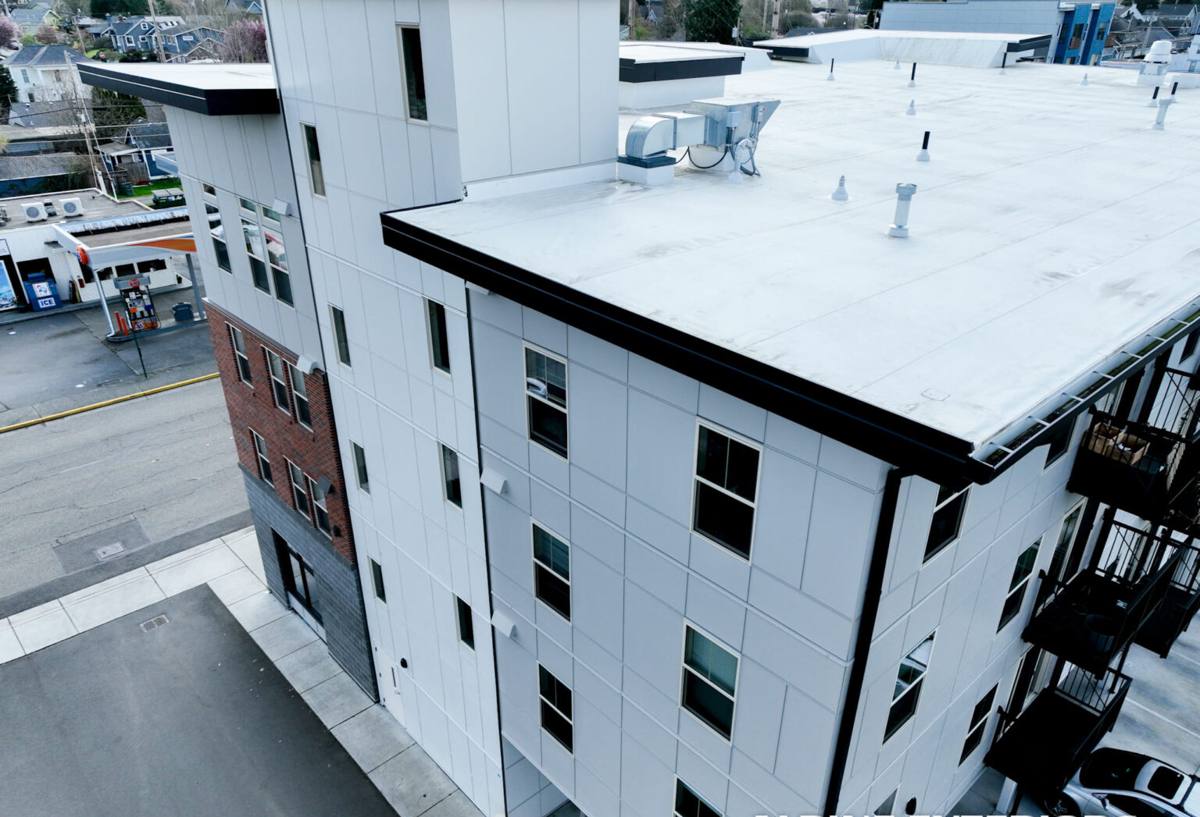
What This Climate Actually Does to Siding
Salt Air and Slow Corrosion
Homes closer to the water pick up a fine, near-invisible film of salt on exterior surfaces. Over years, that salt film accelerates the breakdown of fasteners, trim, and paint film that wasn't designed to handle it. Cheap fasteners rust and streak. Coatings that aren't rated for coastal exposure chalk and fade faster than the manufacturer's warranty assumes they will.
Driving Rain and Wind-Driven Moisture
Rain that falls straight down is manageable for almost any siding product. Rain that gets pushed sideways by wind is a different problem — it finds horizontal laps, butt joints, and penetrations around windows and utility fixtures that were never built to shed water moving at an angle. This is where most siding failures actually start: not on the open field of the wall, but at the seams.
A Long Moss and Algae Season
Shaded north- and west-facing walls, tree cover, and consistent moisture give moss, algae, and mildew a long runway to establish themselves. On porous or poorly finished siding, that growth isn't just a surface stain — it holds moisture against the wall longer, which compounds every other problem on this list.
Why James Hardie Is the System We Install
James Hardie fiber cement is engineered specifically for climates like this one. It's a cement, sand, and cellulose fiber composite — non-combustible, dimensionally stable, and resistant to the swelling, warping, and rot that plague wood-based and wood-alternative siding products in a wet marine climate. Hardie makes region-specific formulations, and the HZ5 product line is engineered for the colder, wetter climate zone that includes the Pacific Northwest — it's built to hold up to freeze-thaw cycling and sustained moisture exposure rather than a generic, one-size-fits-all formula.
Just as important is the factory finish. Hardie's ColorPlus Technology is a baked-on, UV-cured finish applied under factory conditions, not brushed on at the jobsite. That finish is engineered to resist fading, chipping, and cracking far longer than field-applied paint, which matters enormously in an area where moss, algae, and salt film all attack a coating from different angles at once. We install this specifically because it removes the weakest link — job-site painting — from the equation.
We install James Hardie exclusively. We don't install LP SmartSide, vinyl, Cemplank, Allura, primed spruce, or cedar. Each of those has legitimate uses somewhere, but none of them holds up the same way, for the same length of time, in this specific combination of salt air, driving rain, and moss exposure, without asking the homeowner to take on a heavier maintenance burden down the road. We'd rather stand behind one system we trust completely than install several we'd have to caveat.
What a Correct Installation Actually Involves
The siding product is only part of the story. Most of the failures we get called out to inspect on older homes near Sumas weren't caused by bad siding material — they were caused by installation shortcuts that let water get behind a perfectly good product.
Water Management Behind the Siding
A correctly built wall assembly includes a drainage plane — typically a weather-resistant barrier with either furring strips or a purpose-built rainscreen gap — so any moisture that does get past the siding face has somewhere to go besides sitting against the sheathing. This detail is invisible once the job is done, which is exactly why it gets skipped by crews trying to save time.
Flashing at Every Penetration
Windows, doors, hose bibs, electrical penetrations, and roof-to-wall transitions all need properly lapped flashing so wind-driven rain is directed out and down instead of behind the siding. This is the single most common failure point we see, and it has nothing to do with the siding brand.
Fastener Pattern and Clearances
Hardie publishes specific nailing schedules, fastener types, and minimum clearances from grade, roofing, and other surfaces. Skipping these specs voids manufacturer warranty coverage — and it's one of the most common ways we see other installers cut corners, because it's cheap and fast to do wrong.
Caulking and Joint Treatment
Butt joints, trim intersections, and panel edges need the right sealant applied correctly, not just wherever it looks tidy. Over-caulking can trap moisture just as badly as under-caulking lets it in.
Our Process for Sumas-Area Homes
- Walkthrough and assessment — we inspect the existing siding, trim, and any soft or moisture-damaged sheathing before quoting anything, so the estimate reflects what your wall actually needs.
- Prep and repair — any compromised sheathing or framing gets addressed before new siding goes up. Covering a problem doesn't solve it.
- Water management installation — weather barrier, flashing, and drainage detailing go in first, before a single piece of siding is hung.
- Hardie installation to manufacturer spec — correct fastener pattern, clearances, and joint treatment, following Hardie's published installation guidelines.
- Trim and detail work — corners, window and door trim, and transitions are finished to shed water, not just to look clean.
- Final walkthrough — we go over the finished work with you before calling the job done.
Comparing Siding Options for This Climate
Homeowners in Sumas and greater Lynden often ask us to explain, in plain terms, why we standardized on one product instead of offering several. Here's an honest comparison of how the main options behave under salt air, driving rain, and a long moss season:
| Factor | James Hardie Fiber Cement | Vinyl | LP SmartSide / Wood-Based | Cedar |
|---|---|---|---|---|
| Moisture behavior | Dimensionally stable, resists swelling and rot | Doesn't rot, but can warp and gap, letting water track behind it | Engineered wood core is vulnerable to swelling if the finish is ever compromised | Absorbs moisture readily; needs consistent finish maintenance to resist rot |
| Finish durability | Factory-baked ColorPlus finish resists fading and chipping | Color is through-body but can fade and become brittle with UV exposure | Relies on field-applied or factory coatings that need repainting over time | Requires regular staining or sealing to hold appearance |
| Moss/algae resistance | Dense, low-porosity surface resists growth better than porous materials | Resists growth but can trap moisture behind loose panels | Wood-based substrate is more vulnerable if growth takes hold | Naturally more susceptible to moss and mildew without upkeep |
| Fire resistance | Non-combustible | Combustible, can melt or deform near heat sources | Combustible | Combustible |
| Long-term maintenance | Occasional cleaning; no repainting cycle with ColorPlus | Low maintenance but limited repair options if cracked | Periodic repainting and moisture inspection | Regular refinishing required |
None of these alternative products are inherently bad products — they're simply a different set of trade-offs than the ones we're willing to install our name behind. In a climate that combines salt exposure, wind-driven rain, and a long wet season, those trade-offs tend to show up as maintenance headaches sooner than most homeowners expect.
What to Expect Cost-Wise
Siding costs vary based on the size and complexity of the home, how much of the existing wall assembly needs repair, trim detail, and the specific Hardie profile chosen (lap siding, panel siding, or shingle-style accents). Broadly, budget for these cost drivers rather than a single flat number:
| Cost Driver | Why It Matters |
|---|---|
| Underlying sheathing condition | Rot or moisture damage found during tear-off adds repair scope before new siding can go up |
| Home size and wall complexity | More corners, dormers, and trim detail mean more labor and material |
| Siding profile selected | Lap siding, panel systems, and shingle-style accents carry different material and labor costs |
| Trim and accessory scope | Full trim replacement versus reusing sound existing trim changes the total |
| Access and site conditions | Multi-story walls, tight lot lines, or landscaping can add labor time |
We give a firm, itemized quote after walking your home in person — not a phone estimate — because the variables above genuinely change the number.
Maintenance Checklist for Hardie Siding in This Climate
Correctly installed Hardie siding is low-maintenance, not no-maintenance. In a Whatcom County climate with salt exposure and a long moss season, a simple annual routine keeps it performing the way it's designed to:
- Rinse the siding down once a year, focusing on shaded north- and west-facing walls where moss and algae take hold first.
- Keep gutters clear so overflow doesn't run down the wall face repeatedly during heavy rain.
- Trim back vegetation and tree cover that keeps siding shaded and damp for extended periods.
- Walk the exterior once a year looking for cracked caulk joints around windows, doors, and trim, and have them resealed before winter rains set in.
- Check that soil, mulch, or landscaping hasn't crept up above the manufacturer's minimum clearance from grade.
- Note any soft spots, staining, or unusual gaps at trim and butt joints, and have them looked at before they become bigger repairs.
Why a Crew That Already Works Sumas Matters
A siding crew that regularly works this part of Whatcom County already knows which walls take the worst of the wind-driven rain, where moss establishes fastest, and how the salt-influenced air affects fastener and finish choices over time. That's not something you can fully compensate for with a generic installation manual — it shapes small decisions throughout the job, from flashing details to where extra attention on drainage is worth the time. Local experience also means straightforward answers instead of guesswork when you ask why we're doing something a particular way.
Being local also means accountability. If a question comes up after the job is done, you're not calling a call center or waiting on a crew that has to drive in from out of the area — you're calling the same company that installed it.
Ready for a Straightforward Estimate
If you're weighing a siding replacement or repair for a home in or around Sumas, we're happy to take a look and give you an honest read on what your walls actually need — no pressure, no inflated scope. Use the form below to request a free estimate and we'll go from there.