 Lynden Siding
 Ferndale Decks Take a Different Kind of Beating
Ferndale sits close enough to the water that salt-laden air is a real factor in how fast a deck ages, and it gets the same long stretches of driving rain that soak the rest of Whatcom County every fall and winter. Add a moss season that can run from October through April in a wet year, and you've got three separate forces working against a deck at the same time: corrosion, moisture intrusion, and organic growth that traps both against the wood.
A deck built or replaced without accounting for that combination will look fine for a season or two, then start showing problems all at once — soft boards, rusting hardware, and a slick green film that never fully goes away. Replacing a deck the right way in this area means building for the climate that's actually here, not the climate a generic spec sheet assumes.
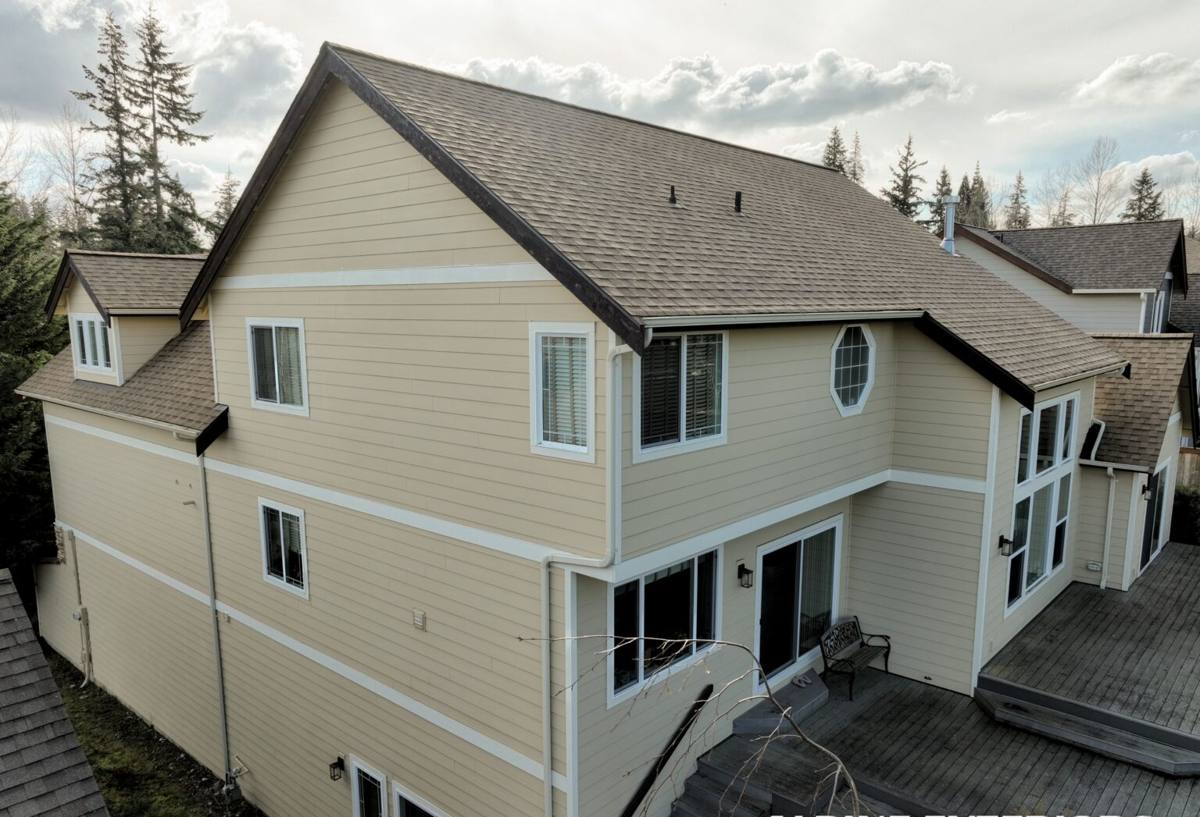
Signs Your Deck Needs Replacement, Not Another Repair
Homeowners often ask whether a deck can be patched instead of replaced. Sometimes it can. But once a deck shows more than one or two of the issues below, patching individual boards usually just delays a bigger, more expensive fix.
- Boards that feel soft, spongy, or flex underfoot, especially near the house or at board ends
- Rot or discoloration at the ledger board where the deck attaches to the house
- Rust streaks bleeding out from screws, nails, or joist hangers
- Moss or algae that returns within weeks of cleaning, even in dry spells
- Visible gaps, cracking, or splitting where fasteners no longer hold tight
- Noticeable bounce, sway, or movement when the deck is loaded with people or furniture
- Post bases or footings that show cracking, heaving, or standing water around them
Any one of these on its own might be a repair. Several together usually means the structure underneath — not just the surface boards — has been compromised by years of moisture cycling.
Why Older Decks in This Area Fail Faster
A lot of Whatcom County decks were built with standard pressure-treated lumber and basic fasteners that weren't rated for coastal-adjacent exposure. Over ten to twenty years of driving rain and salt air, that combination corrodes fasteners from the inside of the joint outward — often long before the visible wood surface looks bad. By the time surface rot shows up, the connections holding the frame together may already be weaker than they look.
What a Correct Deck Replacement Actually Involves
A deck replacement done right is not just pulling up old boards and screwing down new ones. The parts of a deck that fail first in this climate are almost all hidden underneath the decking surface.
The Ledger Board Connection
The ledger board — where the deck attaches to the house — is the single most important point on the whole structure. If it's not flashed correctly to shed water away from the house framing, moisture works its way behind the siding and into the rim joist over time, causing damage that's expensive to find and fix. Every replacement we do treats this connection as a moisture-management detail, not just a structural bolt pattern.
Footings and Framing
Post footings need to sit below frost depth and drain properly, not sit in a pocket of standing water after every storm. Joists need hardware-rated hangers, not just toe-nailing, and spacing needs to match the decking material being installed — composite and PVC boards generally need tighter joist spacing than solid wood to avoid flexing between supports.
Fasteners and Hardware
Given the salt air Ferndale sees, we favor stainless steel or heavy hot-dip galvanized fasteners and connectors rated for coastal exposure over standard-grade hardware. It costs a little more up front and it's the difference between hardware that lasts the life of the deck and hardware that starts staining and weakening within a handful of years.
Choosing a Decking Material for This Climate
There's no single "best" decking material — the right choice depends on how much maintenance you want to do, your budget, and how much the salt air and rain in this area matter to you long-term. Here's how the common options actually compare.
| Material | Moisture & Salt Air Performance | Maintenance | Typical Lifespan | Relative Cost |
|---|---|---|---|---|
| Pressure-treated wood | Fair — needs sealing to resist moisture and salt exposure | Annual cleaning and re-sealing/staining | 10–15 years | Lowest upfront |
| Cedar | Good natural rot resistance, but still needs sealing near salt air | Regular cleaning, periodic oiling or staining | 15–20 years | Moderate |
| Capped composite | Very good — resists moisture absorption and salt staining | Occasional washing, no sealing or staining | 25–30 years | Higher upfront |
| PVC decking | Excellent — fully synthetic, doesn't absorb moisture | Lowest — washing only | 25–30+ years | Highest upfront |
We install all of these depending on what a homeowner wants. Where we steer people away from an option, it's an honest trade-off conversation — for example, uncapped or budget composite boards can absorb moisture at cut edges and stain in salt air over time, so if a homeowner wants composite, we generally recommend a fully capped product and detail the cut edges carefully during install.
Our Deck Replacement Process
- On-site assessment — we inspect the existing deck's framing, ledger connection, footings, and overall condition, not just the surface boards.
- Plan and materials review — we walk through decking material options, railing style, and layout changes if you want any, along with a clear cost breakdown.
- Permitting — we handle the local permit and inspection process so the finished deck meets current code, not just what was allowed when the old one was built.
- Demolition and structural work — full removal of the old decking and any compromised framing, footings, or ledger flashing.
- Rebuild — new framing, corrosion-resistant hardware, correctly flashed ledger connection, and decking installed to the manufacturer's spec.
- Railings, stairs, and finish details — built to current code for height and baluster spacing, finished to match the rest of the home.
- Final walkthrough — we go over the finished deck with you, including basic care so it holds up through the next moss season.
Permits and Code in Whatcom County
Most deck replacements in this area require a permit, especially when framing, footings, or railings are being rebuilt rather than just resurfaced. Requirements around guardrail height, baluster spacing, and stair geometry are enforced during inspection, and older decks are frequently out of compliance with current code even if they were fine when originally built. We pull the necessary permits and coordinate inspections as part of the job so you're not left tracking that down yourself.
Keeping Moss and Algae Off Your New Deck
Moss doesn't just sit on top of a deck — it holds moisture against the boards and, on wood decks, accelerates rot underneath the growth. A few things make a real difference after replacement:
- Proper gaps between boards for drainage and airflow, set correctly during installation
- Keeping nearby gutters and downspouts directing water away from the deck surface, not onto it
- Trimming back overhanging branches so more sunlight and airflow reach the deck
- A simple wash-down once or twice a year, timed before moss season sets in each fall
- Clearing debris out of board gaps regularly so organic material doesn't sit and hold moisture
None of this eliminates moss entirely in a climate this wet, but it keeps it from taking hold the way it does on a deck with poor drainage and tight, debris-packed board gaps.
Why Hiring a Crew That Already Works in Ferndale Matters
A contractor who works this area regularly already knows how much faster salt air corrodes standard hardware, how early moss season starts most years, and what condition older Whatcom County deck framing tends to be in by the time it needs replacing. That's the difference between a deck that's built to a generic national spec and one that's actually built for what Ferndale weather does to it year after year. It also means a crew that's on hand quickly for the permit process, the build, and any follow-up questions once the deck is done — not a company that treats the area as a one-off drive.
If your deck is showing its age or you're just not sure whether it needs repair or full replacement, we're happy to take a look and give you a straight answer. Use the form below to request a free, no-pressure estimate for your Ferndale deck replacement.