 Lynden Siding
 Ferndale homes sit in one of the more exposed pockets of Whatcom County — close enough to the water to pick up salt-tinged marine air, open enough on the surrounding lowland farmland to catch wind straight off the flats with little to break it up, and wet enough for most of the year to grow moss on anything shaded. That combination doesn't just wear on siding and roofs. It shows up directly in how windows perform, especially once a window stops being a standard off-the-shelf size.
We work out of Lynden and cover Ferndale as part of our regular Whatcom County service area, and custom windows come up here more often than a lot of homeowners expect. Older farmhouses built long before manufacturers standardized sizing, additions that don't line up with the original structure, and newer builds with larger view-oriented glass all create openings that a stock window simply won't fit. Custom work is its own category of job — different measuring, different lead times, and a different flashing plan than a straightforward swap — and in a climate like this one, getting those details right matters more than it would somewhere calmer and drier.
Why Ferndale Homes End Up Needing Custom Windows
Older Farmhouses and Rural Properties
A good share of the housing stock around Ferndale is older farmhouses and rural properties built on lowland lots, framed to whatever dimensions made sense at the time rather than to a modern manufacturer's standard sizing chart. When one of those original windows needs replacing, a like-for-like match often isn't available as a stock item, so the choice becomes ordering a true custom unit or reframing the opening to fit something standard. Both are legitimate options — which one makes sense depends on the condition of the surrounding framing and what the homeowner wants out of the finished look.
Additions and View-Oriented Newer Construction
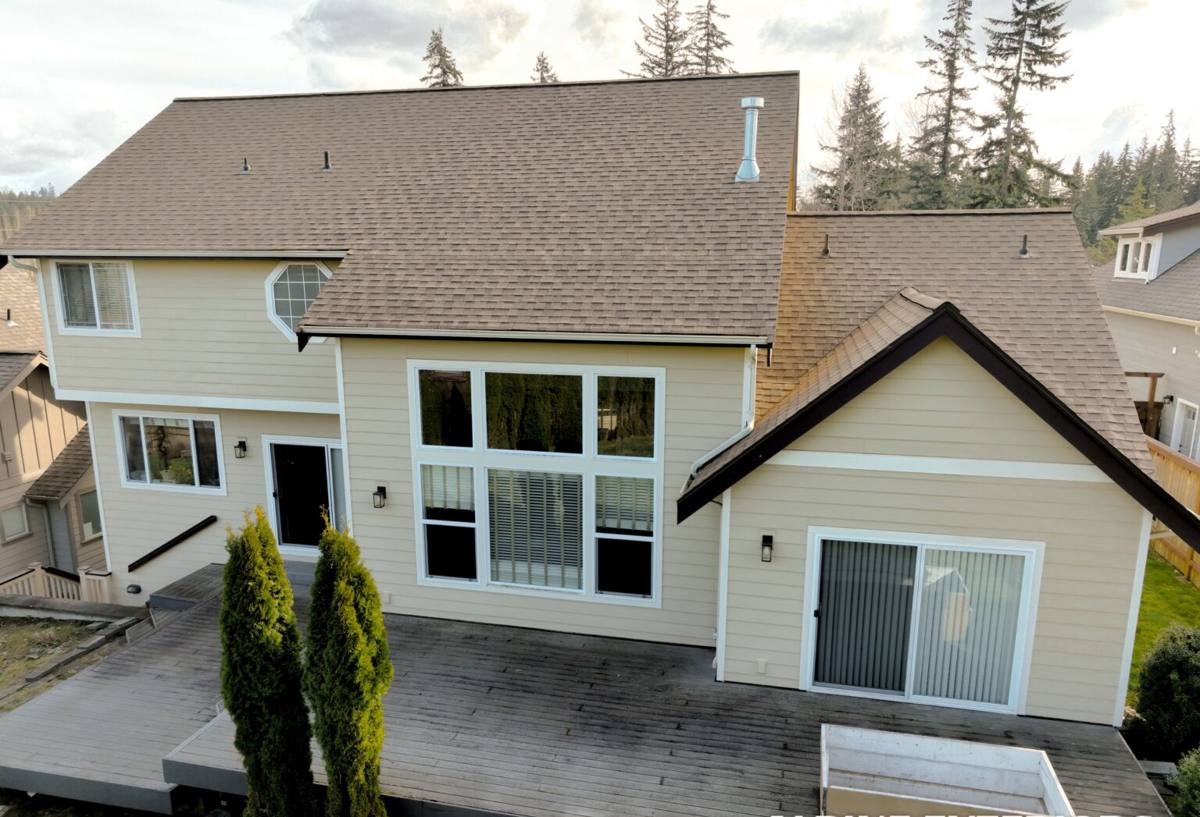
The other pattern we see regularly is additions and remodels that create openings with no original counterpart to match, plus newer construction designed around a view of the open farmland or, on some lots, a glimpse of the water. Larger picture windows and wider window sets are common in that second category, and both scenarios push a project out of stock-size territory fast.
The Climate Factor: Salt Air, Wind, and Sustained Moisture
Open, Wind-Exposed Lowland Terrain
Ferndale's mix of open farmland and lower-lying terrain means some lots take more direct wind than you'd see on a more sheltered, tree-lined property further inland. That matters most on larger custom units — a wide picture window or a bay window has more surface area for wind to load against, and a poorly rated unit on an exposed lot can flex, leak, or whistle in a way a smaller stock window on a protected wall never would.
Salt Air and Corrosion
Proximity to the water puts a steady dose of salt-laden air into the mix as well. Salt accelerates corrosion on hardware, fasteners, and lower-grade frame components faster than a drier inland setting would, which is a real consideration on custom units that often use more hardware — multiple locking points, crank mechanisms on casement styles, or heavier balance systems on larger sash windows.
Moss and a Long Wet Season
Mild temperatures and consistent moisture add up to a moss and mildew season that can run most of the year on shaded or north-facing walls across Whatcom County, and Ferndale is no exception. Wide sills, wrapped trim, and the transition points around a custom opening are exactly the spots where trapped moisture and organic growth tend to show up first if they aren't detailed correctly.
Custom Window Types We See in Ferndale
- Non-standard replacement sizes — matching an opening in an older farmhouse that predates modern sizing standards
- Bay and bow windows — projecting units that add interior space, but need their own roof, support, and flashing system separate from the main wall
- Picture and large-format windows — fixed units used to open up a view of the surrounding farmland or water, with more glass area for wind load to work against
- Reframed or resized openings — where the existing rough opening needs correction before any new unit will go in cleanly
- Matched sets for additions — new windows sized to sightline correctly with the existing windows on an older home
- Egress and code-driven openings — bedroom or living space additions where the minimum opening size is set by code, not preference
What a Correct Custom Window Job Involves
Measuring and Ordering
Custom work starts with precise field measurement, not a catalog lookup. We measure the actual opening, check for the out-of-square and out-of-level conditions that are common in older Ferndale farmhouses, and account for what the finished trim and flashing will need in terms of clearance. Because custom units are built to order, this is also where we set honest expectations on lead time — a custom window generally takes longer to arrive than a stock size, and we'd rather say so upfront than surprise you mid-project.
Structural and Wind-Load Considerations
Larger custom units, especially bay windows and wide picture windows on open, wind-exposed lots, sometimes need structural support beyond what a standard opening requires. We evaluate that during the initial assessment, not after demolition has already started, and on an exposed farmland lot we also look at whether the window's wind-load rating is appropriate for how much direct exposure that specific wall actually gets.
Flashing and Weatherproofing
This is the step that matters most given the exposure here. Every custom shape changes how flashing has to be sequenced — a bay window's roof needs its own weatherproofing separate from the wall flashing below it, a wide sill needs to shed water outward instead of letting it pool, and a resized opening needs new flashing tied cleanly into the surrounding wall rather than patched around the old detail. We build the flashing plan around the specific opening rather than pulling a generic template off a manufacturer's installation sheet.
Finish and Trim Integration
Custom windows often sit in visually prominent spots — a picture window centered on a farmland view, a bay window added during a remodel — so the trim and finish work has to match the rest of the exterior cleanly. We plan that integration before the window arrives so the finished result reads as intentional rather than added on.
Practical Checklist Before You Order
- Confirm the opening was field-measured, not estimated from old plans or a rough guess
- Ask what the flashing plan looks like for your specific opening shape, not a generic answer
- Get a realistic lead time in writing before committing to a schedule
- Ask whether the opening needs a wind-load or structural review, especially on an exposed lot
- Confirm what's covered under warranty — the window unit and the installation labor are often separate
- Ask how trim and finish will be matched to the surrounding siding
Frame Material and Window Style for This Climate
Frame material matters more on a custom unit, since a larger or more exposed window has more surface area for salt air and moisture to work against over time. Fiberglass and vinyl frames generally hold up to sustained coastal moisture with less ongoing upkeep than an all-wood exterior finish, which is why we lead with them on weather-facing custom installs around Ferndale. Wood-clad interiors paired with a low-maintenance exterior cladding can still be the right call when the interior look matters and the exterior is properly protected — that's a trade-off worth discussing against your specific opening and budget, not a one-size answer.
Window style is worth the same honest conversation. On a wind-exposed lot, a casement or awning style seals with a compression gasket when it cranks shut, which tends to resist wind-driven rain better than the interlocking rails of a double-hung sash. That doesn't mean double-hung windows are off the table in Ferndale — plenty of homes call for that look — it just means we'll talk through how much direct wind a given wall actually sees before defaulting to one style over another.
Our Process, Start to Finish
- On-site assessment — we measure the opening, check square and level, and evaluate any structural, wind-load, or flashing concerns specific to its shape, size, and exposure
- Honest recommendation — custom order, modified stock size, or opening reframe, explained with the reasoning behind it
- Ordering and lead time — a realistic timeline for the custom unit to arrive, since it isn't a same-week job
- Removal and opening prep — the old unit comes out carefully, and any hidden framing or flashing issues get addressed before the new window goes in
- Installation and flashing — the new unit is set, shimmed, and flashed to a sequence built for its specific shape and exposure
- Trim and finish — exterior trim is integrated to match the surrounding siding and architecture
Custom vs. Stock Windows: Cost and Trade-Offs
| Factor | Stock Window | Custom Window |
|---|---|---|
| Lead time | Often available relatively quickly | Built to order — expect weeks, not days, depending on complexity |
| Fit | Standard sizes only; reframing needed if the opening doesn't match | Matched to the exact opening or design intent |
| Wind exposure handling | Rated for typical conditions | Can be spec'd with a higher wind-load rating for open, exposed lots |
| Flashing complexity | Straightforward, well-documented rectangular details | Shape-specific — bay roofs, resized openings, or wide sills each need their own plan |
| Cost | Lower, especially for common sizes | Higher, reflecting manufacturing and labor complexity |
| Best fit | Simple replacements in standard, already-correct openings | Older farmhouses, additions, view-driven design, or non-standard framing |
What actually moves price on a custom job is fairly consistent: overall size and glass area, shape complexity, whether structural or wind-load reinforcement needs to be added, frame material, the condition of the existing opening, and how many units are being ordered together. We won't quote a number without seeing the opening in person, but we'll walk through which of those factors apply to your project before you commit to anything.
Why a Local Ferndale Crew Matters
Manufacturer installation guidance is written for average, standard-size conditions in a moderate climate, and custom windows in Ferndale rarely fit that description — neither does the exposure here. Salt air, wind coming straight off open farmland, and a long wet season all stack the deck against a shortcut installation more than they would somewhere drier, calmer, and more sheltered. A crew that has actually built out bay windows, reframed odd-sized farmhouse openings, and installed large view windows on exposed lowland lots in this specific area knows which parts of a manufacturer's guidance are non-negotiable here, and where extra time on flashing or sealant is worth it even when it isn't strictly required elsewhere.
That experience shows up in decisions that don't come up in a sales conversation — how a bay window's roof ties into the main wall's drainage plan, how much lap a flashing course needs on a resized opening, when a sill needs a sloped composite cap instead of relying on caulk alone, and whether a given wall's wind exposure actually calls for a higher-rated unit. Those are the details that decide whether a custom window is still performing cleanly in fifteen years or showing drafts and soft trim in five.
What to Ask Before Hiring for Custom Window Work
- Ask to see examples of custom shapes or sizes they've actually installed, not just standard replacements
- Ask how they sequence flashing for your specific opening shape
- Confirm current Washington contractor licensing and insurance
- Get a written scope of work and a realistic lead time before signing anything
- Ask how labor and the window unit are each covered under warranty
If you're weighing a custom window for an older Ferndale farmhouse, planning an addition, or looking at a picture or bay window to open up a farmland or water view, it's worth having someone look at the actual opening before you start pricing units. We offer free, no-pressure estimates for custom window projects in Ferndale and the surrounding Whatcom County area — use the form below to get a time on the schedule.