 Lynden Siding
 Deck Building That Actually Holds Up in Sumas
Sumas sits out in the Nooksack lowlands near the Canadian border, and like the rest of Whatcom County it gets a steady diet of marine-influenced weather off the Salish Sea: damp, salt-tinged air, long stretches of driving rain, and a moss season that can run most of the year in shaded spots. A deck built here isn't just a weekend backyard project - it's an outdoor structure that has to survive standing water, freeze-thaw cycles, and constant moisture exposure without rotting, warping, or turning into a slip hazard. We build decks specifically for this environment, not a generic set of blueprints pulled off the shelf.
This page covers what a deck actually needs to hold up around Sumas and Lynden, what goes into doing the job right, and how we approach it from first measurement to final walkthrough.
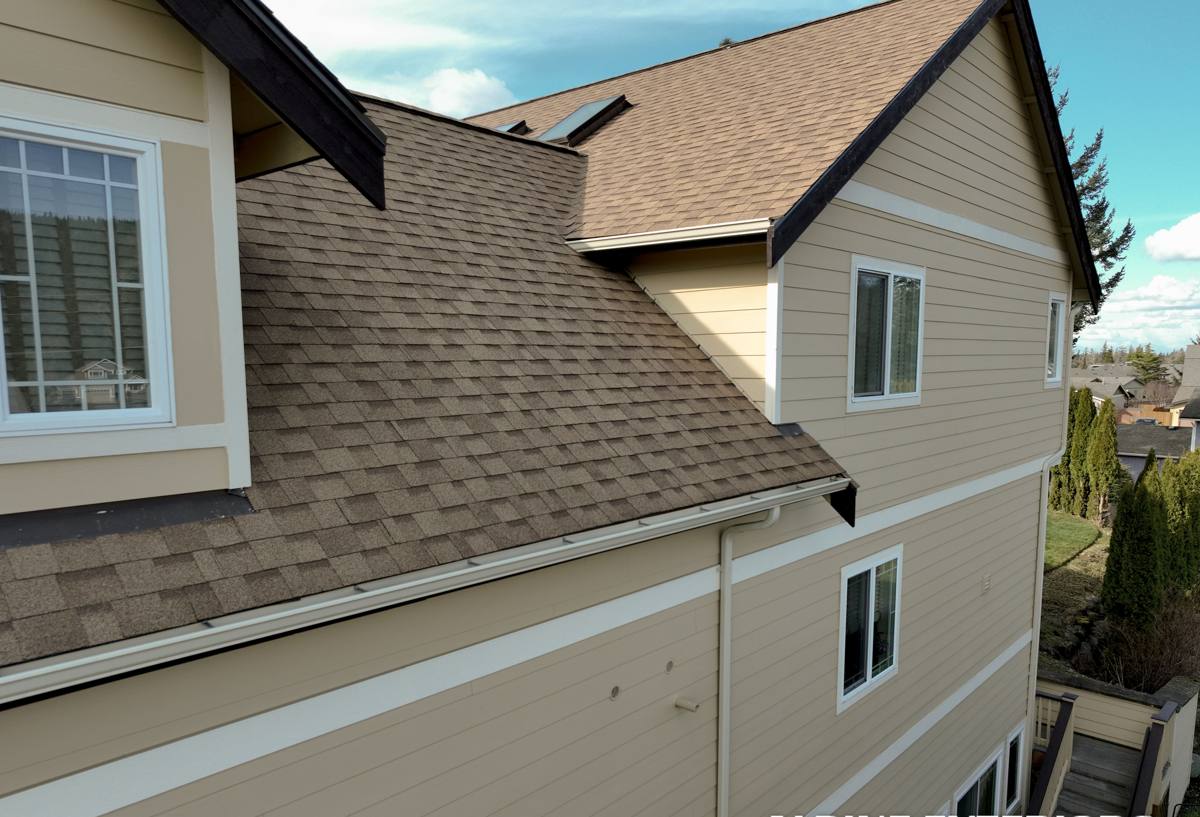
What Whatcom County Weather Does to a Deck Over Time
Most deck problems we get called out for didn't happen overnight. They're the result of years of moisture working into places it shouldn't be. Understanding the failure pattern is the first step to avoiding it.
Salt-Tinged, Moisture-Heavy Air
The marine air that moves through this part of Whatcom County carries more moisture and mineral content than a dry inland climate. Over years, that air accelerates corrosion on exposed fasteners, hinges, and metal connectors, and it keeps wood fibers swollen more of the year than they'd be somewhere drier. That's why fastener choice and hardware coatings matter more here than they would in a lot of other places.
Driving Rain
Rain in this region rarely falls straight down. Wind-driven rain gets pushed sideways and up under railings, ledger boards, and stair stringers - the exact spots that are hardest to inspect and easiest to build wrong. A deck that looks fine from the yard can be trapping water against the house framing where nobody sees it until there's a soft spot.
A Long Moss Season
Shaded decking, north-facing stairs, and anything under tree cover in the Sumas and Lynden area can stay damp enough to grow moss and algae for the better part of the year. Beyond looking bad, moss holds moisture against the decking surface and turns boards slick, which is a real fall risk on stairs and ramps.
Choosing the Right Decking Material for This Climate
There's no single "best" decking material - there's a best material for your budget, your maintenance tolerance, and how much sun or shade the deck actually gets. Here's how the common options compare for a property like yours in this climate.
| Material | Upfront Cost | Moisture & Moss Resistance | Maintenance | Typical Lifespan |
|---|---|---|---|---|
| Pressure-treated lumber | Lowest | Good if sealed and maintained; prone to moss in shade | Needs re-sealing every 1-2 years | 15-25 years |
| Cedar | Mid-range | Naturally rot-resistant but still needs sealing | Annual cleaning and re-sealing | 15-20 years |
| Composite / capped composite | Highest | Excellent - won't rot, minimal moss adhesion | Occasional wash, no sealing | 25-30+ years |
Pressure-treated lumber is the honest budget choice, but it only performs as well as its maintenance schedule - skip a couple of re-sealing cycles in this climate and moisture damage accelerates fast. Cedar looks great and resists rot naturally, but it's not maintenance-free here; it still needs periodic sealing to keep water out of the grain. Composite costs more up front, but for a shaded or low-maintenance property in the Sumas area, the reduced moss adhesion and lack of annual sealing often pay for themselves in saved weekends over the life of the deck. We'll walk through the honest trade-offs for your specific site rather than push whatever has the best margin.
Framing and Structure: Where Most Deck Failures Start
The decking surface is what you see, but the framing underneath is what determines whether the deck is still sound in fifteen years. This is also where corner-cutting is easiest to hide - and easiest to regret.
Ledger Board Flashing
Where a deck attaches to the house, the ledger board needs proper flashing to keep water from wicking behind the siding and into the wall framing. This is one of the most common sources of hidden rot we find on older decks, and it's invisible until the damage has already spread into the house structure.
Joist and Beam Protection
Every cut end, notch, and fastener hole in pressure-treated framing exposes untreated wood underneath. We treat cut ends and use joist tape or flashing on top of joists so standing water doesn't sit directly on exposed wood fiber for months at a time - a small step that meaningfully extends the life of the frame.
Fasteners and Hardware
Given the salt-tinged, moisture-heavy air common to Whatcom County, we use corrosion-resistant, code-rated fasteners and structural connectors rather than standard exterior-grade hardware. Cheap fasteners are one of the most common points of early failure on decks in this region, and they're also one of the cheapest things to get right the first time.
Drainage and Grading Around Your Deck
A lot of Sumas-area properties sit on flatter, low-lying ground compared to the hillier parts of Whatcom County, which means water doesn't always drain away on its own. If a deck is built without accounting for where water actually goes, you end up with standing water under and around the structure long after the rain stops.
Before we build, we look at how the ground slopes near the deck footprint, where downspouts and gutters discharge, and whether the footings will sit in ground that stays saturated. Footings set too shallow or in poorly draining soil are a common cause of deck posts heaving or settling unevenly over time - problems that show up as a deck that's suddenly out of level even though nothing was ever "wrong" with the lumber itself.
Our Deck Building Process
- On-site assessment - we look at your yard's grading, sun/shade exposure, existing structure (if replacing a deck), and how the space will actually be used.
- Material and layout discussion - honest pros and cons for your budget and maintenance preference, not a upsell script.
- Permitting - we handle the permit application and required inspections so you don't have to chase paperwork.
- Footings and framing - proper footing depth, ledger flashing, corrosion-resistant hardware, and treated cut ends throughout.
- Decking, railing, and stairs - installed to code for guardrail height and stair rise/run, with attention to drainage gaps between boards.
- Final walkthrough - we go over care and maintenance for whatever material you chose before we consider the job done.
Permits and Local Requirements
Most new decks and many deck replacements in Whatcom County - whether inside Sumas city limits or in the surrounding unincorporated county - require a building permit, especially once the deck is elevated above a certain height or attached to the house. Guardrail height, baluster spacing, and stair rise/run are all governed by code, and they're not areas where it makes sense to guess. We pull the appropriate permits and coordinate inspections as part of the job, so the deck you end up with is one that will pass inspection and hold up to scrutiny if you ever sell the house.
Maintaining Your Deck Once It's Built
Whatever material you choose, a little seasonal attention goes a long way in this climate. Here's what we recommend keeping on your radar:
- Sweep debris and standing leaves off the deck surface regularly, especially in fall - trapped organic matter holds moisture and feeds moss growth.
- Rinse or wash the surface at least once or twice a year to knock back algae and moss before it gets established, especially on shaded stairs.
- Check and re-seal wood decking (pressure-treated or cedar) on the schedule recommended for that product - don't wait until the wood looks gray and dry.
- Inspect railings and stair connections annually for loose or corroding fasteners.
- Keep gutters and downspouts near the deck clear so runoff isn't dumping extra water onto or under the structure.
- Trim back overhanging branches to cut down on shade, debris, and moss pressure on the deck surface.
Why Hire a Crew That Already Works in Sumas
A deck built to a generic national code minimum will usually pass inspection. Whether it's still solid in fifteen years depends on details that only show up when a builder has actually dealt with this specific climate - how far to flash a ledger board given the driving rain patterns here, which fasteners actually hold up against the marine air, and how to grade around a low-lying lot so water doesn't pool under the frame. We build decks throughout the Lynden and Sumas area and bring that local experience to every job, rather than treating your property as a first attempt at understanding Whatcom County weather.
If you're planning a new deck or need to replace one that's showing its age, we're happy to take a look and walk you through your options. Reach out for a free, no-pressure estimate using the form below.