 Lynden Siding
 Custer's Roof Climate Is Its Own Animal
Custer sits in a stretch of Whatcom County that takes weather from two directions at once. Storms roll in off the water carrying salt-laden air that settles on every exposed surface, while the same marine pattern dumps long, low-intensity rain for months at a stretch rather than the short, hard downpours other regions get. Add in the shade and dampness that many Custer and Lynden properties have from mature trees and fence lines, and you get a near-perfect incubator for moss, algae, and slow-moving moisture problems that don't show up as a leak until they've been working on the roof deck for a year or two.
Asphalt shingle roofing can handle this climate well, but only when it's installed with this specific area in mind. A shingle roof that would be fine in a drier part of the state can fail early here if the underlayment, ventilation, and flashing details aren't matched to what Whatcom County actually throws at a house. This page is about what that looks like in practice for homes in and around Custer.
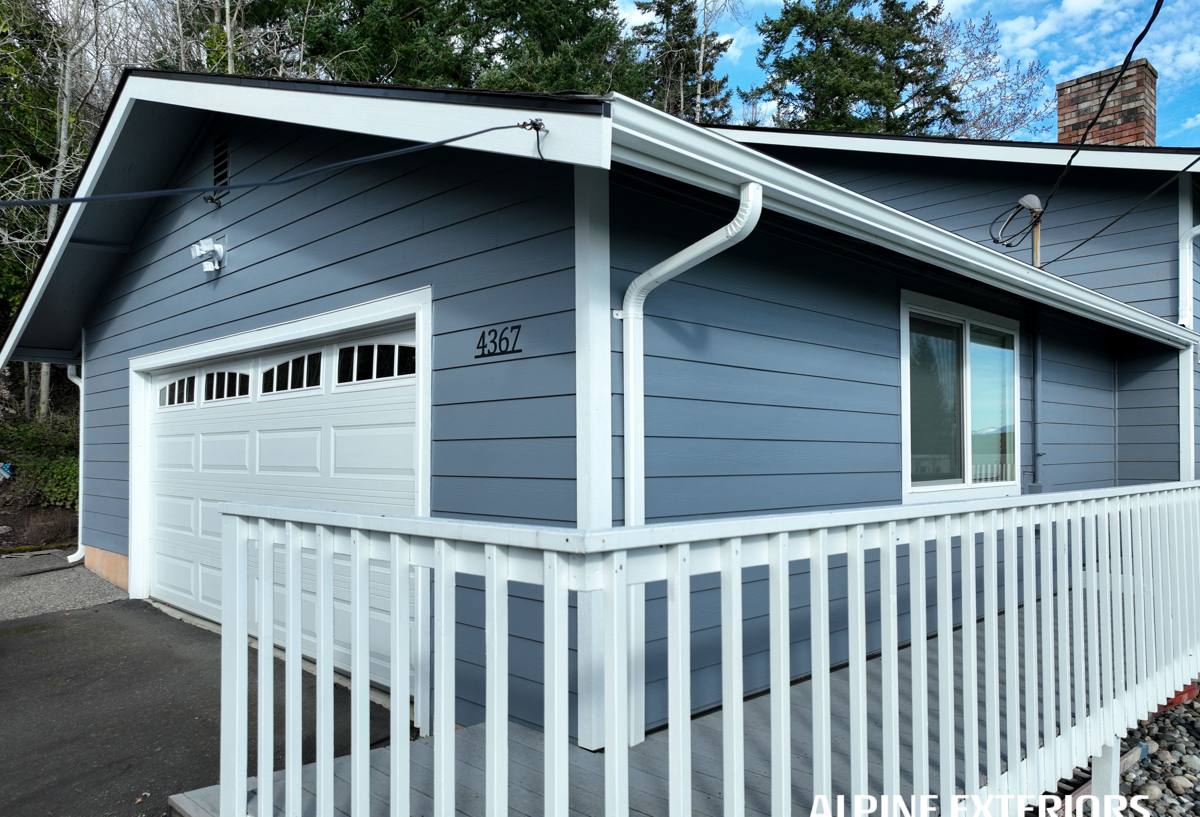
What Driving Rain and Salt Air Actually Do to a Shingle Roof
Driving rain
Wind-driven rain doesn't just fall on a roof, it pushes sideways and works its way under shingle tabs, around vent boots, and along flashing edges that would stay dry in calmer weather. Over years, this is what turns a small flashing gap into a stained ceiling. It's also why nailing pattern and shingle sealing matter more here than the manufacturer's minimum spec would suggest for a milder climate.
Salt air
Salt-laden air corrodes exposed metal faster than it does inland. On a roof, that means nails, flashing, vent housings, and gutter hardware are all working against a shorter clock. Standard steel fasteners and unprotected metal flashing can start showing rust streaks and pitting well before a shingle roof's expected lifespan is up. The fix isn't complicated, it's using corrosion-resistant fasteners and flashing metals from the start rather than patching rust later.
Moss and shade
Whatcom County's moss season runs long, and moss doesn't just sit on top of a shingle looking messy. It holds moisture against the granule surface, lifts shingle edges as it grows, and works its way into any exposed nail head or seam. On shaded lots common around Custer and Lynden, moss can establish itself within a couple of years of a roof going untreated.
What a Correctly Installed Shingle Roof Needs Here
A shingle roof built for this climate isn't a different product so much as a different set of installation decisions layered on top of a standard system. The details that matter most for Custer-area homes:
- Ice and water shield at vulnerable points — valleys, eaves, and around every penetration, not just where code requires the minimum.
- Synthetic underlayment rated for extended exposure — because Whatcom County weather can delay a roof from being fully dried in for longer than a felt underlayment is comfortable sitting exposed.
- Balanced intake and exhaust ventilation — enough soffit intake and ridge or roof-vent exhaust to keep the attic from trapping moisture, which is a bigger factor here than in drier climates.
- Corrosion-resistant fasteners and flashing — matched to the salt exposure this stretch of the county sees, not generic hardware picked for cost alone.
- Proper nailing pattern and sealing — every shingle nailed in the manufacturer's nailing zone, at the right count per shingle, so wind and driving rain can't work tabs loose.
- Algae-resistant granules — a real help against the black streaking that shows up on shaded, damp roofs over time.
Choosing a Shingle for Whatcom County Weather
Not every asphalt shingle is built the same, and the differences matter more in a wet, mossy climate than they would somewhere dry. Here's how the common tiers compare for a Custer or Lynden roof:
| Shingle Type | Wind Rating | Moss/Algae Resistance | Best Fit For |
|---|---|---|---|
| 3-tab (economy) | Lower | Basic, without upgraded granules | Budget-driven projects, secondary structures |
| Architectural / laminate | Higher | Good, especially with algae-resistant granule options | Most primary homes in this climate |
| Premium/designer architectural | Highest in the asphalt category | Best available in asphalt, thicker profile sheds debris better | Steep-shade lots, homes prioritizing longevity and curb appeal |
For most Custer-area homes, a mid-to-upper architectural shingle with algae-resistant granules is the sensible balance of upfront cost and how well it holds up against moss and driving rain over the life of the roof. We'll talk through the real trade-offs for your specific roof rather than defaulting to whatever is easiest to sell.
A note on lifetime warranties
Shingle warranties are prorated, and most of the fine print around wind and algae coverage depends on the roof being installed to the manufacturer's exact specification, including starter strip, ridge cap product, and nailing pattern. An improperly installed roof can void manufacturer coverage even if the shingle itself is a good product. This is a bigger deal in a climate that puts real stress on a roof, so we install to spec and document it.
Our Asphalt Shingle Roofing Process
Every roof we do in the Custer and Lynden area follows the same sequence, adjusted for what we find once the old roofing comes off:
- On-site assessment — we look at the existing roof, attic ventilation, flashing condition, and any signs of moss or moisture damage before quoting anything.
- Tear-off and deck inspection — old material comes off completely so we can inspect the roof deck for soft spots, rot, or prior moisture damage that needs to be addressed before new shingles go down.
- Deck repair as needed — any damaged sheathing gets replaced, never covered over.
- Underlayment and ice/water shield installation — installed to the standard described above, matched to this climate.
- Flashing — new flashing at valleys, chimneys, walls, and penetrations, in corrosion-resistant metal.
- Ventilation check and correction — intake and exhaust venting evaluated and corrected if the existing setup is undersized or unbalanced.
- Shingle installation — installed to manufacturer nailing specification, straight lines, proper exposure.
- Cleanup and magnetic sweep — job site and yard cleared of debris and stray fasteners.
- Final walkthrough — we go over the finished roof with you before calling the job done.
Repair or Full Replacement — What to Weigh
Not every roof problem in Custer means a full tear-off. The right call depends on the roof's age, how widespread the damage is, and what's driving the concern in the first place.
| Factor | Leans Toward Repair | Leans Toward Replacement |
|---|---|---|
| Roof age | Under two-thirds of the shingle's rated life | Nearing or past its expected service life |
| Damage location | Isolated area, single leak or flashing failure | Widespread granule loss, multiple leak points |
| Moss/algae condition | Surface growth, no lifted shingles | Moss has lifted tabs or worked under shingle edges |
| Deck condition | Solid, no soft spots found | Rot or soft decking discovered during inspection |
| Ventilation | Adequate and balanced | Undersized or missing, contributing to moisture issues |
We'll always tell you honestly which side of that table your roof falls on. A well-timed repair can buy several good years; patching a roof that's already failing underneath just delays a bigger bill.
Why a Crew That Already Works Custer Matters
Roofing decisions in this part of Whatcom County are shaped by conditions a crew from outside the area won't necessarily account for by default — how much salt exposure a given property actually gets, how long moss stays active in a shaded yard, how much driving rain a particular roof orientation catches during the wet months. A crew that regularly works Custer and Lynden roofs has already seen how local roofs age, which details tend to fail first, and which ones hold up. That translates into fewer surprises during the project and a roof built for the weather it will actually face, not a generic install.
Being local also means we're not far away if a question comes up after the job is done, whether that's about a warranty detail, an unrelated storm concern, or just wanting a second look at something before it becomes a problem.
Maintenance After Installation
A correctly installed shingle roof in this climate still needs a little ongoing attention to hit its full lifespan:
- Keep gutters clear so water isn't backing up under the shingle edge, especially during the long rainy stretches typical of a Whatcom County winter.
- Have moss addressed before it spreads across the whole roof, not after it's already lifted shingles.
- Trim back overhanging branches where practical, since shade and debris both feed moss growth.
- After any significant windstorm, a quick visual check for lifted or missing shingles can catch a small problem before it becomes a leak.
- Schedule a roof check every few years even without an obvious problem, since flashing and sealant wear can be gradual and easy to miss from the ground.
If you're weighing a repair, a replacement, or just want an honest read on where your roof stands, we're happy to take a look. Fill out the form below for a free, no-pressure estimate on your Custer or Lynden property.