 Lynden Siding
 Window Replacement in Blaine: A Border Town Right on the Water
Blaine sits at the northern edge of Whatcom County, wrapped around Semiahmoo Bay and Drayton Harbor and close enough to the Canadian border that the weather coming off the water is a daily fact of life, not an occasional event. That location makes windows work harder here than they do almost anywhere else in the county. Salt-laden air settles into hardware and seals, storms off the water push rain sideways into every seam and joint, and long stretches of mild, damp weather give moss and mildew a season that runs most of the year on shaded walls. Windows sit right at the boundary between conditioned indoor space and all of that weather, and when a window or its installation isn't built for what Blaine actually delivers, it usually shows up as a leak, a draft, or a soft sill within a few years rather than decades.
We're based just up the road in Lynden, and Blaine is regular territory for our crew — we're out here often enough to see how differently a house ages this close to the water compared to more sheltered towns further inland. This page is specifically about window replacement in Blaine: what the local climate demands, what a correct replacement job actually involves, and how we approach it so a new window here performs the way it's supposed to for the long haul.
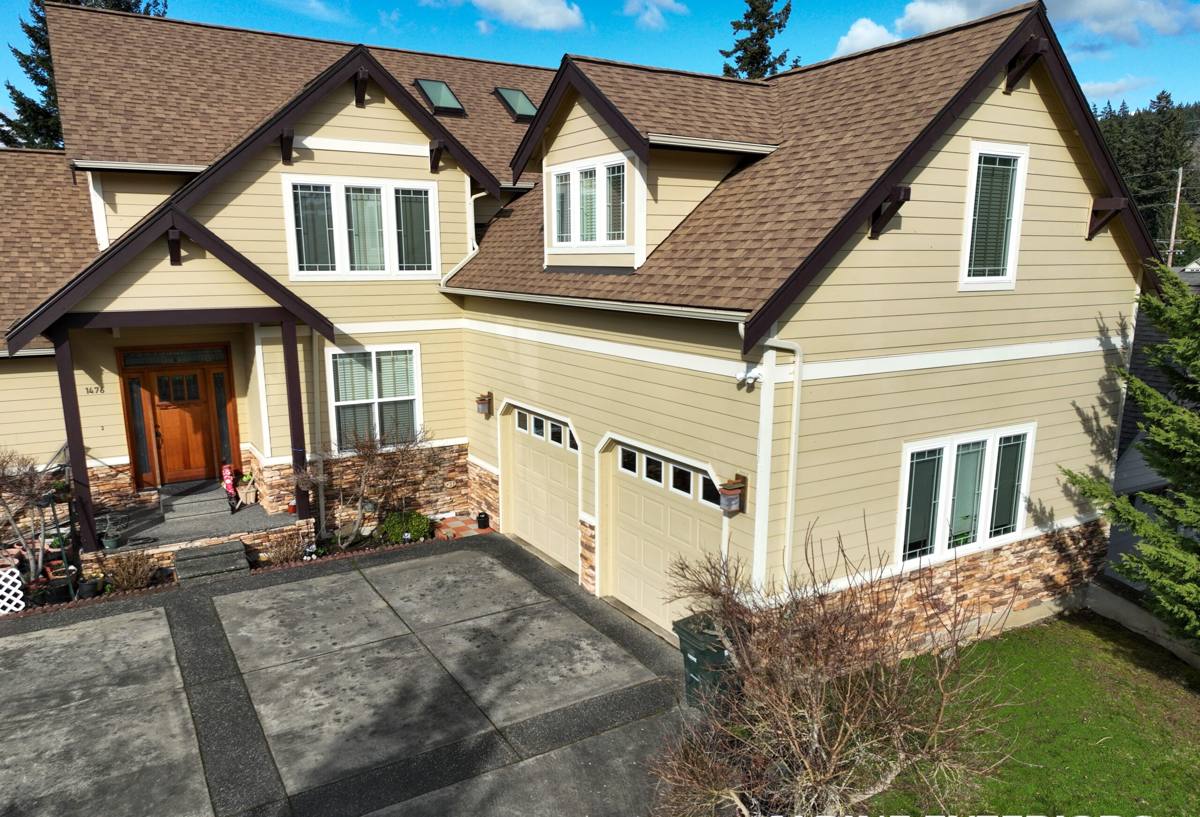
What Blaine's Climate Does to Windows
Salt Air and Hardware Corrosion
Homes anywhere near the bay or harbor take a steady dose of salt-carrying air, and that accelerates corrosion on window hardware, screen frames, and lower-grade fasteners faster than it would in a drier, inland climate. Locks, hinges, and balance mechanisms are usually the first parts to show it — stiffness, pitting, or a latch that used to close easily and now doesn't. Once hardware starts corroding, the seal around the sash is often compromised too, which opens the door to the moisture problems below.
Driving Rain and Flashing Stress
Storms coming off the water in Blaine rarely drop rain straight down. Wind pushes it sideways into head flashing, jambs, and the sill beneath the window frame, and that sideways load puts far more stress on the installation than the same rainfall total would in a calmer climate. This is where the real difference between a good window job and a bad one shows up — not in the glass or the frame, but in whether the flashing and sill pan were built to shed water that's coming in at an angle instead of straight down.
Moss, Mildew, and Sill Rot
Shaded elevations and window sills that don't drain well stay damp longer here than they would in a drier part of the state, and that sustained moisture feeds mildew growth and, on wood-framed windows, slow rot at the sill and lower corners. It's rarely sudden. Paint starts failing, a sill feels soft underfoot, or a faint musty smell shows up near a window well before anything looks seriously wrong from the outside.
Signs a Blaine Home Needs Window Replacement
Not every window issue means full replacement, but these are the signs worth having a professional look at, especially on a house this close to the water:
- Fogging or condensation trapped between panes, which means the seal on a double- or triple-pane unit has failed
- Noticeable drafts or a cold spot near a window even when it's fully closed and latched
- Soft, discolored, or spongy wood at the sill or lower frame corners
- Hardware that's stiff, pitted, or corroded, or a window that's become hard to open, close, or lock
- Peeling paint or bubbling finish on the frame or interior trim near the window
- Visible daylight, cracked caulk, or gaps around the frame from inside the house
- Water staining on interior walls, ceilings, or trim near a window opening
Any single item on that list is worth a look before another wet season. Several of them together, especially sill softness combined with staining, usually mean water has already reached the framing behind the window.
Full-Frame Replacement vs. Insert Replacement
One of the first decisions on any window project is whether to do a full-frame replacement, which pulls the old window out down to the rough opening and rebuilds the flashing from scratch, or an insert replacement, which sets a new window into the existing frame. Insert replacement is quicker and less disruptive to the surrounding siding and trim, and it's a reasonable choice when the existing frame is sound and was properly flashed to begin with. Full-frame replacement takes longer and costs more, but it's the honest call when there's already sill or jamb rot, or when the original flashing wasn't done correctly and is quietly letting water behind the wall. In a town where wind-driven rain off the water is a regular occurrence, we won't seal a known moisture problem behind a new window just to save a day of labor — we'll tell you which situation your house is actually in.
Frame Materials That Hold Up in Blaine
There's no universal right answer here — budget, sun exposure, and how long you plan to stay in the home all factor in. What matters is understanding how each material actually behaves under sustained salt air and moisture before deciding.
| Frame Material | Behavior Near Salt Air & Moisture | Typical Maintenance | Realistic Lifespan Here |
|---|---|---|---|
| Vinyl | Won't rot or corrode; performance depends heavily on weld and seam quality | Low; periodic track and weep-hole cleaning | 20-30 years |
| Fiberglass | Dimensionally stable, holds up well against salt-influenced moisture | Low | 30-40+ years |
| Wood, painted or clad | Attractive but the most vulnerable to salt air and sustained moisture without diligent upkeep | Higher; regular paint or finish maintenance | 15-30 years depending on upkeep |
| Aluminum | Conducts cold and is prone to corrosion this close to the water unless well-finished | Moderate | 20-30 years |
For a coastal, salt-exposed location like Blaine, we lean toward recommending fiberglass or a well-built vinyl unit for most homes, but we won't rule out wood-clad windows for someone who wants that look and is committed to the maintenance it takes to protect it here. We'll walk through the real trade-offs for your specific walls and sun exposure rather than defaulting to whatever's easiest to sell.
What a Correct Installation Involves
In a town this exposed to wind-driven rain, the installation details matter more than the window product itself. Most of the leaks and rot we find behind old windows trace back to a shortcut taken here, not a bad window. On every job, that means:
- A properly pitched sill pan that sheds water outward instead of letting it pool under the frame
- Head flashing integrated into the housewrap above the window, lapped so water sheds downward and outward, not sideways into the wall
- Jamb flashing tied into the surrounding wall assembly rather than relying on caulk alone to do the work
- Weep holes and drainage paths left clear and functional, not sealed shut during installation
- Corrosion-resistant fasteners and hardware suited to sustained salt-air exposure
- Air sealing and insulation around the frame that doesn't trap moisture against the framing
None of these steps add meaningfully to the cost of the job relative to the window itself. Skipping any of them is what turns a window that should last decades into one that's leaking behind the wall within a few winters — and in Blaine, those winters come with more wind and more direct moisture than most of the county sees.
How Our Process Works
- Walk-through and assessment. We look at every window being considered, check for existing moisture damage at the sill and jambs, and get a clear read on the wall assembly behind the frame before recommending anything.
- Honest recommendation. We tell you whether each window calls for insert or full-frame replacement, which frame material fits your budget and exposure, and what the realistic cost range looks like — no upsell script, no default to the most expensive option.
- Careful removal. Old windows come out cleanly, and any hidden rot or flashing failure gets flagged and explained before we move forward, not discovered as a surprise change order.
- Installation to spec. Sill pans, flashing, fasteners, and air sealing go in following manufacturer specifications built for sustained moisture exposure, not shortcuts that only show their weakness after a wet season.
- Final walkthrough. We check operation, seals, and finish work with you before calling the job done.
Why a Crew That Already Works Blaine Matters
A crew that installs windows across Whatcom County through every season, including regularly in a coastal town like Blaine, sees how salt air, driving rain, and moss actually behave on real houses over years — not just how a product performs on a spec sheet. That experience shows up in practical decisions on install day: how much extra attention a wall facing the water needs compared to a sheltered one, how a sill pan should be pitched for the amount of driving rain a given elevation actually sees, and which flashing details are worth the extra time so you're not dealing with a leak two winters later. It also means understanding that Blaine's exposed, waterfront position isn't the same as a more sheltered inland town, and building accordingly instead of applying one generic approach to every house in the county.
Beyond Windows: Siding, Roofing, and Decks
Windows are the focus of this page, but the same salt air and driving rain that wears on a window wears on the rest of a Blaine home's exterior too. We also handle siding, roofing, and deck work, and if a window replacement turns up moisture damage in the surrounding siding, trim, or wall sheathing, we can address it as part of the same project instead of sending you to track down a second contractor. Treating the exterior as one connected system, rather than a set of unrelated trades, is usually what keeps a fixed window problem from reappearing somewhere else on the wall a year or two later.
Get a Free, No-Pressure Estimate
If your Blaine home has windows that are fogging, drafty, hard to operate, or showing soft or stained trim, we're glad to take a look and give you a straightforward read on what it actually needs. Reach out using the form below to schedule a free estimate — no pressure, no upsell script.