 Lynden Siding
 Birch Bay Roofs Take a Different Kind of Beating
Birch Bay sits right on the water in Whatcom County, and that changes what "storm damage" means compared to a roof a few miles inland. Homes here deal with wind coming straight off the Strait of Georgia, salt-laden air that never really lets up, and rain that doesn't just fall — it drives sideways into fascia, soffits, and any gap in the roofline that a calmer climate would never test. Add in the long, wet moss season that Whatcom County is known for, and you've got a roof that ages differently than one in a drier, more sheltered part of the state.
We work out of Lynden, but Birch Bay has been part of our regular service area for years. That matters because storm damage repair isn't a one-size-fits-all job — what a roof needs after a windstorm on the coast is often different from what an inland roof needs after the same storm, and a crew that doesn't normally work waterfront properties can miss it.
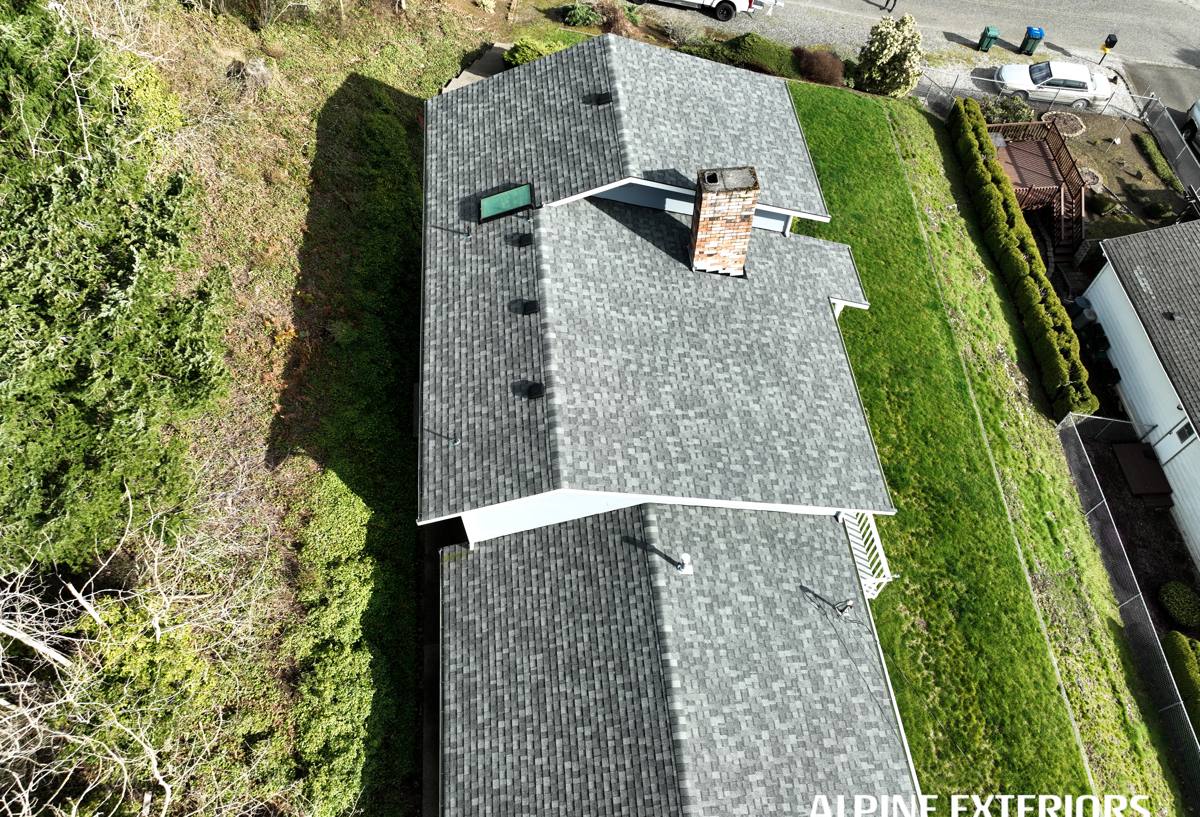
What Actually Damages Roofs in Birch Bay
Wind and Wind-Driven Rain
Straight-line wind off the water doesn't just tug at shingles — it gets underneath them. Once wind gets under a shingle tab, it can break the seal strip, crack the shingle at the nail line, or tear it off completely. Even when shingles survive a storm intact, a broken or lifted seal is enough to let wind-driven rain track sideways up the roof deck instead of running off it, which is a very different failure mode than a simple leak straight down.
Salt Air and Metal Fatigue
Salt air accelerates corrosion on anything metal on the roof — flashing, drip edge, exposed fasteners, vent stacks, and gutter hardware. A fastener or flashing seam that would last decades inland can start showing rust and pitting much sooner this close to the water. Corroded flashing is one of the most common root causes we find behind a "mystery leak" that shows up after a storm but was actually years in the making.
Moss and Trapped Moisture
Whatcom County's moss season runs long, and Birch Bay's damp, shaded, salt-air climate keeps roofs wet longer between drying periods. Moss holds moisture against the shingle surface and works its way under tabs and around flashing, and a storm is often what finally exposes damage that moss has been quietly causing for a season or two — lifted shingles, soft decking, or granule loss that was masked until wind and rain forced water into a spot moss had already compromised.
Patch Job vs. Correct Repair
After a storm, it's tempting to just seal the obvious spot and move on. Sometimes that's genuinely the right call for a small, isolated issue. But on a coastal roof, a surface patch over unaddressed wind, salt, or moisture damage tends to fail again — often in the next storm.
| Approach | What It Addresses | Typical Result on a Coastal Roof |
|---|---|---|
| Surface patch / sealant only | The visible leak point | Often re-fails within one to two storm seasons if the underlying cause (broken seal, corroded flashing, trapped moisture) isn't fixed |
| Shingle replacement without deck check | Visible wind or storm damage | Looks correct but can leave soft or wet decking underneath, which shows up later as sagging or a new leak |
| Full diagnostic repair | Root cause — flashing, decking, underlayment, and shingle condition together | Addresses what actually let water in, not just where it came out |
The difference isn't about upselling a bigger job. It's that storm damage on a roof exposed to salt air and driving rain rarely stays isolated to one shingle — by the time you can see a leak inside, water has usually already traveled along the deck or underlayment.
What a Correct Storm Damage Repair Involves
A proper repair starts with figuring out how the water actually got in, not just where it's showing up inside the house. On a Birch Bay roof, that means checking a few things that are easy to skip:
- The roof deck itself, not just the shingles — soft or delaminated decking under a repaired area will keep causing problems even with new shingles on top
- Flashing condition around chimneys, vent stacks, and any roof-to-wall transitions, since salt air corrosion often hits flashing before it hits shingles
- The underlayment in the affected area, since wind-driven rain can get past shingles and rely on underlayment as the last line of defense
- Fastener condition — corroded or backed-out nails are a common, easy-to-miss cause of repeat leaks
- Moss or organic buildup nearby that could be holding moisture against the repair area even after the storm damage itself is fixed
Skipping any one of these is how a repair ends up being redone a year later.
How We Handle Storm Damage Calls in Birch Bay
- Assessment first. We look at the whole roof, not just the spot you're worried about — storms rarely damage just one area, and coastal wind exposure means the windward side often has issues the homeowner hasn't noticed yet.
- Honest scope, in writing. You get a clear explanation of what's actually damaged, what caused it, and what it will take to fix it correctly — including if the honest answer is that a small patch really is enough.
- Temporary protection when needed. If there's active exposure and a full repair can't happen immediately, we get the roof weathertight first so a follow-up storm doesn't make things worse.
- The repair itself. Matching materials where possible, replacing what's actually compromised (not just what's visible), and paying particular attention to flashing and fastener choices given the salt air exposure.
- Follow-up check. We want to see the repair hold through a real storm, not just look right on a dry day.
Material and Fastening Choices for a Coastal Climate
Not every material or fastener performs the same way a mile from the water versus right on Birch Bay's shoreline. Part of doing this job correctly here is choosing components that are appropriate for the exposure, not just whatever's fastest to install.
| Factor | Why It Matters in Birch Bay |
|---|---|
| Fastener material | Corrosion-resistant fasteners hold up better against salt air than standard-grade options, reducing the chance of backed-out or rusted nails down the line |
| Flashing material and detailing | Properly lapped, well-sealed flashing matters more here because wind-driven rain tests every seam, not just roofs with gravity-fed drainage |
| Shingle sealant strip condition | A weak or aged seal strip is far more likely to fail under sustained coastal wind than it would in a sheltered inland location |
| Ventilation | Good attic ventilation helps roof materials dry out between the region's frequent wet spells, which matters for both moss resistance and material lifespan |
None of this means coastal homes need exotic or dramatically more expensive materials — it means the standard choices (fastener grade, flashing detail, ventilation) get applied with the local exposure in mind rather than defaulted to whatever's used everywhere else.
Insurance and Documentation
Many storm damage repairs in Whatcom County involve a homeowner's insurance claim. We can document the damage we find — photos, a written description of cause and extent, and a scope of repair — in a way that's useful whether you're filing a claim or just want a clear record for your own files. We'll give you a straight assessment of what's storm-caused versus what's pre-existing wear, because that distinction matters for how a claim gets handled, and it's not something we'll fudge in either direction.
Why a Crew That Works Birch Bay Regularly Makes a Difference
A roofing crew based well inland, with little regular experience on waterfront or near-waterfront properties, can reasonably miss things that are second nature to a crew that works this stretch of coastline often — how far salt corrosion typically travels up exposed flashing, how quickly moss reestablishes on a shaded, damp roof this close to the water, or which side of a roof takes the worst of a given storm system. Being a Lynden-based company that regularly serves Birch Bay means we're not learning the local exposure on your roof — we're applying what we've already seen on roofs like it.
After the Storm: A Quick Homeowner Checklist
If you've just been through a windstorm and aren't sure whether you need a repair call, here's what's worth checking from the ground first:
- Shingles or shingle pieces in the yard or gutters after a storm
- Visible gaps, lifted edges, or curling shingles when viewed from the ground or a second-story window
- New or worsening water stains on interior ceilings, especially near chimneys or exterior walls
- Granules collecting at downspout outlets, which can indicate accelerated shingle wear
- Sagging or uneven spots along the roofline
- Moss growth that's thickened noticeably since the last time you looked
- Dented or displaced flashing around vents, chimneys, or skylights
Any one of these is worth a professional look — not because every storm means a major repair, but because catching it early is almost always cheaper and less disruptive than waiting.
If your Birch Bay roof took a hit in a recent storm, or you're just not sure whether what you're seeing is a real problem, we're happy to come take an honest look. The estimate is free, there's no pressure, and if the right answer is a small fix instead of a big one, that's exactly what we'll tell you. Use the form below to get in touch and we'll set up a time to come out.