 Lynden Siding
 Birch Bay Roofs Work Harder Than Most
Birch Bay sits right where the wind comes off the water, and that changes what a roof has to deal with day to day. Homes a few miles inland in Lynden get plenty of Pacific Northwest rain, but Birch Bay adds salt-laden air, near-constant onshore breeze, and a moss season that runs longer than almost anywhere else in Whatcom County. None of that is dramatic on its own. It's the accumulation over years that turns small, ignorable issues into leaks, rot, and premature roof failure.
A roof repair in Birch Bay isn't just "patch the leak." It's understanding why that spot failed first, whether salt exposure or trapped moisture had anything to do with it, and making sure the fix doesn't just hold until next winter.
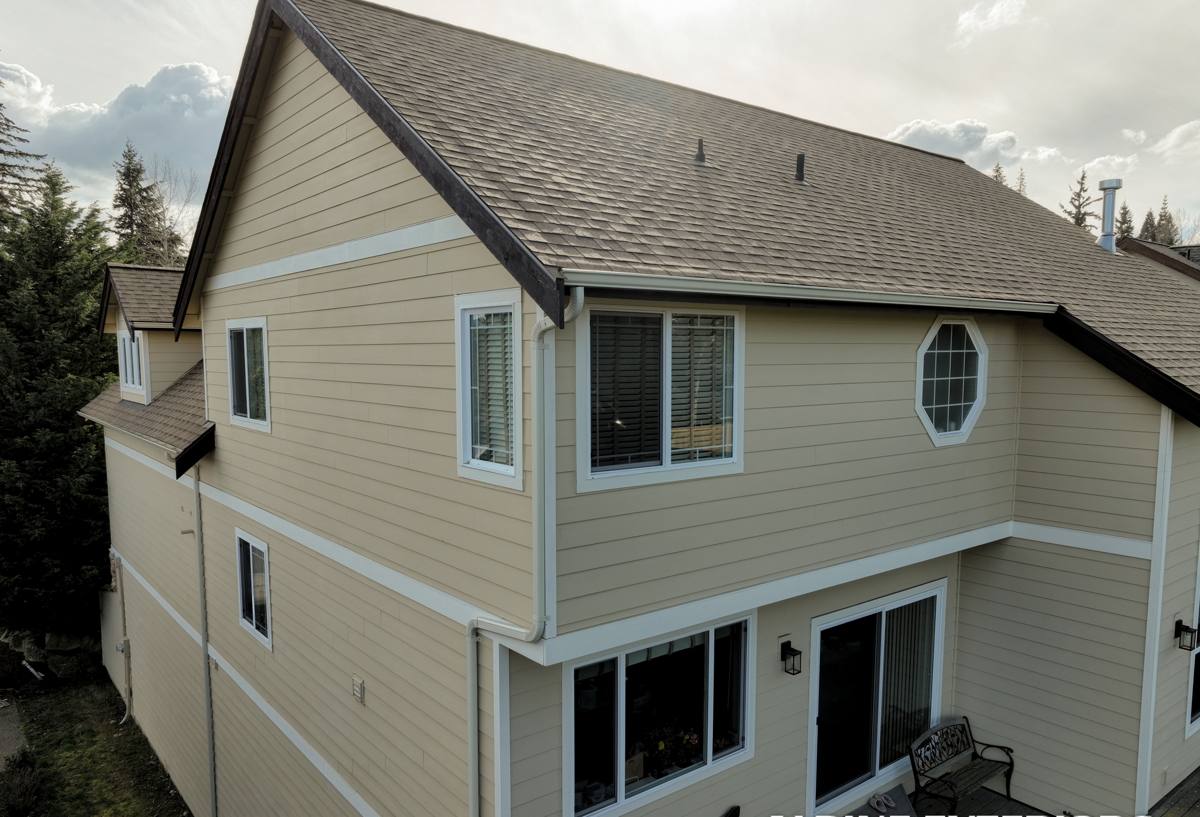
Signs a Birch Bay Roof Needs Attention
Most roof problems here show up gradually. Homeowners usually notice one of these before they call anyone:
- Granules collecting in gutters or at downspout outlets — a sign shingles are wearing faster than they should
- Dark streaking or green-black growth on north-facing slopes, especially under tree cover
- Soft or spongy spots when walking a low-slope section, which usually means the decking underneath has absorbed water
- Rust staining around metal flashing, vent boots, or exposed fasteners
- Curling, cupping, or lifted shingle edges near ridge lines and eaves
- Water stains on interior ceilings, especially after a stretch of wind-driven rain
- Daylight visible through the attic at roof penetrations or ridge boards
Any one of these on its own might just need monitoring. Two or three together usually means active water intrusion somewhere, and waiting rarely makes the repair smaller or cheaper.
Why Waiting Costs More Here Specifically
In a drier climate, a small roof leak might sit for a season without much consequence. In Birch Bay's combination of salt air and sustained moisture, exposed wood and fasteners start corroding or softening much faster. A repair that would have been a few hours of work when caught early can turn into decking replacement, insulation removal, and interior drywall repair if it sits through a wet winter.
What a Correct Roof Repair Actually Involves
A repair that only addresses the visible symptom tends to fail again within a year or two. Doing it right means working through the whole assembly, not just the top layer:
Diagnosis Before Repair
Water rarely leaks straight down from where it enters. It follows underlayment, framing, and gravity until it finds a gap. A correct repair starts by tracing the actual entry point — often at a flashing seam, a nail pop, or a failed pipe boot — rather than just resealing wherever the ceiling stain appears.
Matching Materials and Fasteners
In a salt-air environment, the fasteners and flashing metal matter as much as the shingles. Mixing incompatible metals (for example, certain steel fasteners against aluminum flashing) sets up galvanic corrosion that can fail again within a couple of seasons, even though the visible repair looks fine on day one.
Underlayment and Ventilation
If the underlayment beneath the damaged shingles has already broken down, replacing just the shingles leaves the real vulnerability in place. Proper attic and roof ventilation also matters more here than people expect — trapped moisture from condensation can do as much long-term damage as an actual leak, particularly on the shaded, wind-sheltered sides of a home.
Salt Air's Specific Toll on Roofing Materials
Homes closer to the water deal with a slow, steady form of wear that inland roofs don't see as much:
- Faster corrosion of exposed steel fasteners, flashing edges, and vent stacks
- Accelerated breakdown of sealants and caulking at penetrations
- Salt deposits that hold moisture against the roof surface longer after rain
- Increased algae and moss growth where salt spray keeps surfaces damp
None of this means a Birch Bay roof needs exotic materials. It means the details — fastener type, flashing metal, sealant choice, and how tightly seams are lapped — need to be handled by someone who's dealt with this exposure before, not treated the same as a repair three miles inland.
Moss Season: Whatcom County's Long Wet Stretch
Whatcom County's moss season isn't a two-week nuisance — shaded, north-facing, and low-slope roof sections can stay damp for months at a time, giving moss and moss-adjacent algae plenty of time to establish. Left alone, moss does more than look bad. It holds moisture directly against the shingle surface, works its way under tabs and edges, and can lift shingles enough for wind-driven rain to get underneath.
| Approach | What It Actually Does | Trade-Off |
|---|---|---|
| Pressure washing | Removes moss quickly | Can strip granules and shorten shingle life if done wrong |
| Manual removal + soft wash | Clears moss without abrading the surface | Takes more time and care than pressure washing |
| Zinc or copper strips | Slows regrowth on treated slopes over time | Preventive only — won't remove existing moss |
| Ignoring it | Costs nothing up front | Shingle lifting, trapped moisture, and eventual leaks |
Moss removal by itself isn't always a repair — sometimes it's maintenance that prevents a repair from being needed. But if moss has already lifted shingles or worked under flashing, that's no longer a cleaning job.
How We Handle a Birch Bay Repair Call
The process is straightforward, and we keep it that way on purpose:
- Inspection. We look at the affected area and the roof as a whole — a single visible leak often has a related issue nearby that hasn't shown up inside yet.
- Honest diagnosis. We tell you what's actually wrong, what caused it, and whether a repair is the right call or whether the roof is past the point where patching makes sense.
- Straightforward scope and pricing. You get a clear explanation of what work is needed before anything is done — no surprise add-ons mid-job.
- Correct repair. Matched materials, proper flashing technique, and attention to how the repair ties into the surrounding roof — not just a surface patch.
- Cleanup. Old materials, debris, and fasteners are cleared from the roof and property before we consider the job done.
What Affects Repair Cost
Every roof repair is different, but the same handful of factors drive most of the variation in scope and cost:
| Factor | Why It Matters |
|---|---|
| Extent of decking damage | Soft or rotted decking has to be replaced before new shingles go on, which adds material and labor |
| Roof pitch and access | Steeper or harder-to-access sections take longer and require more safety setup |
| Age and condition of surrounding shingles | Older roofs may not have matching shingles available, affecting how the repair blends in |
| Flashing complexity | Chimneys, skylights, and multiple roof valleys all add points where leaks originate and need careful re-flashing |
| Moss or algae buildup | Heavily affected roofs may need cleaning before the repair area can even be properly assessed |
We won't quote a number without seeing the roof first — anyone who does is either guessing or lowballing to get the job, and neither ends well for you.
Why a Crew That Already Works Birch Bay Matters
A contractor who mainly works drier, inland areas of Whatcom County can still do competent general roofing work, but they won't necessarily think about galvanic corrosion between dissimilar metals, or how long moss sits wet on a shaded, ocean-facing slope. Those are things you learn by working this specific stretch of coastline repeatedly, not by reading a spec sheet.
Being local also means a faster response when a leak shows up during a storm, and a crew that isn't guessing at how Birch Bay's wind and rain patterns differ from a roof a few miles inland in Lynden. It's a small thing until you're the homeowner waiting on a hold-off tarp during a wind event.
Simple Maintenance Checklist Between Repairs
- Clear gutters and downspouts at least twice a year, more often near trees
- Check for granule buildup in gutters after heavy storms
- Have shaded, north-facing slopes checked for moss before it spreads
- Look at flashing around chimneys and vents annually for gaps or rust
- Address small leaks the season they appear, not the season after
If your roof in Birch Bay is showing any of the signs above, or it's just been a while since anyone looked at it closely, we're happy to come take a look. The estimate is free, there's no pressure to move forward, and you'll get a straight answer about whether it's a repair, a maintenance item, or something bigger — just fill out the form below.