 Lynden Siding
 Why Aldergrove, BC Roofs Take a Beating in This Climate
Homes around Aldergrove and the greater Lynden area sit in a stretch of the Pacific Northwest where the roof rarely gets a break. Winters bring long stretches of low-angle, wind-driven rain. Summers are short. In between, humidity stays high enough that roofs almost never fully dry out between storms. That combination — salt-laden coastal air, driving rain, and a moss season that can run eight or nine months out of the year — is hard on every layer of a roofing system, not just the shingles on top.
Moss and Trapped Moisture
Moss doesn't just look bad. It holds water against the roof surface long after the rain stops, which softens shingle mat, works granules loose, and eventually finds its way under laps and around fasteners. On older roofs, moss growth is usually the first visible sign that the roof is holding moisture it shouldn't be.
Wind-Driven Rain and Flashing Failure
Rain in this region rarely falls straight down. Wind pushes it sideways, up under shingle tabs, and into any flashing detail that isn't installed correctly. Most leaks we trace back to their source aren't a failed shingle field — they're a flashing detail around a chimney, valley, or wall that was never sealed right in the first place.
Salt Air's Slow Corrosion
Proximity to the coast means fasteners, flashing metal, and any exposed hardware corrode faster here than they would further inland. Standard steel nails and lower-grade flashing metal show rust and pitting years before they would in a drier climate, which is why material choice on the exposed metal components matters as much as the shingle brand.
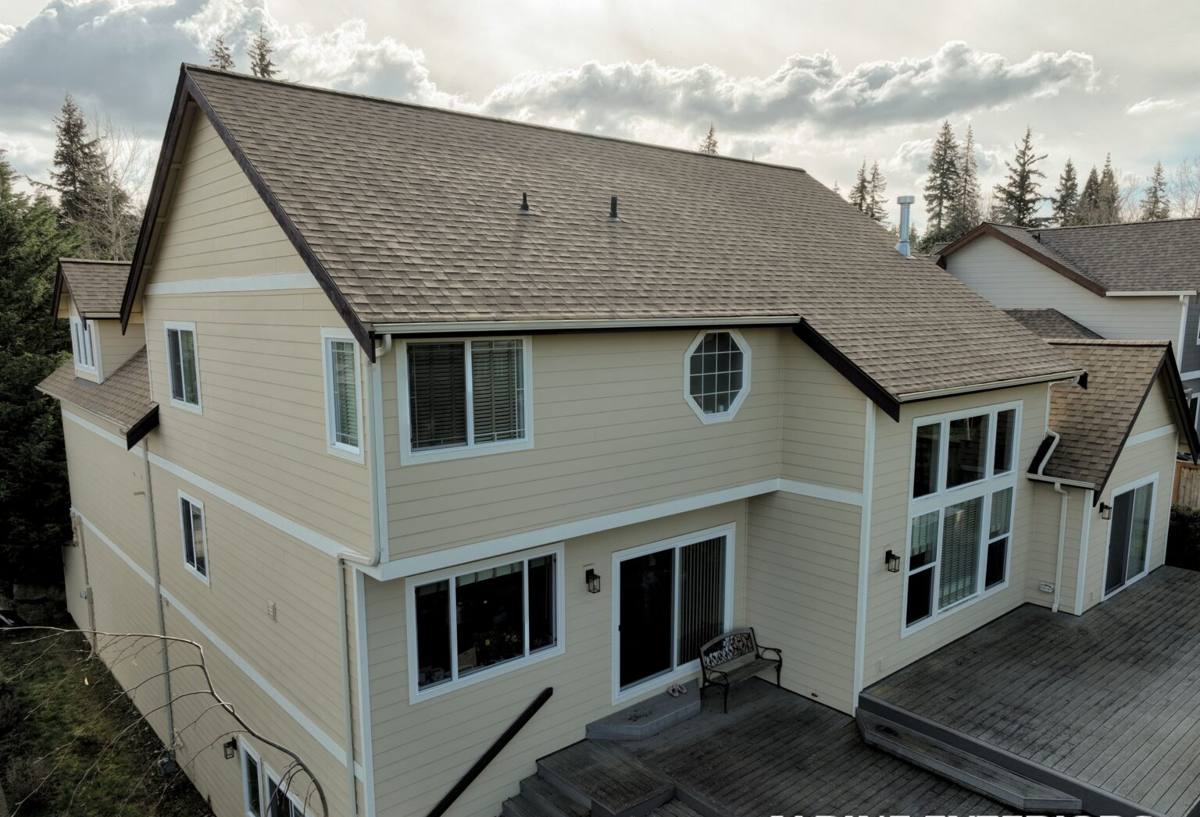
Signs Your Roof Has Reached the End of Its Service Life
Not every roof problem means a full replacement — plenty of leaks and worn spots can be repaired. But there's a point where patching stops making financial sense and a full replacement is the honest recommendation. Common signs include:
- Granules collecting in gutters or at downspout outlets
- Shingles that are cupping, curling, or cracking, especially on south- and west-facing slopes
- Moss or dark algae staining that keeps returning within a season of cleaning
- Soft spots or slight sagging when walking the roof deck
- Daylight visible through the attic roof boards
- Multiple isolated leaks that keep appearing in different spots each winter
- A roof already past 20-25 years old, regardless of surface appearance
If a roof is showing two or more of these at once, that's usually a sign the underlayment and decking are already compromised, not just the shingles.
What a Correct Roof Replacement Actually Involves
A roof replacement is more than stripping old shingles and nailing down new ones. In a climate this wet, the layers underneath the shingles do most of the actual work of keeping water out.
Tear-Off and Deck Inspection
A full tear-off exposes the plywood or plank decking underneath, which is the only way to actually find soft, delaminated, or rotted sections. Any deck damage gets replaced before anything new goes down — covering over a compromised deck just hides the problem for a few more years.
Underlayment and Ice-and-Water Protection
Synthetic underlayment goes down across the full roof as the primary water barrier beneath the shingles. In vulnerable areas — eaves, valleys, and around penetrations — a self-adhering ice-and-water membrane adds a second line of defense where wind-driven rain is most likely to work its way underneath.
Flashing Details
New flashing at every chimney, sidewall, valley, vent pipe, and skylight is standard on a proper replacement, not an upsell. Reusing old flashing to save time is one of the most common shortcuts that leads to a callback within a year or two.
Ventilation
Balanced intake and exhaust ventilation keeps the attic dry and temperature-regulated, which slows moss regrowth from underneath and protects the new decking and shingles from the inside. A roof that looks great from the curb but has poor attic ventilation will show problems again sooner than it should.
Choosing the Right Roofing Material for This Climate
There's no single "best" roofing material — the right choice depends on budget, roof pitch, and how much long-term maintenance a homeowner wants to take on. Here's how the common options compare for a wet, moss-prone climate like this one.
| Material | Typical Lifespan | Moss/Moisture Resistance | Maintenance |
|---|---|---|---|
| Architectural asphalt shingle | 25-30 years | Good, especially with algae-resistant granules | Periodic moss removal, gutter cleaning |
| Standing seam metal | 40-50+ years | Excellent — sheds moisture, little surface for moss to grip | Low; occasional fastener/sealant checks |
| Cedar shake | 20-30 years with upkeep | Requires active maintenance to resist moss and rot | Higher — treatment, cleaning, and inspection needed regularly |
We're upfront with homeowners about trade-offs. Cedar has a look a lot of people want, but it needs consistent upkeep to hold up in a climate this damp, and we won't oversell it as low-maintenance when it isn't. Metal costs more up front but asks the least of a homeowner over time. Architectural asphalt remains the most common choice because it balances upfront cost, appearance, and performance well for most homes here.
Our Roof Replacement Process
Every project follows the same sequence, whether it's a straightforward gable roof or something with multiple valleys and dormers:
- On-site inspection and measurement, with photos of any deck or flashing concerns we can see from the ground and roof surface
- A written estimate that breaks out material, labor, and any deck repair allowance — no vague lump-sum guessing
- Scheduling built around the weather window, since tear-offs shouldn't sit exposed overnight if rain is coming
- Full tear-off, deck inspection, and repair of any soft or damaged sheathing before new material goes down
- Underlayment, ice-and-water membrane at vulnerable areas, new flashing, and correct ventilation installed to code
- New roofing material installed per manufacturer specification to keep warranty coverage intact
- Full site cleanup, including a magnetic sweep for stray nails
- Final walk-through so the homeowner can see the finished work before we consider the job done
Why a Crew That Already Works Aldergrove, BC Matters
Aldergrove sits right up against the Lynden area, and homes on both sides of that border deal with the same wind patterns, the same rain, and the same moss pressure. A crew that already works this specific corridor understands the local building patterns, knows what typically fails first on roofs of a given age here, and doesn't need to relearn the climate on your project. That familiarity shows up in small but real ways — knowing which valleys tend to collect debris, which roof orientations moss hits hardest, and how to sequence a tear-off around this area's rain patterns instead of the drier conditions a lot of national roofing crews are used to.
It also matters for logistics. A contractor already routing crews and material deliveries through this area can schedule more reliably than one making a special trip, which keeps your roof exposed for less time during the tear-off and re-roof.
Keeping a New Roof Performing for the Long Haul
A correctly installed roof still needs a small amount of ongoing attention in this climate. The most useful habits:
- Clean gutters at least twice a year so water isn't backing up under the eaves
- Remove moss buildup before it establishes rather than after, ideally with a soft-wash approach that doesn't strip granules
- Trim back overhanging branches to cut down on shade and debris, both of which feed moss growth
- Have the roof looked at after any major windstorm, even if nothing looks obviously wrong from the ground
None of this requires a large time investment, but skipping it is how a well-installed roof ends up with avoidable problems years before it should.
What Roof Replacement Typically Costs
Pricing depends on roof size, pitch, number of penetrations and valleys, current deck condition, and material choice. Steeper roofs and roofs with a lot of cutting-in around dormers or chimneys take more labor than a simple gable. Deck repair, if the tear-off reveals rot or soft sheathing, is priced separately since it's not knowable until the old roofing is off. Rather than quote a number that won't reflect your actual roof, we provide a detailed written estimate after an on-site inspection, so every cost driver is spelled out instead of buried in a lump sum.
Get a Straightforward Estimate
If your roof is showing its age or you just want an honest opinion on where it stands, we're happy to take a look. The estimate is free, there's no pressure attached to it, and you'll get a clear explanation of what we find — whether that means a repair, a replacement, or simply confirmation that the roof has some good years left. Use the form below to get started.