 Lynden Siding
 Board & Batten Siding Built for Aldergrove, BC's Climate
Aldergrove sits just across the line from Lynden, in the Fraser Valley, where Pacific storms roll through for months at a stretch. Homes here deal with driving rain, long stretches of overcast damp weather, and a moss season that can run from fall through spring. Add in the marine-influenced air common to this part of the Pacific Northwest and you get a climate that is genuinely hard on exterior materials. Board and batten siding, with its bold vertical lines and deep shadow reveal, is one of the most requested looks for farmhouse-style and modern homes in this area — but it is also one of the least forgiving styles when it is installed wrong. The vertical battens create dozens of extra seams and fastening points compared to standard lap siding, and every one of those seams is a potential path for water if the details are not handled correctly.
We work out of Lynden and regularly take on projects in Aldergrove, BC, so we are not guessing at what this climate does to a house — we see it. This page covers what a correct board and batten job looks like in this specific environment, what we install and why, and how our process works for homeowners just across the border.
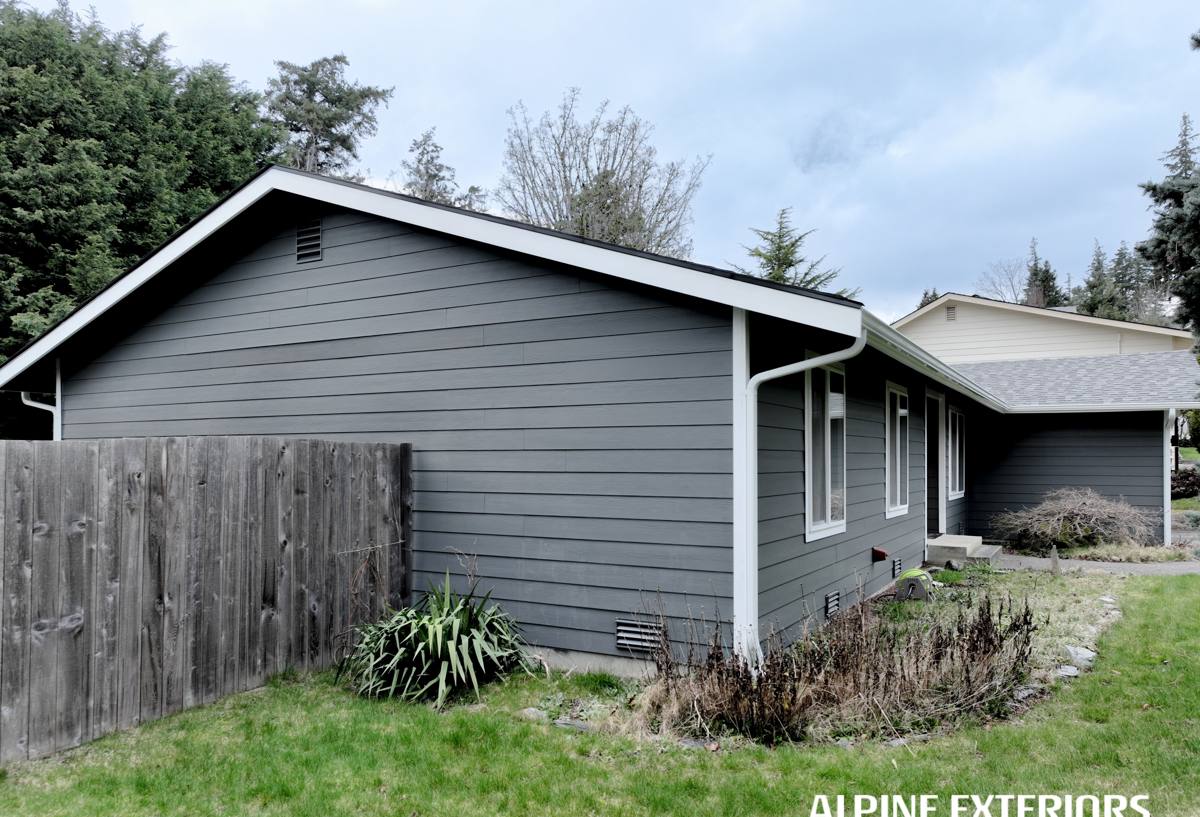
What Board & Batten Siding Actually Is
Board and batten is a vertical siding style built from wide flat boards installed side by side, with narrower strips (battens) covering the seams between them. Historically it was a simple, practical way to close gaps in barn and farmhouse walls. Today it is used as a design statement — often mixed with horizontal lap siding as an accent on gables, dormers, or a full elevation — because of the strong vertical lines and deep shadow lines it creates.
The look is straightforward. The installation is not. Every batten is a fastening point, every seam needs to shed water correctly, and the wider spacing between studs on many walls means furring or additional blocking is often required to give the fasteners something solid to bite into. A board and batten wall has more linear feet of seam per square foot of coverage than almost any other siding style, which is exactly why installation quality matters more here than on a simpler profile.
Why the Style Is Popular in This Area
Vertical siding pairs well with the mix of craftsman, farmhouse, and modern architecture common in Whatcom County and the Fraser Valley. It is frequently used as an accent on gable ends, entry features, or garage walls, paired with horizontal lap siding on the main body of the house. That mixed approach also concentrates the risk — the transition points where vertical and horizontal siding meet are common failure points if flashing isn't detailed correctly.
What This Climate Does to Board & Batten Siding
The Fraser Valley and northern Whatcom County share a wet, temperate coastal climate. A few specific conditions matter most for board and batten performance in Aldergrove:
- Driving rain: Storms coming off the Pacific frequently arrive with sideways wind-driven rain, which pushes water into seams and joints that would stay dry in a calmer climate.
- Extended damp seasons: Long stretches of overcast, humid weather mean siding rarely gets a fast, complete dry-out between rain events. Materials and details that trap moisture stay wet longer here than they would in a drier region.
- Moss and organic growth: Shaded walls, north-facing elevations, and areas near trees and greenbelt are prone to moss, algae, and mildew growth that holds moisture against the siding surface for extended periods.
- Salt-influenced air: Proximity to the Salish Sea and Georgia Strait means coastal air quality can accelerate corrosion of unprotected metal fasteners and trim over time.
None of these conditions are unusual for the region — but they add up. Board and batten's extra seams mean more places for that moisture to find an entry point if the install skips steps.
What a Correct Board & Batten Installation Involves
A board and batten wall that holds up in this climate depends on details you will not see once the job is finished. This is where most of the long-term performance is decided, and where corners get cut on a rushed installation.
Rainscreen Gap
A drainage gap behind the siding lets any moisture that does get past the surface drain and dry out instead of sitting against the wall sheathing. In a climate with this much sustained dampness, a rainscreen assembly is not optional — it is the difference between siding that dries out and siding that stays wet.
Water-Resistive Barrier and Flashing
The house wrap and flashing behind the siding do the actual work of keeping bulk water out of the wall assembly. Every window, door, and horizontal transition needs flashing detailed so water sheds outward and down, never backward into the wall. This is especially critical at the transitions between vertical board and batten sections and horizontal lap siding.
Fastening and Batten Spacing
Battens need to land on solid backing — either studs or added blocking — with fasteners driven correctly, not overdriven or underdriven. Improper fastening is one of the most common causes of buckling, cracking, and premature failure in board and batten walls.
Caulking and Sealant Discipline
Sealant belongs at specific joints, not as a substitute for correct flashing everywhere. Over-caulking a wall can trap moisture behind the siding just as easily as under-caulking lets it in.
Why We Only Install James Hardie Fiber Cement
Board and batten is available in several materials, and we get asked regularly why we do not offer vinyl board and batten panels, LP SmartSide, cedar, or primed spruce alongside it. The honest answer is that we standardized on James Hardie fiber cement because of how it performs specifically in this climate, over the long term, not because the alternatives are without merit.
| Material | Moisture Behavior in This Climate | Maintenance Burden | Our Position |
|---|---|---|---|
| James Hardie fiber cement | Non-combustible, engineered to resist moisture-related swelling and rot; ColorPlus factory finish resists fading and moisture intrusion at the surface | Low — periodic washing, no repainting on ColorPlus finish | What we install on every board and batten project |
| Cedar | Natural material, attractive, but absorbs moisture and is prone to warping, checking, and rot in sustained wet climates without diligent upkeep | High — regular refinishing, sealing, and moisture monitoring | We do not install; upkeep demands are difficult to keep pace with here |
| LP SmartSide | Engineered wood strand product; performs reasonably when perfectly installed and maintained, but wood-based substrate is more sensitive to sustained moisture exposure than fiber cement | Moderate — edge sealing and paint maintenance needed over time | We do not install |
| Vinyl board and batten panels | Won't rot, but is a thin material that can warp, crack in cold snaps, and fade; seams and panel joints behave differently than a true fastened board system | Low, but limited repair options and shorter realistic lifespan on a coastal climate | We do not install |
This is a professional standard, not a knock on any manufacturer. Each of these products has a legitimate place in the market. We simply found that fiber cement, installed correctly, gives Aldergrove and Lynden-area homeowners the best combination of moisture resistance, non-combustibility, and a factory-baked finish that does not need repainting on a normal cycle — which matters when you are dealing with this much sustained damp weather and a real moss season every year.
What James Hardie Board & Batten Looks Like in Practice
Hardie's board and batten systems typically use vertical panel or plank product with battens installed over the seams, or individual HardiePanel and batten combinations depending on the look you want. The HZ5 product line used in this region is engineered for cold, wet climates specifically, which lines up with what this area actually experiences most of the year.
Our Process for Aldergrove, BC Projects
We are based in Lynden, and Aldergrove is close enough that it is a normal part of our service area, not a special trip. A few things homeowners on this side of the border should know:
- We start with an in-person walk-around to look at existing siding condition, moisture damage, moss buildup, and any transitions or trim details that need attention.
- Because Aldergrove falls under Canadian jurisdiction, any required permitting or inspection goes through the applicable local authority — we coordinate on the project side, but homeowners should confirm current permit requirements for their specific property before work begins.
- Material selection, colors, and batten spacing are worked out with the homeowner before install day, including how the board and batten will meet existing trim, windows, and any adjacent horizontal siding.
- Installation follows manufacturer fastening and flashing specifications, with particular attention to the rainscreen gap and transition flashing given the local climate.
Signs Your Current Siding May Need Attention
If you already have board and batten, cedar, or another vertical siding on your Aldergrove home, watch for these warning signs — they tend to show up earlier in this climate than in drier regions:
- Persistent moss or dark staining that returns quickly after cleaning, especially on shaded or north-facing walls
- Soft spots, bubbling, or visible swelling at board seams or batten edges
- Paint that is peeling or bubbling rather than simply fading
- Gaps or separation where battens meet the boards beneath them
- Visible water staining on interior walls near exterior corners or window trim
What a Board & Batten Project Typically Involves
| Factor | What Affects It |
|---|---|
| Wall complexity | Number of window and door openings, corners, and transitions between vertical and horizontal siding sections |
| Existing wall condition | Whether sheathing, house wrap, or framing behind the current siding needs repair before new siding goes on |
| Rainscreen requirement | Adding a proper drainage gap where one doesn't already exist |
| Batten spacing and reveal | Wider or narrower batten spacing changes material quantities and labor time |
| Trim and flashing detail | Custom trim at windows, corners, and roof transitions adds time but is where long-term performance is won or lost |
We do not quote broad numbers without seeing the actual wall — the honest answer is that cost depends heavily on the condition behind your existing siding, which we cannot know until we look.
Why It Matters to Hire a Crew That Already Works in Aldergrove, BC
Board and batten siding installed by a crew unfamiliar with this specific climate is a risk, even if the crew is skilled in general. The rainscreen detailing, fastener spacing, and flashing choices that work in a drier climate are not automatically correct here. We work in Lynden and the surrounding Whatcom County and Fraser Valley area regularly, which means we are not learning this climate on your house — we already know what driving rain, extended damp seasons, and moss growth do to a wall assembly over years, not just at installation.
If you're considering board and batten siding for a home in Aldergrove, BC, we're happy to come take a look, walk you through what a correct installation involves for your specific walls, and put together a straightforward, no-pressure estimate. There's a form below to get started.