 Lynden Siding
 Acme Roofs Work Harder Than Roofs in Town
Acme sits out in the wooded foothills east of Lynden, and that setting changes how a roof ages. Homes tucked under conifer canopy stay shaded and damp long after a storm has passed through the rest of Whatcom County. Less sun, more standing moisture, more organic debris on the roof deck — it all adds up to a roof that needs a different kind of attention than one on an open lot in town.
We've replaced roofs across this stretch of the county long enough to know that a generic roofing job doesn't hold up out here. This page covers what a roof replacement in Acme actually needs to get right, what our process looks like, and why the details matter more in a property like yours than they would somewhere drier.
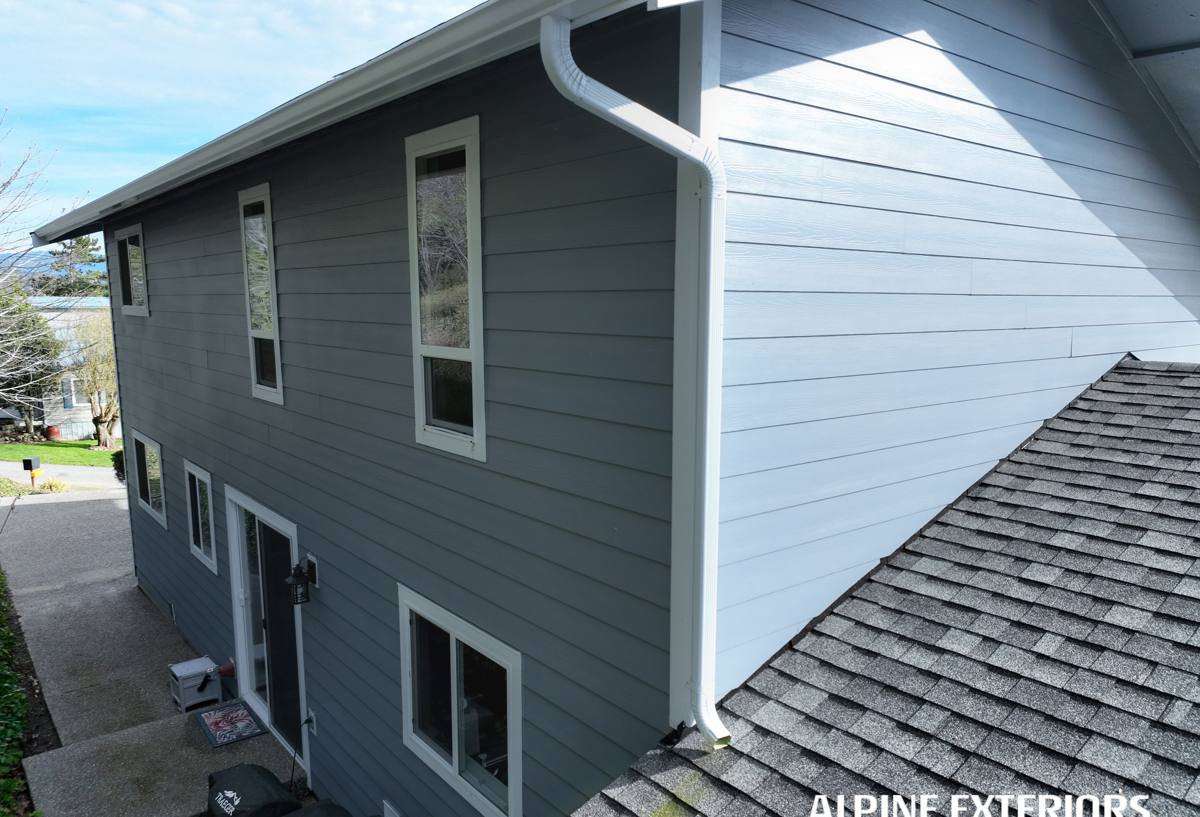
What Acme's Climate Does to a Roof Over Time
Three things wear down roofs in this part of Whatcom County faster than most homeowners expect:
Driving Rain
Pacific storms don't just drop rain straight down here — wind pushes it sideways, up under shingle tabs, into exposed nail lines, and along any flashing that's even slightly undersized. A roof that's fine in a light shower can leak in a wind-driven storm if the underlayment and flashing details weren't built for it.
A Long Moss Season
Shade, moisture, and organic debris from overhanging trees give moss and algae a long window to establish themselves on an Acme roof — often most of the year. Moss doesn't just look bad. It holds water against the roofing material, works its way under shingle edges, and lifts material away from the deck over time, which is exactly how small leaks start.
Salt-Tinged Marine Air
Even this far inland, marine air moving in off the Salish Sea carries a fine trace of salt with it. On its own that's a minor factor, but combined with constant dampness it accelerates corrosion on exposed metal — fasteners, flashing, vents, and gutters — especially anything that wasn't rated for coastal-adjacent exposure in the first place.
None of these three problems is dramatic by itself. Together, over ten or fifteen years, they're what turns a roof that should have another decade left into one that's failing early.
Signs Your Acme Roof Needs Replacement, Not Another Repair
Repairs make sense when the damage is isolated and the roof underneath is still sound. Replacement makes sense once the problems are spread across the roof or the underlying materials have started to fail. Signs worth taking seriously include:
- Moss or algae covering large sections of the roof rather than a patch or two
- Shingles that are cupping, curling, or losing granules in multiple areas
- Soft spots or sagging when you walk the roof or view it from a ladder
- Daylight visible through the roof deck from inside the attic
- Staining on interior ceilings or exterior fascia boards that keeps coming back after cleaning
- A roof that's approaching or past the manufacturer's expected service life for its material
- Multiple past repairs in different spots rather than one contained issue
If you're only seeing one or two of these, a repair may still be the right call. We'll tell you honestly which category your roof falls into — we don't have any reason to push a replacement you don't need.
What a Correct Roof Replacement Actually Involves
A roof replacement is more than stripping old material and nailing down new shingles. Given what Acme's climate does to a roof, the details underneath the visible surface matter as much as the shingles themselves.
Full Tear-Off and Deck Inspection
We remove the existing roofing down to the deck rather than layering over it. That's the only way to actually see the plywood or plank sheathing underneath, check for soft or rotted sections from years of trapped moisture, and replace any deck material before new roofing goes over it. Covering up a compromised deck just hides the problem.
Underlayment Built for Wind-Driven Rain
Given how often storms push rain sideways here, we don't treat underlayment as an afterthought. Synthetic underlayment and ice-and-water shield in vulnerable areas — eaves, valleys, around penetrations — give the roof a second line of defense if wind ever drives water past the shingles themselves.
Flashing That Won't Corrode Early
Flashing around chimneys, skylights, and roof-to-wall transitions is where most roof leaks actually start, not out in the open field of shingles. We install flashing rated to hold up against the moisture and mild salt exposure common in this part of the county, and we tie it into the underlayment correctly rather than just caulking a gap and calling it done.
Ventilation That Matches the Attic
An attic that can't breathe traps moisture, which speeds up deck rot from the inside and works against everything the roofing material is trying to do from the outside. We check intake and exhaust ventilation as part of the replacement, not as a separate add-on sale.
Choosing a Roofing Material for Acme's Conditions
There's no single "best" roofing material for every home — it depends on your roof's pitch, how much shade and tree cover you have, and your budget. Here's how the common options compare for a property like yours:
| Material | Moss & Moisture Resistance | Typical Lifespan | Relative Cost |
|---|---|---|---|
| Standard 3-tab asphalt shingle | Fair — needs regular moss treatment | 15–20 years | Lowest |
| Algae-resistant architectural shingle | Good — copper/zinc granules slow regrowth | 25–30 years | Moderate |
| Standing seam metal | Very good — sheds moss buildup, sheds water fast | 40+ years | Highest upfront |
| Synthetic/composite shingle | Good — resists moisture absorption | 30–50 years | Moderate to high |
For most heavily shaded Acme properties, we lean toward algae-resistant architectural shingles or metal as the honest recommendation — the upfront cost difference over a basic 3-tab shingle pays for itself in fewer moss treatments and a longer service life. That said, a well-installed and properly maintained standard shingle roof can still perform fine; it just asks more of you in upkeep along the way.
What Actually Drives Your Quote
Two roofs of the same square footage can come in at very different prices. The factors below explain why, so a quote makes sense once you see it broken down:
| Factor | Why It Affects the Price |
|---|---|
| Roof pitch and complexity | Steep or multi-plane roofs take longer and need extra safety setup |
| Number of existing layers | Tear-off of multiple old layers adds labor and disposal cost |
| Deck condition | Rotted sheathing found during tear-off has to be replaced before roofing continues |
| Access and site conditions | Long driveways, tree cover, and limited staging area affect equipment and labor time |
| Material choice | Asphalt, synthetic, and metal carry very different material costs |
| Flashing and penetration count | Chimneys, skylights, and multiple vents each add detail work |
We walk every one of these with you before we quote, so you know exactly what you're paying for and why — not just a lump-sum number.
Our Roof Replacement Process
- On-site inspection. We walk the roof and attic, check the deck where accessible, and talk through what we're seeing with you directly.
- Written estimate. A clear scope and price broken down by material, labor, and any deck repair we expect — no surprise add-ons midway through.
- Material selection. We help you weigh options against your budget and how much shade and moss exposure your specific roof deals with.
- Scheduling around the weather. Given how much rain this area gets, we plan tear-off days around forecasts and keep the roof protected if conditions turn.
- Tear-off and deck inspection. Old material comes off, the deck gets inspected, and any needed repairs happen before new roofing goes down.
- Underlayment, flashing, and installation. Built in the order and detail described above, not shortcut to save a day.
- Cleanup and final walkthrough. Magnetic sweep for nails, debris hauled off, and a walkthrough so you can see the finished work before we call it done.
Why a Crew That Already Works in Acme Matters
Rural and semi-rural properties out here come with logistics that a crew unfamiliar with the area can get wrong. Long or narrow driveways affect where a dumpster or material delivery can even park. Well and septic systems mean equipment staging has to be planned, not assumed. Heavy tree cover changes how a crew handles safety lines and debris cleanup compared to an open suburban lot.
A crew that's already replaced roofs on properties like yours knows to ask about these things up front instead of discovering them on install day. We also handle the permitting piece through Whatcom County for you, so that step isn't something you have to chase down separately.
Keeping Your New Roof Ahead of the Next Moss Season
A properly installed roof still benefits from a little ongoing attention in a climate like this one. A few habits go a long way:
- Keep overhanging branches trimmed back so the roof gets more light and air movement
- Clear gutters and valleys of needles and debris before the fall rains set in
- Have moss growth treated early, before it spreads across large sections
- Schedule a quick visual check every year or two, especially after major windstorms
- Address small leaks or lifted shingles right away rather than waiting for the next dry stretch
None of this replaces a properly built roof, but it does help your new one actually reach its full expected lifespan instead of falling short of it.
If your Acme roof is showing its age or you just want an honest read on where it stands, we're happy to come take a look. Use the form below to request a free, no-pressure estimate.