 Lynden Siding
 Siding Repair Built for Abbotsford's Climate
Abbotsford sits in a stretch of the Fraser Valley that takes real weather seriously. Homes here deal with a long wet season, driving rain that comes in sideways off the coast, and a moss season that can stretch for months on shaded roof lines and north-facing walls. Add in salt-tinged air moving through the valley from the coast, and you have a combination that is hard on every exterior material, siding included. We work this region regularly, just across the border from our Lynden, Washington base, and we see the same patterns on Abbotsford homes that we see throughout Whatcom County: moisture finding its way behind panels, caulk failing years before anyone expects it to, and moss quietly holding water against surfaces that were never designed to stay wet.
Siding repair in this climate is not just about patching what looks bad. It is about understanding why a section failed in the first place, because if the underlying cause is not fixed, the same spot will fail again in a year or two. That is the standard we hold every repair job to, whether it is a single damaged board or a wider section that has been quietly deteriorating behind the surface.
Signs Abbotsford Homes Should Watch For
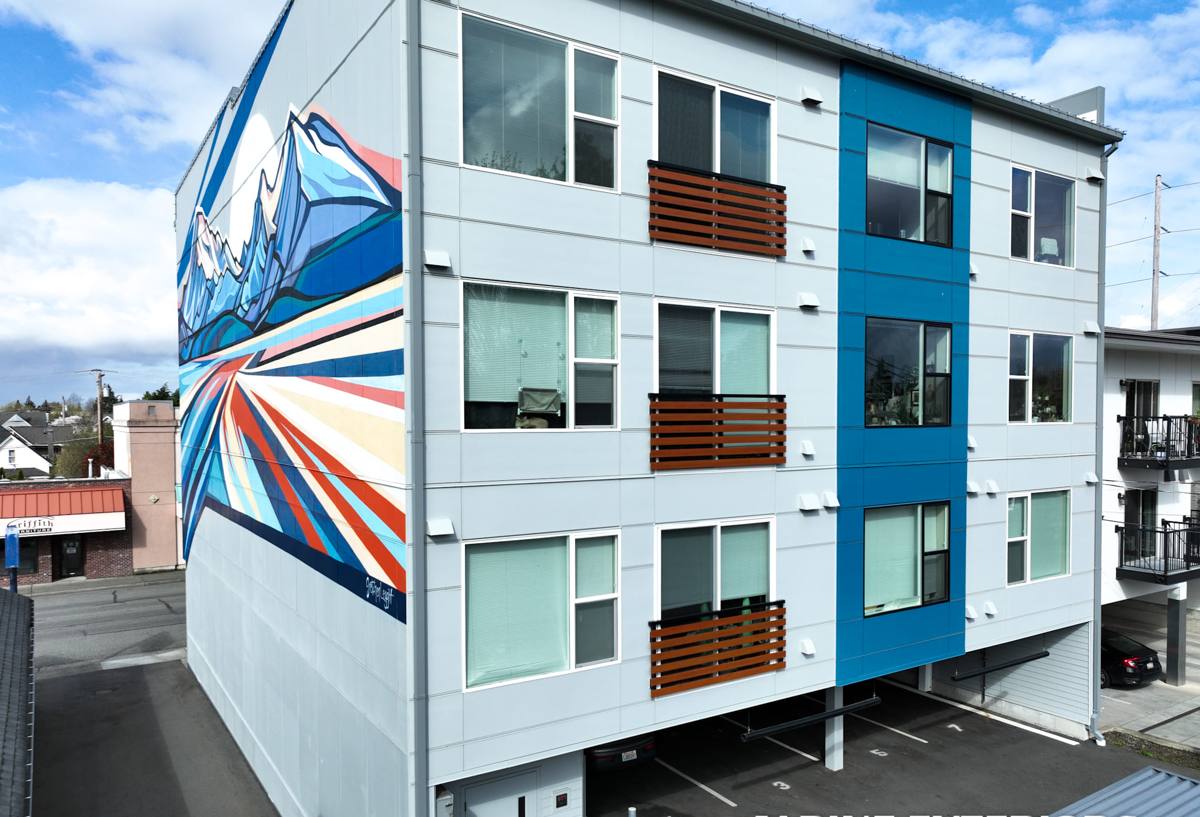
Because of the rain and moss exposure typical here, siding problems often show up in predictable places: low corners, areas beneath overhangs that never fully dry, and walls that face prevailing wind and rain. Watch for these signs:
- Soft or spongy spots when you press on the siding, especially near the bottom courses
- Visible moss or dark streaking that keeps returning after cleaning
- Cracked, bubbled, or peeling paint that reappears within a season or two of repainting
- Gaps or separation at seams, corners, or where siding meets trim, windows, or doors
- Warping, buckling, or panels that no longer sit flush against the wall
- A musty smell near exterior walls inside the home, which can point to moisture already past the siding
Any one of these on its own might be minor. Several together, or any sign of softness, usually means moisture has been active for a while and the repair needs to address more than the surface.
Cosmetic Damage vs. Moisture Damage
Impact damage — a cracked panel from a stray branch or a dented section — is usually straightforward: cut out the damaged piece, replace it, match the finish, done. Moisture damage is a different animal. It often looks small on the outside while the sheathing or framing behind it has already started to soften. A correct repair always checks what is behind the visible damage before deciding how big the fix actually needs to be.
What a Correct Repair Actually Involves
A repair that only replaces what is visible from the driveway is a repair that will need to be done again. Here is what we check on every siding repair call in the Abbotsford area:
- Remove the damaged section and inspect the house wrap or building paper underneath for tears, gaps, or staining.
- Check the sheathing for softness or discoloration, since Abbotsford's wet season gives moisture plenty of time to work if a seal has failed.
- Correct the water path — flashing, kick-out diverters, and caulking joints often need attention alongside the siding itself, or the same failure repeats.
- Address any moss or algae growth at the source rather than just cleaning the surface, since regrowth in shaded, damp areas is fast in this region.
- Replace with matching material, properly fastened and sealed to the manufacturer's specification, not just "close enough."
- Finish and blend so the repaired section does not stand out as an obvious patch.
Skipping any of these steps is how homeowners end up paying for the same repair twice. A patch over hidden rot is not a repair — it is a temporary cover.
How Siding Materials Hold Up to Repair in This Climate
Not every siding material responds to Abbotsford's rain and moss exposure the same way, and that affects both how often repairs are needed and how well a repair holds once it is done.
| Material | Common Failure in This Climate | Repair Outlook |
|---|---|---|
| Cedar / primed spruce | Moisture absorption, rot at joints and low courses, repeated repainting | Repairs often reveal wider rot than expected; matching weathered wood is difficult |
| Vinyl | Cracking in cold snaps, warping from heat/moisture cycling, seams opening | Easy to replace a panel, but color fade means new pieces rarely match old ones |
| LP SmartSide (engineered wood) | Edge swelling and delamination if caulking or paint maintenance lapses | Repairable, but swelling can spread along a course before it is visible |
| James Hardie fiber cement | Rare failures; mostly impact damage or installation-related caulk gaps | Non-combustible, dimensionally stable, holds paint and repairs cleanly when matched to the correct ColorPlus or field-finish batch |
This is not a knock on any homeowner's existing siding — most of these products perform reasonably well when properly maintained. But in a climate that stays wet for months at a time, the materials that depend the most on paint film and caulking to stay dry are the ones we see called back for repair most often. It is a big part of why we install only James Hardie fiber cement on new work and full replacements: it simply asks less of the maintenance cycle in a climate like this one.
Repair or Replace: How We Help You Decide
Not every problem area needs a full re-side, and we will tell you that plainly if a repair is the right call. Generally:
- Repair makes sense when damage is isolated, the sheathing underneath is sound, and the rest of the siding is performing well.
- Replacement makes sense when repairs keep recurring in the same area, when moisture has spread behind multiple sections, or when the existing material is near the end of its practical service life and repeated patch jobs are becoming a pattern rather than an exception.
We would rather do an honest $400 repair than talk a homeowner into a $15,000 re-side they do not need yet. When full replacement is the right answer, James Hardie fiber cement is what we install — but that is a separate conversation from getting your current siding repaired correctly today.
Our Repair Process for Abbotsford Homes
We keep the process straightforward:
- Inspection — we look at the damaged area and the surrounding sections, not just the spot you called about.
- Honest diagnosis — you get a clear explanation of what caused the damage, not just what it will cost to fix.
- Scoped estimate — a written scope covering material, labor, and any hidden-damage contingency if we cannot fully assess extent until we open the wall.
- Repair work — done to manufacturer fastening and sealing specifications, not shortcuts.
- Follow-up — we point out anything nearby worth keeping an eye on, so small issues do not turn into next year's repair call.
Cross-Border Scheduling
Since Abbotsford sits just across the international border from our home base in Lynden, scheduling a repair visit is no different than scheduling one anywhere else in Whatcom County — we simply plan the border crossing into the day. Homeowners do not need to do anything differently to get an estimate or have work completed.
Why Hire a Crew That Already Works in Abbotsford
Siding repair looks different in a climate that stays wet from fall through spring than it does in a dry region. A crew that regularly works Whatcom County and the Fraser Valley already knows where moisture tends to hide, how fast moss re-establishes on shaded walls here, and which failure patterns show up again and again on homes exposed to driving coastal rain. That familiarity shortens the diagnosis, reduces guesswork, and means the repair addresses the actual cause rather than just the symptom. It also means we are not learning the region on your dime — we already know what to check before we ever open up the wall.
Maintenance Checklist to Extend Your Repair
Once a repair is done right, a little seasonal attention keeps it that way:
- Rinse siding of moss and algae buildup before it takes hold, especially on shaded or north-facing walls
- Check caulking at trim, window, and door joints once a year and re-seal any that has cracked or pulled away
- Keep gutters clear so overflow does not run down the wall face during heavy rain
- Trim back vegetation and tree limbs that keep a wall section shaded and damp
- Walk the exterior after any major windstorm and check for new gaps, cracks, or loose sections
- Repaint or refinish promptly if you notice the paint film thinning, rather than waiting for bare material to show
If you are seeing soft spots, recurring moss, cracked caulking, or damage anywhere on your Abbotsford home's siding, we would be glad to take a look. Fill out the form below for a free, no-pressure estimate — we will give you a straight answer on whether it is a repair, and what a proper one involves.