 Lynden Siding
 Roofing in a Border-Region Climate
Abbotsford sits in the Fraser Valley just north of the Whatcom County line, and the roofs here take on a specific combination of stresses that you don't get everywhere. Marine air moving in off the Salish Sea carries salt with it, driving rain comes in sideways during fall and winter storms, and the long stretch of overcast, wet weather between October and April gives moss every chance it needs to take hold. None of this means Abbotsford roofs fail faster than roofs anywhere else in the Pacific Northwest — it means they fail in particular ways, and a repair that doesn't account for those ways doesn't hold.
Salt Air and Corrosion
Metal components on a roof — flashing, fasteners, drip edge, vent caps — are the first things to show wear from salt-laden air. Corrosion usually starts small: a rusting nail head, a flashing seam that's lost its coating. Left alone, that small corrosion point becomes the entry spot for water. Part of doing a repair right here is checking every metal component on and around the repair area, not just the shingles or membrane that are visibly damaged.
Driving Rain and Wind-Driven Leaks
A lot of Fraser Valley storms don't drop rain straight down — they push it sideways under shingle edges, around chimney flashing, and into any gap that a calmer climate would never test. This is why leaks here often show up somewhere other than where the actual roof damage is; water tracks along the underlayment or decking before it finds a way into the attic or ceiling. Diagnosing the real source, not just patching where the stain appeared, is the difference between a repair that lasts and one you're paying for again next winter.
Moss Season
Moss thrives in shade, moisture, and mild temperatures — which describes most of an Abbotsford winter. It's not just cosmetic. Moss holds moisture against the shingle surface, lifts shingle edges as it grows, and works its way under flashing and into valleys where it blocks proper drainage. By the time moss is visible from the ground, it's usually already doing damage you can't see.
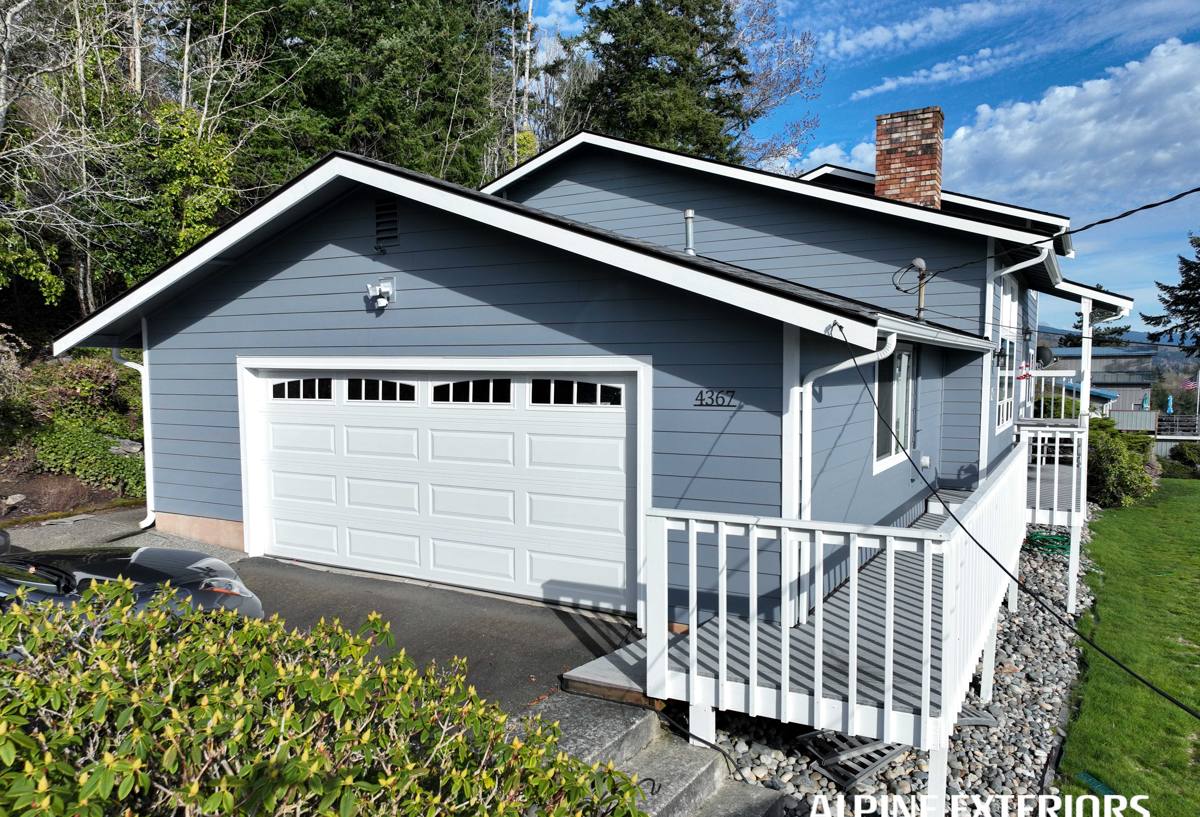
Common Roof Repair Issues We See in Abbotsford
- Moss-related shingle lift and granule loss, especially on north-facing slopes and under tree cover
- Flashing leaks around chimneys, skylights, and roof-to-wall intersections where corrosion or sealant failure has opened a gap
- Valley leaks where two roof planes meet and debris or moss slows drainage
- Wind-lifted or missing shingles after fall and winter storm systems
- Clogged or damaged gutters that back water up under the roof edge instead of carrying it away
- Nail pops and fastener corrosion that loosen shingles over time
- Soft or damaged decking found once a smaller leak has gone unaddressed for a season or more
Signs Your Roof Needs Repair
Most roof repairs get more expensive the longer they're put off, because water damage spreads underneath the roof surface long before it's visible from inside the house. Here's what we'd tell a neighbor to watch for:
- Water stains on ceilings or upper interior walls, even faint or old-looking ones
- Visible moss, algae, or dark streaking on the roof surface
- Shingles that are cracked, curling at the edges, or missing entirely
- Granules collecting in gutters or at the base of downspouts
- Daylight visible through the roof deck from inside the attic
- Sagging anywhere along the roofline or in a valley
- Rusted or visibly separating flashing around chimneys and vents
- A musty smell in the attic, which often shows up before any visible stain does
If you're seeing more than one of these at once, it's worth having someone look before the next major storm system rolls through.
Repair or Replace? What Actually Drives That Decision
Not every roof problem calls for a full replacement, and we don't sell one when a repair will genuinely hold. The honest answer depends on a handful of factors:
| Factor | Favors Repair | Favors Replacement |
|---|---|---|
| Age of roof | Under 10-15 years, still within expected lifespan | Near or past manufacturer's rated service life |
| Extent of damage | Isolated to one area — a valley, a flashing point, a storm-damaged section | Spread across multiple slopes or recurring in different spots |
| Decking condition | Solid, no soft spots found on inspection | Soft, rotted, or delaminating in multiple areas |
| Moss and moisture history | Recent or first-time issue | Long-term, untreated buildup with granule loss underneath |
| Material availability | Matching shingles or panels still available | Discontinued product, visible mismatch unavoidable |
When a roof falls in the middle — say, sound decking but aging shingles with a couple of trouble spots — we'll walk you through both options honestly, including what a repair buys you in time versus what a full replacement resets.
How We Handle a Roof Repair, Start to Finish
- Inspection first. We look at the whole roof, not just the spot you called about — a leak inside often originates somewhere else entirely.
- Find the actual source. On steep or wet roofs this sometimes means checking the attic side too, tracing water staining back along the decking.
- Clear moss and debris from the repair area and surrounding valleys or slopes so we're working on a clean, dry surface.
- Replace damaged materials — shingles, underlayment, flashing, or decking — matching existing materials as closely as possible.
- Re-seal and re-flash all penetrations and transitions in the repair area, since a repair that only replaces shingles but ignores flashing rarely lasts.
- Check drainage — gutters, downspouts, and valleys — since a repair means nothing if water is still pooling or backing up nearby.
- Walk the roof with you (or send photos and a written summary) explaining what we found and what we did, including anything worth keeping an eye on going forward.
Materials and Methods We Use for Lasting Repairs
Matching materials matters more than it sounds like it should. A repair patched with mismatched shingle profiles or incompatible flashing metal can look fine for a season and then fail right at the seam where old meets new — often at a lower point than the original problem. We match asphalt shingle repairs by profile and, where possible, color lot, and we use flashing metal compatible with what's already on the roof to avoid galvanic corrosion between dissimilar metals, which is a real problem in a salt-air environment.
On Moss Treatment
Removing moss is only half the job. We also address what's letting it grow back — usually shade, debris buildup, or slow drainage in a specific area — because scraping moss off without changing the conditions that grew it just buys you a season, not a solution.
On Sealants and Fasteners
We use corrosion-resistant fasteners and rated roofing sealants rather than general-purpose caulk, which breaks down faster under UV and repeated wet-dry cycling. It costs a little more up front and holds up considerably longer, which matters on a roof that's dealing with driving rain for months at a stretch.
Why a Crew That Already Works This Corridor Matters
Lynden and Abbotsford sit close enough together that the roofing challenges are nearly identical — same weather systems, same moss pressure, same wind exposure off the valley. A crew that works this stretch regularly has already seen how local roofs age, which trouble spots show up first, and which fixes actually hold through a full wet season rather than just looking good on install day. That's different from a one-time repair from someone unfamiliar with how this specific climate behaves on a roof over time.
We also know that scheduling around weather matters here — there's a real difference between doing flashing and sealant work on a dry window versus rushing it between storm fronts. Part of doing this right is being upfront about when conditions are good for a lasting repair and when it's better to wait a day or two.
Maintenance That Extends the Life of a Repair
A good repair holds longer with a little upkeep between visits:
- Clear gutters and downspouts at least twice a year, more often near overhanging trees
- Trim back branches that shade roof sections and keep them damp
- Have moss treated before it spreads, not after it's visibly thick
- Check the attic occasionally for staining, especially after a heavy storm
- Don't ignore small issues — a single lifted shingle or a hairline flashing gap is a much smaller job than what it becomes after a wet winter
If you're seeing signs of a leak, moss buildup, or storm damage on your Abbotsford roof, we're happy to take a look and give you a straight assessment — no pressure, no upsell, just what we find and what it would take to fix it right. Fill out the form below and we'll get in touch to schedule a free estimate.