 Lynden Siding
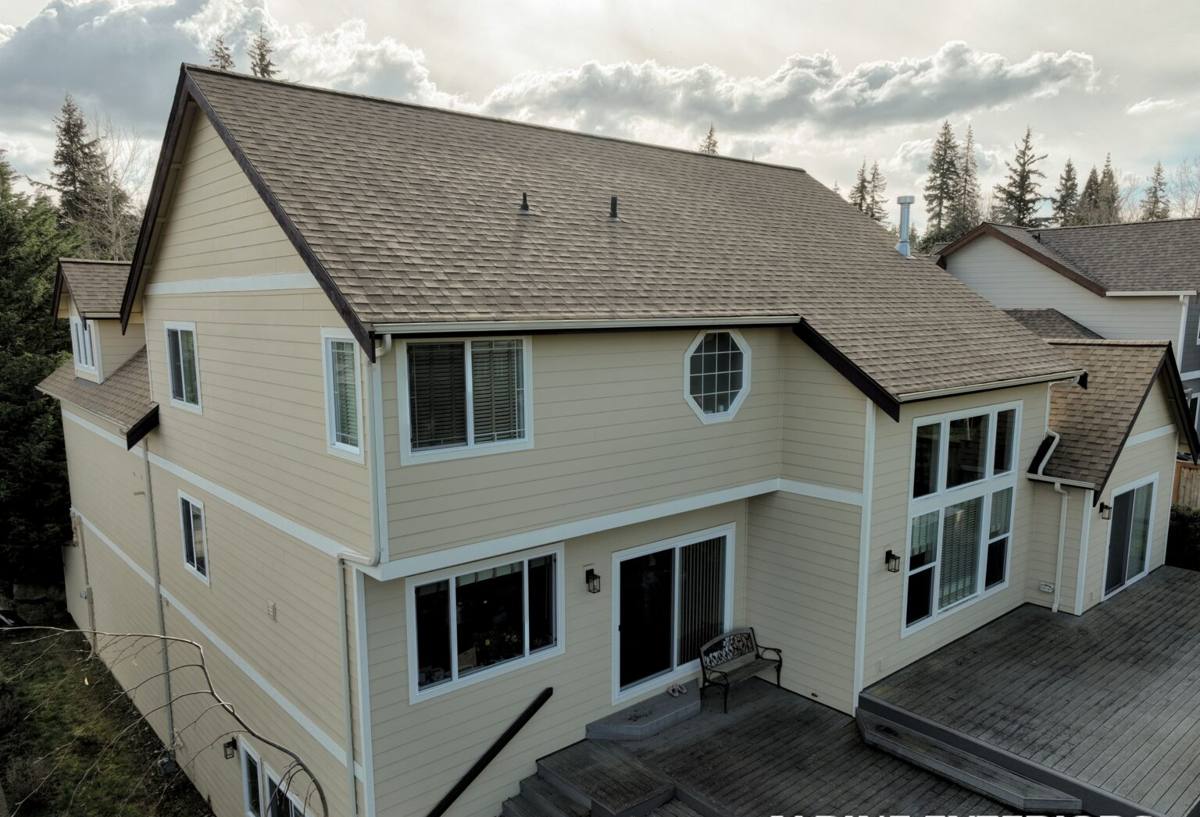
 Asphalt Shingle Roofing Built for the Abbotsford Climate
Homes in and around Abbotsford, BC sit in one of the wetter corners of the Pacific Northwest. The Fraser Valley funnels moisture off the coast and holds onto it, which means long stretches of driving rain in the fall and winter, damp air that never fully clears in the shoulder seasons, and a moss season that can run for months if a roof isn't shedding water and drying out the way it should. Add in salt-laden air carried inland from the Strait of Georgia and Puget Sound, and you've got a combination that is genuinely hard on asphalt shingles if the roof underneath them wasn't built to handle it.
An asphalt shingle roof that's installed correctly for this climate can hold up for decades. One that's installed to a generic spec, or patched together over the years by whoever was cheapest, tends to show its age early — granule loss, soft spots, moss creeping up from the eaves, and leaks that show up two rooms away from where the water actually got in. This page covers what an asphalt shingle roof needs to actually perform here, and what our process looks like when we take one on for an Abbotsford-area home.
Why Local Conditions Change the Job
Asphalt shingles are the same product whether they're installed in a dry inland climate or here in the Fraser Valley. What changes is everything around them — the underlayment, the flashing details, the ventilation, and the attention paid to the parts of the roof where water actually causes damage.
Driving Rain and Wind-Driven Water
Rain here doesn't always fall straight down. Wind pushes it sideways and up under shingle edges, especially at eaves, valleys, and anywhere two roof planes meet. A roof that relies on the shingles alone to keep water out, without a proper underlayment and ice-and-water membrane at the vulnerable points, is gambling on conditions that this region doesn't reliably give you.
Moss and Sustained Dampness
Moss doesn't just look bad — it holds moisture against the shingle surface, works its way under shingle edges, and lifts them over time, which is exactly what opens the door to leaks. A roof with poor airflow underneath, or one that's shaded and slow to dry after rain, will grow moss faster than a well-ventilated roof in full sun, even on the same street.
Salt Air and Material Fatigue
Salt-carrying air accelerates the breakdown of exposed metal — flashing, fasteners, vents — faster than it affects the shingles themselves. A roof can look fine from the ground while its flashing is quietly corroding at the seams. This is why we pay close attention to what metal we use and how it's installed, not just what brand of shingle goes on top.
What a Correctly Installed Asphalt Shingle Roof Includes
A shingle roof is a system, not a single product. Skipping or shortcutting any layer shows up later as a leak, premature wear, or moss that keeps coming back no matter how often it's cleaned off.
- A solid, properly prepared roof deck — no installing over rot or soft sheathing
- Ice-and-water shield at eaves, valleys, and roof penetrations, where wind-driven rain is most likely to get in
- Synthetic underlayment across the full roof for a secondary water barrier
- Properly lapped and sealed flashing at chimneys, walls, skylights, and any roof-to-wall transitions
- Balanced intake and exhaust ventilation so the attic space can actually breathe and dry out
- Shingles fastened to manufacturer spec — correct nail count, placement, and exposure
- Ridge caps and starter strips installed as a system, not improvised from cut field shingles
None of this is exotic. It's the difference between a roof that's built to shed this region's weather for its full expected lifespan and one that's built to look finished on installation day.
Signs an Abbotsford-Area Roof Needs Attention
Asphalt shingle roofs rarely fail all at once. They give warning signs first, and catching them early is almost always cheaper than waiting for a leak to show up inside the house.
- Moss or dark streaking building up on north-facing or shaded slopes
- Granules collecting in gutters or at the base of downspouts
- Shingles that look cupped, curled at the edges, or cracked
- Soft or spongy spots when the roof is walked
- Daylight visible through the attic roof boards
- Water stains on ceilings or attic framing, even faint ones
- Flashing that looks rusted, lifted, or separated from the roof surface
Any one of these on its own isn't necessarily an emergency, but they're worth a real inspection rather than a guess from the ground.
Choosing a Shingle for This Climate
Not every asphalt shingle product performs the same way in sustained wet, mossy conditions. Wind rating, algae resistance, and the shingle's overall weight and construction all matter more here than they would in a drier climate.
| Shingle Type | Typical Lifespan Here | Best For | Cost Factor |
|---|---|---|---|
| 3-tab asphalt | 15-20 years | Budget-focused re-roofs on simpler roof shapes | Lowest upfront cost |
| Architectural (laminate) asphalt | 25-30+ years | Most homes; better wind resistance and appearance | Moderate, best overall value |
| Algae-resistant architectural | 25-30+ years | Shaded roofs or homes with a history of moss/algae staining | Slightly above standard architectural |
| Impact-resistant / high wind-rated | 30+ years | Exposed or wind-prone lots | Higher upfront, fewer repairs long term |
For most homes in this area, an architectural shingle with algae-resistant granules is the practical middle ground — it costs more than a basic 3-tab up front, but the added resistance to moss and streaking pays for itself in fewer cleanings and a longer service life before the roof needs attention again.
Ventilation and Moisture Control
A shingle roof can be installed perfectly and still fail early if the attic underneath it can't breathe. Trapped heat and moisture in the attic cause shingles to age from underneath, encourage mold and rot in the sheathing, and make ice damming worse in a hard freeze. Balanced ventilation — intake at the eaves, exhaust at or near the ridge — keeps air moving through the attic space so it dries out between rain events instead of staying damp for weeks at a time. This is one of the most overlooked parts of a roofing job, and it's often the real reason a "good" roof starts having problems well before its shingles are actually worn out.
Our Process for Abbotsford-Area Roofs
1. Inspection and Honest Assessment
We start by actually getting on the roof, not just looking from the driveway. That means checking the deck condition, flashing, ventilation, and the general age and wear of the existing shingles before recommending a repair or a full replacement.
2. Clear Scope and Straightforward Pricing
You get a written scope of work before anything starts — what's being torn off, what underlayment and flashing details are included, and what shingle product is going on. No vague allowances that turn into surprise add-ons later.
3. Tear-Off and Deck Repair
Old roofing comes off down to the deck so we can actually see what we're working with. Any soft or damaged sheathing gets replaced before new material goes down — not covered over.
4. Full System Installation
Underlayment, ice-and-water membrane at vulnerable areas, flashing, and shingles installed to manufacturer spec, with ventilation addressed as part of the job rather than an afterthought.
5. Cleanup and Final Walkthrough
Job site cleaned up, magnetic sweep for stray nails, and a walkthrough so you know exactly what was done and what to expect from the roof going forward.
Maintaining an Asphalt Shingle Roof in This Climate
- Keep gutters and downspouts clear so water isn't backing up under the eaves
- Have moss removed gently — no aggressive pressure washing, which strips granules
- Trim back overhanging branches to reduce shade and debris buildup
- Check attic ventilation isn't blocked by insulation or storage
- Get a professional look after any major windstorm, even if nothing looks obviously wrong
- Address small leaks or lifted shingles right away rather than waiting for a bigger problem
Why Local Roofing Experience Matters
A roofing crew that regularly works in Whatcom County and the Fraser Valley knows which details actually matter here — where moss tends to build up first, how much ventilation an attic really needs given the humidity, and which flashing details fail fastest under sustained wind-driven rain. That experience shows up in fewer callbacks and a roof that performs the way it's supposed to for its full expected lifespan, not just on the day it's finished.
If you're weighing a repair against a full replacement, or just want an honest read on how much life is left in your current roof, we're happy to take a look. Reach out for a free, no-pressure estimate using the form below.