 Lynden Siding
 Roof Replacement in Sumas: Built for This Corner of Whatcom County
Sumas sits out at the far eastern edge of Whatcom County, hard against the Canadian border in the flat farmland of the Sumas Prairie, a bit further inland than most of the towns we regularly work in. It shares the same underlying weather pattern that shapes roofing across the rest of the county — driving rain that comes in sideways more often than it falls straight down, marine air working its way up the valley, and a moss season that runs longer here than in drier parts of the state — but it also gets its own added twist: sharp winter outflow wind events that come down the valley toward the border harder than they hit towns closer to the water. A roof built for a milder, more sheltered lot doesn't always hold up the same way out here.
This page covers roof replacement specifically, for homes in and around Sumas. Not every aging or damaged roof needs a full tear-off, and we'll always tell you honestly when a repair is the more sensible call. But when a roof has reached the point where replacement is the right answer, here's what that actually involves in this climate, and why it matters to hire a crew that already understands what this specific corner of the county does to a roof over time.
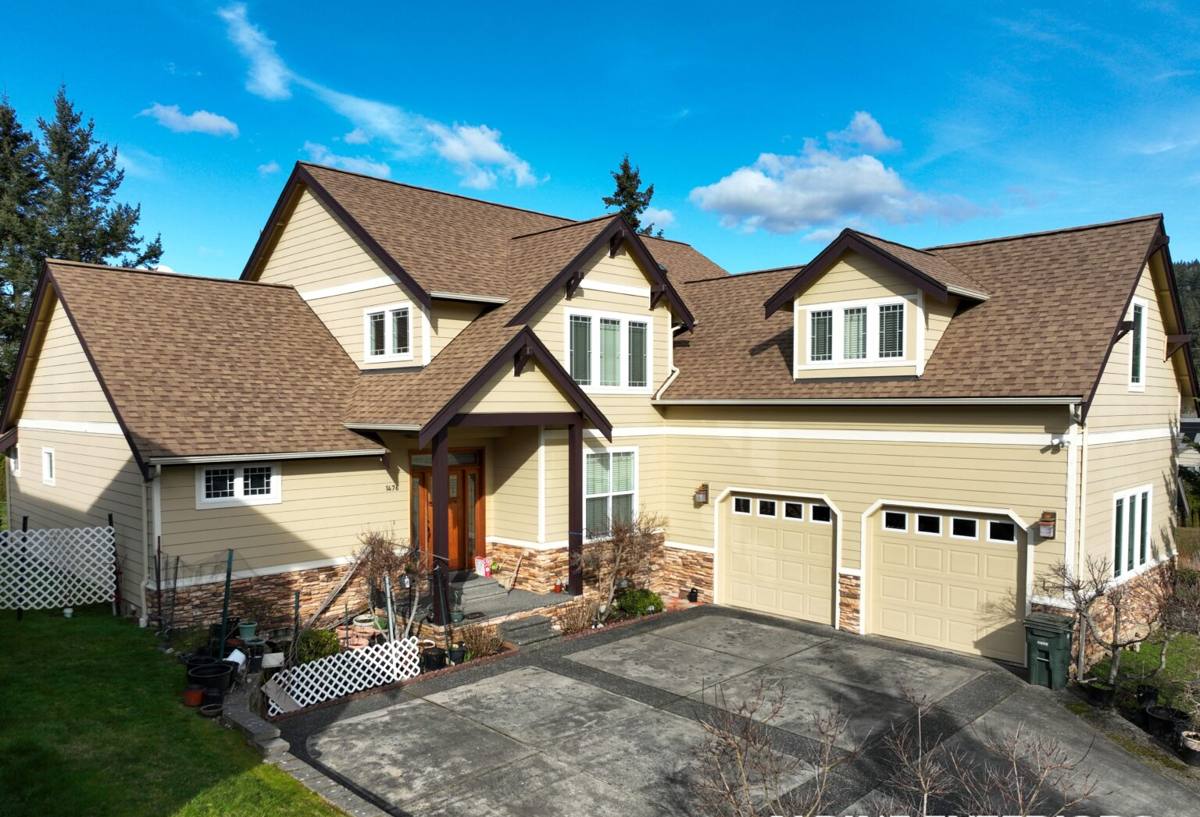
What This Climate Does to a Sumas Roof
A Long Moss and Algae Season
Persistent regional dampness and mild temperatures add up to a moss and algae season that stretches across much of the year here. Shaded slopes, north-facing planes, and roof sections under mature trees hold moisture longest, and moss does more than look bad — it holds water directly against the roofing material and works its way under shingle tabs and along flashing edges, loosening things over time if it isn't kept in check.
Wind-Driven Rain, Not Just Rainfall Totals
Rain out here doesn't just fall on a roof, it gets pushed sideways and up under shingle edges, around chimney and vent penetrations, and into any flashing that isn't properly lapped and sealed. Annual rainfall totals don't capture this well — a roof needs to be built for water moving in directions a simple pitched surface doesn't naturally shed.
Cold Outflow Wind Events
Because of its position at the head of the valley near the border, Sumas sees more of these cold outflow wind events during winter than towns further west toward the water. They bring sharp temperature swings and real wind load, testing fastening patterns and shingle wind ratings harder than a calmer, more sheltered site would ever see.
Salt Air and Corrosion
Sumas is far enough inland that salt exposure is less direct here than in our waterfront service areas, but marine air still moves up the valley and reaches this part of the county. Combined with sustained dampness, it's still enough to accelerate corrosion on undersized fasteners and cheap flashing metal over the years, so we don't cut corners on that just because the ocean isn't in view.
Signs a Sumas Roof Needs Full Replacement, Not Another Repair
Roofs rarely fail all at once. They give warning signs first, and the honest answer on repair versus replacement usually comes down to how many of these are showing up at the same time and how far along the roof already is in its expected life.
- Moss buildup on shaded slopes that returns quickly after cleaning, year after year
- Granules collecting heavily in gutters or at the base of downspouts
- Curling, cupping, or missing shingles, especially after a winter wind event
- Water staining on interior ceilings near exterior walls, chimneys, or valleys
- Daylight visible through the roof deck when viewed from inside the attic
- Soft spots or sagging felt underfoot when the roof is walked
- Flashing that looks lifted, rusted, or stripped of sealant
- A roof that's already had several patch repairs in the last few years
One or two of these on an otherwise sound roof usually points to a repair. Several at once, or a roof already past its rated lifespan, is more honestly addressed with a full replacement rather than another round of patchwork that just delays the same decision.
What a Correct Roof Replacement Involves
A roof replacement isn't just stripping off old material and laying down new shingles. Done right, it addresses the whole roof system from the deck up, and it's the layers underneath the visible surface that actually determine how long the job lasts.
Tear-Off and Deck Inspection
A full tear-off down to the decking is the only way to find hidden moisture damage or soft, rotted sheathing that's been developing under the old roofing, often invisible from inside the attic until it's advanced. Any layover approach that skips this step just buries whatever problems already exist under a fresh layer of shingles.
Underlayment and Ice-and-Water Shield
Synthetic or self-adhered underlayment gives a real water barrier under the roofing field, which matters directly here given how often rain gets pushed under shingle tabs rather than running straight off. Ice-and-water shield at eaves, valleys, and other vulnerable transitions adds another layer of protection exactly where water is most likely to find its way in.
Flashing at Valleys, Chimneys, and Wall Transitions
Most roof leaks in this region start at a flashing detail, not out in the open field of the roof. Valleys, chimney and skylight penetrations, and wall-to-roof transitions all need flashing that's properly lapped, sealed, and tied into the underlayment system, not caulked over as an afterthought at the end of the day.
Fastening for Wind Exposure
Correct nail placement, count, and pattern, following manufacturer spec rather than a shortcut, is what keeps roofing material from lifting when a winter outflow event brings real wind behind the rain. That detail matters more on a Sumas roof than it does on a calmer, more sheltered lot.
Ventilation
Balanced intake and exhaust ventilation keeps the underside of the roof deck dry, which extends material life and reduces the moisture that feeds moss growth from below as much as weather does from above. A roof can look fine from the ground and still be shortening its own life from poor attic airflow.
Choosing a Roofing Material for a Sumas Home
There's no single correct material for every roof — it depends on budget, pitch, how much shade the roof gets, and how long you plan to stay in the home. What matters is understanding the real trade-offs for this specific climate before deciding.
| Material | Moss & Wind Behavior | Typical Maintenance | Realistic Lifespan Here |
|---|---|---|---|
| Architectural asphalt shingle | Good with proper ventilation and algae-resistant granules; solid wind rating when fastened to spec | Periodic moss removal and gutter checks | 20-30 years |
| Standing seam metal | Sheds water and moss buildup well; handles outflow wind events better than most materials | Low; occasional fastener and sealant checks | 40-60 years |
| Composite/synthetic shingle | Resists moisture absorption; performance varies by product quality | Low to moderate | 30-50 years depending on product |
| Cedar shake | Absorbs moisture readily; needs strong airflow underneath to dry fully between rains | Higher; regular treatment and moss control | 20-30 years with consistent upkeep |
For most Sumas homes, architectural shingles with algae-resistant granules and a wind rating suited to the property's exposure strike a reasonable balance of cost and performance. Metal is worth a serious look on more exposed sites or for homeowners planning to stay long-term, given how well it handles both moss and wind.
Cost Factors Worth Understanding
Bids on the same roof can vary by thousands of dollars, and the gap usually comes down to real differences in scope, not one contractor simply charging more for identical work.
| Factor | What It Affects | Why It Matters in Sumas |
|---|---|---|
| Tear-off vs. layover | Whether hidden deck damage gets found and fixed | Long-term moisture in a valley climate can rot decking that a layover would simply bury |
| Underlayment grade | Resistance to wind-driven rain intrusion | Standard felt underperforms here compared to synthetic or self-adhered options |
| Material and wind rating | Expected lifespan and resistance to lifting | Winter outflow wind events call for a higher wind rating than a sheltered site needs |
| Flashing scope | How thoroughly valleys, chimneys, and walls are addressed | Most local leaks trace back to flashing, not the shingle field |
| Ventilation work | Long-term moisture control and material life | Poor attic airflow shortens roof life regardless of material quality |
| Site access | Labor time and staging needs | Rural and agricultural properties near the border can have longer driveways or wider staging needs than an in-town lot |
A detailed written estimate that itemizes these components tells you far more than a single lump-sum number, and it's worth asking any contractor to walk through exactly what's included before comparing prices.
How Our Process Works
We keep the process straightforward because a roof replacement is a significant investment, and homeowners deserve to know what's happening at every stage.
- In-person inspection: We walk the roof and attic in person, not from a photo or a drive-by estimate, and document what we actually find.
- Written estimate: You get a clear, itemized bid covering tear-off, underlayment, flashing, ventilation, material selection, and cleanup, not a vague single-line price.
- Scheduling around weather: We build reasonable flexibility into the timeline, since wet-season delays and winter wind windows are a normal part of working out here.
- Tear-off and deck repair: Old roofing comes off completely, and any deck damage found underneath is addressed before anything new goes down.
- Underlayment, flashing, and material installation: Each layer goes on to manufacturer specification, with extra attention at valleys, penetrations, and wall transitions.
- Final walkthrough and cleanup: We review the completed roof with you and do a full site and magnetic nail sweep before calling the job done.
After Your New Roof Goes On
A correctly installed roof still benefits from basic upkeep, especially given how long the moss season runs in this part of the county. Clearing gutters and downspouts before the heaviest rain arrives keeps water moving off the roof the way it's designed to. A light annual check for early moss growth on shaded slopes, and prompt removal if it appears, keeps small growth from turning into the kind of buildup that holds moisture against the roofing material for months at a stretch. None of this is complicated, but skipping it for several years in a row is how a well-installed roof still ends up looking older than it is.
Why Hiring a Crew That Already Works Sumas Matters
A crew that regularly works roofs out this far in the county has already seen how outflow wind events test fastening and flashing, how long moss actually holds on a shaded slope through a full year, and which roof orientations near the border take the hardest weather. That's practical knowledge that shows up in the small decisions made throughout a job, decisions a crew unfamiliar with this specific stretch of Whatcom County might not think to make at all. Most jurisdictions here also require a permit for a full roof replacement, and a crew that already works this area knows which office to file with and what inspections to expect, so the paperwork doesn't become a separate headache on top of the construction itself.
It also matters after the job is finished — a workmanship warranty is only as good as the company standing behind it, and a crew with an ongoing local presence is one you can actually reach a few years later if a question comes up.
A Practical Checklist Before You Choose a Roofer
- Do they perform a full tear-off with deck inspection, not just a layover?
- Does the estimate specify underlayment type and roofing material by name, not just "new roof"?
- Is flashing work at valleys, chimneys, and walls explicitly included in the bid?
- Do they carry current WA contractor licensing, liability insurance, and workers' compensation?
- Can they point to recent, real local work in or near Sumas and the surrounding border area?
- Does the bid separate manufacturer warranty coverage from their own workmanship warranty?
If your Sumas home needs a full roof replacement, or just an honest opinion on whether a repair will still hold, we're glad to come take a look. Use the form below to request a free, no-pressure estimate.