 Lynden Siding
 Roof Repair for Sumas, WA Homes
Sumas sits out at the far edge of Whatcom County, hard against the Canadian border in the flat, low-lying farmland of the Sumas Prairie. It's a different setting than the towns closer to Bellingham Bay, but a Sumas roof still lives under the same broad Pacific Northwest weather pattern that shapes roofing everywhere in this region: driving rain that comes in sideways more often than it falls straight down, a moss season that runs long because the air stays damp and mild for months at a time, and occasional storms that push salt-tinged air inland off the Sound even though Sumas itself sits well away from open water. Add in the cold outflow wind events this border valley sees more often than towns further west, and a roof out here gets tested in a few specific ways that a generic repair doesn't account for.
We work in Sumas and the surrounding border communities regularly, and roof repair is one of the most common calls we get — a leak after a windstorm, a stain spreading across a ceiling, moss that's finally done enough damage to show up as a soft spot underfoot. This page covers what actually causes roof problems out here, what a correct repair involves, and how we handle it from the first call to the final walk-through.
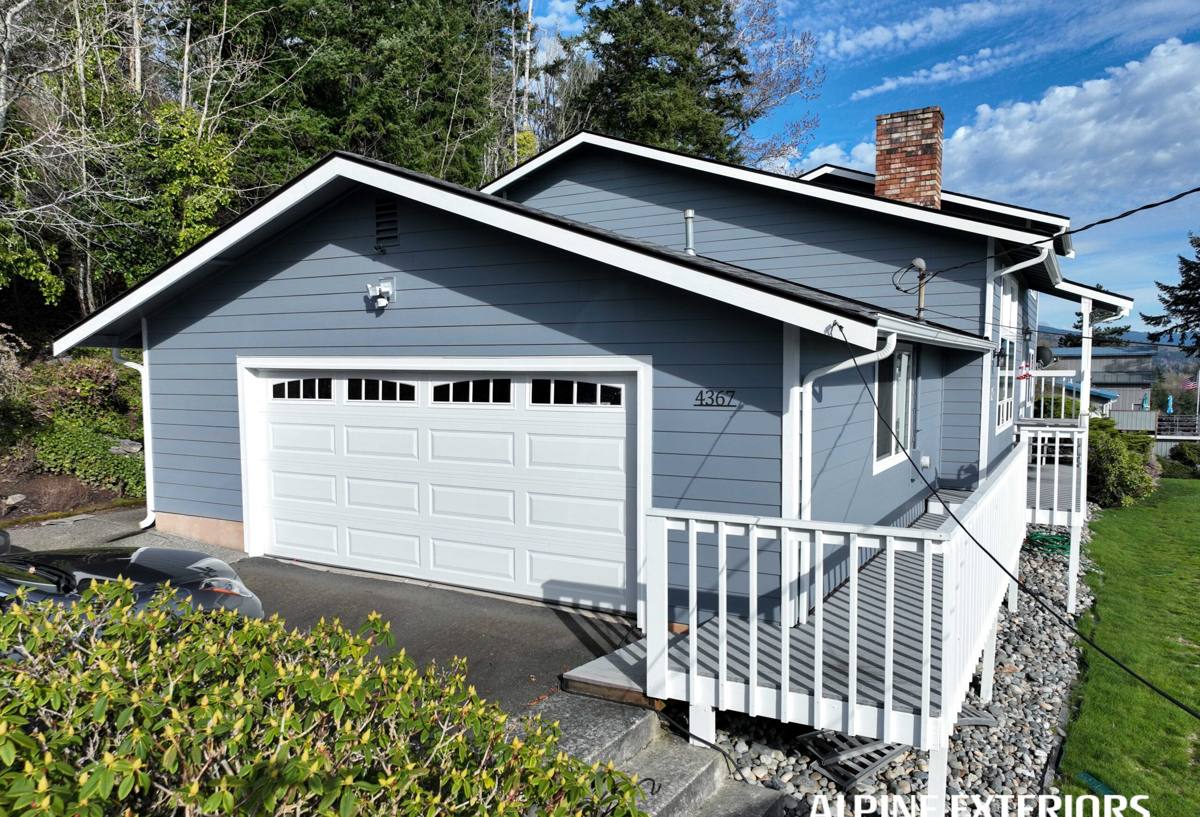
What This Climate Does to a Sumas Roof
Wind-Driven Rain and Flashing Failure
Rain in this part of the county rarely falls straight down. Wind pushes it sideways into roof valleys, up under shingle tabs, and around every penetration — chimneys, vent pipes, skylights, and the joint where a roof meets a wall. Flashing that's lapped correctly and sealed with the right materials sheds that kind of rain without issue. Flashing that's been caulked over instead of properly integrated, or that's simply aged past its useful life, is exactly where a Sumas roof starts leaking first, and it's rarely obvious from the ground.
Cold Outflow Wind and Freeze-Thaw Stress
Because of its position near the head of the valley by the border, Sumas gets more exposure to cold outflow wind events in winter than towns closer to the water. Those events bring sharp temperature swings and real wind load — the kind that lifts a marginal shingle, works a loose fastener free, or finds the weak point in a repair that was never sealed quite right. Sumas also sees more frequent hard frosts than milder coastal parts of the county. Water that's worked its way under a shingle or into a crack and then freezes expands, which turns a small problem into a bigger one fast, and it's a big reason why a leak that shows up in January often traces back to damage that started months earlier.
A Long Moss and Mildew Season
Persistent regional dampness and mild temperatures add up to a moss season that stretches across much of the year here, especially on shaded, north-facing slopes and anywhere a roof sits under trees. Moss does more than look bad. It holds water directly against the roofing material, works under shingle edges as it spreads, and lifts tabs enough for wind-driven rain to get underneath. A roof that's been carrying moss for a season or two without attention is almost always dealing with more damage than what's visible from the ground.
Flat, Low-Lying Terrain and Roof Drainage
The Sumas Prairie is flat, low-lying farmland near the Nooksack River system, and that terrain affects more than just ground drainage — it affects how much a roof relies on its own valleys, gutters, and downspouts to move water off cleanly, since there's less natural runoff advantage than a home built on a slope. Clogged valleys or undersized gutters on a flat-lot property tend to hold water against the roof edge longer than they would on a well-drained hillside lot, which is exactly the kind of slow, repeated exposure that wears out shingles and rots decking at the eaves.
Signs Your Sumas Roof Needs Repair
- Water staining on a ceiling or interior wall, especially near an exterior wall, chimney, or skylight
- Moss buildup in valleys or on shaded slopes that keeps coming back after cleaning
- Granules collecting in gutters or piled at the base of downspouts
- Shingles that are curling, cupping, cracked, or missing outright after a windstorm
- Flashing around a chimney, vent, or roof-to-wall junction that looks lifted, rusted, or gapped
- Daylight visible through the roof deck when viewed from inside the attic
- A soft spot or slight give underfoot when the roof is walked, which usually points to decking damage
- Ice buildup or unusual dampness in the attic during a cold snap
Any single item on that list is worth a professional look before the next storm. Several of them together, especially interior staining plus visible attic light or a soft deck, usually means water has been getting in for a while.
What a Correct Roof Repair Actually Involves
Finding the Real Source, Not Just the Symptom
Water rarely shows up inside a house directly below where it got in. It travels along rafters, follows underlayment, and can appear on a ceiling several feet from the actual entry point. A repair that just patches the spot above a visible stain, without tracing the water back to its actual source, often looks fine for a season and then fails again. We start every repair call by getting on the roof and finding where the water is actually entering — usually flashing, a valley, a penetration, or a section of failed shingles — before we touch anything.
Flashing, Underlayment, and Matching Materials
Once we've found the source, the repair itself needs to address the actual failure, not just cover it. That usually means removing and correctly re-lapping flashing rather than smearing sealant over the gap, replacing underlayment beneath the affected shingles rather than just the shingles on top, and matching new shingles to the existing roof as closely as the product line allows so the repair blends in and performs the same as the surrounding roof. Sealant has a place in a correct repair, but it's a finishing detail, not a substitute for proper flashing and lapping.
Checking Ventilation While We're Up There
A leak repair is also a chance to check attic and roof ventilation, since poor ventilation traps moisture against the underside of the roof deck and accelerates the same kind of damage a leak causes from the outside. If we find blocked soffit vents or inadequate ridge ventilation while we're diagnosing a leak, we'll flag it as part of the same visit rather than treating it as a separate problem to discover later.
Common Roof Repair Issues We See in Sumas
| Issue | Typical Cause Here | What the Repair Involves |
|---|---|---|
| Leak at a chimney or vent pipe | Aged or improperly lapped flashing, worsened by wind-driven rain | Remove and correctly re-flash the penetration, replace damaged underlayment beneath it |
| Leak in a roof valley | Debris buildup, worn valley flashing, or moss holding moisture against the metal | Clear debris, inspect and replace valley flashing, address nearby moss growth |
| Lifted or missing shingles after a windstorm | Outflow wind events common to this part of the border valley | Replace affected shingles and check fastening pattern on the surrounding field |
| Soft or spongy decking at an eave | Long-term moisture from clogged gutters or a slow, undetected leak | Cut out and replace damaged decking, then correctly re-flash and re-shingle the section |
| Interior ceiling staining with no visible roof damage | Water traveling along rafters or underlayment from a distant entry point | Trace the actual leak path from inside the attic before opening up the roof |
| Recurring moss on shaded slopes | Long regional moss season combined with tree shade or a north-facing pitch | Careful removal, moss-resistant treatment, and monitoring rather than aggressive pressure washing that can damage granules |
Repair or Replace? How We Help You Decide
Not every roofing problem on a Sumas home calls for a full replacement, and we don't default to recommending one. We look at the age of the existing roof, how much of the surface is affected, whether the decking underneath has moisture damage, and how many prior repairs the roof has already had. A localized leak on a roof that's otherwise sound and reasonably young is almost always a straightforward repair. A roof that's near the end of its rated life, has moss-related damage spread across multiple slopes, or shows decking rot at more than one spot is usually more honestly addressed with a replacement rather than another round of patchwork that's just delaying the same conversation a year or two down the road. We'll explain what we actually find on the roof and why, and lay out the real trade-offs rather than steering toward whichever option happens to be more profitable for us.
Our Roof Repair Process
- Initial call and scheduling: Tell us what you're seeing — a stain, a draft, visible damage — and we'll get a look scheduled, sooner if there's active water intrusion.
- On-roof inspection: We physically get on the roof and in the attic where needed rather than assessing from the ground or from photos alone, since flashing and valley problems are rarely visible from a driveway.
- Diagnosis and written estimate: We identify the actual source of the problem, explain what we found in plain terms, and give you a clear, written scope and price before any work starts.
- Repair work: We complete the repair using materials matched to your existing roof where possible, addressing the underlying cause, not just the visible symptom.
- Final walk-through: We show you what was done and flag anything else worth watching, whether that's moss on an adjacent slope or a section of roof that's approaching the end of its service life.
Cost Factors for a Sumas Roof Repair
| Factor | What It Affects | Why It Matters Here |
|---|---|---|
| Extent of decking damage | Whether the repair is surface-level or requires cutting out and replacing structural decking | Long-term trapped moisture from wind-driven rain or clogged valleys can rot decking well before it's visible |
| Roof pitch and access | Labor time and equipment needs | Steeper roofs and rural properties with longer driveways can add setup time |
| Material matching | Whether new shingles blend with the existing roof or a wider section needs to be redone | Older or discontinued shingle products are harder to match exactly |
| Number of leak sources | Total repair scope | Wind-driven rain and freeze-thaw stress can create more than one problem area in the same storm season |
| Ventilation issues found during inspection | Whether the visit stays a simple repair or expands to include ventilation work | Poor attic ventilation compounds moisture damage from the outside in |
Exact pricing depends on what we actually find once we're on the roof, which is why we give you a real number after inspection rather than quoting blind over the phone.
Why a Local Crew That Already Works Sumas Matters
A crew that works roofs across this part of Whatcom County through every season sees how wind-driven rain, cold outflow events, and a long moss season actually behave on real homes over years, not just how a shingle performs on a spec sheet. That experience shows up in practical decisions on a repair call: knowing that a leak reported after a January cold snap in Sumas is more likely tied to freeze-thaw damage than it would be on a milder coastal roof, understanding which flashing details need extra attention on a flat, low-lying property where water doesn't drain away as fast, and recognizing when moss on a north-facing slope is a maintenance issue versus a sign of deeper damage. Sumas sits far enough inland and close enough to the border that its roofing conditions look a little different from towns nearer the water, and a crew that already works here treats that difference seriously instead of applying a one-size-fits-all approach built for a different climate.
Beyond the Roof
Roof leaks in Sumas rarely stay confined to the roof. Water that gets past flashing or a failed valley often tracks down into siding, trim, or a wall assembly before anyone traces it back to its actual source on the roof. Because we handle siding, windows, and decks along with roofing, we can look at a Sumas property as one connected exterior system exposed to the same rain, wind, and freeze-thaw cycling, rather than treating the roof as an isolated problem and missing where the water is really getting in.
If your Sumas roof has a leak, storm damage, or moss that's finally caught up with it, we're glad to take a look and give you a straightforward, honest read on what it actually needs. Reach out using the form below to schedule a free, no-pressure estimate.