 Lynden Siding
 Siding Built for Life on Wiser Lake
Homes around Wiser Lake sit in a spot where Whatcom County's weather shows up in a very concentrated way. The lake itself keeps humidity higher at ground level than it is a mile up the road, tree cover shades large stretches of exterior wall for most of the day, and the marine air moving through this part of Washington carries salt that settles on every exposed surface. None of that is a problem siding can't handle — but it is a problem that ordinary siding installation, done without those specifics in mind, handles poorly. This page walks through what Siding Installation actually requires on a Wiser Lake property, what we do differently because of it, and why the crew doing the work matters as much as the material going on the wall.
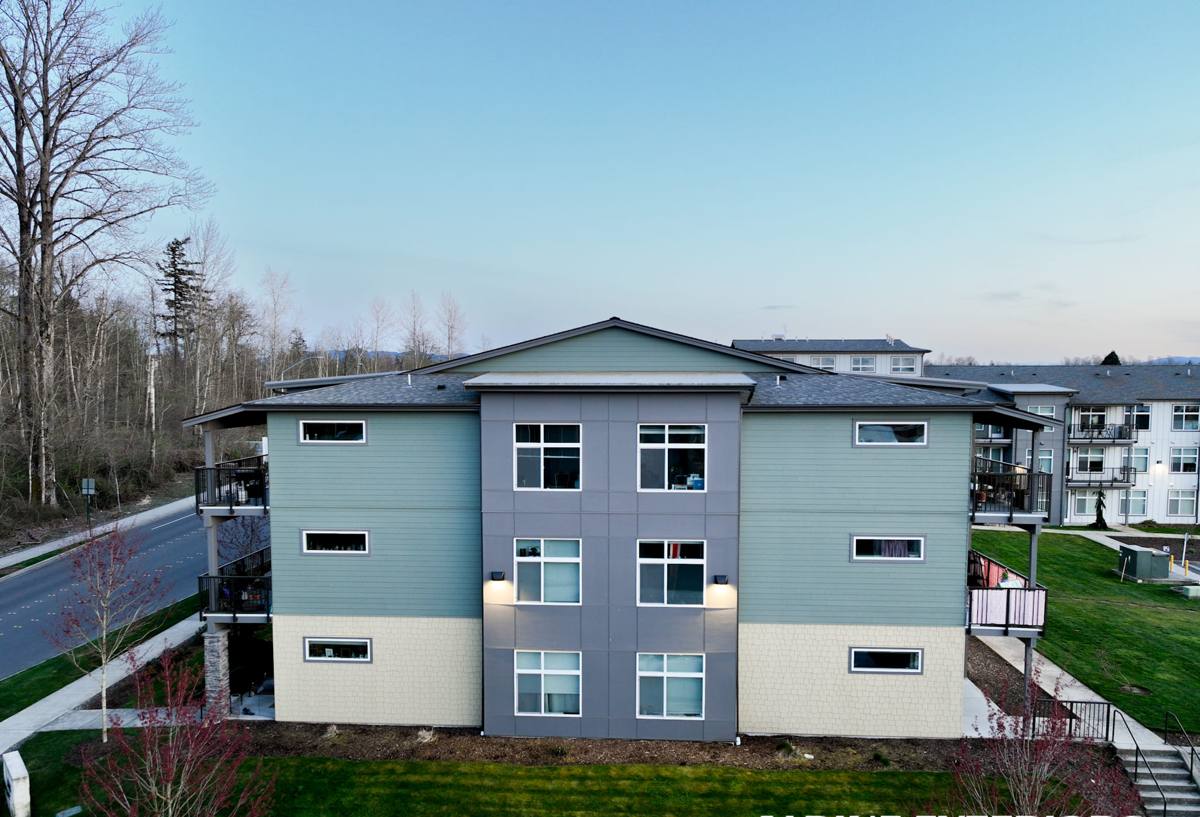
What the Wiser Lake Environment Does to a Home's Exterior
Three things define this microclimate, and each one puts a specific kind of stress on siding:
- Salt-laden air: Marine air moving inland through Whatcom County carries fine salt that accelerates corrosion on fasteners, trim, and any metal flashing that isn't rated for it.
- Driving rain: Wind off open water pushes rain sideways into wall assemblies, not just straight down. Siding and flashing details that only manage vertical water shed can fail here.
- A long moss season: Shade from mature trees plus lake humidity keeps north- and lake-facing walls damp far longer after a storm than a wall in full sun. That extended dampness is exactly what moss, algae, and mildew need to take hold.
Individually, none of these are unusual for the Pacific Northwest. Together, on a property that sits low and shaded near open water, they compound. A siding job that would hold up fine on a sunny, exposed lot a few miles inland can fail years early on a Wiser Lake home if it wasn't installed with drainage and material choice in mind.
What Correct Siding Installation Actually Involves
Siding is a system, not a single layer. Homeowners rarely see most of what makes an installation succeed or fail, because it's covered up before the finished boards ever go on. On a Wiser Lake home, we pay particular attention to:
The Water-Resistive Barrier and Drainage Plane
Every wall needs a continuous water-resistive barrier (WRB) behind the siding, lapped correctly from bottom to top so water is always directed outward and down. Behind that, a drainage gap lets any moisture that gets past the siding drain out and lets the wall assembly dry instead of staying wet. In a shaded, humid microclimate like this one, that drainage gap is not optional — it's the difference between a wall that dries out after a storm and one that stays damp long enough to grow moss and rot sheathing.
Flashing at Every Penetration
Windows, doors, hose bibs, light fixtures, deck ledgers — every place something interrupts the siding needs flashing that sheds water outward, plus kick-out flashing anywhere a roofline meets a wall. Driving rain off the lake finds every gap in this detailing eventually. It's the single most common thing we find missing or done wrong on older installs in this area.
Fastening and Clearances
Fiber cement siding has a specific nailing pattern, clearance from grade, and gap requirement at trim and corners. Fasteners need to be corrosion-resistant given the salt air, and siding needs a minimum clearance from soil, decks, and roof lines so it isn't sitting in standing moisture.
Why We Install Only James Hardie Fiber Cement
We don't install vinyl, LP SmartSide, Cemplank, Allura, primed spruce, or cedar. That's a standard we hold company-wide, not just for lake-adjacent properties, but it matters even more here. James Hardie fiber cement is non-combustible, doesn't swell or delaminate the way wood-based or engineered wood products can when they take on repeated moisture, and its ColorPlus factory finish is baked on under controlled conditions rather than field-applied — which means better, more even resistance to fading and moisture intrusion at the finish layer itself, exactly where salt air and damp shade do the most damage over time.
Hardie also engineers its product lines by climate zone. The HZ5 line is built for regions that see the freeze-thaw and moisture cycling common to the Pacific Northwest, and it's what we spec for most Whatcom County homes, Wiser Lake included. That's a meaningful difference from a generic siding product with no regional engineering behind it. Combined with a strong transferable warranty, it's why we standardized on this one product system rather than offering several and letting price shop the decision.
Our Installation Process
The steps don't change much house to house, but how carefully each one is executed is what separates a siding job that lasts twenty-plus years from one that needs attention in five.
- Assessment: We walk the exterior, check existing sheathing condition, note shaded and lake-facing walls that will need extra attention to drainage and material spacing, and identify any rot or moisture damage under the current siding.
- Tear-off and sheathing check: Old siding comes off, sheathing is inspected and repaired or replaced where needed — this step is where hidden moisture damage from a previous installation usually shows up.
- WRB and flashing installation: A continuous water-resistive barrier goes on, lapped correctly, with flashing installed at every window, door, and penetration before any siding goes up.
- Drainage gap and furring: A drainage plane is created behind the siding so water that gets past the surface layer can drain and the wall can dry.
- Siding installation: James Hardie panels or lap siding go on per manufacturer fastening specifications, with corrosion-resistant fasteners and correct clearances at grade, trim, and corners.
- Trim, caulking, and touch-up: Trim is installed, caulking is applied only where it belongs (not as a substitute for proper flashing), and any factory-finish touch-up is done with Hardie-matched product.
- Final walkthrough: We walk the finished job with the homeowner, checking every wall, corner, and penetration before calling it done.
Cost Factors for Wiser Lake Siding Projects
Every home is priced individually, but the same handful of factors drive most of the variation we see on properties in this area:
| Factor | Why It Matters Here |
|---|---|
| Existing siding removal | Homes with moisture-damaged sheathing under old siding need repair before new siding goes on — common on shaded, lake-facing walls |
| Home size and wall complexity | More corners, dormers, and roof-wall intersections mean more flashing detail and labor |
| Number of stories | Access equipment and safety setup add cost on taller homes, especially near sloped lake-adjacent lots |
| Trim and architectural detail | Custom trim, board-and-batten accents, or shake-style panels take more time than a straightforward lap siding job |
| Site access | Narrow lake-access driveways or limited staging space can affect material delivery and scaffolding |
| Color and finish selection | ColorPlus factory finishes vary slightly in cost by color and Hardie product line |
What We Find on Older Installs Near the Lake
A large share of the siding replacement work we do near Wiser Lake isn't because the siding itself failed — it's because the installation underneath it did. The patterns repeat:
- Missing or improperly lapped water-resistive barrier, allowing moisture to track behind the siding instead of draining out
- No drainage gap, so siding sat directly against sheathing with nowhere for trapped moisture to go
- Face-nailing or incorrect fastener spacing that split boards or left gaps for water entry
- Caulk used in place of proper flashing at windows and roof-wall intersections — a common shortcut that fails within a few seasons in driving rain
- No consideration for shaded, north-facing walls, which stayed damp longer and grew moss and mildew well before the rest of the house showed any wear
None of these are rare mistakes specific to one installer — they're the kind of shortcuts that are easy to take anywhere, but that show up faster and worse in a shaded, humid, salt-air environment like this one. That's exactly why the details matter more here than they would on a drier, sun-exposed lot.
After Installation: What Keeps Siding Performing
Correct installation does most of the work, but a little homeowner attention extends the life of any siding job, especially in a moss-prone area:
- Rinse shaded and lake-facing walls once or twice a year to keep moss and algae from establishing
- Keep gutters clear so overflow doesn't run down wall surfaces
- Trim back tree branches and shrubs that keep siding in constant shade or hold moisture against the wall
- Watch for caulk lines separating at trim joints and have them resealed promptly
- Have the exterior walked every few years to catch any flashing or trim issue while it's still minor
Why Hire a Crew That Already Works Wiser Lake
A contractor who already works this specific area understands things a generalist doesn't have to think about elsewhere: which walls will stay shaded and damp longest, how much drainage detail a lake-adjacent lot actually needs, and how the local permitting process in Lynden and Whatcom County works for exterior projects. That local familiarity shows up in the small decisions — where extra flashing gets added, which walls get flagged for closer moisture inspection, how siding clearance is handled on a sloped lot near the water. It's the difference between a crew following a generic checklist and one that's actually accounting for this property's conditions.
Get an Estimate for Your Wiser Lake Home
If your siding is showing moss, gaps, or wear — or you're planning ahead before it becomes a bigger repair — we're happy to take a look and walk you through what your home specifically needs. There's no pressure and no obligation. Use the form below to request a free estimate.